
 Follow us
Weekly News Wrap: E20 Debate Intensifies, Tata Motors PV Targets 10x Growth, BMW Takes Luxury Crown
The week saw the Centre defend its E20 policy, Mahindra and Tata Motors outline ambitious growth plans, BMW overtake Mercedes-Benz, and auto component imports from China rise further.
 By Darshan Nakhwa
 1471 Views


India’s ethanol-blending policy dominated the automotive conversation during the week of July 6-12, as the government responded to growing questions over the cost, compatibility and implementation of E20 petrol.
The Petroleum Ministry acknowledged that E20 can be costlier to produce than pure petrol when international crude trades at around $70 a barrel. It said maize-based ethanol is procured at ₹71.86 a litre before taxes, transport and handling costs. The ministry, however, argued that ethanol blending should be viewed primarily as a measure to reduce crude-oil imports and exposure to global price volatility, rather than simply as a way to make petrol cheaper.
The Centre also ruled out offering pure petrol, E10 and E20 simultaneously across the country. It said maintaining separate fuel streams through more than one lakh retail outlets would increase storage, handling and inventory costs. At the same time, state governments were asked to take strict action against fuel adulteration and lapses in the supply chain amid growing consumer anxiety over E20, particularly among owners of older vehicles.
Beyond fuel policy, India’s two largest home-grown automotive groups set out ambitious growth plans. Mahindra Group Chairman Anand Mahindra said the company would enter an “Attack Mode” and accelerate investments despite geopolitical, supply-chain and technology uncertainty. The group is also expanding the use of artificial intelligence across its businesses.
Tata Motors Passenger Vehicles, meanwhile, used its first annual general meeting as a separately listed company to outline its plan for the next decade. Chairman N. Chandrasekaran said the passenger-vehicle business was targeting tenfold growth between FY20 and FY31. Its roadmap includes annual sales of more than 1.2 million vehicles, six new nameplates, over 20 product interventions and a higher contribution from electric vehicles. Tata Motors and Jaguar Land Rover also plan combined investments of about ₹2.6 lakh crore over five years.
The luxury-car market witnessed a significant change in leadership. BMW Group India became the country’s largest luxury carmaker during the first half of 2026, according to Vahan registration data, overtaking Mercedes-Benz. BMW, including MINI, recorded 10,043 registrations, compared with 9,472 for Mercedes-Benz. BMW also strengthened its position in the luxury-EV segment, while Mercedes reported record company sales during the second quarter and first half despite supply constraints.
The week also brought fresh product and investment developments. Nissan launched the Tekton to re-enter the high-volume midsize SUV segment but remained cautious about introducing an electric vehicle before 2028. Honda outlined a stronger push into premium scooters and mid-capacity motorcycles, Hero expanded its Vida electric-scooter range, and Yamaha launched the Aerox E electric scooter.
India’s auto component industry reported record FY26 turnover of ₹7.6 lakh crore, but its trade deficit widened to $1.37 billion as imports grew faster than exports. China’s share of component imports increased to 36%, from 32% in FY25 and around 30% in FY24. Industry body ACMA also flagged labour shortages across manufacturing clusters and said stronger ethanol blends could require suppliers to develop more durable materials.
Retail demand remained strong in June. Two-wheeler and passenger-vehicle sales reached record levels for the month, while electric-vehicle registrations crossed three lakh units and achieved more than 12% penetration for the first time. Commercial vehicles and three-wheelers also posted their highest-ever June sales, while tractor registrations rose sharply ahead of the kharif season.
Here is a detailed round-up of the key developments that shaped the automotive industry during the week:
E20 Is Costlier to Produce Than Pure Petrol at $70 Crude: Oil Ministry
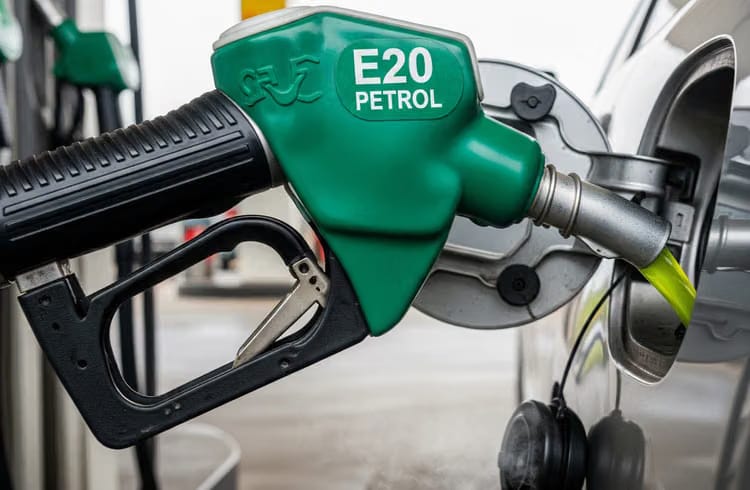
E20 petrol can be costlier to produce than pure petrol when international crude oil trades at around $70 a barrel, the Ministry of Petroleum and Natural Gas has said, challenging the assumption that blending ethanol should automatically make fuel cheaper.
The government currently procures maize-based ethanol at around ₹71.86 a litre. This price excludes goods and services tax, transportation, storage and handling charges, the ministry said in a question-and-answer note on India’s ethanol-blending programme.
“Therefore, if international crude oil is trading at around US$70 per barrel, E20 is actually costlier to produce than pure petrol,” the ministry said.
India's Shift to E20 Was More Than Two Decades in the Making: Centre
Govt Rules Out Nationwide Choice of Pure Petrol, E10 and E20
The Central government has rejected the idea of offering pure petrol, E10 and E20 simultaneously across India, saying separate fuel grades would raise distribution costs and create a major logistical challenge.
The Ministry of Petroleum and Natural Gas said India’s fuel network covers more than one lakh retail outlets. It is supported by refineries, terminals, depots, pipelines and storage facilities.
Maintaining three petrol grades across this network would require separate storage and inventory management at several points in the supply chain, the ministry said in a question-and-answer note issued on July 10. It would also increase handling costs and reduce operational efficiency.
Centre Asks States to Crack Down on Fuel Adulteration Amid E20 Concerns
India’s Ethanol Production Jumps To 2,000 Cr Litres From 421 Cr Litres
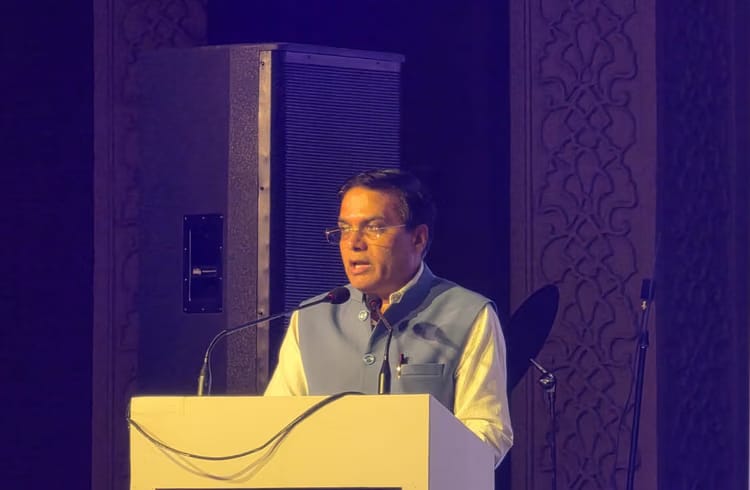
India’s ethanol blending programme has helped the country save more than ₹1.90 lakh crore in foreign exchange by substituting over 310 lakh metric tonnes of crude oil between the 2014-15 ethanol supply year and May 2026, according to the government. Ethanol production capacity also increased nearly fivefold from 421 crore litres in 2013-14 to around 2,000 crore litres in 2026.
Speaking at the GEMA Ethanol Conclave 2026, Ashwini Srivastava, Joint Secretary, Department of Food & Public Distribution (DFPD), said the programme has also helped avoid approximately 930 lakh metric tonnes of carbon dioxide emissions, while strengthening India’s energy security, improving farmer incomes and creating new markets for agricultural produce.
Grain-Based Ethanol Accounts for 67% of India's Supplies in ESY 2025-26 Till June
Auto Dealers Launch National Awareness Campaign on Ethanol Blending
Mahindra to Go Into ‘Attack Mode’, Accelerate Growth Amid Global Uncertainty: Anand Mahindra
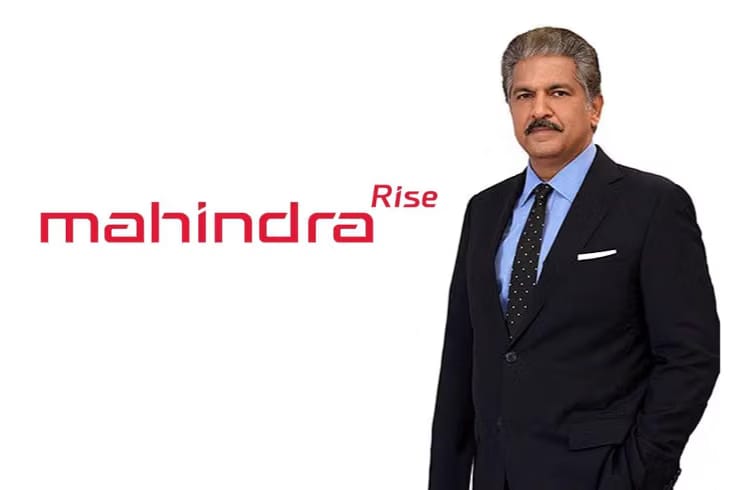
Mahindra & Mahindra will look to accelerate its growth and investment push despite growing geopolitical, supply-chain and technology uncertainty, Chairman Anand Mahindra said, describing the company’s approach as entering an “Attack Mode”.
Mahindra said the group sees the present disruption as an opportunity to build a lasting competitive advantage rather than a reason to delay decisions.
Mahindra Steps Up AI Adoption Across Businesses
Chandrasekaran Maps Tata Motors Passenger Vehicles' Next Decade, Targets Tenfold Growth by FY31
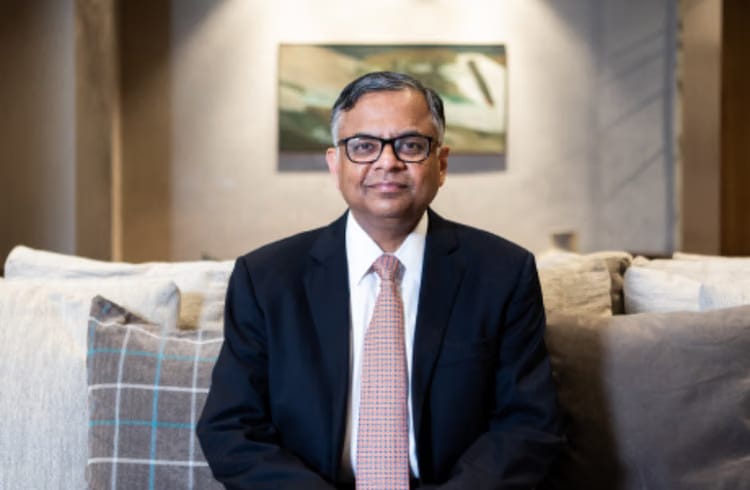
Tata Motors Passenger Vehicles (TMPVL) used its first annual general meeting as a standalone listed entity to set out an ambitious growth blueprint for the remainder of the decade, with Chairman N. Chandrasekaran outlining a plan to scale the business tenfold between FY20 and FY31.
The company is targeting annual sales of over 1.2 million passenger vehicles by FY31, alongside a 20 percent share of the domestic market and double-digit EBITDA margins. The roadmap includes six new nameplates, more than 20 product refreshes, and a significant push on electrification, with electric vehicles expected to account for over 30 percent of total volumes. A deeper operational and technological integration with Jaguar Land Rover (JLR) will underpin this next phase of growth.
Chandrasekaran Targets $100 Billion Automotive Revenue by FY31
Tata Group has outlined an ambitious roadmap to scale its automotive revenues to about $100 billion by FY2030–31, with Chairman N. Chandrasekaran sharing this vision with shareholders at the company’s Annual General Meeting on Wednesday.
Alongside the revenue aspirations, the Group is working towards a profit before tax of around ₹50,000 crore by FY31 at the automotive level, as indicated in its long-term guidance. Based on current exchange rates and the 10 per cent EBIT margin target, this implies a profit pool well in excess of $5 billion.
Tata Motors, JLR Plan ₹2.6 Lakh Crore Capex Over Five Years to Drive Growth, EV Push
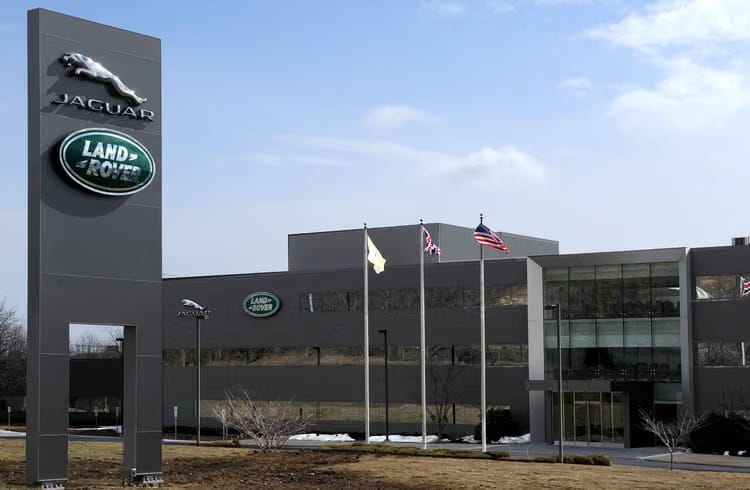
Tata Motors and Jaguar Land Rover (JLR) plan to spend about ₹2.6 lakh crore on their automotive businesses over the next five years, a figure Tata Group Chairman N. Chandrasekaran outlined to shareholders at the company’s Annual General Meeting.
The plan marks an aggressive ramp up in the Group’s commitment to electrification, additional manufacturing capacity and new age vehicle technologies, even as the leadership has flagged that cost inflation and margin pressures will remain a reality in the near term across its auto businesses.
Tata Group Steps Up Cyber Defence, Pins Battery Localisation to 2027 in Next Phase of Auto Strategy
Tata Motors Targets South Africa, Australia, Eyes UK and Europe in Next Phase of Global Expansion
Mahindra Announces Price Increase Across SUV and Commercial Lineups
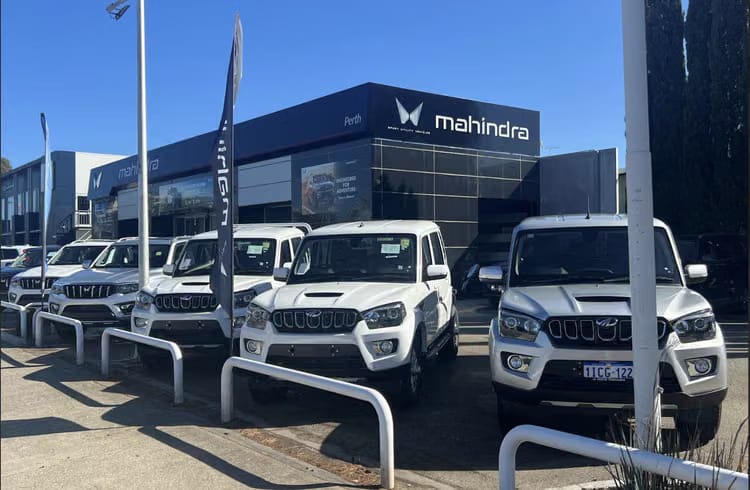
Mahindra & Mahindra has announced a price hike across its entire passenger SUV and commercial vehicle portfolio, scheduled to take effect from July 10, 2026. The retail revisions will average an increase of 2.7 per cent for the manufacturer's SUV lineup and 2 per cent for its active commercial vehicle range.
The automotive company attributed the mid-year pricing adjustments primarily to sustained cost escalations across core industrial commodities and input materials. Company officials noted that the exact quantum of the upward revision will vary depending on the specific model, variant selection, and local market configuration.
Nissan Targets 2028 EV Launch, Says India Market Is Still Maturing
Despite being among the pioneers of mass-market EVs globally with the Leaf, Japanese carmaker Nissan remains cautious about introducing electric vehicles in India. "We don't think it (the Indian market) is yet mature enough to bring EV tomorrow morning. But definitely Nissan has the technology to fulfil all the customer needs. So at the right time, we're going to do what is needed," Massimiliano Messina, Chairperson, AMIEO region, Nissan said.
The company says it first wants to understand how much of India's roughly 6% EV penetration is driven by genuine customer preference versus compliance with regulations such as Corporate Average Fuel Efficiency (CAFE) norms.
Nissan Launches Tekton at ₹10.49 Lakh–₹18.59 Lakh, Re-enters India's High-Volume Midsize SUV Segment
Renault Partners With IIT Kanpur for Vehicle Aerodynamics, Wind-Noise Testing
Honda Bets on Premium Scooters, Motorcycles to Win Over India's Young Buyers
Honda Motorcycle & Scooter India (HMSI) is sharpening its focus on premium scooters and mid-capacity motorcycles as it seeks to retain younger buyers whose purchasing decisions are increasingly driven by design, technology and global products rather than just affordability.
The strategy marks a significant evolution for Honda, whose India business has long been anchored by high-volume commuter products such as the Activa scooter and Shine motorcycle.
"Today's customers, especially Gen Z and Gen Alpha, expect easy access to information through their smartphones and the internet," HMSI President and CEO, Tsutsumu Otani told Autocar Professional in an interview.
Hero MotoCorp Expands Vida Lineup With 4.4 kWh VX2 Plus Scooter
TVS Motor Company Board to Evaluate ₹1,000 Crore Debt Issuance
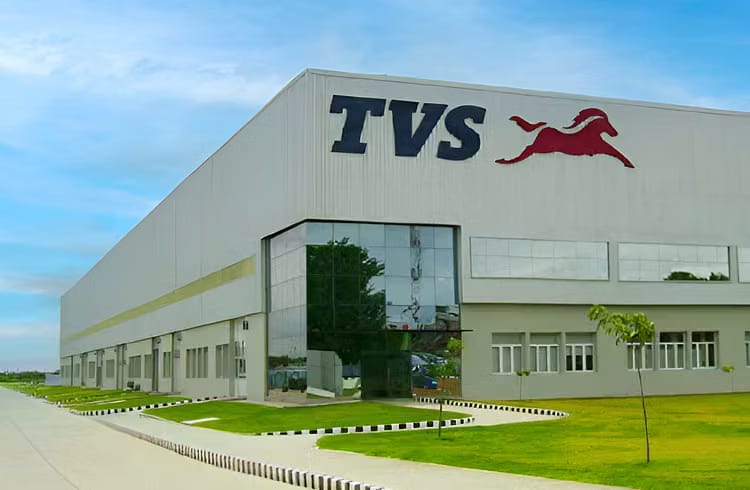
TVS Motor Company Limited has scheduled a meeting of its Board of Directors on July 21, 2026, to evaluate corporate fundraising options alongside its periodic earnings review. According to an official regulatory filing submitted to the stock exchanges, the board will consider a proposal to raise capital up to ₹1,000 crore through the issuance of non-convertible debentures.
The proposed debt capital is intended to be secured over a period of time in single or multiple tranches on a private placement basis. Concurrently, the directors will review and vote on the approval of the company's unaudited standalone and consolidated financial results for the first fiscal quarter ended June 30, 2026.
Greaves Cotton Board Approves Up to ₹331 Crore Subscription to GEML Rights Issue
Yamaha Launches FZ Blue Flex Motorcycle With E20-E85 Fuel Compatibility
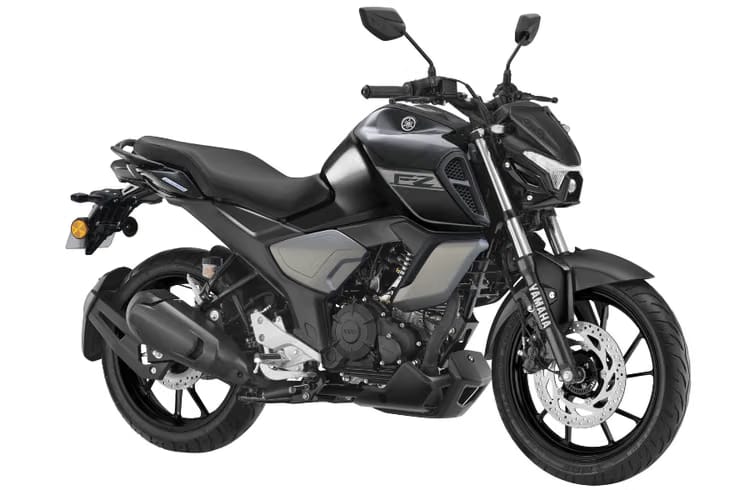
Yamaha Motor India has launched the FZ Blue Flex motorcycle in India, expanding its alternative-fuel portfolio with a flex-fuel model capable of running on ethanol-blended fuels ranging from E20 to E85. The motorcycle is priced at Rs 1,24,240 (ex-showroom, Delhi).
The FZ Blue Flex is powered by the company's 149cc, air-cooled, fuel-injected engine and produces 8.6 kW of power and 12.8 Nm of peak torque, paired with a five-speed gearbox. Yamaha said the motorcycle has been engineered to operate across multiple ethanol-blend levels as India expands the use of biofuels in the transport sector.
Yamaha Launches Aerox E Electric Scooter
BMW Becomes India’s No.1 Luxury Carmaker In H1 2026: Vahan Data
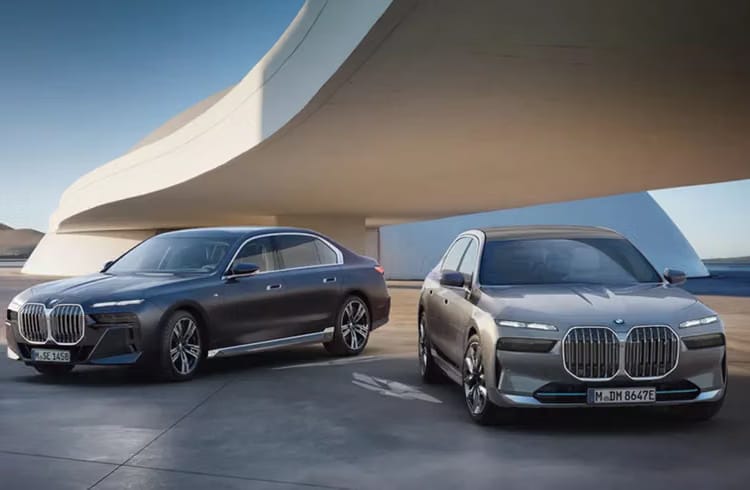
BMW Group India has emerged as India’s largest luxury carmaker in the first half of 2026, overtaking long-time market leader Mercedes-Benz after registering 10,043 vehicles (including MINI) compared with Mercedes’ 9,472, according to Vahan registration data. BMW grew 15% year-on-year, compared to the overall luxury market growth of only 4%, while Mercedes’ registrations declined 3%, allowing BMW to capture a 38% share of the luxury car market.
Mercedes-Benz's retail performance was influenced by supply-side constraints. Strong demand for diesel models and the newly launched CLA could not be fully met due to limited availability, whereas BMW entered the period with healthier inventory levels.
BMW Strengthens Luxury EV Leadership as EV Mix Rises to 26%, Sells 2,359 EVs in H12026
MINI India Reports 70% Growth in H1 2026 Sales
Delhi EV Policy: BMW Calls for State EV Policies to Align With Centre, Flags Risk of Tax Arbitrage
BMW Group India has called for greater alignment between state and central electric vehicle (EV) policies, after Delhi's new EV Policy restricted road tax and registration fee exemptions to electric cars priced below ₹30 lakh, a move that has drawn criticism from luxury carmakers despite their support for the broader objective of accelerating electric mobility. BMW cautioned that varying state-level incentives could distort buying behaviour and encourage customers to register vehicles in neighbouring states offering more favourable tax regimes.
Mercedes-Benz India Flags Fuel Adulteration Concerns as E20 Rollout Gathers Pace
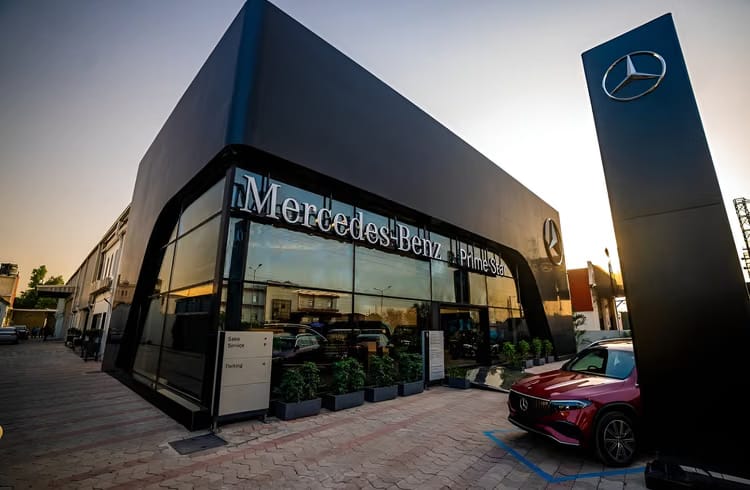
As India pushes ahead with higher ethanol blending to reduce crude oil imports and emissions, Mercedes-Benz India is seeing growing customer anxiety around E20 fuel due to suspected fuel adulteration at some retail outlets. Mercedes-Benz India Managing Director and CEO Santosh Iyer said the luxury carmaker has been receiving a rise in customer queries around E20 fuel and has equipped its dealer network with FAQs to address them.
"In terms of queries, we've seen a lot of anxiety, with a lot of customers asking us and our dealerships. We have given FAQs to our dealers so that they are able to answer them. We were one of the first to get materially compliant E20 cars, as well as emission-compliant E20 cars. The new S-Class hybrid we launched in Bombay is already an E25-compliant car. So I think we, as long as the compliance levels are concerned, are not bothered," he said.
Mercedes-Benz India Posts Record Q2, H1 Sales on CLA and Top-End Demand
Delhi EV Policy: Rs 30 Lakh Price Cap Could Hurt EV Adoption, says Santosh Iyer

Mercedes-Benz India has welcomed Delhi's proposed Electric Vehicle Policy but has questioned the decision to impose additional taxes on premium electric vehicles priced above ₹30 lakh, arguing that it runs counter to the broader objective of decarbonising road transport.
Mercedes-Benz India Managing Director and CEO Santosh Iyer said the company supports the policy's overall direction but disagrees with the treatment of higher-priced EVs.
Mercedes-Benz India Signals Further Price Hike as Currency Pressure Mounts
China Commands 36% Share of India’s Auto Component Imports as Trade Deficit Widens
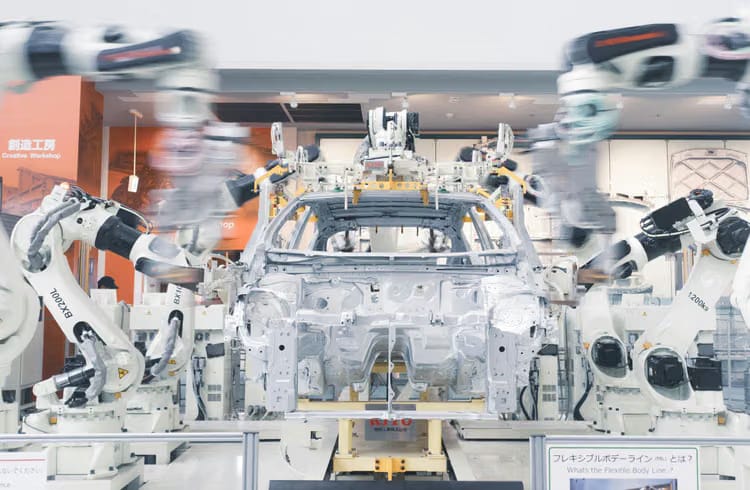
India's automotive component industry reached a historic turnover of Rs 7.6 lakh crore ($85.9 billion) in FY26, yet the milestone is shadowed by a deepening reliance on China, which now commands a 36% share of all imports. Despite the government’s aggressive Aatmanirbhar (self-reliant) push and a healthy 12.7% growth in domestic production, the sector has slipped back into a trade deficit of $1.37 billion. This deficit is primarily driven by a 13% surge in imports, totalling $25.4 billion, which outpaced a modest 5% growth in global exports.
In comparison, China's share of automotive components stood at 32% in FY25 and around 30% in FY24.
Auto Component Exports Rise 5%, ACMA Expects Trade Deals to Drive Next Growth Phase
Uno Minda to Expand Into Four-Wheeler Passenger Vehicle Seating Market
Indian Auto Component Industry Grows 12.7% to INR 7.6 Lakh Crore in FY26
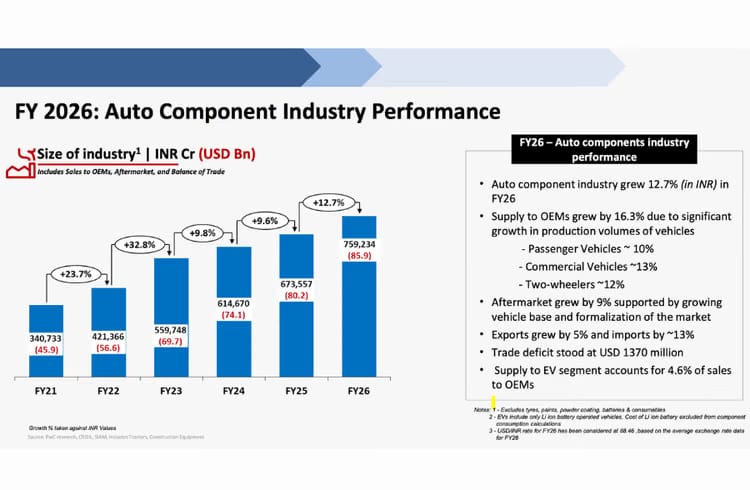
The Indian auto component industry recorded a turnover of INR 7.60 lakh crore (USD 85.9 billion) in FY2025-26, registering a 12.7% year-on-year increase, according to the latest Industry Performance Review released by the Automotive Component Manufacturers Association of India (ACMA). The industry's growth was supported by higher domestic vehicle production, sustained investments in manufacturing capacity and technology, and continued export demand.
Domestic EV Component Market Projected to Reach ₹3.55 Lakh Crore by 2032: Report
ACMA Identifies Labour as the Industry’s Primary Long-Term Headwind
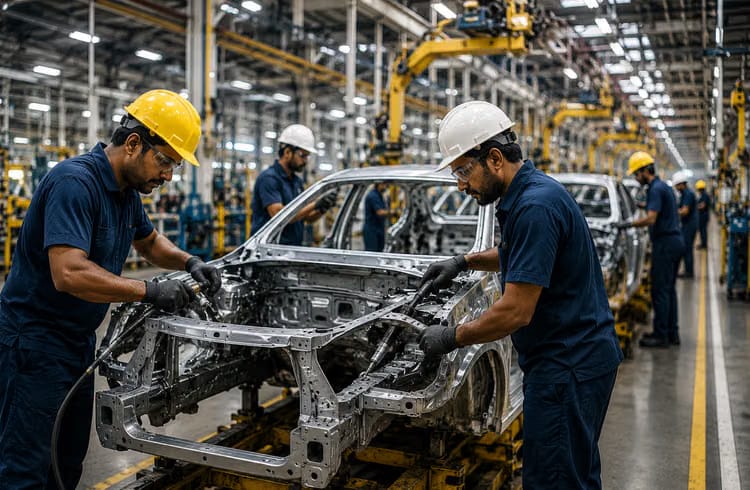
Even as the Indian auto components industry celebrated a record turnover of Rs 7.6 lakh crore (USD 85.9 billion) for the fiscal year ending March 2026, industry leaders are flagging the challenge of a severe and deepening labour shortage across India’s primary industrial belts, which threatens to dampen the growth momentum.
Vinnie Mehta, Director General of the Automotive Component Manufacturers Association (ACMA), characterized the current labour shortage as not limited to the automotive sector but visible across almost every industrial cluster in the country. However, the underlying pressure on shop floors is mounting.
ACMA Rebuts US Allegations of "Mistreated" Labour and "Excess" Capacities
NATRAX, NAMTECH Sign MoU To Advance Automotive Skills And R&D Collaboration
Component Industry May Need Newer Materials to Withstand Ethanol Blending
India's auto component industry registered a turnover growth of 12.7 per cent in FY26, matching the broader auto industry's growth story. However, a lurking threat looms, as ethanol-blended fuel could impact vehicle components going forward.
Amid the uproar over E20 fuel issues raised by vehicle owners on social media, Vinnie Mehta, director general of the Automotive Component Manufacturers Association of India (ACMA), said, "We don't have direct visibility of these failures." Vehicle owners typically visit service centres when facing issues rather than approaching component makers directly. Mehta added, "No member or OEM has brought this to our attention as yet."
Auto Component Makers Absorbed Cost Surge from West Asia Crisis
Auto Part Makers Drive Nearly Half of India's Auto Deals Since FY22
Auto component makers have attracted more deals than any other segment of India's automobile industry since FY22, and their stocks have beaten every other auto index over the past year, according to Equirus Capital's automobile sector tracker for June 2026.
Ancillary companies featured in 69 of the 110 mergers and acquisitions recorded in the sector between FY22 and FY27 so far, and in 19 of the 28 equity capital market transactions. They drew 46 private equity deals, trailing only two-wheeler makers, which drew 54. In all, component makers were at the centre of 134 of the 283 auto deals struck over the period.
EV Makers Take Two of Every Three Private Equity Deals
Ministry of Heavy Industries Outlines Plans to Expand Incentives for Battery Cells and Recycling
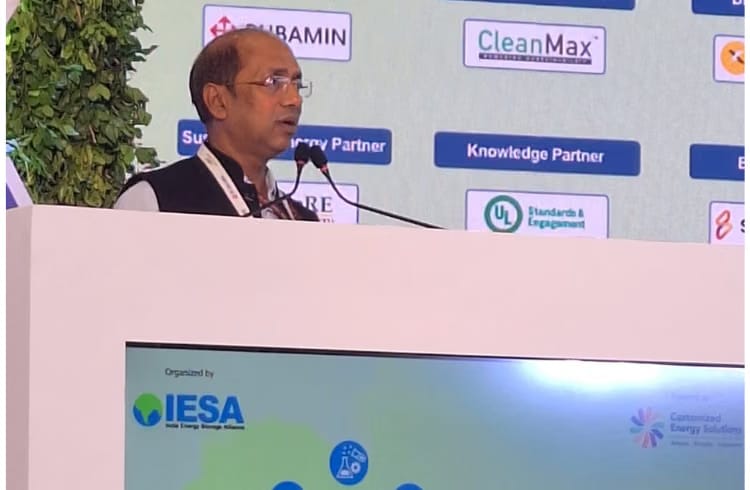
The Ministry of Heavy Industries has announced plans to expand its policy support and fiscal incentive frameworks for advanced chemistry cells and battery recycling as the domestic energy storage sector matures. Speaking at the India Energy Storage Week conference in New Delhi, Vijay Mittal, Joint Secretary at the Ministry of Heavy Industries, stated that the ministry is assessing proposals to extend existing production-linked incentive systems to encompass a broader network of market operators and clean-technology partners.
LICO Materials, Ather Energy Partner on End-of-Life EV Battery Recycling
Himadri-Backed Sicona Secures AUD 45 Million ARENA Funding for Battery Materials Facility
Battery Smart Secures USD 13 Million Debt Facility from responsAbility
India-UK FTA: DGFT Imposes Use-It-or-Lose-It Rule on Automotive Import Quotas
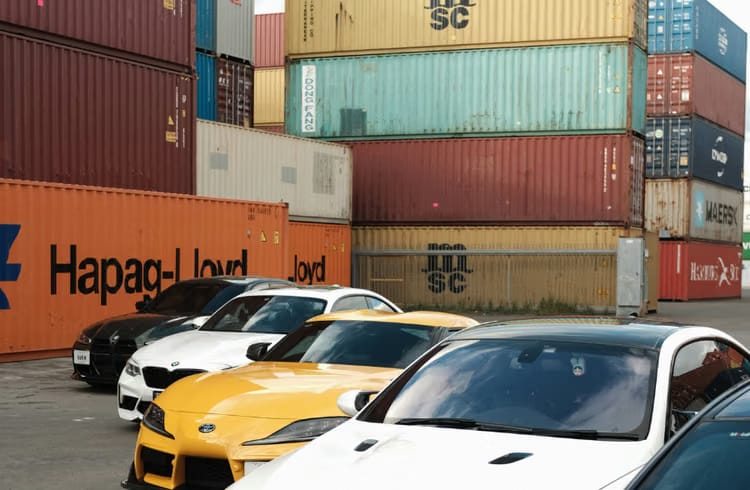
The Directorate General of Foreign Trade (DGFT) has operationalised the automotive import provisions of the India-United Kingdom Comprehensive Economic and Trade Agreement (CETA), paving the way for concessional-duty imports of up to 20,000 UK-built internal combustion engine passenger cars in the first year under the tariff rate quota (TRQ) mechanism. The notification also lays down the procedures governing quota allocation, eligibility, customs documentation and utilisation for eligible vehicle imports from the United Kingdom.
India's Aluminium Industry Calls for Urgent Notification of Long-Awaited Scrap Quality Standards
ReNew Suggests Ethanol-Like Blending Push For Green Hydrogen
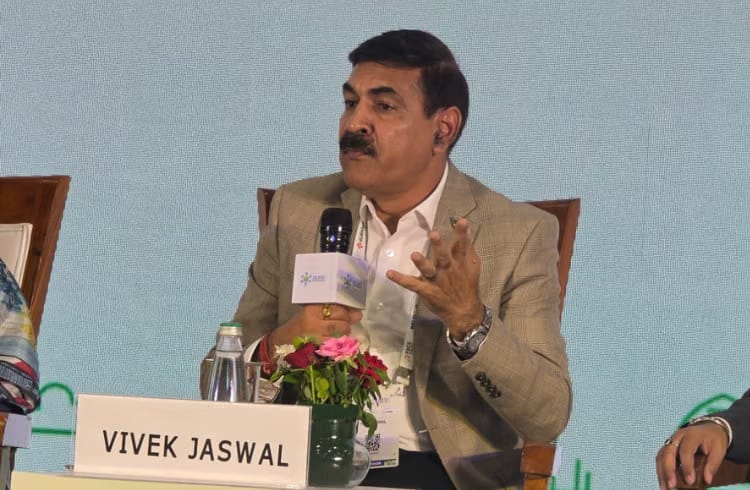
ReNew has suggested an ethanol-like blending approach for green hydrogen, arguing that creating assured domestic demand will be critical to scaling up the sector and unlocking investments.
Speaking at the 12th India Energy Storage Week (IESW) 2026, Vivek Jaswal, Executive Vice President and Head of Green Hydrogen Business at ReNew, said the industry’s biggest challenge is no longer technology but demand creation. He said a blending mechanism, similar to India’s ethanol programme, could help create a stable domestic market and accelerate adoption.
Hydrogen CVs Could Gain Scale By 2030-31: MNRE
Electric, Ethanol, Hydrogen CVs Get 7 Year Permit Exemption
The Ministry of Road Transport and Highways (MoRTH) has exempted goods and passenger transport vehicles powered by battery electric, ethanol, methanol and hydrogen from the permit requirement under the Motor Vehicles Act for a period of seven years, in a move aimed at supporting the adoption of cleaner commercial transport technologies.
The exemption has been notified under Section 66 of the Motor Vehicles Act, 1988, which governs permits for transport vehicles used to carry goods or passengers. According to the Gazette notification issued on July 6, the relaxation will remain in force for seven years from the date of its publication.
Prawaas 5.0 Concludes in Gandhinagar, Marking BOCI's 10th Anniversary
How Nippon Paint Is Reengineering Automotive Coatings for New-Age Vehicles and Fuels
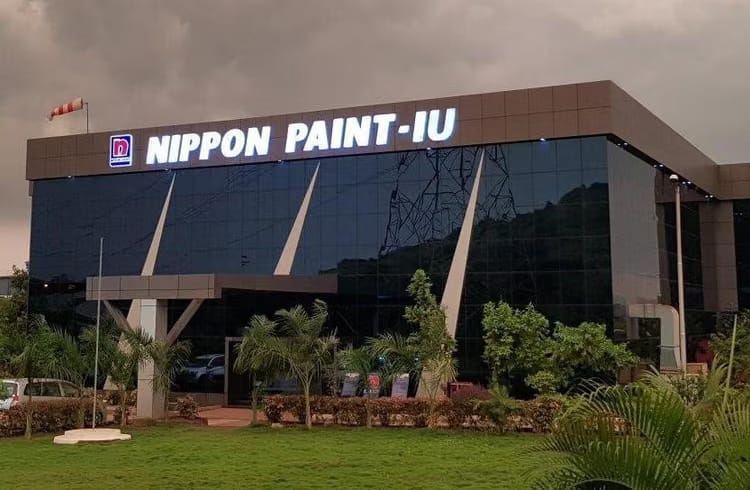
Nippon Paint India is preparing its automotive coatings business for a market in which paint will have to do more than provide colour and shine.
The company already supplies E20-compatible coatings for metal two-wheeler fuel tanks, is working with customers on E30 and E40 formulations, and says it has developed a product capable of withstanding E60. It is also using artificial intelligence to speed up colour matching, developing lower-temperature coating systems, and tapping its Japanese research teams for finishes suited to LiDAR-equipped vehicles.
JUNE SALES
Two-Wheeler Retail Sales Cross 18.28 Lakh in Record June as EV Penetration Enters Double Digits: FADA
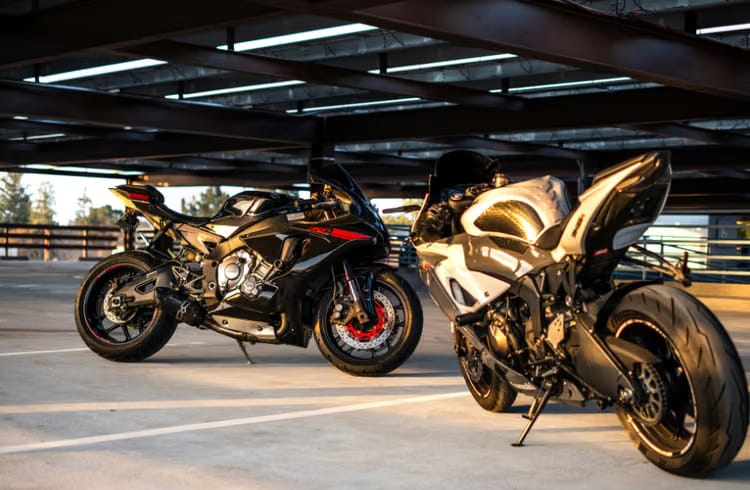
The Federation of Automobile Dealers Associations (FADA) reported that two-wheeler retail sales reached a record 18.28 lakh units in June 2026, marking the highest-ever June performance for the segment. Retail volumes grew 21.22% year-on-year from 15.08 lakh units in June 2025, although sales slipped marginally by 0.89% compared with May's 18.45 lakh units, reflecting the impact of a delayed and uneven southwest monsoon on rural demand.
Passenger Vehicle Retail Sales Hit Record 4.11 Lakh in June as Alternative Fuel Share Crosses 40%: FADA
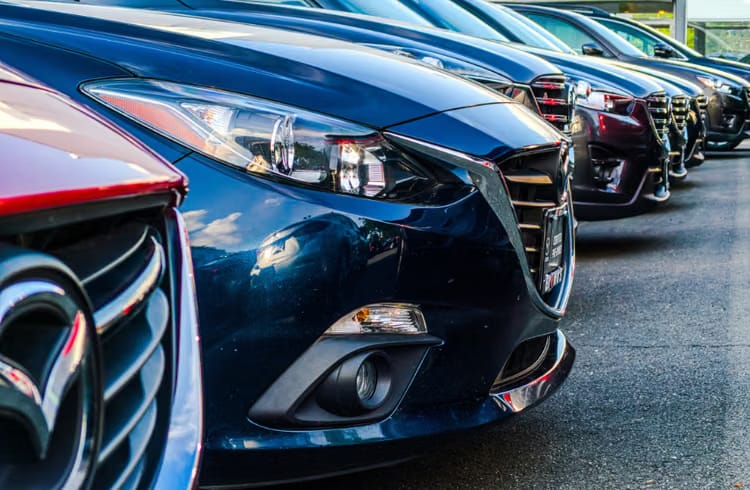
The Federation of Automobile Dealers Associations (FADA) said passenger vehicle retail sales climbed to a record 4.11 lakh units in June 2026, marking the highest-ever June performance for the segment. Retail volumes increased 28.63% year-on-year from 3.19 lakh units. They were also up 2.05% sequentially from May's 4.03 lakh units, supported by healthy bookings, improved supplies and sustained demand across alternative fuel powertrains.
EV Retail Crosses 3 Lakh Units in June as Penetration Surpasses 12%: FADA
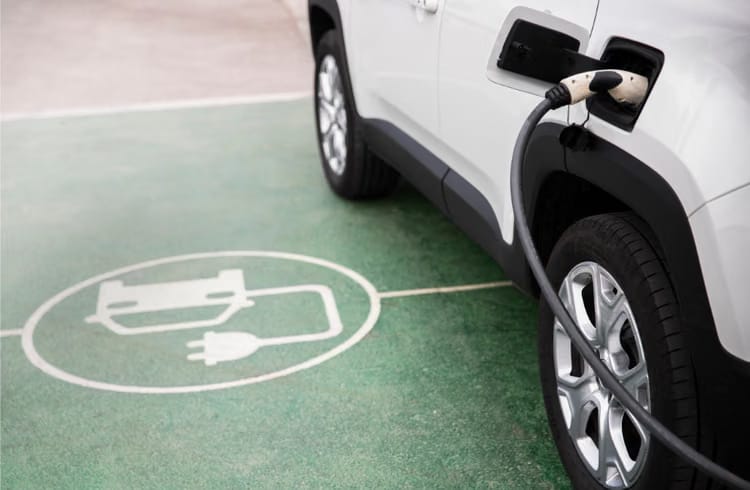
India's electric vehicle (EV) retail market recorded its strongest monthly performance to date in June 2026, with total retail sales rising to 306,220 units, up 62.7% year-on-year from 188,773 units a year earlier, according to data released by the Federation of Automobile Dealers Associations (FADA).
The growth was driven by record sales in the electric passenger vehicle (PV) and commercial vehicle (CV) segments, while electric two-wheelers (E2Ws) and three-wheelers (E3Ws) also registered healthy gains. Overall EV penetration in the domestic retail market crossed 12% for the first time, supported by rising adoption across vehicle categories.
Commercial Vehicle Retail Sales Reach Record 90,972 Units in June as Rural Demand Outpaces Urban Markets: FADA
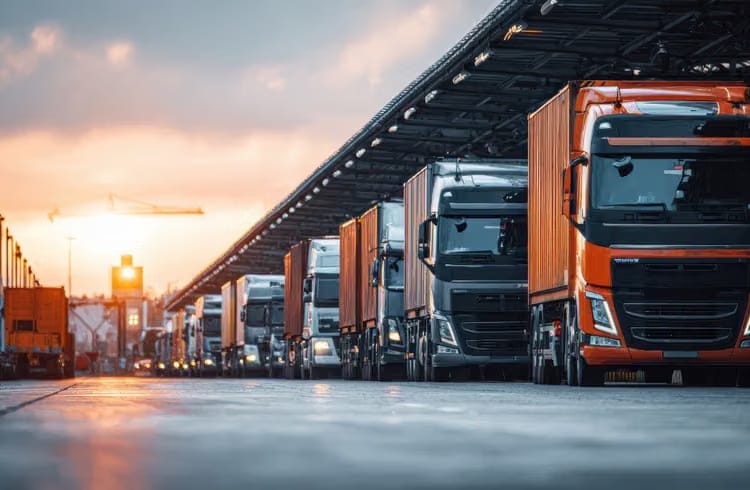
The Federation of Automobile Dealers Associations (FADA) reported that commercial vehicle (CV) retail sales reached a record 90,972 units in June 2026, marking the highest-ever June performance for the segment. Retail volumes increased 16.88% year-on-year from 77,836 units in June 2025 and rose 8.53% over May's 83,823 units, supported by steady freight activity, infrastructure spending and improved vehicle availability.
Tractor Retail Sales Climb 25% to Second-Best June on Record Ahead of Kharif Season
LONG READS
How Mercedes-Benz's Bengaluru Hub Ended up Driving its Global Software Backbone
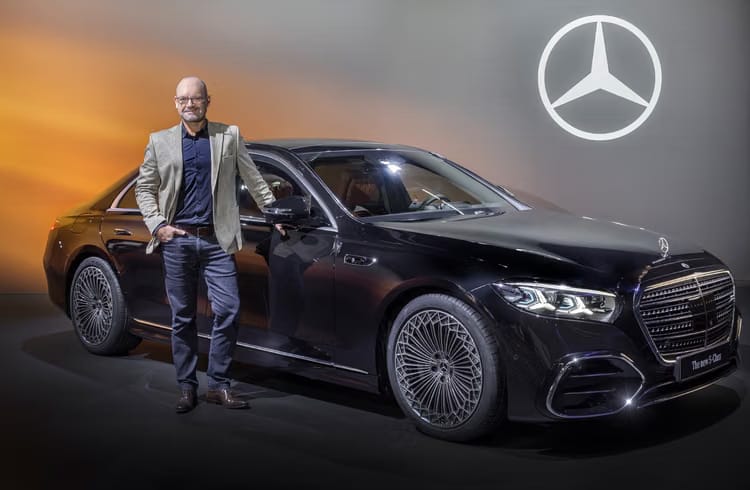
"There is a bit of India in every Mercedes."
For Dr Jörg Burzer, Member of the Board of Management of Mercedes-Benz Group AG responsible for Development and Procurement, the statement reflects the growing role Indian engineers play in developing technologies that are becoming increasingly central to the future of the automobile.
“We can say that there is a bit of India in each and every Mercedes because the competence level is so high,” Burzer told Autocar India and Autocar Professional during his visit to India for the launch of the all-new S-Class.
Upping the Game: Tata Motors' Investment Plan for EVs, Hatchbacks and Capacity Expansion
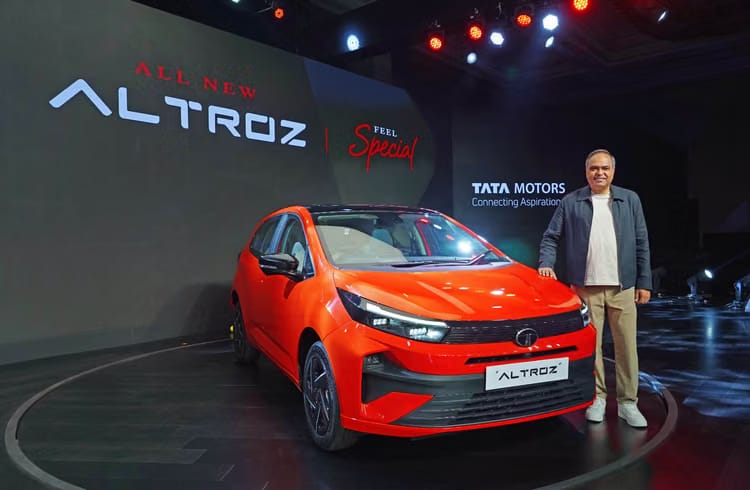
Tata Motors is entering a decisive phase in its passenger vehicle journey, backing an aggressive product pipeline with higher investments, fresh manufacturing capacity and a renewed focus on electric mobility. The strategy comes as the company seeks to defend market share while preparing for the next phase of industry growth.
This includes a substantial increase in spending on new products, electric vehicles and manufacturing infrastructure. The automaker is preparing to launch multiple products across powertrains while expanding production capacity. The strategy reflects broader shifts reshaping the Indian passenger vehicle market - rising fuel prices, changing customer preferences, the stabilisation…
EXPERT VIEWS
Beyond EVs and Ethanol: Can India Balance Energy Security, Consumer Value and Sustainable Mobility?
India's mobility transition is frequently discussed through the lens of electric vehicles, battery technology, and charging infrastructure. Yet one of the country's most significant transportation transformations may already be happening at fuel stations across India.
Over the last decade, ethanol blending has evolved from a niche energy-security initiative into a major national program influencing fuel policy, agriculture, vehicle engineering, and energy economics. Having achieved the rollout of E20 petrol ahead of schedule, India is now entering the next phase of the debate—not whether ethanol blending should continue, but how far it should go.
GST's Next Frontier: From Rate Rationalisation to Credit Optimisation
Nine years after its rollout, India’s Goods and Services Tax (GST) has moved decisively beyond its initial implementation challenges into a phase of consolidation and forward-looking reform. Deloitte’s GST@9 Survey, based on insights from 1,096 senior executives across eight industries, reflects growing confidence in the regime and a materially more positive industry perception than in previous years.
The GST 2.0 reforms, introduced in September 2025, were particularly significant for the FMCG and automotive sectors. Passenger vehicles under four metres moved from a 28 per cent rate to 18 per cent, the luxury vehicle bracket was restructured to a flat 40 per cent rate and the 5 per cent concessional rate for electric vehicles was retained. Similarly, GST rates were reduced to 5 per cent for various food products, textile products and other FMCG products. This was one of the most consequential tax interventions since GST was introduced in 2017. The impact was visible almost immediately with sales seeing a strong uplift in the festive quarter.
FADA Intensifies Push to Recover ₹2,500 Crore Stuck in Auto Dealers' Tax Credit
ENTRY, EXIT, ELEVATION
Skoda Auto Volkswagen India Reshuffles Sales and Marketing Leadership
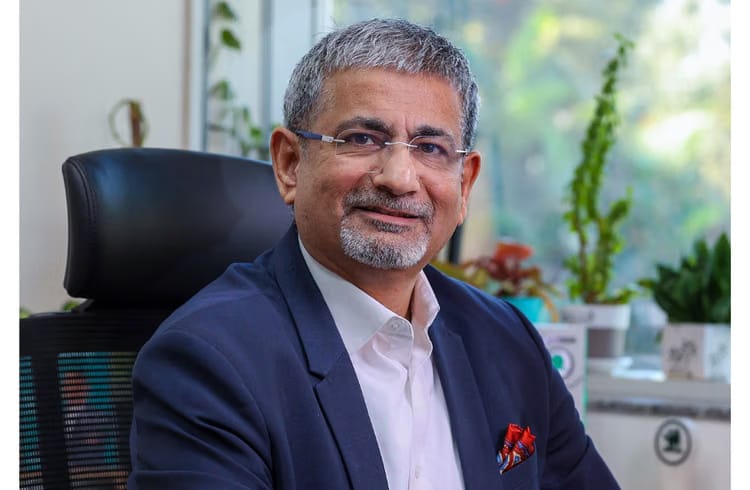
Škoda Auto Volkswagen India Private Limited (SAVWIPL) has announced a leadership transition in its sales, marketing and digital division, with Executive Director Jan Bures set to move to a new role at Volkswagen AG from September 2026.
Following Bures' departure, Managing Director and CEO Piyush Arora will take on the additional responsibility of Executive Director – Sales and Marketing for the Group's India operations. The company said the revised leadership structure is intended to strengthen strategic alignment, accelerate decision-making and improve accountability across the organisation.
Hala Mobility Elevates Shivam Agarwal as Chief Business Officer

RELATED ARTICLES

Hero MotoCorp invests Rs 959.99 crore in Ather Energy
 Eshisha Java
 26 Aug 2026
Hero MotoCorp has invested Rs 959.99 crore in Ather Energy through 76.19 lakh convertible warrants issued on a preferent...


SMK Typhoon Secures 4-Star UK SHARP Safety Rating
 Dev Vadchhedia
25 Aug 2026
Dev Vadchhedia
25 Aug 2026
Studds Accessories premium brand becomes the first Indian helmet manufacturer to achieve four stars in independent UK cr...

Tata Motors Passenger Vehicles Partners with Tata Communications for 5G-Enabled Sierra.ev
Dev Vadchhedia
25 Aug 2026
MOVE platform integrates with OEM's N.IO architecture to enable over-the-air updates, real-time diagnostics, and connect...