Follow us
Weekly News Wrap: Launch Fever Grips Auto Sector as Royal Enfield, M&M, Hyundai Step Up FY27 Plans
Product pipelines dominated the week as Royal Enfield, Mahindra and Hyundai lined up fresh launches, even as automakers weighed stronger PV growth, two-wheeler caution, commodity pressure and leadership changes.
 10 May 2026
 1082 Views
Share -
1082 Views
Share -


India’s automobile sector began May with a clear message from boardrooms and earnings calls: FY27 will be a year of launches, capacity build-up and sharper execution, but not without pressure from commodities, geopolitics and regulatory shifts.
Passenger vehicle makers sounded more confident than two-wheeler companies, supported by GST-led demand recovery, SUV momentum, fresh product pipelines and capacity additions. Hyundai Motor India guided for 8-10% growth in domestic and export volumes, Mahindra outlined a larger SUV and LCV roadmap through FY31, and Maruti Suzuki continued to frame growth around capacity, exports and portfolio breadth.
In two-wheelers, the mood was more mixed. Royal Enfield prepared a broad product push as rivals crowd the mid-size segment, Hero MotoCorp stepped up investment in EVs and scooters, while Bajaj Auto warned that motorcycle industry growth could cool from the post-GST spike as West Asia-related pressures begin to weigh on sentiment, fuel-linked costs and supply chains.
Here is a detailed round-up of the key developments that shaped the automotive industry during the week:
Indian Auto Industry Stares at ₹25,000 Crore Hit Due to End-of-Life Vehicle Rules
 The Indian automobile industry is facing a potential bottom-line impact of approximately ₹25,000 crore in FY2025-26, triggered by an accounting clause set off by the Environment Protection (End-of-Life Vehicles) Rules, 2025.
According to PTI, an "innocuous looking" clause in the ELV Rules, notified by the Ministry of Environment, Forest and Climate Change in January 2025, has alarmed automakers after their auditors flagged the scale of its financial ramifications.
Royal Enfield Gears Up for 18-Product Blitz as Rivals Crowd the Mid-size Segment
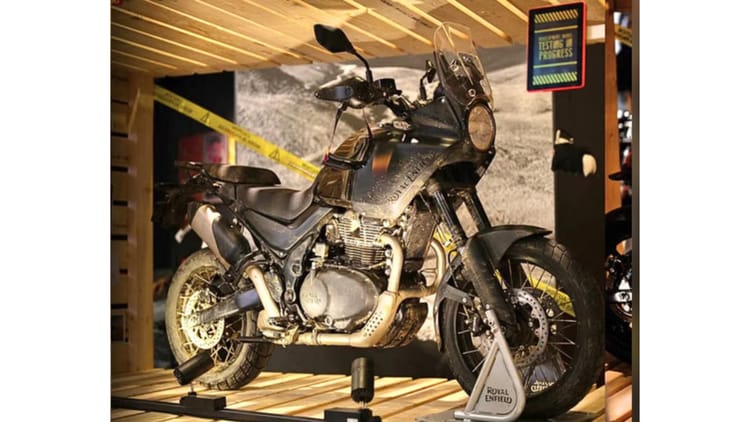 As global and domestic rivals crowd into India’s mid-size motorcycle space, Royal Enfield has been reinforcing its position, leaning on strong brand recall, scale and a steady flow of new products. With competition set to intensify further, the Eicher Motors-owned brand is planning a sharper round of product interventions this year, including a move into larger motorcycle segments.
Royal Enfield is recalibrating its product offerings with a growing set of riders, particularly in the urban areas, moving beyond utility- driven by weekend rides, touring culture and riding communities. The company is planning to expand its offering beyond its existing 650cc segment while sharpening its existing portfolio, a move that also aligns with its broader global ambitions.
Royal Enfield to set new manufacturing facility in Andhra Pradesh with Rs 2,200 crore investment: Report
 Royal Enfield is establishing a new manufacturing facility and vendor park in Andhra Pradesh with an investment of Rs 2,200 crore, as reported by The Economic Times. This development marks the motorcycle maker's first expansion outside of Tamil Nadu since it began operations there in 1955.
The new facility will be located on a 276 acre site spanning the villages of Vanelluru and Rallakuppam in the Satyavedu region of Tirupati district. The project received clearance from the Andhra Pradesh State Investment Promotion Board, which is chaired by Chief Minister N Chandrababu Naidu.
Hero MotoCorp to Double EV Capacity at Chittoor, Targets Production of 2.8 Lakh Units in FY27
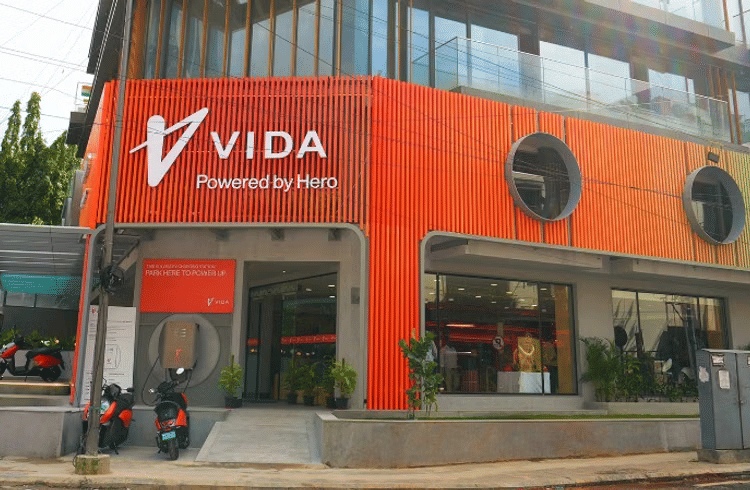 Hero MotoCorp has had a slow start in the electric vehicle race. It adopted a slow and gradual expansion in the market over the past few years, rather than being aggressive like some of its traditional competitors. But the automaker has now become a major player in the electric two-wheeler market. It became one of the two fastest-growing brands and broke into the top five players list in the financial year 2026.
As Hero MotoCorp expands its volume and market share, the automaker is preparing for its next leg of growth. Sources tell Autocar Professional that Hero MotoCorp is now planning to double its manufacturing capacity of electric two-wheelers at its Sri City (Chittoor, Andhra Pradesh) plant with plans for multiple new electric two-wheeler models under the Vida brand.
Hero MotoCorp Lines Up ₹1,500 cr Capex for FY27, to Double EV Capacity
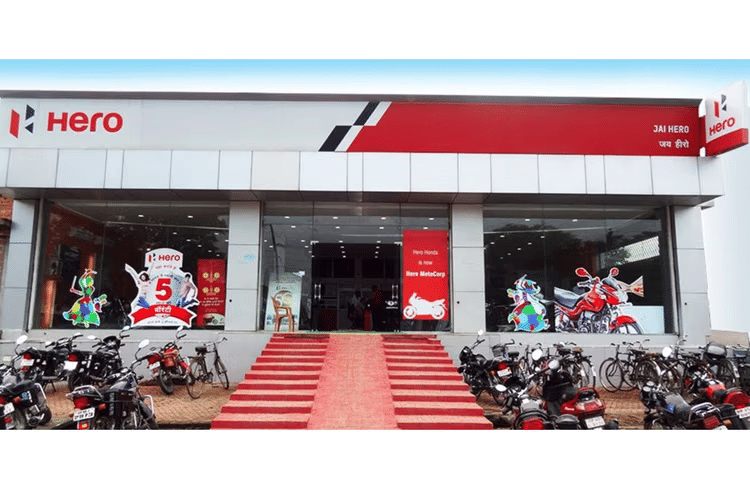 Hero MotoCorp is stepping up its investments with a planned capital expenditure of over ₹1,500 crore during financial year 2027, as India’s largest two-wheeler maker expands its manufacturing capacity in electric vehicles and high-growth scooter segments, as well as prepares for new product launches.
“This capital expenditure is going to expand our capacity in scooters, where some of our models are doing very well. We are doubling our capacity,” the automaker’s management said in a post-earnings call on Wednesday.
Hero MotoCorp Flags Near-Term Margin Pressure amid Higher Input Cost
India’s leading two-wheeler maker Hero MotoCorp has flagged near-term pressure on its margins as rising commodity, fuel and labour costs push up manufacturing expenses. The automaker’s management said volatility in raw material prices has made the business environment difficult to predict.
According to the company’s Chief Executive Officer Harshavardhan Chitale, commodity headwinds started emerging in March and are expected to weigh on profitability in the short term, even as demand momentum in the domestic two-wheeler market remains stable.
Hero Motocorp Expects High Single-digit Growth for 2-wheeler Industry in Fy27
Bajaj Auto Sees Motorcycle Growth Cooling To 7-9% Amid West Asia Shock
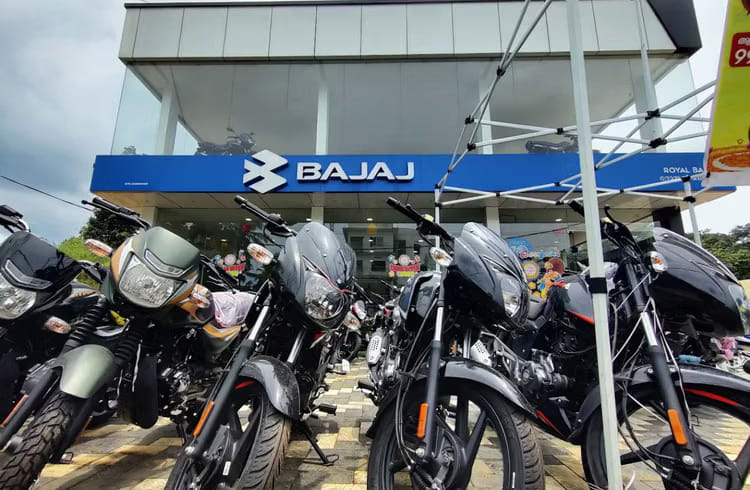 Bajaj Auto Ltd expects near-term motorcycle industry growth to moderate to around 7-9% from the over 20% growth seen in the fourth quarter, as the West Asia conflict starts weighing on supply chains, fuel-linked costs, consumer sentiment and retail prices.
Rakesh Sharma, Executive Director, Bajaj Auto, said April marked an inflection point for the industry after a strong March quarter, as the West Asia crisis led to LPG shortages, supply-chain disruptions, softer consumer sentiment, retail price inflation and outbound logistics complexity, particularly in overseas markets.
Bajaj Auto Sees Strong EV Growth as Fuel Price Concerns Lift Demand
Bajaj Auto To Introduce New Pulsars, Chetak Variants Ahead of Festive Season
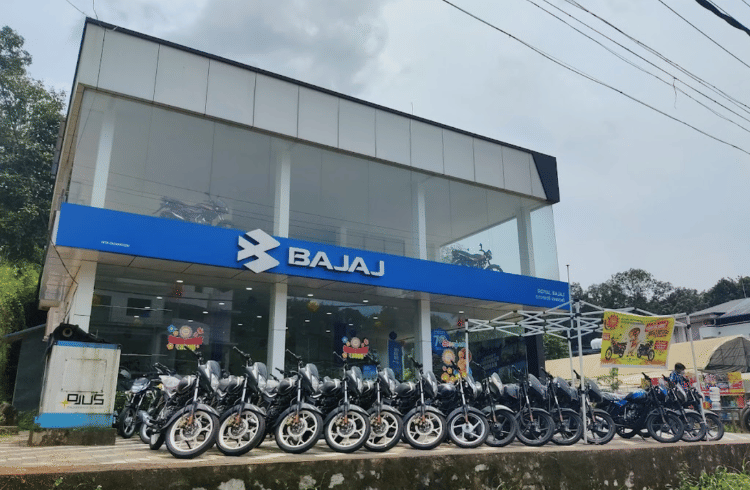 Bajaj Auto Ltd is preparing a fresh product push in FY27, with new motorcycles in the 125cc-plus segment and additional electric scooter variants under the Chetak brand, as it looks to strengthen its position in premium motorcycles and electric mobility ahead of the festive season.
Rakesh Sharma, Executive Director, Bajaj Auto, said the company will sustain the pace of product interventions in FY27, with the Pulsar range remaining a key focus area. This comes after the Pune-based company refreshed the Pulsar series through eight interventions over the past few months.
“You will see the same rate continuing and we want to accelerate the introductions before the festive season,” Sharma said during a media call, adding that there would be “some good hectic activity” in the coming months.
Bajaj Auto Approves Rs 5,633 Crore Buyback for Up to 1.68 Percent Equity
‘The Future is Disorder’: M&M's Anish Shah says Disruption is the New Normal
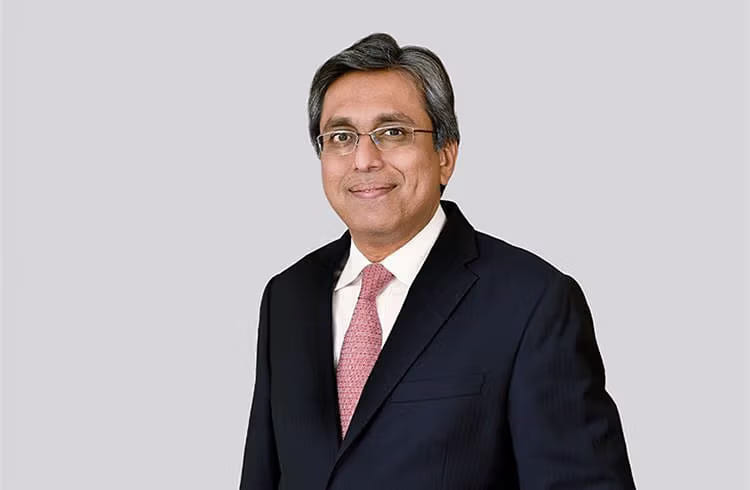 When Mahindra Group CEO & Managing Director Anish Shah stepped into the top job five years ago, the brief was straightforward: clean up the portfolio, tighten capital allocation and improve returns. What followed was anything but.
A pandemic, supply chain breakdowns and geopolitical tensions have since reshaped the operating environment. For Shah, the bigger shift is not any one crisis, but how frequently they now occur.
“The future is disorder… this is the best possible time to be alive, when almost everything you thought you knew is wrong,” he said, reflecting on the group’s journey at the end of his first term.
M&M Deepens Supply-Chain Checks, Identifies High-Risk Components Amid Global Volatility
Mahindra to Launch 15 New SUVs, 10 New LCVs by FY31
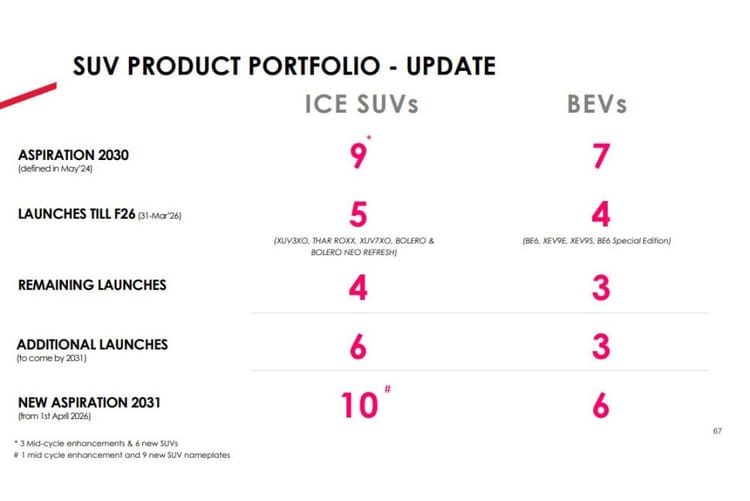 Mahindra & Mahindra has updated its product roadmap through FY31, stepping up its push in SUVs and light commercial vehicles as it looks to sustain mid-to-high teens growth in its core auto business, alongside gains in volumes and market share.
The company now plans to introduce around 15 new SUVs, including 9 petrol and diesel models and 6 electric vehicles, along with one mid-cycle update in its ICE portfolio, M&M’s Executive Director and CEO for Auto and Farm Sector Rajesh Jejurikar said.
Mahindra to Ramp Monthly SUV Capacity by 14,000 Units in FY27
Mahindra eyes EV mix of 13–17% by March 2027 to meet CAFE norms
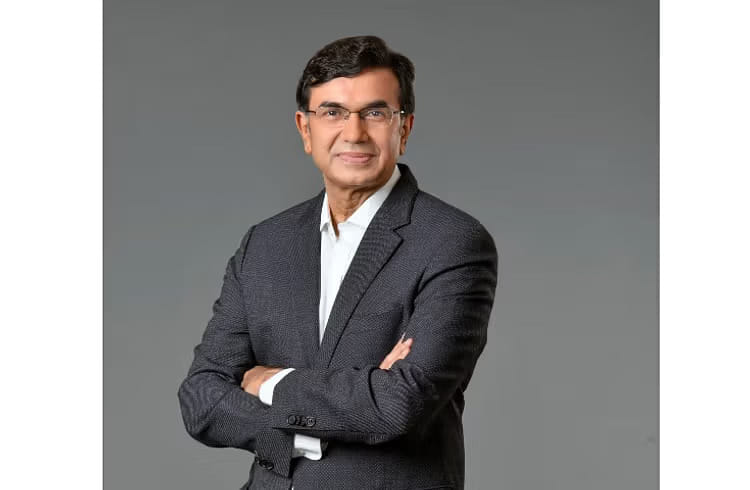 Mahindra & Mahindra expects to meet upcoming fuel efficiency regulations by steadily increasing the share of electric vehicles in its SUV portfolio, aligning its product mix with evolving CAFE (Corporate Average Fuel Efficiency) requirements.
Rajesh Jejurikar, Executive Director & CEO (Auto and Farm Sector), Mahindra and Mahindra said that the company is targeting EV penetration of 13–17% in its passenger vehicle portfolio by March 2027, based on current demand trends and planned product rollouts. “We need to be somewhere between 18–20% over a five-year period,” Jejurikar added.
Mahindra Says April Output Hit by Supplier Shortfalls, Expects Recovery in May
Mahindra Expects Mid-Teens Growth for Its SUVs in FY-27, Tractor Market Growth in Mid-Single Digits
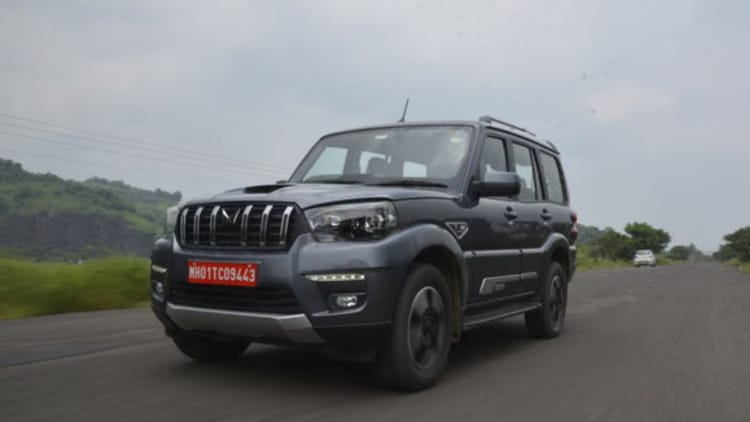 Mahindra & Mahindra expects its SUV business volume to sustain momentum into FY27 even as growth in the farm sector is likely to remain moderate, reflecting the cyclical nature of rural demand.
While speaking to media after announcing the company’s FY26 results, M&M’s Executive Director & CEO for Auto and Farm Sector Rajesh Jejurikar said M&M is “aiming for mid to high teens growth” in its SUV portfolio, while the tractor industry is expected to grow in “mid-single digits”.
Mahindra Sees Healthy Demand Despite Fuel Price Risks; No Production Hit from Gas Supply Issues
M&M Eyes Rs 4,100 Cr Incremental Revenue in FY27 from Higher AI Adoption
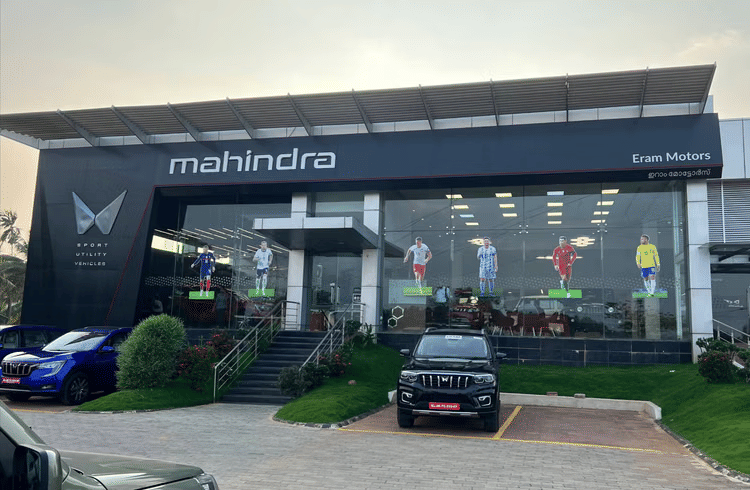 Mahindra & Mahindra expects to generate additional Rs 4,100 crore in revenue from increased adoption of artificial intelligence in its automotive business, according to its Group Chief Executive Officer and Managing Director Anish Shah. The automaker sees AI as a tool that can improve all its businesses, with clear benefits already visible.
Shah noted that teams are using it in daily work to save time, improve quality and handle customer interactions better. “This is something that has the ability to transform all our businesses… we see huge benefits on a day-to-day basis in small things, on larger projects as well.”
Hyundai Motor India Marks 30 years With 13.5 Million Units Sold; Outlines ₹45,000 Crore Future Investment Plan
 Hyundai Motor India Limited (HMIL) on Tuesday marked its 30th foundation day, reporting cumulative sales of over 13.5 million units since its inception in 1996, including 9.6 million units in India and more than 3.9 million exports to over 150 countries.
The company said it has invested ₹40,700 crore in India to date and outlined plans to invest a further ₹45,000 crore between FY26 and FY30 to expand manufacturing, accelerate electrification, and develop future mobility solutions.
Hyundai Motor India to Invest ₹7,500 crore in FY27, Expand Capacity to 1.14 Mn Units
Hyundai Plans Two New SUVs to Take On Maruti Victoris and Tata Nexon EV
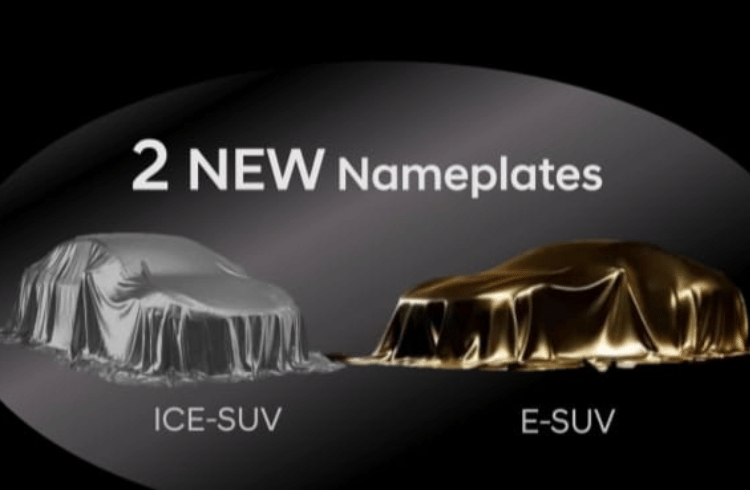 Hyundai Motor India is preparing two new SUVs for the Indian market in 2026 as it looks to regain market share amid growing competition from Maruti Suzuki and Tata Motors.
The company is working on an ICE crossover internally codenamed Bc4i and a new electric SUV, HE1i, both of which were discussed by Hyundai management during recent interactions with media and analysts following its FY26 earnings. These two new SUVs begin the wave of over 2 dozen new product onslaught the company announced last year.
Hyundai Confident on CAFE 3 Compliance, Plans Local Dedicated EV in FY27
‘Post-GST Growth in Sedans and Hatches Not Really a Sustainable Trend’: Hyundai Motor’s Tarun Garg
 The recent rebound in India’s hatchback and sedan segments following the GST rate rationalisation may not represent a long-term structural shift, according to Tarun Garg, Managing Director and Chief Executive Officer of Hyundai Motor India. Speaking about changing market dynamics after the GST revision in September 2025, Garg said the recent growth across body styles has improved overall industry sentiment and plant utilisation, but SUVs are expected to continue dominating the market going forward.
“So, before GST reform, the mix was heavily skewed in favor of only cars more than 4 meters but now we are seeing a growth across segments. But I don’t think this is a trend as such. We’re going to introduce two new models this year which are both going to be SUVs,” Garg said.
Hyundai Motor India Targets 8-10% Growth in FY27, Guides for Improved Margins
Carmakers Enter FY27 with a Stronger Growth Outlook than Two-Wheeler Makers
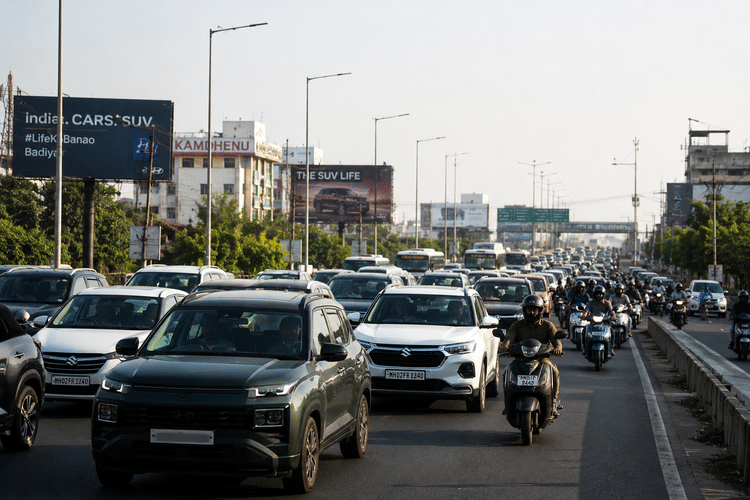 India’s passenger vehicle makers are entering FY27 with a stronger growth outlook than two-wheeler manufacturers, highlighting the widening gap between the country’s resilient SUV-driven car market and a slower, more uneven recovery in motorcycles and scooters. Commentary from leading listed automakers following their March-quarter earnings suggests most passenger vehicle companies are targeting double-digit growth this fiscal year, supported by new model launches, production capacity expansion and sustained demand for utility vehicles.
Indian Automakers on Alert for Another Round of Price Hikes Amid Rising Commodity Costs & Supply Chain Pressures
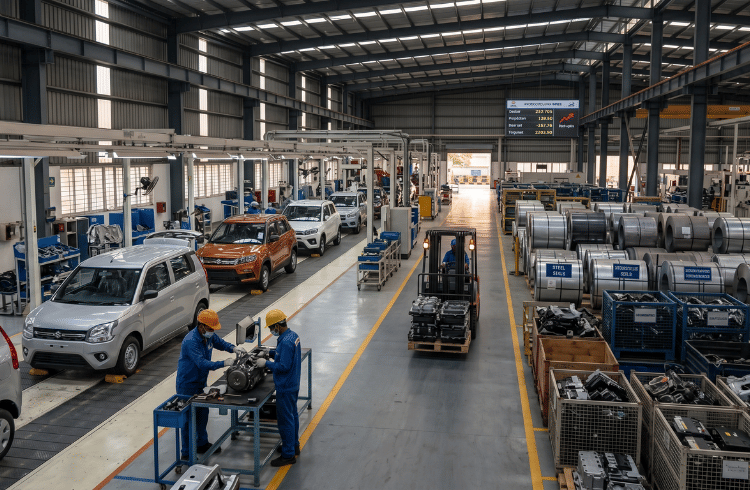 India’s automakers could be staring at another round of vehicle price hikes as rising commodity costs, supply chain disruptions and geopolitical tensions begin putting pressure on their margins, despite demand recovering following the GST rationalisation in September 2025. Inflation in key raw materials such as steel, aluminium, copper and platinum group metals is forcing companies to revisit pricing strategies, despite ongoing efforts to offset costs through localisation, value engineering and operational efficiencies.
JLR India Cuts Prices on Imported Range Rover SV Models Ahead of India-UK FTA
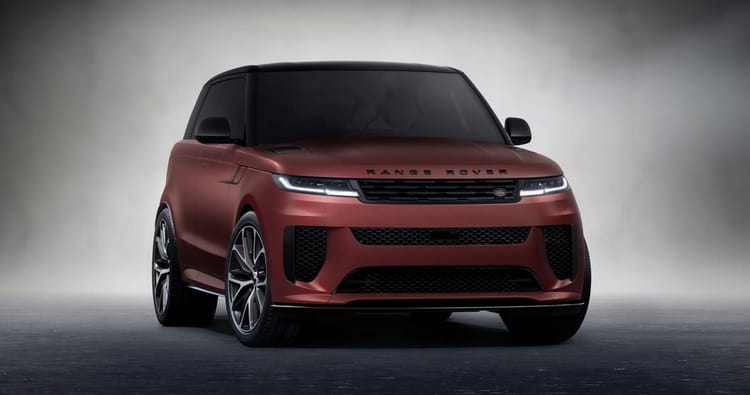 JLR India announced a price reduction for its imported Range Rover models on May 5, 2026, in anticipation of the upcoming Free Trade Agreement between India and the United Kingdom. The price adjustments specifically apply to Completely Built Units imported directly from the UK.
The flagship Range Rover SV has been repriced to Rs 3.50 crore, down from its earlier price of Rs 4.25 crore. The Range Rover Sport SV now carries a starting price of Rs 2.35 crore, a reduction from the previous Rs 2.75 crore. Alongside the price cuts, JLR India enhanced the standard equipment list for the Range Rover SV, which now includes SV Ultra Metallic paints in both gloss and satin finishes for the first time. The company noted that the revised ex showroom prices are effective immediately to reflect the anticipated duty structure enabled by the trade agreement.
Tata Motors Introduces Curvv EV SeriesX Variants Starting at Rs 16.99 Lakh
Ather Energy To Launch EL Platform Scooter, Start Operations At New Plant In Aurangabad in 2026
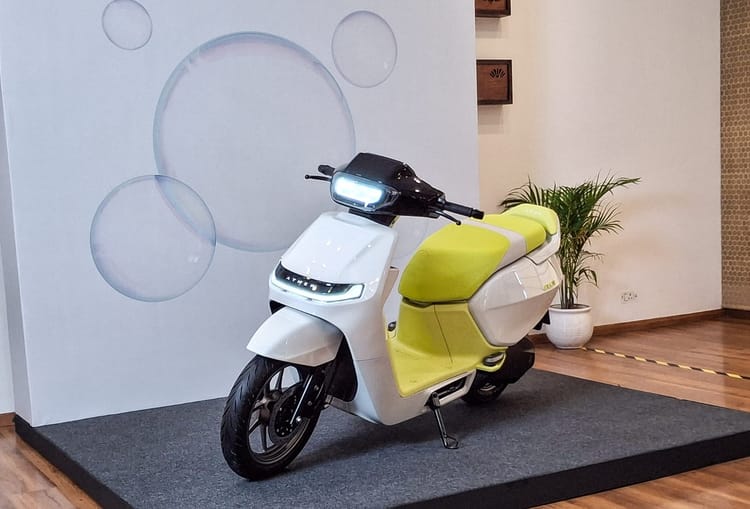 Ather Energy is betting big on its upcoming EL platform to widen its addressable market, with the first model expected around the festival season this year and production to be supported by a new factory, which will start operations before year-end.
The new plant is expected to start with a monthly capacity of about 42,000 units, adding to the company’s existing manufacturing base in Hosur as it prepares for the next phase of growth.
Ather Energy Doubles Retail, Service Network
Bharat Forge Takes ₹450-Crore EV Hit, Begins Europe Steel Restructuring
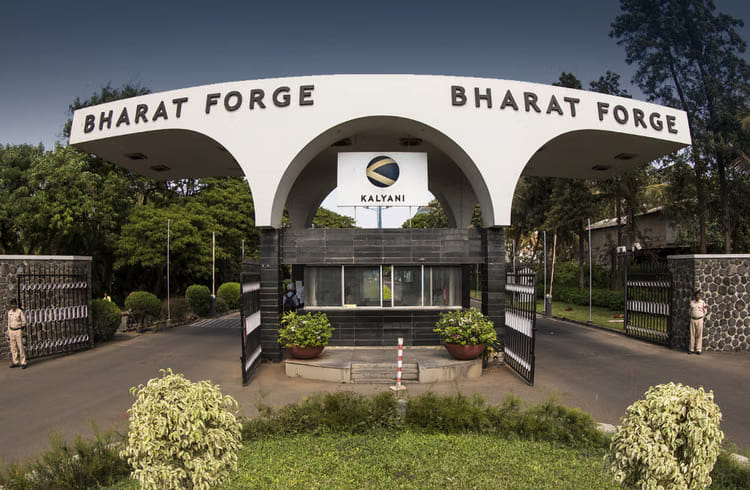 Bharat Forge Ltd has taken a ₹450-crore impairment on its investment in KPTL’s e-mobility division, signalling a reassessment of its electric vehicle strategy at a time when global EV adoption has become more uneven than initially expected.
“The Rs 450 Crores impairment during the quarter of our investments in KPTL (E-mobility division) is an acceptance of the need to take a fresh look at how we address the EV opportunity as the EV adoption globally has changed significantly,” Baba Kalyani, Chairman and Managing Director, of Bharat Forge said.
The write-down comes as several global automakers recalibrate their electrification plans amid slower-than-expected adoption in some markets, policy uncertainty and rising competition from Chinese EV makers.
Borgwarner Secures Three E-motor Programmes Across China and South Korea
Himadri Maps FY27 Growth Push with Battery Materials, Birla Tyres and Speciality Chemicals
 Himadri Speciality Chemical Ltd is preparing for its next phase of growth by expanding into lithium-ion battery materials, scaling up Birla Tyres, strengthening its speciality carbon black business and moving deeper into high-value speciality chemicals, according to the company’s investor presentation.
The company has laid out a roadmap through FY28 under which growth will be driven by its core business, full-year operations from its speciality carbon black expansion, ramp-up of Birla Tyres’ capacity in off-highway tyres, commercial vehicle, and passenger car radial segments, commercialisation of lithium iron phosphate (LFP) cathode active material, and forward integration into anthraquinone and carbazole. The company said the strategy is aimed at “high-value growth”, business resilience and sustainable profitability over the next two years.
Remsons UK Arm Secures ₹160 Crore Pedal Box Order From Global CV OEM
KPIT Technologies to Acquire Israeli Cybersecurity Firm Cymotive in Multi-Stage Deal
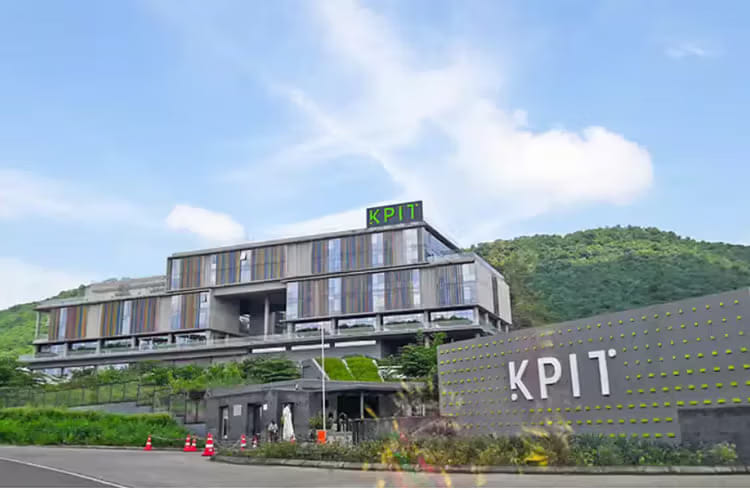 KPIT Technologies announced on May 6, 2026, that its board of directors has approved the strategic acquisition of a stake in Israel-based Cymotive Technologies.
The acquisition of Cymotive, which specializes in vehicle lifecycle cybersecurity, will be executed through a phased cash consideration. KPIT will initially invest $10 million in preference capital, a transaction expected to close by mid-June 2026. This investment is scheduled to convert into a 26 percent equity stake within eight quarters, contingent upon Cymotive meeting specific performance milestones. KPIT expects to complete a 100 percent buyout of the firm by mid-2029. The total cost for the full acquisition is projected to range between $60 million and $120 million, based on the target entity's future revenue and earnings.
Abu Dhabi Backs Motherson's Automotive Plant in KEZAD Industrial Zone
ZF Sees India Emerging as a Software-Led Aftermarket Growth Hub
 Philippe Colpron, Executive Vice President of ZF’s aftermarket division, sees India evolving into an increasingly important market for software-enabled aftermarket services, as connected vehicles, diagnostics, fleet uptime and EV servicing begin reshaping the country’s automotive service ecosystem.
Speaking during a media interaction, Colpron said India’s rapidly evolving mobility landscape, growing infrastructure and increasing vehicle complexity were creating new opportunities for the aftermarket business beyond conventional mechanical repairs.
Netradyne Acquires Moove Connected Mobility to Expand European Footprint
How BKT Is Ring-Fencing Its Carbon Future
 BKT Industries is positioning itself as more than just a tyre manufacturer. The company is aggressively scaling its carbon black business, moving from a model of internal consumption to a technology-led, market-facing strategy focused on high-margin speciality applications.
BKT has identified a critical niche in EV battery materials, where specialised carbon black acts as a conductive additive to enhance battery performance. This move places BKT deeper into the electronics and energy storage supply chains, moving away from commodity-grade products toward "performance blacks".
Flood of Used Machines Rattles India's CE Makers Amidst New Norms Overhual
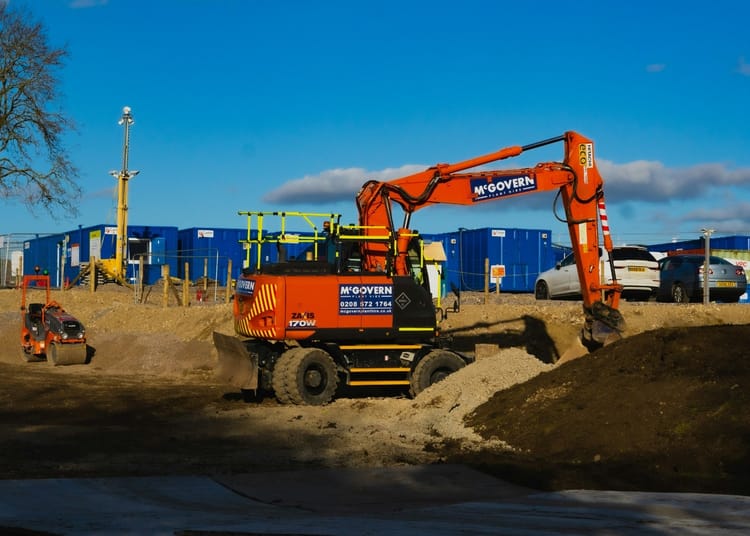 Even as the country's construction equipment (CE) industry transitions to stringent emission and safety regulations, the rising import of used CE vehicles is emerging as a key concern amongst industry players.
In recent months, there has been a noticeable increase in imports of used construction equipment vehicles (CEVs), including mobile cranes, tyre-mounted equipment, and access platforms. Driven by lower upfront costs, many of these imports are non-compliant with current emission and safety standards, posing risks to operators and the environment.
DGFT’s 50% RoDTEP Cut Sparks Export Competitiveness Concerns in CE Industry
ICEMA Projects India's Construction Equipment Volume to Grow 7% in FY27
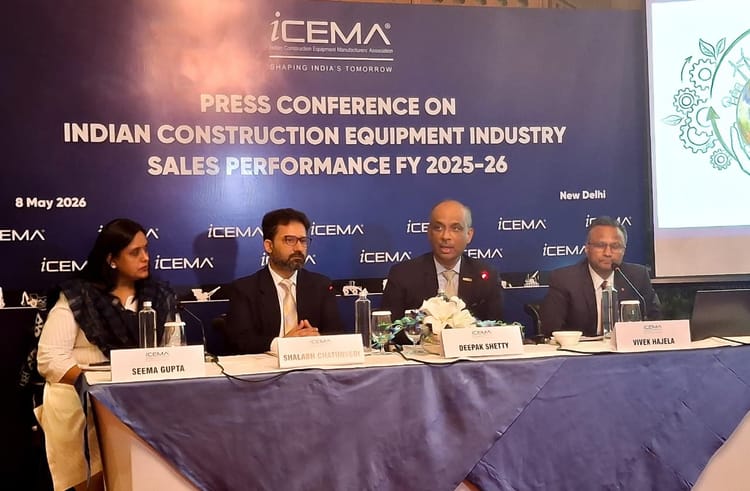 India’s construction equipment industry expects domestic sales volume to be back on the growth path during the current financial year with a high single-digit growth after demand slowed in the financial year 2026, according to the Indian Construction Equipment Manufacturers Association (ICEMA).
The industry expects domestic demand to grow about 7% in the financial year 2026-27, helped by higher government spending on infrastructure, recovery in road construction activity and increased allocation for rural projects, ICEMA President Deepak Shetty told reporters on Friday.
India to Become 2nd Largest Construction Equipment Market by 2030: ICEMA
After Its Strongest Year on Record, Escorts Kubota Steers Into a Tighter FY27
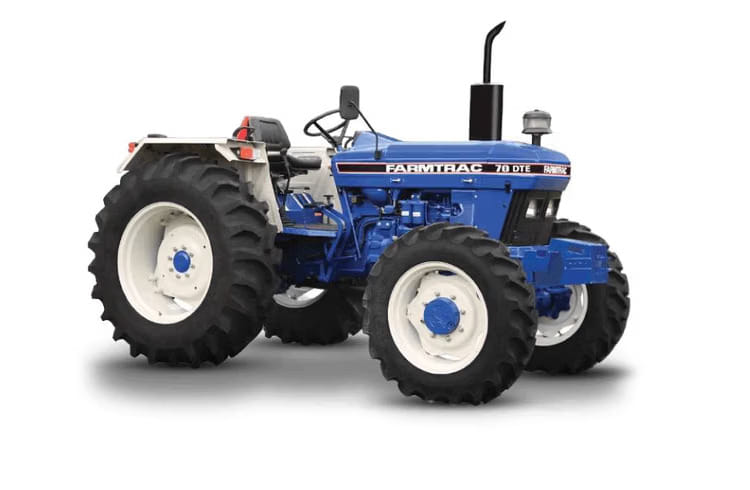 Escorts Kubota wrapped up FY26 with the strongest financial performance in its history, yet the company's management was equally candid, on its post-results call, that the road ahead would be considerably narrower. Where the overall domestic volumes crossed 11.6 lakh units in FY26, the highest the market has ever recorded, the industry grew 23.4 percent over the previous year.
Escorts Kubota, amongst most other players, was a direct beneficiary. The Faridabad-based manufacturer shipped 1,33,670 tractors in FY26, its highest volume ever, up 14.9 percent year-on-year. Growth in its core northern and central markets, however, came in at around 17 percent while southern and western regions expanded at nearly 30 percent, lifted partly by state subsidy programmes. Management cited this regional imbalance, along with constrained availability of newly launched models during peak months, as the reasons volumes grew below the industry pace.
Explainer: The New Shop Floor Reality: Decoding the 2025 Labour Codes for the Auto Industry
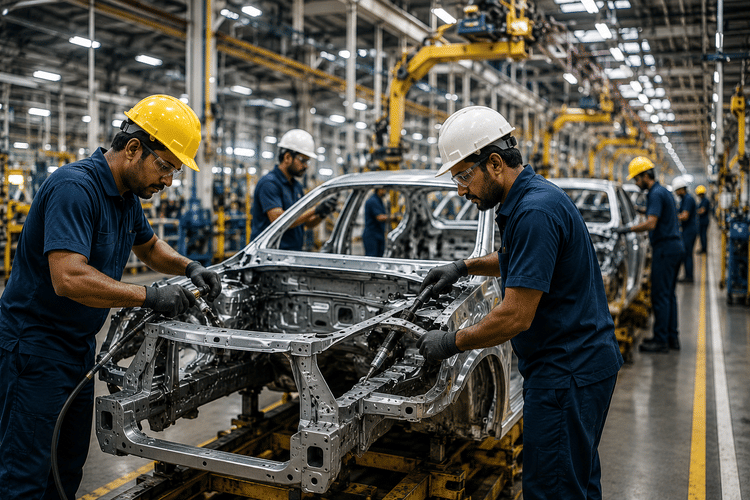 The landscape of Indian industrial relations has undergone its most significant overhaul in decades. On November 21, 2025, the Union Government officially notified four major Labour Codes: the Code on Wages, the Occupational Safety, Health and Working Conditions (OSH) Code, the Social Security Code, and the Industrial Relations (IR) Code.
While corporate circles have largely welcomed these changes as essential "reforms," trade unions view them as a fundamental shift in how the State mediates the relationship between capital and labour. To help our readers in the automotive sector, from Tier-1 suppliers to assembly plant managers, understand what has changed, Autocar Professional's Shahkar Abidi spoke with Advocate Maitreyi Krishnan of the All India Central Council of Trade Unions (AICCTU). Krishnan warns that these codes represent an "abdication by the State" of its responsibility to protect the vulnerable.
Exide’s Cylindrical Cell Lines to Start Customer Sample Deliveries by Q1FY27
 Exide Industries Ltd’s lithium-ion subsidiary Exide Energy Solutions Ltd is expected to begin customer sample deliveries from its cylindrical cell lines by the first quarter of FY27, marking an important step in the company’s transition from project execution to customer validation in advanced battery cells.
The company said the prismatic cell line will initiate product trials shortly thereafter. Exide Energy Solutions is also continuing discussions with key OEMs and energy providers to build offtake across end-consumer markets.
Ministry of Mines Selects LICO Materials to Extract Critical Minerals from Used Batteries
Indofast Energy Reports Network Growth in FY26, Eyes Expansion into Tier II and III Markets
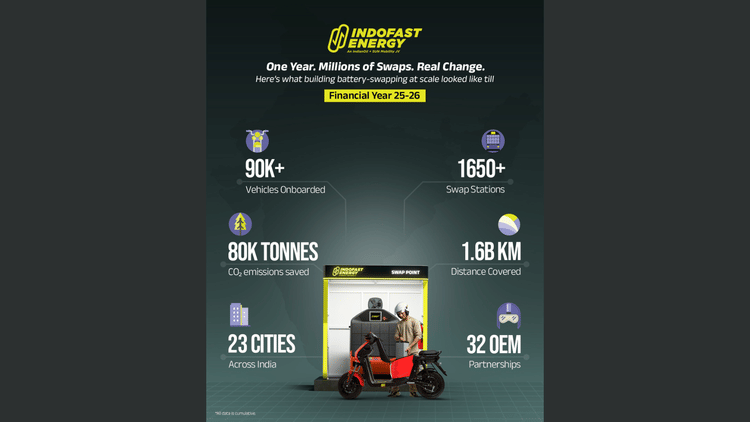 Indofast Energy, a battery-swapping network operator for electric two-wheelers and three-wheelers, closed financial year 2026 with growth across infrastructure, fleet size, and commercial partnership.
In FY26, the company deployed over 1,600 battery swap stations across 23 cities, onboarded more than 90,000 vehicles, and entered agreements with 32 original equipment manufacturers. For FY27, the company has set a target of 3,500 stations and 2.32 lakh electric vehicles on its network.
Ravi Pandit Wrote His Obituary at MIT, Then Spent a Lifetime Proving It Right
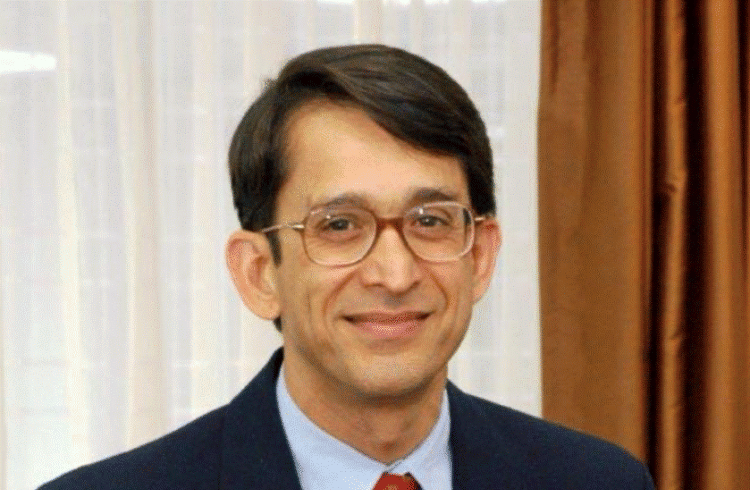 Most people spend their lives wondering what their legacy will be, but Ravi Pandit began building his in an MIT classroom fifty years ago. Assigned to write his own obituary as if he were already dead, he didn't write about profits or stock prices; he wrote about building a company that would be respected not only in India but across the world.
On May 8, 2026, as he concluded that "walk in that direction," he left behind a legacy that perfectly matched the life plan he had drafted as a young student. He was Co-Founder and Chairman of KPIT Technologies, a leading player in software-defined mobility with s a presence in 15 countries across the globe focused on automotive engineering solutions.
Ravi Pandit, KPIT Technologies Co-Founder, Passes Away
GoMechanic CEO: Our Strategy is Built Around Going the Extra Mile
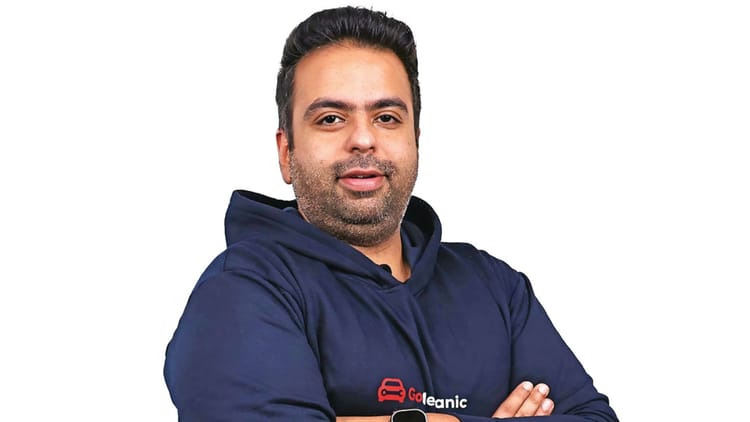 In an email interaction with Shahkar Abidi, Himanshu Arora, Co-Founder and CEO of GoMechanic, outlines how the company is strengthening its position in India’s automotive aftermarket. He discusses GoMechanic’s preparedness to lead the competition, its focus on customer trust, service quality, technology-led operations and expansion strategy as the organised car servicing market continues to grow.
AI is Helping FuelBuddy Acquire and Retain Customers: Sunil Maddala
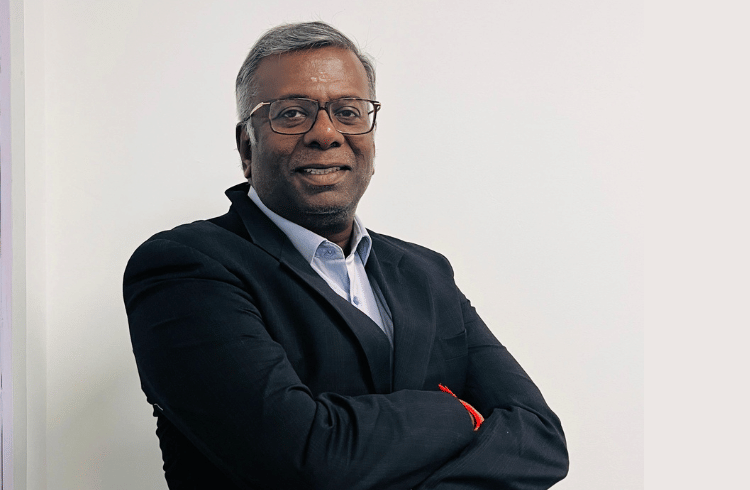 FuelBuddy is piloting newer energy solutions including battery integration and solar as it looks to expand beyond conventional fuel supply. Its current operations, however, remain anchored in doorstep delivery and management of high-speed diesel across commercial and infrastructure use cases.
“We are trying to move away from being a service provider who just provides diesel to a service provider who provides a power solution,” Sunil Maddala, CEO India, FuelBuddy, told Autocar Professional in an exclusive conversation.
2 in 3 Indians Concerned About Road Safety, Says Ipsos Global Survey
 A majority of Indians remain concerned about road safety and support a broad set of interventions spanning enforcement, education, and infrastructure, according to the Ipsos Global Mobility Survey 2026.
The survey, conducted across 31 markets, found that 63% of respondents in India are concerned about road safety in their area. This level is higher than in countries such as South Korea and Germany, where concern stands at 36%, but lower than Peru, where it reaches 76%.
drivebuddyAI Bags $2.5 Million ADAS Contract for 3,000 Trucks
Bain Capital-backed Dhoot Transmission Secures SEBI Approval for Initial Public Offering
 Auto components manufacturer Dhoot Transmission has received approval from the Securities and Exchange Board of India (SEBI) for its proposed initial public offering (IPO). The company supplies wiring harnesses, automotive switches, electronic sensors, and battery packs to original equipment manufacturers. Its product applications span across two wheelers, three wheelers, passenger and commercial vehicles, off road vehicles, and domestic appliances.
Earlier in February, Autocar Professional had reported that the company had filed draft papers with SEBI under the confidential pre-filing route. With the clearance, the company can proceed with the subsequent steps for an IPO.
Entry, Exit, and Elevation
Bajaj Auto Elevates Rakesh Sharma to Joint Managing Director
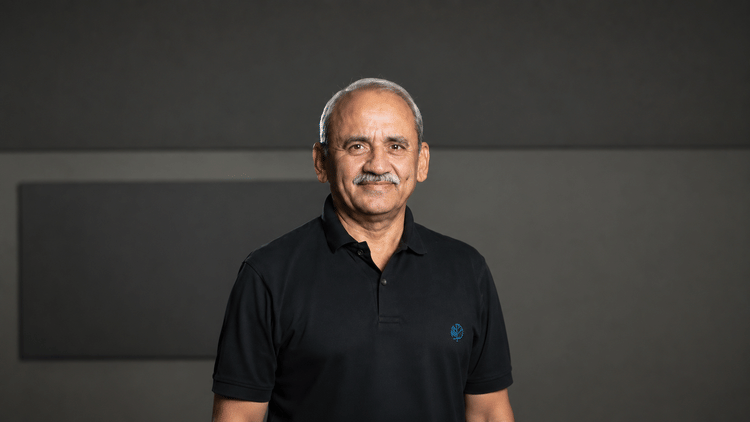 Bajaj Auto Ltd’s Board of Directors has approved the re-designation of Rakesh Sharma from Executive Director to Joint Managing Director of the company. The appointment takes effect from June 1, and will run until March 31, 2029. It remains subject to formal approval by the company's shareholders, which is expected to be sought at a forthcoming general meeting.
The decision was taken at a board meeting held at the company's registered office in Akurdi, Pune, following a recommendation from the Nomination and Remuneration Committee — the body responsible for evaluating senior leadership appointments and remuneration structures at the company.
Volvo Eicher's Sachin Agrawal to Join Hero MotoCorp as CTO
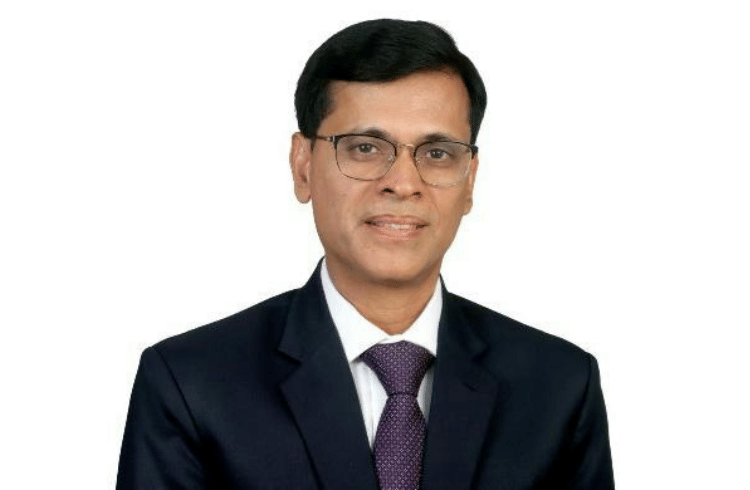 Hero MotoCorp has appointed Sachin Agrawal as its new Chief Technology Officer, with the transition taking effect on May 21, 2026. Agrawal will succeed Vikram Kasbekar, who is stepping down from the technology role but will remain on the company's board as an Executive Director.
In his new position, Agrawal will lead research and development operations across the Hero Centre for Innovation and Technology as well as the Hero Tech Centre Germany. His mandate includes advancing the automaker's initiatives in next generation mobility, electrification, and alternative fuels.
Uno Minda Appoints Vivek Joshi as CEO of Light Metal and Powertrain Systems
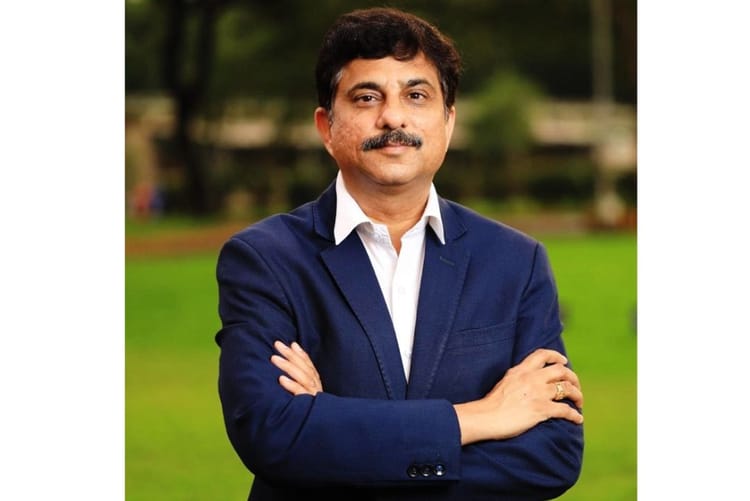 Uno Minda has appointed Vivek Joshi as Chief Executive Officer of its Light Metal and Powertrain Systems (LPS) domain, the company said on Tuesday.
Joshi brings experience in die-casting technologies, process engineering, and lean manufacturing, with a track record spanning operational improvement and manufacturing innovation. In his new role, he will be responsible for driving strategy, execution, and growth across the LPS business, which forms a key part of Uno Minda’s automotive component portfolio.
Greaves Cotton Appoints Vinay Pawar as Group CTO
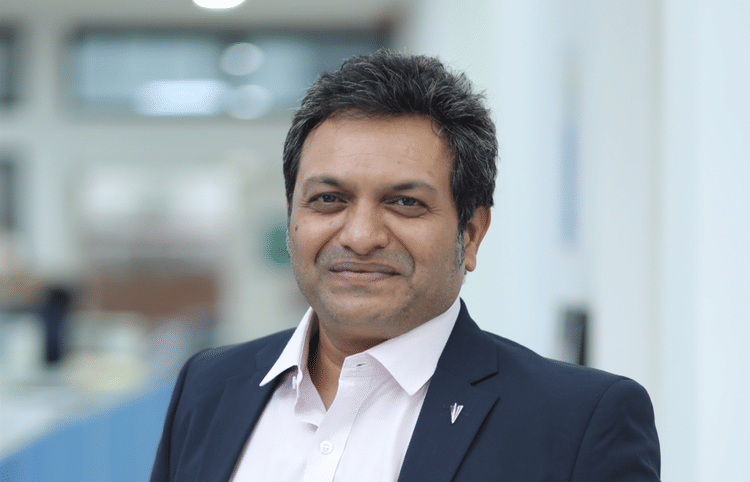 Greaves Cotton Ltd has appointed Vinay Pawar as Group Chief Technology Officer, effective May 4, 2026. He will be based in Pune.
Pawar will lead the company’s technology strategy, with a focus on product and platform development, digital capabilities, and future mobility solutions, including e-powertrain systems.
Daimler India Commercial Vehicles CTO Pradeep Thimmaiyan Moves to Global Chassis Role at Mercedes-Benz Trucks
 Pradeep Kumar Thimmaiyan, President & Chief Technology Officer, Daimler India Commercial Vehicles Pvt. Ltd, who worked in the position for around three years, has been transferred to take over as Global Head of Chassis Technology, Product Engineering for Mercedes-Benz Trucks in Germany.
Prior to that, Thimmaiyan worked across various positions since joining the Group in 2009. Between December 2017 and April 2023, he was the Vice President of Product Engineering, overseeing new product development.
Mahindra Group Names Vimal Agarwal as Group Chief Internal Auditor
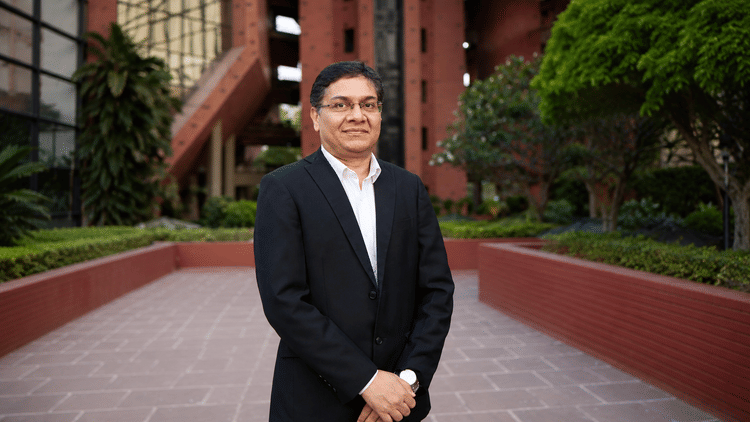 Mahindra Group announced on May 7, 2026 that Vimal Agarwal will assume charge as Group Chief Internal Auditor with effect from July 1, 2026. Along with the operational responsibilities of the role, he will also be inducted into the conglomerate's Senior Management Personnel, signalling the strategic weight the group places on the internal audit function.
The appointment comes as the incumbent, K N Vaidyanathan, prepares to superannuate on June 30, 2026, after a career spanning four decades — more than 14 of which were spent with the Mahindra Group. Vaidyanathan held the designation of Executive Vice-President and Group Chief Internal Auditor, and his exit marks the end of a significant tenure at one of India's largest diversified conglomerates.
Ashutosh Dixit Appointed Brand Director of Porsche India
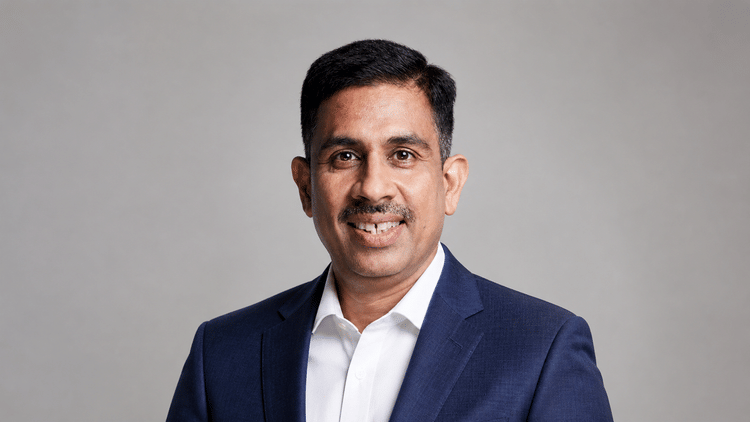 Škoda Auto Volkswagen India Private Ltd has appointed Ashutosh Dixit as Brand Director of Porsche India with immediate effect. Dixit takes over from Manolito Vujicic, who has exited the organisation to pursue opportunities outside the group.
With over 28 years of experience in the automotive sector, Dixit has held leadership roles across India, China and Europe, covering areas such as strategy, sales operations and brand development. He has also spent nearly two decades within the Volkswagen Group. Before this appointment, he served as Market Development Director at the Porsche Middle East and Africa regional office, where he was involved in initiatives linked to the Indian market.
Tenneco India – IceCo Appoints Thalavai Venkatesan as Chief Commercial & Technology Officer
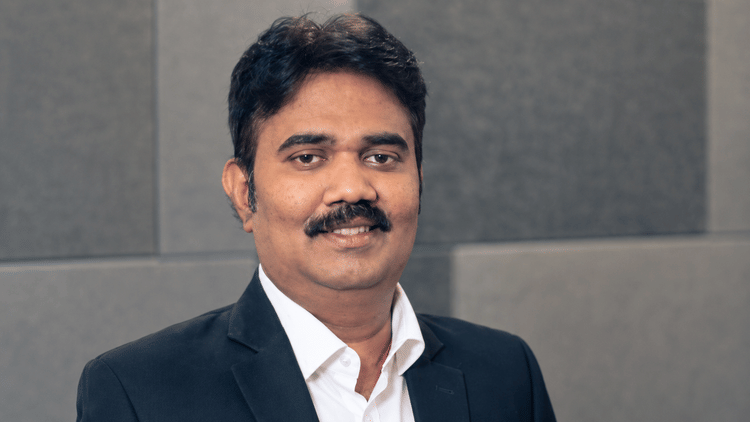 Tenneco Clean Air India Limited has appointed Mr. Thalavai Venkatesan as Chief Commercial & Technology Officer at Tenneco India – IceCo, effective April 23, 2026. The appointment is part of the company's broader effort to accelerate business growth and reinforce its leadership pipeline at a time when the automotive components sector is navigating significant structural and technological change.
Venkatesan will be responsible for driving innovation, deepening customer engagement, and leading commercial strategy across the organisation. His dual mandate — spanning both technology and commercial functions — reflects the growing convergence of product development and market strategy within the automotive supply chain.
Video Playlist
Technology, AI And SDVs Set To Redefine India’s Mobility And Manufacturing Landscape
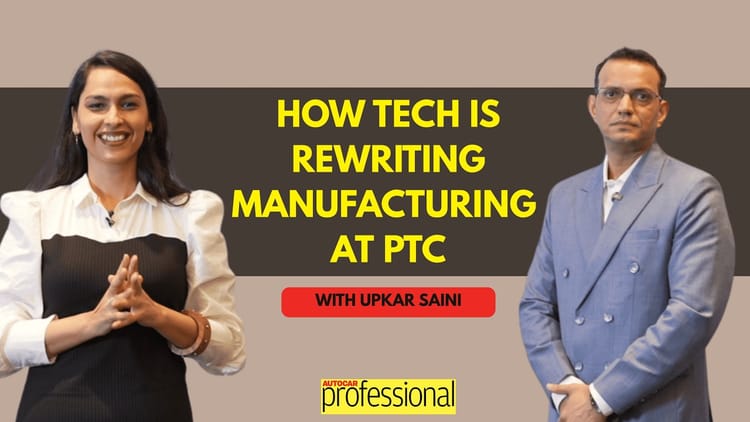 As India's automotive and manufacturing sectors navigate a period of rapid technological change, the conversation around artificial intelligence often skews alarmist. But Upkar Saini, Vice President of India Sales at PTC, pushes back on that narrative firmly — AI, he argues, is a tool that empowers engineers and product teams, not one that replaces them.
Speaking on the sidelines of an Inner Circle event, Saini outlined how AI, software-defined vehicles (SDVs), and product lifecycle management (PLM) platforms are reshaping how India's industry designs, builds, and iterates on products in an increasingly volatile and complex world.
India's EV Push Is About Energy Security, Not Just Clean Transport, Says Exponent Energy CEO
 India's electric vehicle transition is less a clean energy story and more a question of national energy resilience, according to Arun Vinayak, Founder and CEO of Exponent Energy. Speaking in an interview with journalist Prerna Lidhoo, Vinayak made the case that India must treat EV adoption as a strategic imperative, particularly in the commercial vehicle segment.
Commercial vehicles, Vinayak noted, account for close to 70% of on-road energy consumption in India. Electrifying this segment, he argued, should take precedence over the passenger vehicle market, given the economic weight it carries and the fuel import exposure it represents.
Inner Circle: Managing Digital Transformation in the Evolving Tech Era
 As vehicles become increasingly software-led, the automotive industry is undergoing one of its biggest technological shifts yet. From connected platforms and OTA updates to domain controllers, AI-led testing, digital twins and cloud-connected fleets, software is now shaping how vehicles are engineered, validated and experienced.
In this special 3-part conversation by Autocar Professional, industry leaders from Maruti Suzuki, Volvo Asia Commercial Vehicles, Matter India, Euler Motors, OPG Mobility and PTC discuss the opportunities, challenges and realities of the software-defined vehicle era, and what it means for India’s mobility ecosystem.
Sales Analysis
How a Single GST Cut Shifted India's Car Market Out of Neutral
 India's passenger vehicle industry added 91,000 cars to its monthly run-rate in the six months following the September 2025 Goods and Services Tax (GST) rationalisation. A permanent step-up that lifted average monthly sales from 345,627 units to more than 435,000, and turned the FY2025-26 total of five million units from a forecast into a certainty. More than the scale of the shift, it was the nature of it that carried weight. Demand at the bottom of the market had not disappeared, as purchasing-power worries had suggested through the first half of the year. It had simply been priced out.
The consistency of the recovery underlined its structural character. Between October 2025 and March 2026, monthly sales never once fell below 400,000 units. In the six months preceding the reform, the market had been virtually flat; by contrast, average volumes were lower by an unremarkable 1,327 units compared with the same period a year earlier.
How One Tax Cut Fuelled Every Car Maker Except MG Motor
India's Electric Passenger Vehicle Retail Rises 75% Year-on-Year in April 2026
 Electric passenger vehicle (EV) retail in India recorded 23,506 units in April 2026, marking a 4.52% month-on-month increase from 22,490 units in March 2026 and a 75.14% year-on-year rise from 13,421 units in April 2025, according to data released by the Federation of Automobile Dealers Associations (FADA). The data, collated on May 3, 2026, covers 1,463 of 1,466 Regional Transport Offices (RTOs) across the country, with Telangana excluded from the current reporting cycle.
The numbers represent one of the stronger April performances the segment has seen, with month-on-month growth sustained despite April typically being a softer month for automobile retail following the year-end push in March. The fact that sequential growth held positive is being viewed by industry observers as an indication of underlying demand rather than a calendar-driven spike.
Passenger Vehicle Retails Grow 12% YoY; Rural Markets Lead Demand
Two-wheeler Retails Cross 1.9 Million Units in April, Grow 13% YoY
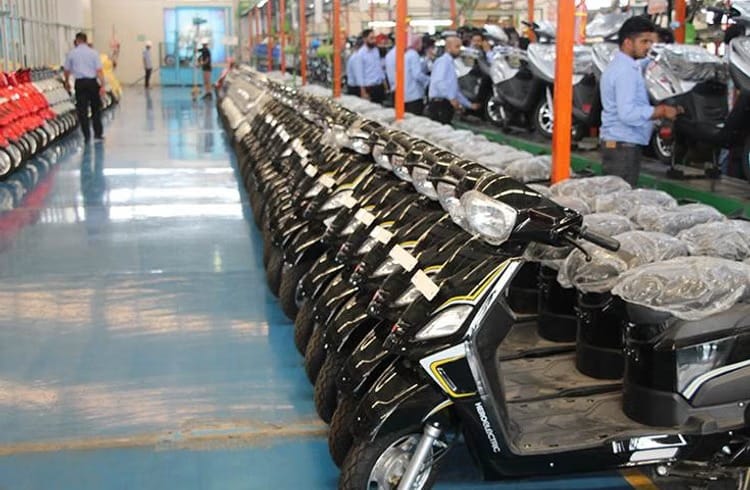 According to data released by the Federation of Automobile Dealers Associations (FADA), two-wheeler retail sales in April 2026 stood at 19,16,258 units, registering a 13.01% year-on-year increase and marking the highest-ever April performance for the segment.
On a sequential basis, sales declined 1.78% compared to March 2026, which FADA attributes to the typical post-financial-year seasonal reset rather than any structural weakness in demand.
Electric Two-Wheeler Sales Dip 22% Month-on-Month in April 2026, Surge 61% Year-on-Year
TVS Motor Expands iQube Lineup With New 4.7kwh S Variant
Electric Commercial Vehicle Retail Sales Rise 149% YoY in April 2026
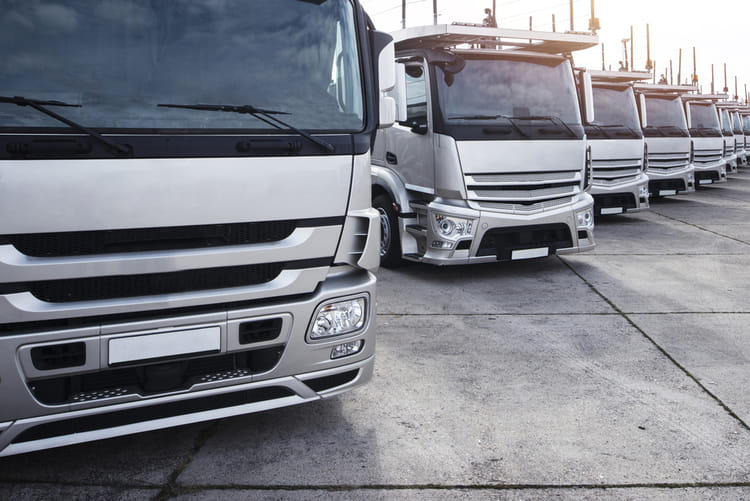 India’s electric commercial vehicle (eCV) retail segment recorded strong year-on-year growth in April 2026, although volumes declined sequentially compared to March, according to the latest retail data released by the Federation of Automobile Dealers Associations (FADA).
Total electric commercial vehicle retail sales stood at 2,245 units in April 2026, registering a 148.9 per cent increase over 902 units sold in April 2025. However, volumes declined 8.70 per cent month-on-month from 2,459 units retailed in March 2026.
Commercial Vehicle Retails Rise 15% YoY in April, Mcv Segment Leads
Three-wheeler Retails Grow 7% YoY; Ev Share Crosses 60%
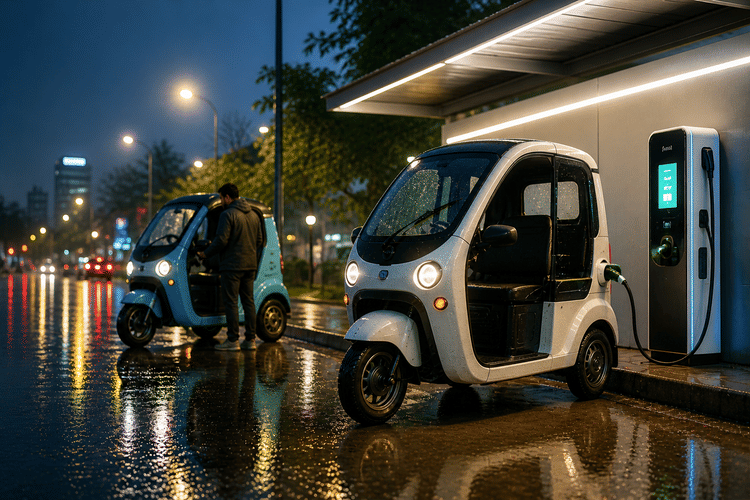 Three-wheeler retail sales stood at 1,06,908 units in April 2026, registering a 7.19% year-on-year increase, according to Federation of Automobile Dealers Associations (FADA) data.
On a month-on-month basis, sales declined 2.61%, in line with broader industry trends following the fiscal year-end.
Electrification remains a defining trend in the segment. Electric vehicles accounted for 60.38% of total three-wheeler sales in April, followed by CNG/LPG at 25.05%, diesel at 14.16% and petrol at a marginal 0.42%.
Electric Three-wheeler Retail Sales Rise 3.3 Percent in April 2026
Earnings Corner
Mahindra and Mahindra Concludes FY26 with Steady Growth Across Segments
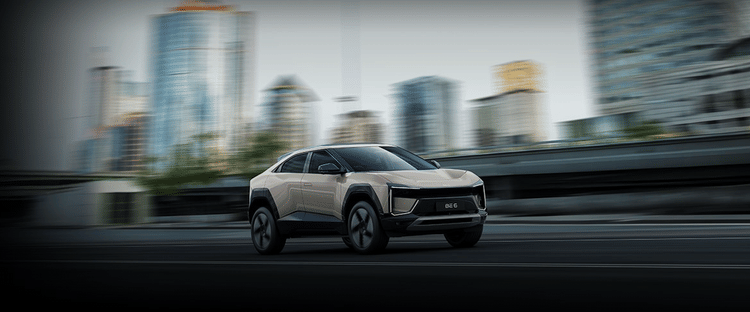 Mahindra and Mahindra has reported a consolidated profit after tax of Rs 17,099 crore for the financial year ending March 31, 2026, representing a 35 percent increase over the previous year. The company’s consolidated revenue for the same period stood at Rs 198,639 crore, up 25 percent. Following these results, the board has recommended a dividend of Rs 33.0 per share, a 30 percent rise compared to the prior fiscal.
The automotive and farm equipment manufacturer maintained its market positions throughout the year. In the SUV segment, the company reported a revenue market share of 25.3 percent, up 260 basis points. It also led the light commercial vehicle segment for vehicles under 3.5 tonnes with a 52.3 percent share and the tractor market with a 43.6 percent share. The electric three-wheeler business recorded a market share of 40 percent.
Mahindra’s Auto Margins Remain Flattish at 10% in Q4 FY26 Due to Operational Constraints
Mahindra 'Growth Gems' Drive 50% Profit Surge in FY26
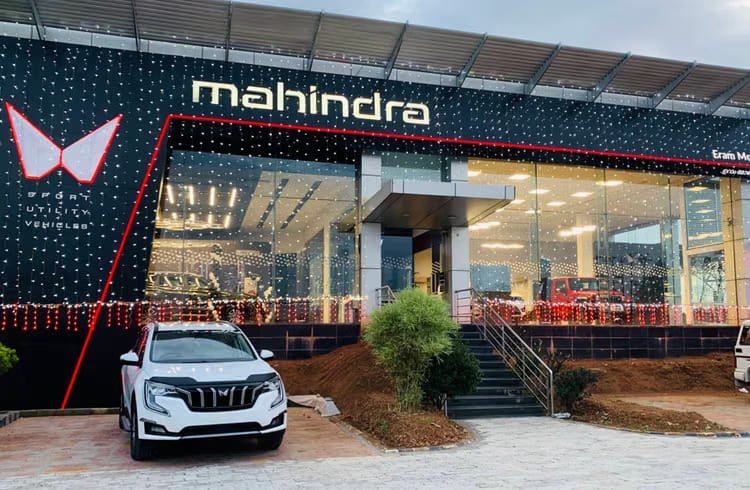 Even as Mahindra & Mahindra's (M&M) passenger SUVs often capture the national limelight, the group’s curated collection of "Growth Gems" is proving to be a high-velocity powerhouse, collectively delivering a 50% profit surge in FY26. This surge is anchored by a strategic focus on segments benefiting directly from India’s massive infrastructure push and the rapid electrification of its urban transport networks.
Nowhere is this momentum more visible than in the last mile mobility division, which has seen its revenue skyrocket by more than ten times compared to its pre-pandemic baseline. The group claims to have firmly established itself as the undisputed leader in the electric three-wheeler market, capturing a dominant 40% share of the industry in the 2026 fiscal year.
Mahindra Logistics Races Out of the Red as Auto Demand Hits High Gear
Mahindra Hits Record 43.6% Quarterly Tractor Market Share in Q4 FY26
Hyundai Motor India Q4 Revenue Rises 5%, Profit Falls 22% on Margin Pressure
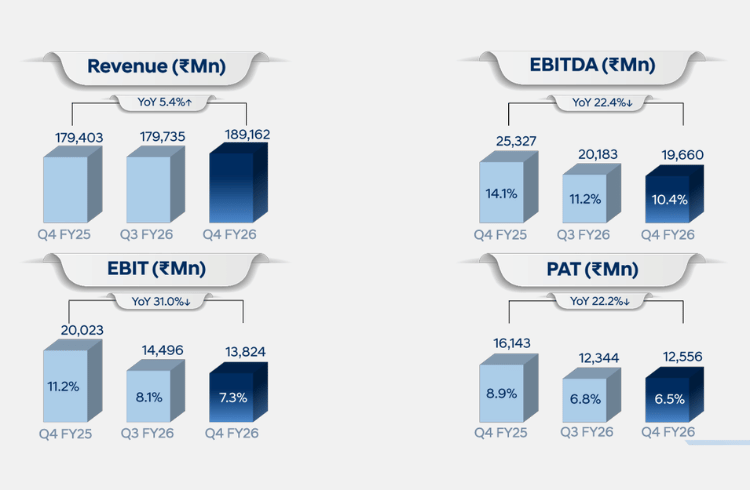 Hyundai Motor India Ltd reported a 5.4% year-on-year rise in consolidated revenue from operations to ₹18,916.2 crore in the quarter ended March 31, helped by GST-led demand tailwinds, product interventions, higher exports and its highest-ever quarterly domestic sales.
However, consolidated profit after tax declined 22.2% year-on-year to ₹1,255.6 crore from ₹1,614.3 crore in the year-ago quarter, as operating margins moderated. EBITDA, excluding other income, fell 22.4% year-on-year to ₹1,966 crore, while EBITDA margin narrowed to 10.4% from 14.1% in Q4FY25.
Hyundai’s Margin Repair Plan: Price Hikes, Lower Discounts And Chennai Ramp-Up
Bajaj Auto Q4 Profit Nearly Doubles; Revenue up 41%
 Bajaj Auto Ltd reported a record performance across volumes, revenues, profits, and cash generation for the quarter ended March 31, 2026.
The Pune-based company delivered a standout quarter, with consolidated revenue from operations reaching ₹17,832 crore, up sharply from ₹12,646 crore in Q4 FY25 — a jump of approximately 41% year-on-year. Profit after tax for the quarter came in at ₹3,662 crore, compared to ₹1,802 crore in the same period last year, nearly doubling on a year-on-year basis.
MRF FY26 Net Profit Rises 30%; Revenue up 11% to Rs 31,654 Crore
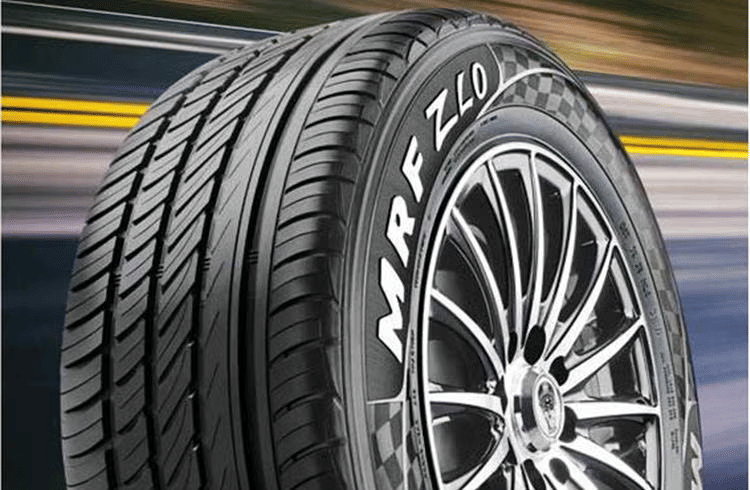 MRF reported an 11% rise in consolidated total income to Rs 31,654 crore for FY26, while consolidated net profit increased 30 per cent year-on-year to Rs 2,426 crore, supported by higher demand across replacement and OEM segments.
Profit before tax for the financial year ended March 31, 2026, rose to Rs 3,222 crore from Rs 2,483 crore in the previous year. Tax expense stood at Rs 796 crore, compared to Rs 610 crore in FY25.
The tyre maker said it crossed the Rs 30,000-crore sales milestone during FY26, aided by growth in both replacement and original equipment (OE) businesses.
Bharat Forge Q4 Net Profit Falls 17.5%; Revenue Rises 17.5%
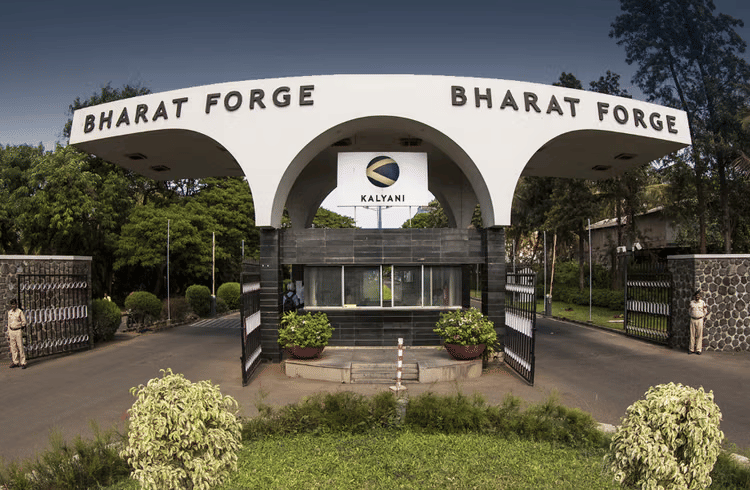 Bharat Forge Limited reported a consolidated net profit of Rs 2,325.65 million for Q4 FY26, down 17.53% year-on-year, while revenue from operations increased 17.53% YoY to Rs 45,280.43 million.
For FY26, the company posted consolidated revenue of Rs 16,812 crore, up 11.2% year-on-year, while consolidated EBITDA rose 5.9% YoY to Rs 2,921 crore.
KPIT Technologies Reports FY26 Revenue of $724.8 Million, up 4.8%
KPIT Technologies reported FY26 revenue of $724.8 million, marking a 4.8% year-on-year increase, while EBITDA margin stood at 20.8%, up 9.4% over the previous year. For the fourth quarter (Q4FY26), the company posted revenue of $185 million, registering 12% year-on-year growth and 5.8% sequential growth, with EBITDA margin at 20.6%.
Revenue growth during the year was supported by a 9% increase in business from OEMs, with contributions from segments such as connected vehicles, aftersales, virtual engineering, and propulsion. In Q4, growth was led by the off-highway segment and the connected vehicle domain.
Exide Industries Q4 Revenue Rises 9.4%, PAT Up 22%; West Asia Conflict Hits Exports
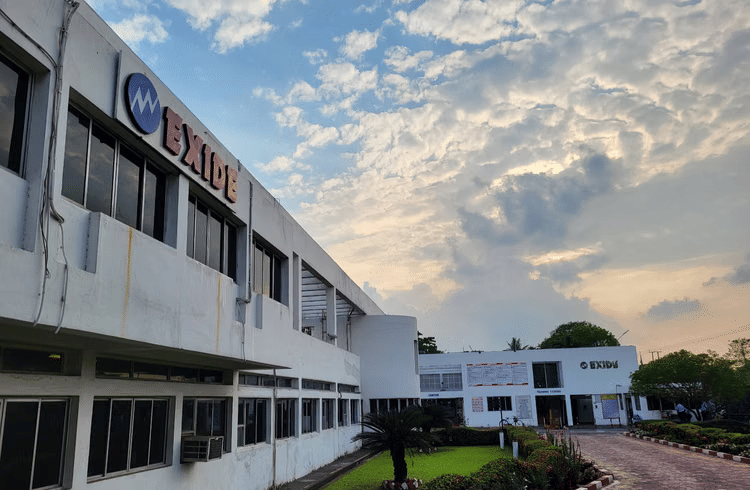 Exide Industries Ltd reported a strong performance in the fourth quarter of FY26, with standalone revenue rising 9.4% year-on-year to Rs 4,551 crore, supported by growth across automotive, replacement, infrastructure, inverter and solar businesses.
The battery maker’s profit before tax before exceptional items grew 22.6% to Rs 420 crore in Q4FY26,and profit after tax rose to Rs 312 crore from Rs 255 crore in the year-ago period.
Escorts Kubota Q4 Net Profit Rises 30% on Strong Tractor Sales
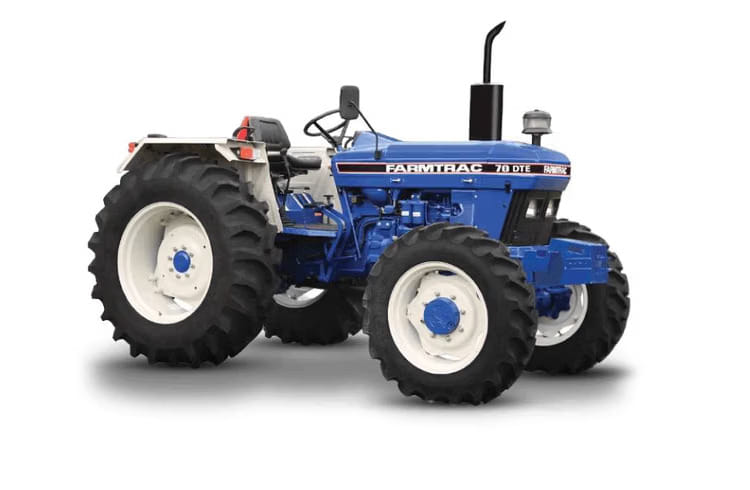 Escorts Kubota Ltd reported a 30% year-on-year rise in standalone net profit and a 21% increase in topline for the March quarter, helped by strong growth in tractor volumes and improved operating margins.
The Faridabad-based company clocked a net profit of ₹324.8 crore in the quarter ended March, as against to ₹250.7 crore in the corresponding quarter. Its revenue from continuing operations came in at ₹2,950.7 crore, compared with ₹2,430.3 crore in the year-ago period.
Ather Energy FY26 Revenue Climbs 66 Percent; Net Loss at 517 Crore
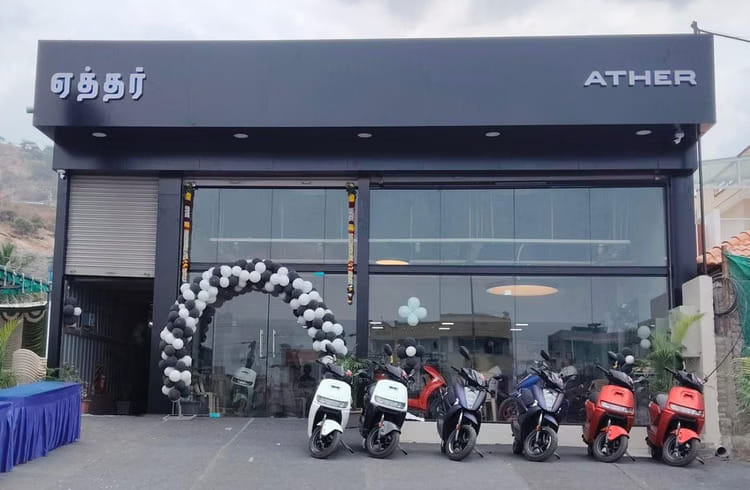 Ather Energy reported a total income of Rs 3,823 crore for the financial year ended March 31, 2026, marking a 66 percent year on year increase driven by strong vehicle demand. The electric two wheeler manufacturer sold a record 2,62,942 units during the fiscal year, representing a 69 percent growth compared to the previous year, and captured an 18.6 percent market share.
For the fourth quarter ending March 31, 2026, the company achieved its highest ever quarterly volume of 83,418 units, up 76 percent year on year, which translated to a total quarterly income of Rs 1,214 crore.
Euler Motors FY26 Revenue Jumps 110%; Losses Narrow, 4W Cargo EV Share Nears 26

RELATED ARTICLES

Cummins India Launches REDEFINE 2026 Case Study Competition
 Arunima Pal
29 Sep 2026
Arunima Pal
29 Sep 2026
Cummins India’s ninth REDEFINE edition will see students from 11 B-schools tackle growth opportunities across industrial...


ThunderPlus Launches 120kW Fast Charger at Prasads IMAX in Hyderabad
Arunima Pal
29 Sep 2026
ThunderPlus has added a 120kW fast-charging station at Hyderabad’s Prasads IMAX, backed by a women-led franchise investm...

Ashok Leyland, IIT Madras Launch 40-City Electric Truck Drive
 Eshisha Java
29 Sep 2026
Eshisha Java
29 Sep 2026
Ashok Leyland and IIT Madras have launched a 40-city electric truck drive to build awareness and acceptance of battery e...