


 Follow us
Weekly News Wrap: Kia Eyes Capacity Boost, Volkswagen-Skoda Line Up New Models, Govt Expands EV Support
The week saw Kia map its next phase of capacity and product growth, Volkswagen prepare a compact SUV for India and the Centre extend electric two-wheeler subsidies through March 2028.
 By Darshan Nakhwa
 1495 Views


India’s automotive industry saw a busy week between August 10 and 16, marked by fresh capacity and product plans, stronger electric mobility investments and a series of quarterly earnings announcements. Kia India began evaluating a potential 2-lakh-unit capacity addition at Anantapur as it prepares new SUVs, while Volkswagen received global approval for a Kylaq-based compact SUV for India. Policy action also remained in focus as the government extended electric two-wheeler incentives under PM E-DRIVE until FY28 and raised the allocation for the segment.
Here is a detailed round-up of the key developments that shaped the automotive industry during the week:
Passenger Vehicles
Mahindra Reveals Lifestyle Pickup, Expands EV and Global Push
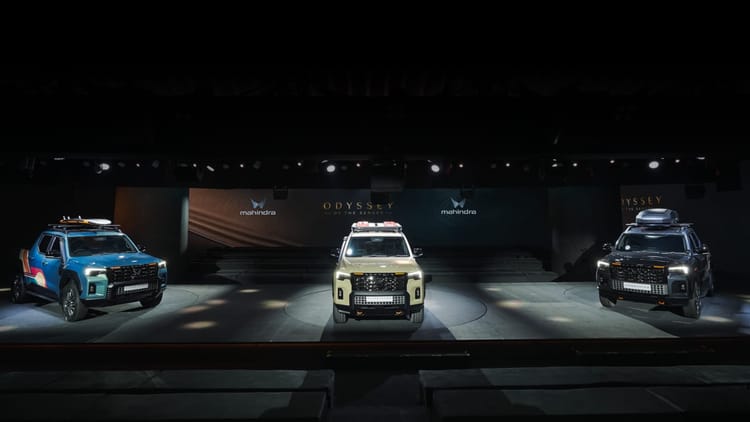 Mahindra & Mahindra stepped up product and technology activity during the week, unveiling the Scorpio Lifestyler pickup, expanding its BE 6 electric SUV range and outlining a more selective approach to global expansion. The Scorpio Lifestyler, the production version of the Global Pik Up concept, is scheduled to launch in India by April 2027 with a starting price below ₹19.79 lakh. Mahindra will spend the next six months studying the Indian market, saying it sees “latent demand” for a vehicle combining SUV comfort, 4x4 capability and pickup utility.
The automaker also launched the BE 6 SPORTEQ, priced from ₹11.45 lakh under its Battery-as-a-Service model, with deliveries starting August 26. The new range is offered with 59kWh, 70kWh and 79kWh battery options. Mahindra and Google Cloud have also integrated a conversational AI assistant based on Gemini Enterprise into the SPORTEQ, making Mahindra the first Indian automaker to deploy such a system in a production vehicle, according to the companies.
On its international strategy, Mahindra said it is in no hurry to enter the UK and will move only when it believes it can build a sustainable and competitive business. At the same time, it sees Indonesia as a relatively easier expansion opportunity where existing products can be deployed with fewer changes and lower competitive intensity.
Kia Studies 2-Lakh-Unit Capacity Expansion, Lines Up New SUVs
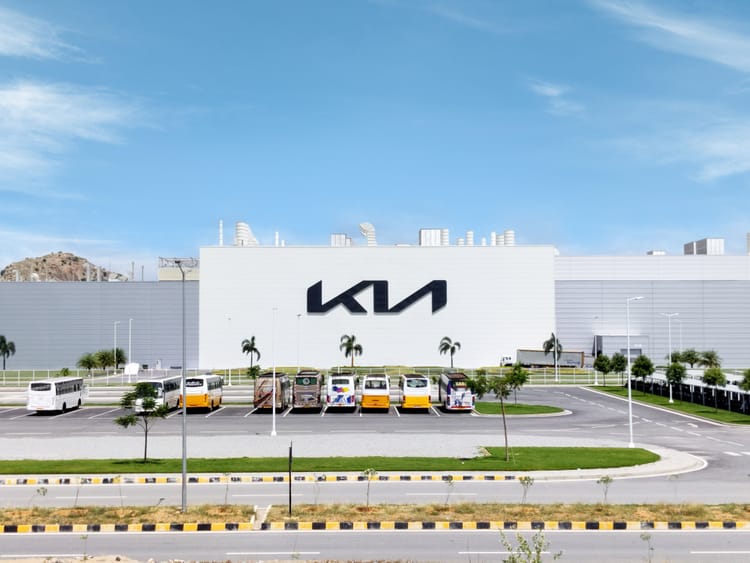 Kia India is evaluating a new production line with annual capacity of around 2 lakh units at its Anantapur plant in Andhra Pradesh as it prepares to expand its product and powertrain portfolio. The proposal is at an early stage and no final investment decision has been taken. The plant currently has installed capacity of around 3 lakh units a year, meaning the proposed line could lift potential capacity to about 5 lakh units annually. Kia is targeting domestic sales of around 4.1 lakh units and a 7.6% market share by 2030, with exports potentially taking its overall production requirement closer to half a million vehicles.
The carmaker is also working on a B-segment SUV for 2028, likely to be electric and positioned between the Syros and Seltos. Separately, Kia is evaluating a C-segment utility vehicle to bridge the gap between the Seltos and upcoming Sorento, although it has yet to decide whether the model will be an SUV or MPV. The new products form part of Kia’s plan to address more price points while broadening its powertrain mix across EVs, hybrids and CNG.
Tata Motors PV Eyes Double-Digit FY27 Growth, Steps Up EV and Export Push
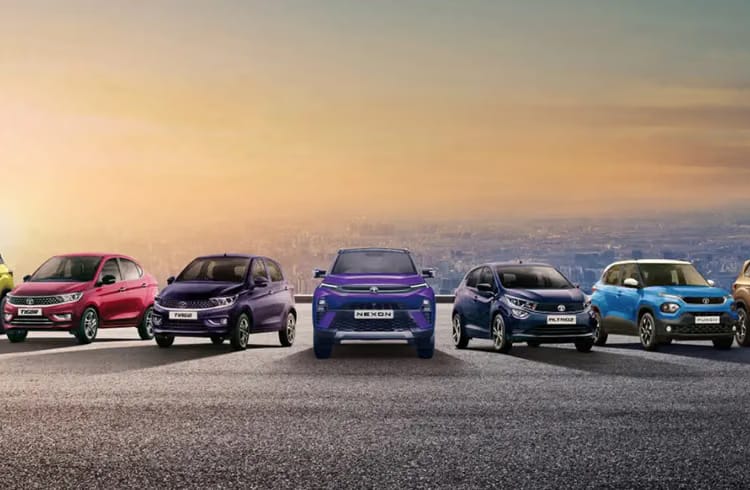 Tata Motors Passenger Vehicles reported a strong start to FY27, with its domestic passenger vehicle revenue rising about 65% year-on-year to ₹17,900 crore in Q1, supported by a 46% increase in volumes. At the consolidated level, which includes Jaguar Land Rover, revenue rose 9.3% to ₹95,799 crore, although profitability was hit by weaker JLR volumes, supply disruptions and higher raw-material costs.
Commodity pressure is expected to intensify in the September quarter. Tata Motors PV said commodity inflation affected its domestic business by an amount equivalent to nearly 4.5% of revenue in Q1, while battery cell costs rose around 10% quarter-on-quarter. The company plans to rely on aggressive cost reduction and calibrated price increases, having already raised ICE and EV prices by up to 1.5% from July 1.
Despite these pressures, Tata Motors PV expects India’s passenger vehicle industry to grow more than 10% in FY27, driven by a strong first half. Industry growth could moderate to single digits in H2 because of a higher base, but the company expects the full year to remain comfortably in double-digit growth territory.
The automaker is also stepping up its international expansion. It plans to enter another major overseas market by the end of FY27 or early FY28, after identifying a mix of ICE- and EV-focused markets for the next two to three years. Its exports more than doubled to 2,408 units in Q1 FY27, with South Africa driving much of the growth.
On powertrains, Tata Motors PV reiterated that it will remain EV-first, while keeping hybrid technology ready as a fallback if market conditions change. The company expects EV penetration in India to reach around 10% by the end of FY27; its own EV volumes crossed 34,000 units in Q1, accounting for around 19% of passenger vehicle sales.
JLR Targets Double-Digit Revenue Growth, Explores North American Production
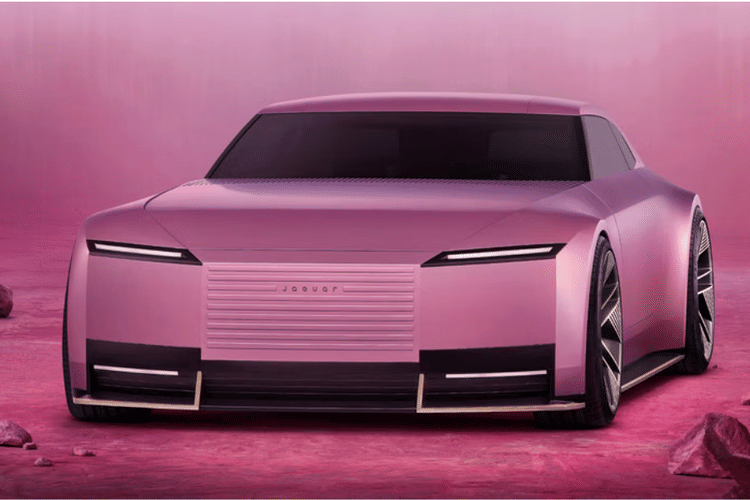 Jaguar Land Rover is targeting double-digit revenue growth over the next five years, with North America expected to play a major role. The luxury carmaker expects its average selling price to move well beyond £80,000 per vehicle over the next 18 months, helped by a richer mix of Range Rover, Range Rover Sport and Defender. JLR is also targeting £1.7 billion in savings over two years as it works through softer demand in China and elevated investment.
The Tata Motors-owned company is also exploring North American production of new US-focused Defender models through a proposed collaboration with Stellantis. The companies have signed an MoU to study vehicles developed specifically for the US market rather than duplicate JLR’s existing models. Local production could help JLR reduce tariff exposure and provide a natural hedge against currency movements, although no final manufacturing agreement has been reached.
At the same time, JLR is preparing for a major EV rollout. It has tentatively planned production of around 12,000 electric vehicles in FY27, with Range Rover Electric production scheduled to begin in September 2026. Range Rover Sport Electric, Range Rover GT and Jaguar Type 01 will follow as part of a four-model launch cycle. JLR expects the new EVs to be at least margin-neutral compared with their combustion-engine equivalents, with initial sales weighted towards the UK and Europe.
Volkswagen Plans Compact SUV, Skoda Readies Diesel Superb Comeback
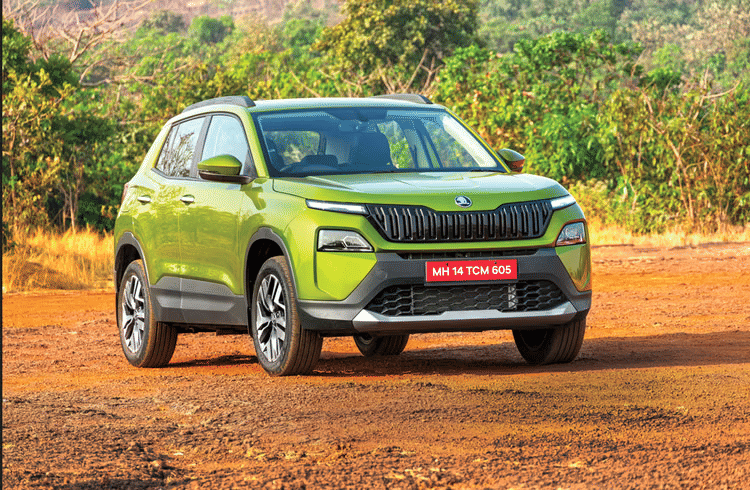 Skoda Auto Volkswagen India is preparing fresh product action at both the mass-market and premium ends of its portfolio. Volkswagen has received global approval for a new sub-four-metre SUV based on the Skoda Kylaq, marking its entry into one of India’s highest-volume vehicle segments. The programme is estimated to involve an investment of around €25 million, or about ₹275 crore. The SUV will share the Kylaq’s architecture and 1.0-litre TSI engine but get distinct styling, equipment and positioning. It is expected to be priced between ₹8 lakh and ₹13 lakh, ex-showroom.
At the premium end, Skoda is planning to bring the diesel-powered Superb back to India as a completely built unit. The move would mark the return of diesel to Skoda’s Indian portfolio after the carmaker discontinued the fuel option ahead of BS6 norms in 2020. The Superb is expected to remain a low-volume flagship, aimed at strengthening Skoda’s premium positioning and broadening its powertrain offering rather than chasing large volumes.
Maruti Readies Baleno Facelift; E20 Fuel Quality Concerns Resurface
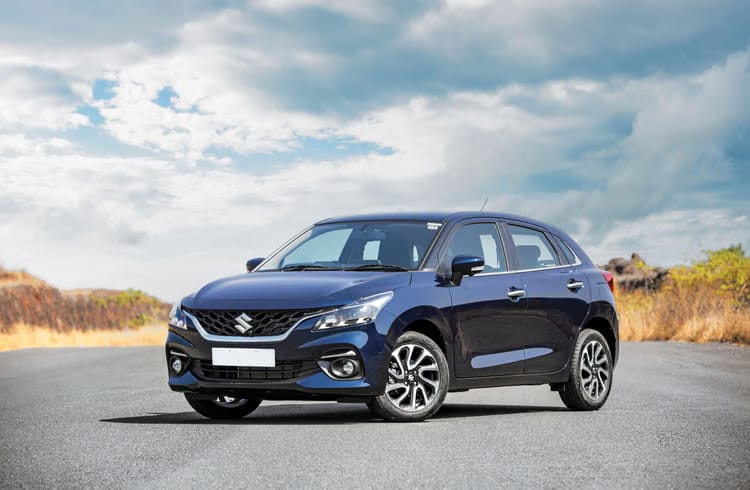 Maruti Suzuki will launch the Baleno facelift on September 5, giving the premium hatchback its first major update since the second-generation model arrived in 2022. The facelift is expected to receive styling and feature upgrades, while retaining the existing 1.2-litre petrol engine and CNG option. The Baleno currently competes with the Tata Altroz, Hyundai i20 and Toyota Glanza.
Separately, concerns around E20 fuel quality resurfaced after Reuters reported that Maruti Suzuki, Tata Motors and Mahindra had tested more than 250 fuel samples across 21 states and Union Territories, with some samples showing elevated chloride and moisture levels. SIAM subsequently withdrew an earlier communication to the government, saying the data required further verification and that a more comprehensive scientific study would be undertaken. State-owned fuel retailers Indian Oil, BPCL and HPCL have rejected claims of widespread contamination, while Mahindra has also said it does not see an issue with E20.
Commercial Vehicles
Tata Motors CV Q1 Profit Jumps 83%, EV Adoption and Iveco Deal in Focus
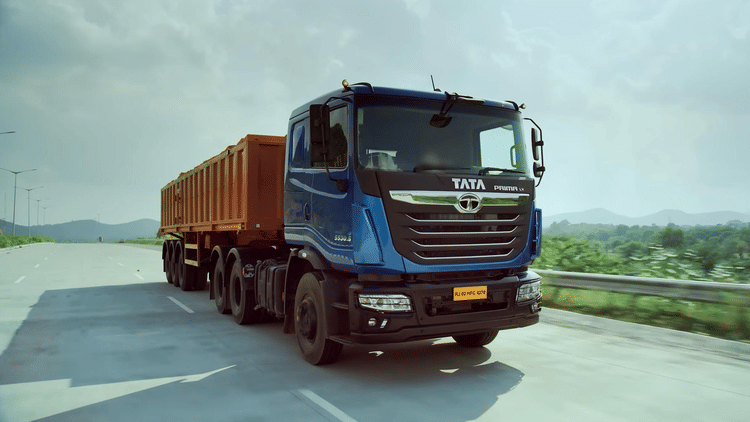 Tata Motors’ commercial vehicle business began FY27 on a strong note, with consolidated net profit rising 83% year-on-year to ₹2,600 crore in Q1. On a standalone basis, revenue increased 23% to ₹19,329 crore, while wholesales grew 26% to around 1.09 lakh units. However, higher commodity costs weighed on profitability, with EBITDA margin narrowing to 11.7% from 12.3%. The company expects the domestic CV industry to maintain double-digit growth in Q2, although it has stopped short of giving full-year guidance.
Electrification is emerging as another growth lever. Tata Motors secured more than 3,400 electric CV orders in Q1 across freight, logistics and passenger mobility, while EV penetration in the SCV and pickup segment has reached close to 10%. The company retailed more than 3,200 electric SCVs during the quarter and expects penetration to rise further in H2 as higher diesel and CNG prices improve the total-cost-of-ownership case for EVs. It also has an electric bus order book of around 850-900 units.
Strong demand has also created supply-side challenges. Tata Motors is working with suppliers to add capacity for sheet-metal components, castings and forgings, while shortages of imported battery cells have constrained some EV production. The company expects both conventional component availability and battery-cell supplies to progressively improve towards the end of Q2.
Separately, Tata Motors expects to receive the final regulatory approval for its proposed Iveco acquisition by the end of August. Subject to clearance, the tender offer is expected to open in early September and close by early November. The company has also flagged what it calls an “anomaly” in the 10% basic customs duty on imported electric truck tractors, arguing that the tariff structure should better support local engineering and manufacturing of electric CVs.
Ashok Leyland Targets ₹2,000-Crore Cost Cut as Q1 Margin Pressure Builds
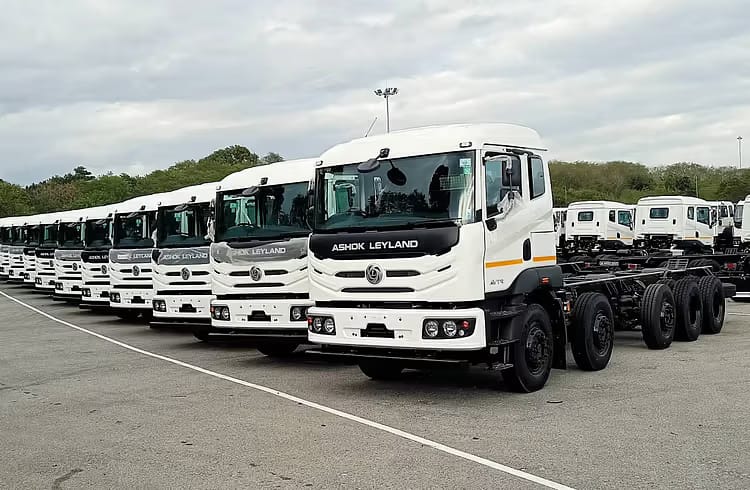 Ashok Leyland reported a 2.5% rise in standalone net profit to a record ₹609 crore in Q1 FY27, while revenue grew 10.4% to ₹9,634 crore. Commercial vehicle volumes increased 10.2% to a record 48,763 units. However, EBITDA remained flat at ₹970 crore and margin narrowed by 100 basis points to 10.1% as higher material costs offset some of the gains from stronger volumes.
To counter the pressure, the company has launched a programme targeting around ₹2,000 crore of cost savings over the next 18-24 months, largely focused on material costs. It has also taken two price increases totalling around 2-2.25% so far in FY27 and could consider further price action or optimise discounts if commodity costs remain elevated.
Separately, Ashok Leyland’s board approved investments of up to ₹325 crore in Optare Plc and ₹500 crore in Hinduja Housing Finance. Management clarified that the Optare infusion is primarily meant to repay debt carried by Switch Mobility’s UK operations and is not growth capital, while Switch India is currently financially independent of the parent.
The broader Hinduja Group also announced a fresh ₹2,500-crore investment in Tamil Nadu to expand its electric mobility and clean-energy footprint. The investment will support deployment of electric buses through OHM Global Mobility, EV charging infrastructure, digital mobility services and automotive engineering. The latest commitment follows a ₹7,500-crore EV ecosystem agreement signed in September 2025 and Ashok Leyland’s ₹500-crore battery-pack assembly plant under construction at Pillaipakkam.
Meanwhile, Switch Mobility set a target to make its operations carbon neutral by 2027 and achieve net zero emissions by 2040. The EV maker said it has more than 5,000 electric vehicles operating globally, including over 2,900 electric buses and 2,200 electric LCVs in India.
Mahindra Launches BLAZO i-TRK, Lines Up New CV Products and Electric Trucks
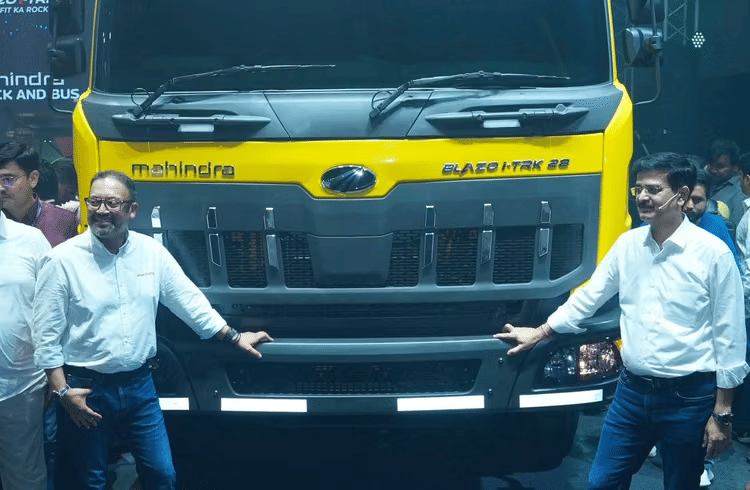 Mahindra stepped up activity in its commercial vehicle business during the week with the launch of the BLAZO i-TRK heavy truck range, while outlining new LCV/ICV products and beginning work on electric trucks. The BLAZO i-TRK gets a 320hp mPOWER engine across the range, AI-enabled automatic drive modes and Mahindra’s iMAXX 2.0 telematics system. The company is also offering a 48-hour uptime guarantee, under which customers will be paid ₹10,000 per day if an eligible breakdown is not repaired within the promised period.
A key technology on the new truck is an onboard machine-learning system that automatically switches between low, medium and turbo engine modes based on inputs such as road gradient, load, accelerator position, engine speed and gear selection. The computation is kept inside the vehicle rather than on the cloud, which Mahindra says improves responsiveness and reduces cyber-security exposure. The company claims the truck can deliver up to 10% better fuel efficiency, potentially translating into ₹15 lakh of additional benefit over five years for a heavy truck running one lakh kilometres annually.
Mahindra is also preparing a wider product offensive, with plans to introduce four to five products across the LCV, ICV segments in FY27 as it integrates its truck and bus operations with SML Mahindra. The group is targeting a 10-12% share of the above-3.5-tonne commercial vehicle market by FY31, compared with around 6% in FY26.
Alongside its ICE portfolio, Mahindra has started initial development work on electric trucks, although management said these are not an immediate priority. The company sees short and predictable routes, such as cement logistics, as more suitable early applications for electric heavy trucks because smaller battery packs can be used without significantly reducing payload. SML Mahindra is meanwhile preparing its first electric bus for launch in FY27.
VECV Sees Heavy-Duty Trucks as Biggest Growth Opportunity
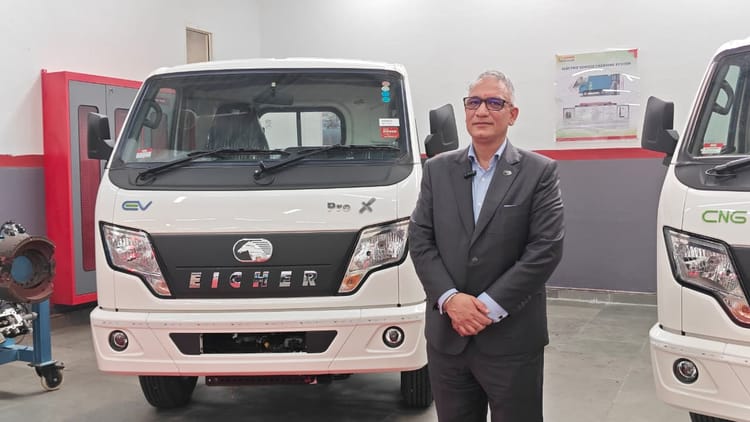 VE Commercial Vehicles sees heavy-duty trucks as its biggest opportunity to gain market share, with the company currently holding around 10% of the segment, according to Chief Commercial Officer S S Gill. VECV is already the market leader in light- and medium-duty trucks and holds around 21% share in buses, leaving significantly more headroom for growth in heavy-duty trucks. Gill said the company has been gaining share in the segment year after year.
VECV is also widening its presence at the lower end of the market through the Eicher Pro X small commercial vehicle range, which it is expanding gradually across states and regions. The company initially launched the Pro X with an electric powertrain before adding diesel and CNG versions. Gill said broader CV demand is being supported by replacement buying, infrastructure-led construction activity and continued growth in e-commerce, while improved roads are also allowing trucks to run longer distances and improve utilisation.
Policy
Government Extends EV Support, Pushes Rare-Earth Localisation and Tipper Safety
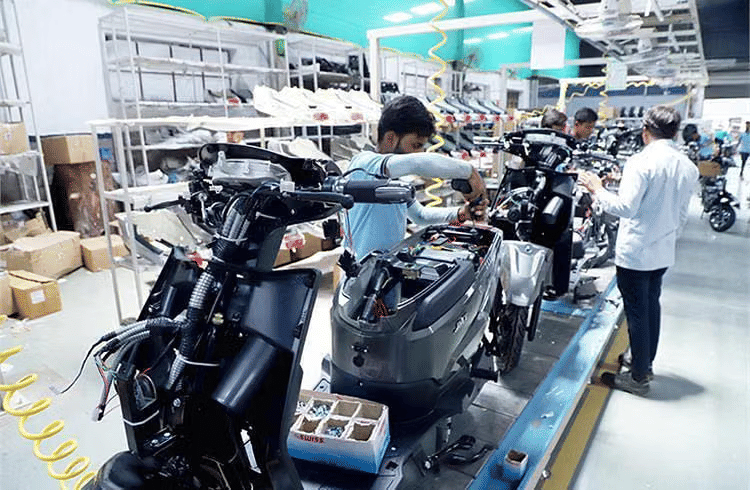 The government extended demand incentives for electric two-wheelers under the PM E-DRIVE scheme until March 31, 2028, while increasing the allocation for the segment to ₹2,767 crore from ₹1,772 crore. The subsidy remains unchanged at ₹2,500 per kWh, capped at ₹5,000 per vehicle, while the overall PM E-DRIVE outlay has been raised to ₹11,900 crore. The revised scheme can support up to 45.79 lakh electric two-wheelers.
In another move aimed at strengthening the domestic EV supply chain, the Ministry of Heavy Industries received 20 bids for its ₹7,280-crore rare-earth permanent magnet manufacturing scheme. The programme aims to establish 6,000 tonnes of annual domestic capacity across five beneficiaries and develop an end-to-end local supply chain for magnets used in EV traction motors, wind turbines, defence and aerospace applications.
Separately, the Ministry of Road Transport and Highways made mechanised load-body covers mandatory for all tippers and dumpers from April 1, 2027. The automated covering systems can be electrical, electro-mechanical, hydraulic or mechanical and will be excluded from statutory vehicle-height calculations. The move is aimed at reducing material spillage and dust pollution, though it is expected to add to the bill of materials for truck makers and bodybuilders.
Two-wheelers
Cos Line Up Products, Funding and Capacity Expansion
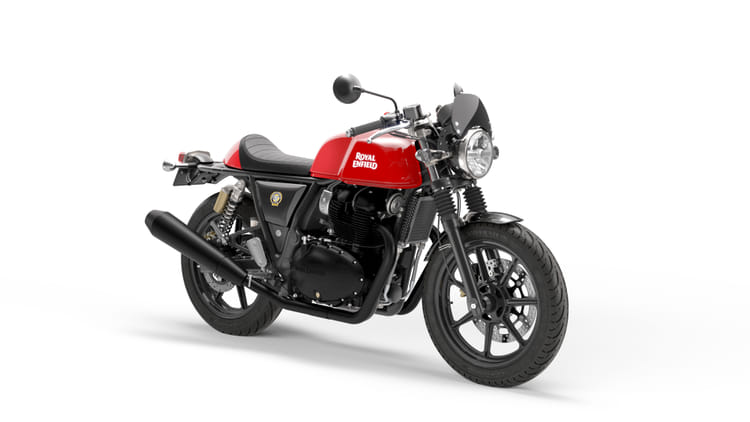 Royal Enfield launched the updated Continental GT 650 at ₹3.58 lakh, ex-showroom, adding LED indicators, USB Type-C fast charging and cosmetic upgrades while retaining its 648cc parallel-twin engine. Sales began across dealerships on August 14.
In electric mobility, Yulu is laying the groundwork for a mainboard IPO and expects to be ready for a listing once annual revenue reaches ₹1,200-1,500 crore. The company, which recently raised $93 million, is targeting PAT profitability next year, a fleet of 2 lakh EVs over the next two years and expansion to 20 cities within 12 months.
Ola Electric, meanwhile, received revised timelines under the government’s Advanced Chemistry Cell PLI scheme for its 20 GWh allocation, giving it a five-year incentive window through 2031. The company estimates it can access incentives of up to ₹7,240 crore and expects its installed cell-manufacturing capacity to increase from 2.5 GWh currently to 6 GWh by the end of the current quarter.
Vietnamese EV maker VinFast also signalled its growing interest in India’s electric two-wheeler market by filing a design patent for the Rasad electric maxi-scooter. The filing follows patents for two other electric two-wheelers, the Viper scooter and a motorcycle believed to be based on the Sulad concept, although patent filings do not necessarily confirm a commercial launch.
Component Makers
Cos Step Up Investment, Diversification and Future-Mobility Push
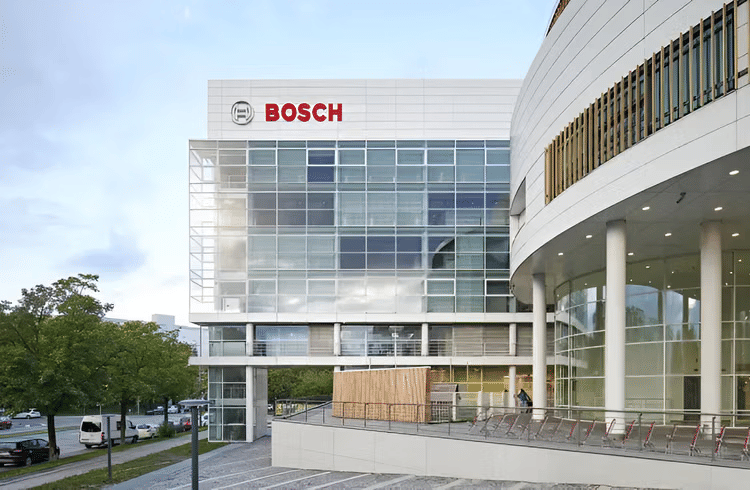 India’s component makers outlined fresh investments and diversification plans during the week. Bosch Ltd’s Q1 FY27 revenue rose 22% to ₹5,841.9 crore, with its Mobility business growing 25.7% and Power Solutions expanding 29%. The supplier expects combustion technologies to continue recording volume growth in India for several years, even as it expands in electrification, ADAS and software-defined vehicles.
Lumax Auto Technologies plans to invest ₹156.23 crore in a new Chakan plant to service orders from Mahindra & Mahindra, with the facility expected to generate peak annual revenue of about ₹440 crore. The company is also seeking to move from a conventional Tier-1 supplier towards a Tier-0.5 systems integrator, combining software, mechatronics, telematics and interior products. Lumax is targeting more than 20% of revenue from clean and future mobility solutions by FY31, with around 40% of its ₹1,450-crore order book already linked to EV and future-mobility platforms.
Elsewhere, NRB Bearings identified six new growth verticals beyond its core automotive business, including aerospace, electrification, robotics-related mobility, industrial and heavy construction equipment, as it looks to reduce dependence on traditional auto applications. Jaya Hind Industries, meanwhile, announced a ₹600-crore investment over FY27 and FY28 to expand high-pressure and gravity die-casting capacity across Pune and Chennai, including a new Chennai facility and more than 12 HPDC machines.
In tyres, Yokohama India launched the Geolandar X-CV for crossover and premium SUVs, with 32 sizes planned across 16- to 20-inch wheels. It will follow this with the Geolandar A/T4 and H/T4 in 2027, as it increases its focus on the fast-growing SUV and larger-tyre market.
Battery maker Amara Raja Energy & Mobility also said it plans to participate in the government’s fresh tender for 10 GWh of Advanced Chemistry Cell manufacturing capacity for grid-scale storage. The company is simultaneously building a 10 GWh gigafactory as it expands beyond automotive batteries into stationary energy-storage applications.
Funding
Auto Firms Raise Capital for Expansion, EV Growth
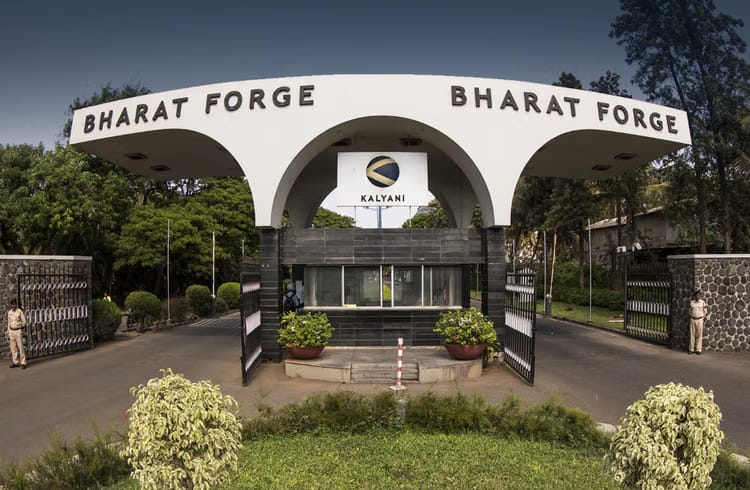 Fundraising activity gathered pace across the automotive sector during the week. Bharat Forge’s board approved raising up to ₹2,500 crore through equity, debt, convertible securities or a combination of instruments. The company is preparing around ₹1,800 crore of capex over the next 12-18 months across automotive and newer areas such as aerospace, semiconductors, large engines and power generation, along with new manufacturing facilities in Odisha and Andhra Pradesh.
Among automakers, TVS Motor Company raised ₹1,000 crore through privately placed non-convertible debentures carrying a 7.28% coupon and maturing in November 2029. Ashok Leyland separately raised ₹300 crore through a two-year NCD issue at a 7.5% coupon, with the instruments maturing in August 2028.
EV companies also attracted fresh capital. Shared-mobility company Yulu raised $93 million in Series C funding, comprising $63 million of equity led by GEF Capital Partners and $30 million of debt. It plans to use the funds to expand its fleet to 200,000 EVs within two years, alongside service hubs and enterprise partnerships. Greaves Electric Mobility, meanwhile, completed a fully subscribed ₹530-crore rights issue to fund new EVs, powertrain development, battery-management systems and operational expansion.
Tractors
Cos Step Up R&D, Product and Used-Vehicle Push
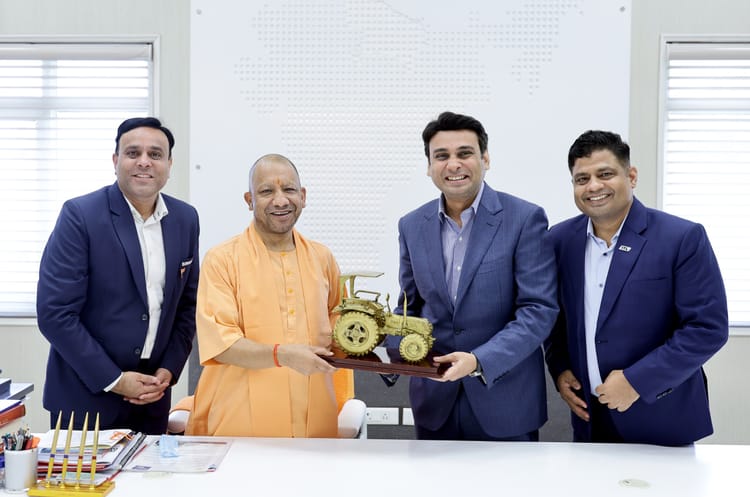 India’s tractor makers announced fresh product and ecosystem initiatives during the week. International Tractors Ltd (ITL), the maker of Sonalika tractors, plans to set up a 25-acre global R&D centre in Greater Noida, which will focus on advanced engineering and agricultural technologies for India and overseas markets. The company has not disclosed the investment amount or timeline for the proposed facility.
Escorts Kubota, meanwhile, launched the MU4502 and MU5002 tractors in the 41-50hp category. The 45hp and 50hp models come with what the company calls an industry-first eight-year transferable warranty, aimed at improving ownership confidence and resale value. Both tractors are positioned for farming, haulage and commercial applications and will be sold across India.
The company also partnered with Tractor Junction to build a more structured resale network for used tractors. Under the arrangement, Tractor Junction will handle digital inspection, market-based valuation and listing of tractors exchanged at Escorts Kubota dealerships. The programme will initially cover Rajasthan, Madhya Pradesh and Maharashtra, before expanding to Gujarat, Telangana and Chhattisgarh.
Other Major highlights
 India’s automobile industry posted a strong July, with passenger vehicle sales rising 34.3% year-on-year to 4.58 lakh units, according to SIAM. Two-wheeler sales increased 22.6% to 19.23 lakh units, while three-wheeler sales grew 33.4% to 92,560 units. SIAM said the industry recorded its strongest-ever July sales across these segments, supported by sustained demand ahead of the festive season.
In a major leadership development, N Chandrasekaran resigned as chairman of Tata Sons, though he will continue in the role until his current term ends in February 2027, Reuters reported. The move comes amid differences with Tata Trusts over governance and his reappointment. Chandrasekaran has chaired Tata Sons since 2017.
Separately, Mahindra Group appointed Shveta Arya as Group Chief Strategy Officer, effective September 15. Arya, most recently managing director of Cummins India, will lead the Group Strategy Office, join the Group Executive Board and report to Group CEO and MD Anish Shah. Her mandate will include identifying growth opportunities, unlocking value and shaping long-term strategy across Mahindra’s businesses.

RELATED ARTICLES

Maserati Grecale, GranTurismo and GranCabrio Facelifts to Launch on October 30
 Autocar Professional Bureau
 13 Oct 2026
The updated luxury models will receive powertrain revisions, subtle styling changes and additional personalisation optio...


Greaves Finance Names Mukul Kanchan as Executive Director and CEO
 Dev Vadchhedia
13 Oct 2026
Dev Vadchhedia
13 Oct 2026
Kanchan takes charge of Greaves Cotton's NBFC subsidiary to scale EV lending platform.

BMW M2 xDrive Turbo Edition Opens for Pre-Orders in India
 Eshisha Java
13 Oct 2026
Eshisha Java
13 Oct 2026
The limited-run BMW M2 xDrive Turbo Edition features a 480hp six-cylinder engine, heritage-inspired styling and a top sp...