


 Follow us
Weekly News Wrap: Rare Earth Magnet Push, Maruti’s Launch Plan, Renault’s Turbo-CNG Duster Tease, West Asia Crisis Impact
Rare earth localisation, fuel price pressure, Maruti Suzuki’s two-track product strategy and Renault’s fresh India signals made for a week that captured both the promise and complexity of India’s automotive transition.
 22 Mar 2026
 1 Views
Share -
1 Views
Share -


India’s automotive industry entered the second half of March with demand still intact, but the operating environment became more complex. Policy, fuel, technology and geopolitics all moved at once.
At the top of the policy agenda was the government’s decision to invite global bids for integrated rare earth permanent magnet manufacturing in India. That marks an important step in the country’s effort to reduce dependence on imported magnets, which are critical to electric vehicles. Around the same time, uncertainty persisted around the next phase of fuel-efficiency norms, with reports suggesting the government may defer tighter CAFE targets after sustained lobbying from automakers.
The week also brought fresh cost pressures. Indian Oil raised prices of XP-95 premium petrol and increased industrial diesel rates, even as regular retail fuel prices stayed unchanged. The moves came against the backdrop of continuing tensions in West Asia, which are beginning to ripple through industrial gas, chemical and logistics supply chains. For the auto industry, that means renewed concern over margins, manufacturing costs and availability of key inputs.
On the product side, Maruti Suzuki laid out perhaps the clearest articulation yet of its India strategy: protect the entry-level base with a new small car aimed at first-time buyers, while pushing deeper into SUVs with a broader mix of hybrid, flex-fuel and other alternative powertrains. Renault, meanwhile, launched the new Duster with a turbo-petrol engine and signalled that a turbo-CNG variant may also be under evaluation for India, underlining how mainstream carmakers are widening the mix of technologies they are willing to deploy.
Here is a detailed round-up of the key developments that shaped the automotive industry during the week:
India Opens Global Bids to Build Rare Earth Permanent Magnet Industry
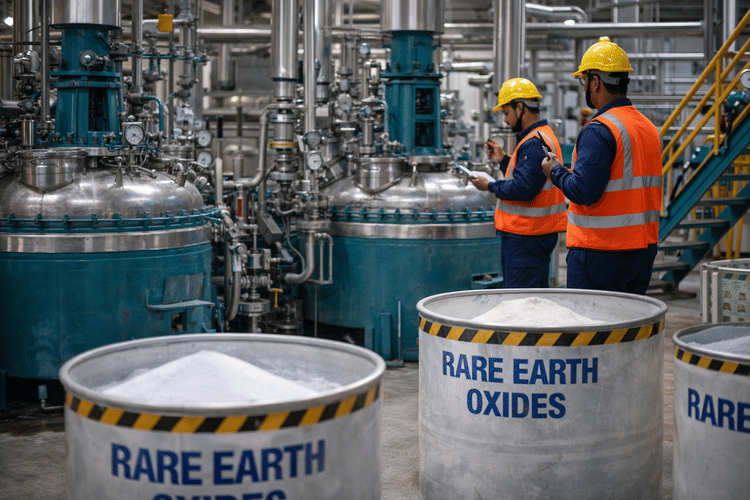 The Ministry of Heavy Industries has released a Request for Proposal (RFP) inviting bids from companies seeking to set up integrated Sintered NdFeB Rare Earth Permanent Magnet (REPM) manufacturing facilities in India. The tender, open to both domestic and international applicants, targets a combined manufacturing capacity of 6,000 Metric Tonnes Per Annum (MTPA) and marks a step toward reducing India's dependence on imported magnets.
Bids are to be submitted through the Central Public Procurement (CPP) Portal using a two-stage Least Cost System (LCS), comprising a Technical Bid followed by a Financial Bid. Tender documents are available from March 20, 2026. A pre-bid conference is scheduled for April 7, 2026, giving prospective applicants an opportunity to seek clarifications before the final bid submission deadline of May 28, 2026. Technical bids will be opened the following day, on May 29, 2026.
India May Delay New Car Fuel Efficiency Rules as Automakers Lobby Government
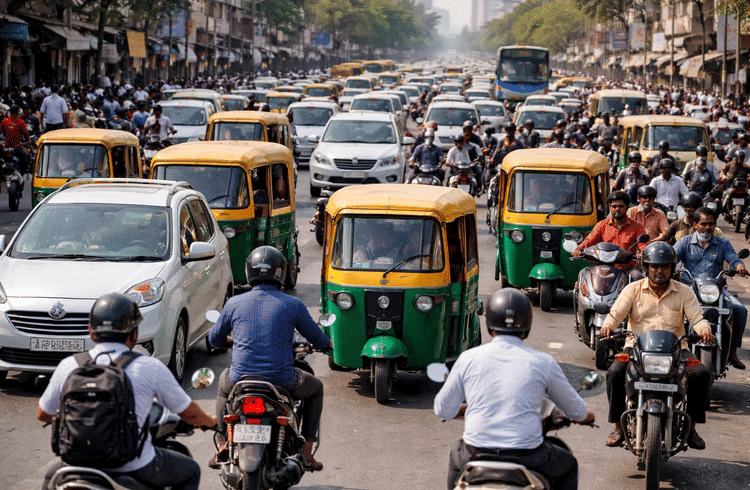 The Indian government is considering pushing back the implementation of the third phase of Corporate Average Fuel Efficiency (CAFE-III) norms, which are scheduled to take effect from April 1, according to The Times of India report.
The development follows sustained lobbying by sections of the automobile industry, which has argued that the proposed targets are too steep and the timeline insufficient for adequate compliance. No official deferral has been announced, but the possibility is being discussed within government circles as the notification deadline draws near without a settled framework in place.
IndianOil Draws the Line at XP-95 Amid Surging Global Crude Costs
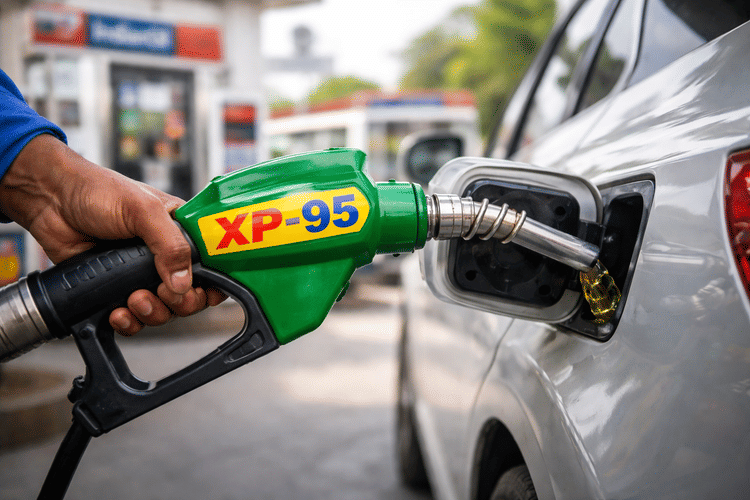 Indian Oil Corporation Ltd has increased the price of its premium petrol product XP-95 by ₹2 per litre, while keeping standard petrol and diesel prices unchanged, even as international crude oil costs have nearly doubled over the past three weeks.
The state-owned oil company made the announcement on Friday via a public notice, noting that XP-95 accounts for approximately 5 percent of total petrol sales in the country, limiting the revision's impact on the general consumer. Regular petrol and diesel, which form the bulk of automotive fuel consumption across India, remain at their current prices.
IOCL Raises Industrial Diesel Price by Over 25% with Immediate Effect
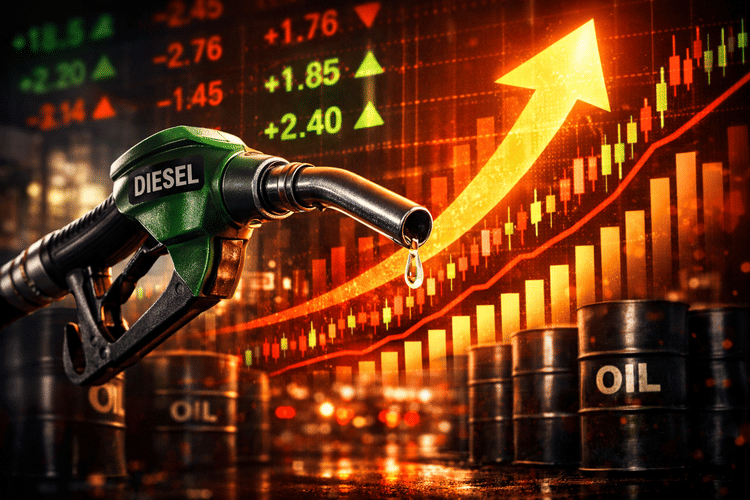 The state-owned Indian Oil Corporation Ltd has raised the price of industrial diesel by over 25%, with the revision taking effect immediately from March 20. The price of bulk diesel, sold directly to large-scale consumers such as factories, power plants, and mall operators, has been revised from ₹87.67 per litre to ₹109.59 per litre in the national capital — an increase of approximately ₹22 per litre.
The revision applies exclusively to bulk procurement channels and does not affect fuel prices at retail outlets used by the general public. Regular diesel prices remain unchanged for now, with the government maintaining that the hike affects only a limited segment of consumers. Sujata Sharma, Joint Secretary at the Ministry of Petroleum and Natural Gas, confirmed that petrol and diesel prices in India are deregulated, meaning oil marketing companies adjust prices in line with international market conditions.
Maruti Suzuki Plans New Entry Car to Target First-Time Buyers, Eyes Affordable Tech Mix
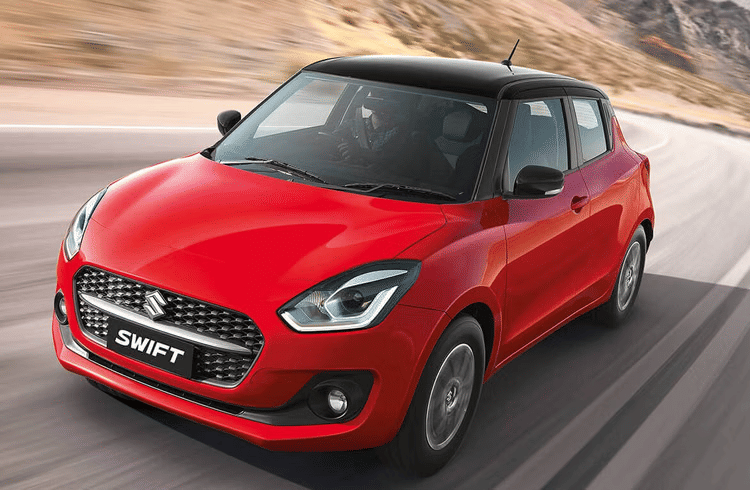 Maruti Suzuki India Ltd is planning to introduce a new entry-level car tailored specifically for first-time buyers, as the country’s largest carmaker looks to regain traction in the small car segment. The company said the model will be designed uniquely for India and will offer multiple powertrain options, including mild-hybrid, flex-fuel, and CNG, in line with its multi-pathway strategy.
The move comes as Maruti sharpens its focus on affordability and accessibility, particularly for customers upgrading from two-wheelers. The company is looking to capture a larger share of first-time buyers by combining lower acquisition costs with improved fuel efficiency and alternative fuel options.
Suzuki Motorcycle to Focus on Flex-Fuel, CNG and EVs Under India Mid-term Plan
Maruti Suzuki to Introduce 7 New SUVs in 5-6 Years as Segment Drives Growth
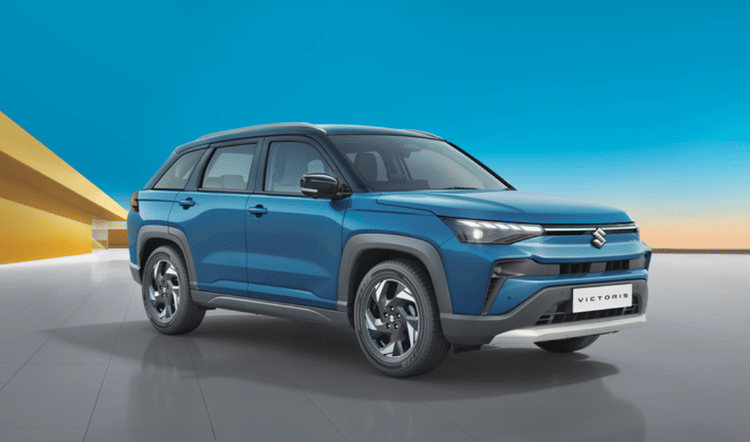 India’s largest carmaker, Maruti Suzuki India Ltd., plans to introduce seven new sport utility vehicles (SUVs) over the next five to six years, as it sharpens focus on the fast-growing segment, according to an investor presentation shared with exchanges on Tuesday.
The company said the expanded SUV pipeline will help it strengthen its presence in a segment that is increasingly driving growth in the Indian passenger vehicle market.
According to the company’s presentation, the share of SUVs in India’s passenger vehicle market has risen from 26.5% in 2019 to 54.7% in 2024, underscoring the rapid premiumisation of the market. Industry data from SIAM also points to a steady rise in utility vehicle share over the past few years, as buyers increasingly move away from entry-level hatchbacks toward larger, feature-rich vehicles.
Maruti Suzuki to Deploy Hybrid SUVs, Push Flex-Fuel Under Multi-Pathway Strategy
Renault Duster Hybrid Sold Out for 2026; Metro Demand at 36%, Says Francisco Hidalgo
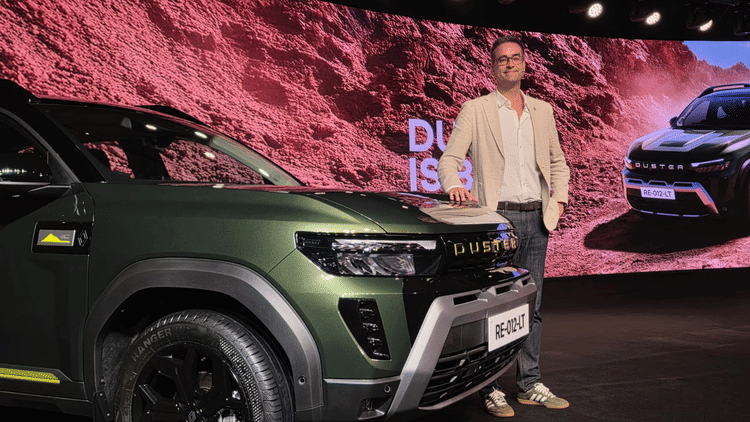 Renault’s comeback bet with the new Duster has got off to a strong start, with the strong hybrid variant already sold out for the current year, prompting the company to look at ramping up production.
Speaking at the unveil, Francisco Hidalgo, VP, Renault India, said the response to the hybrid powertrain has exceeded expectations, particularly in urban markets.
“We have seen an overwhelming response to the hybrid powertrain. As of now, we are sold out for this year and are actively working on increasing capacity,” Hidalgo said.
Renault Bets on Duster, Hybrid Tech for India Comeback
Renault Launches New Duster in India With Turbo Petrol Engine; Prices Start at ₹10.49 Lakh
Turbo CNG Duster on the Cards? Renault Drops Hint for India
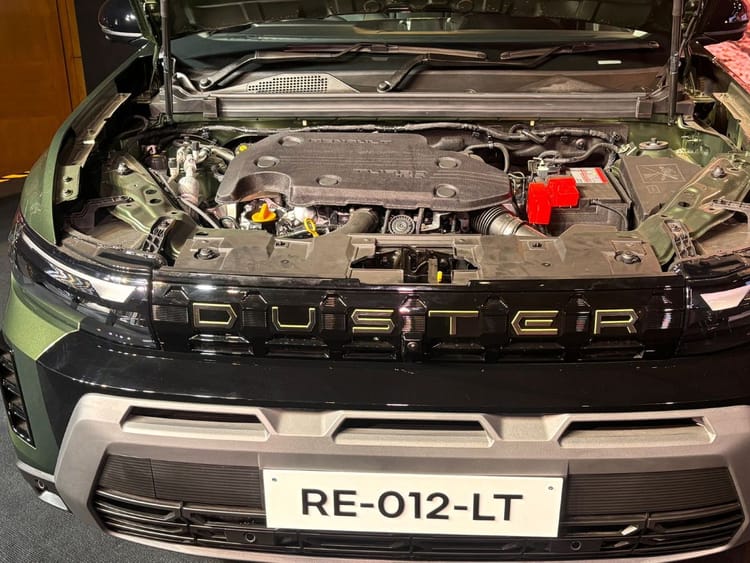 Renault has hinted at the possibility of introducing turbocharged CNG powertrains in India, signalling a potential shift from conventional approaches in a segment that has largely relied on naturally aspirated engines.
In an interaction with the media, Francisco Hidalgo, Vice President – Sales & Marketing, Renault India, suggested that CNG offerings need not be restricted to low-performance configurations.
India Could Become a Top 3 Market for Renault Globally in 3–4 Years, Says Francisco
JSW Motors Targets 2,000 Engineers by 2029, to Set Up a Full-Fledged R&D Centre
 JSW Motors is scaling up its engineering operations in India as the Sajjan Jindal-led conglomerate prepares to enter the passenger vehicle market, with vehicles initially sold under a new JSW automotive brand and logo, before expanding into a broader multi-brand strategy.
The upcoming JSW brand will complement the MG Motor brand in which the group invested in 2024. While the maker of the Windsor and Hector will continue to operate on its own, JSW Motors plans to build a sizable R&D workforce from about 150 engineers currently to around 500 by 2027, eventually expanding to about 2,000 engineers by 2029 as it builds capabilities for full vehicle development in India.
JSW Motors Appoints Ex-Tata Motors Official to Lead Strategy and Planning
Škoda Shifts to a Flexible Multi-Fuel Play as EV Demand Lags, Geopolitical Risks Rise: Ashish Gupta
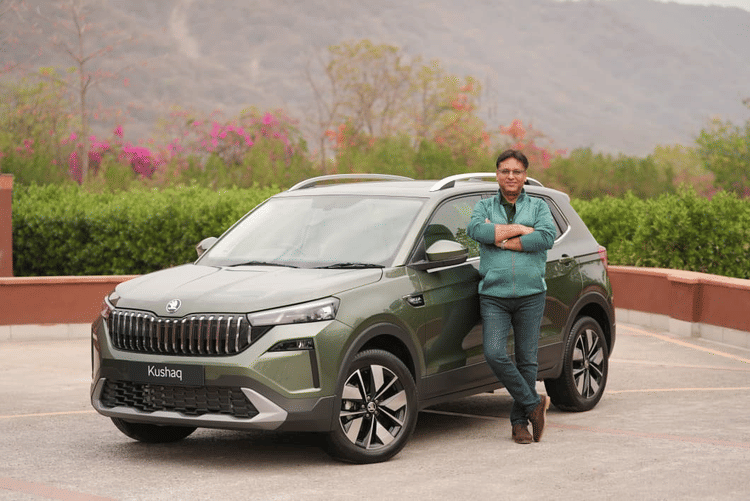 Amid a slower-than-expected electric vehicle (EV) transition, Škoda Auto India is looking at a multi-fuel powertrain strategy, Brand Director Ashish Gupta said. “No company in the world has the resources to invest in every technology. You have to take your bets but also be flexible enough to change if the market doesn’t evolve as expected,” Gupta told Autocar Professional.
While reiterating that electrification remains the long-term direction, largely driven by regulation, Gupta acknowledged a growing mismatch between policy push and market readiness. “We have clearly seen that demand is not matching up to where regulators want us to go,” he said.
Škoda Sees the India Market Turning 80% Automatic in the Next Decade: Ashish Gupta
Škoda Auto India Launches Updated Kushaq from ₹10.69 Lakh
The $72 Billion EV Retreat: How Global Automakers Are Cutting Their Losses
 Five major automakers have collectively written down $72.2 billion in electric vehicle investments, with Honda announcing the latest and largest single hit of $15.7 billion on Thursday, as U.S. demand for battery-powered cars continues to fall sharply following the Trump administration's rollback of federal subsidies.
Honda, Japan's second-largest automaker, said it would cancel three battery-powered models planned for the U.S. market — the Honda 0 Series Saloon, the Honda 0 SUV and the Acura RSX — and would report its first annual net loss in nearly 70 years as a publicly listed company. The writedown, estimated at 2.5 trillion yen, covers EV investments in the U.S. and a partial write-off of its Chinese operations.
Tesla Plans Entry Into India's Energy Storage Market
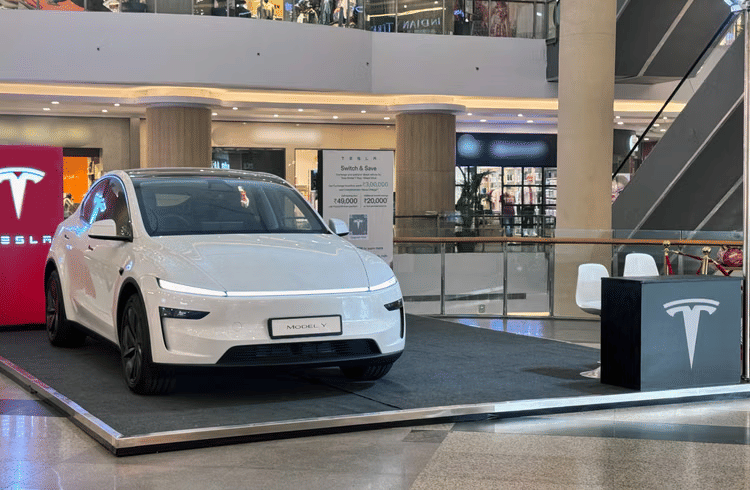 Tesla is preparing to enter India's industrial energy storage market, Reuters has reported, citing a job advertisement posted on the electric vehicle maker's official website.
According to Reuters, the company is seeking to hire a business development lead based in India, with responsibility for developing and executing a market expansion strategy for industrial energy storage solutions. The position, Reuters notes, is focused on shaping Tesla's entry into the utility-scale energy storage segment in the country.
MSRTC to Replace Entire 22,000-Bus Fleet with Electric Vehicles by 2037
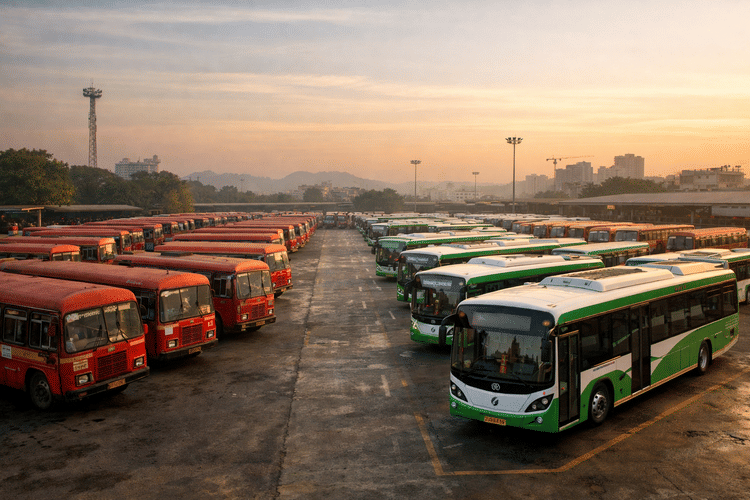 Maharashtra Transport Minister Pratap Sarnaik informed the state Legislative Council on Monday that the Maharashtra State Road Transport Corporation (MSRTC) will convert its entire fleet of 22,000 buses to electric vehicles by 2037, as reported by The Indian Express. The announcement marks a significant shift in the state's public transport policy and positions Maharashtra as the first state in India to formally commit to a complete electrification of its government-run bus network.
Sarnaik stated that MSRTC currently operates 22,000 buses, of which 800 are already electric, and that the transition to a fully electric fleet will be carried out in a phased manner. The minister framed the 2037 target as an interim milestone toward a broader national objective, noting that it is the stated vision of Prime Minister Narendra Modi and Chief Minister Devendra Fadnavis for India to transition entirely to electric mobility by 2047.
Honda Begins Pan-India Road Testing of Its First Electric SUV
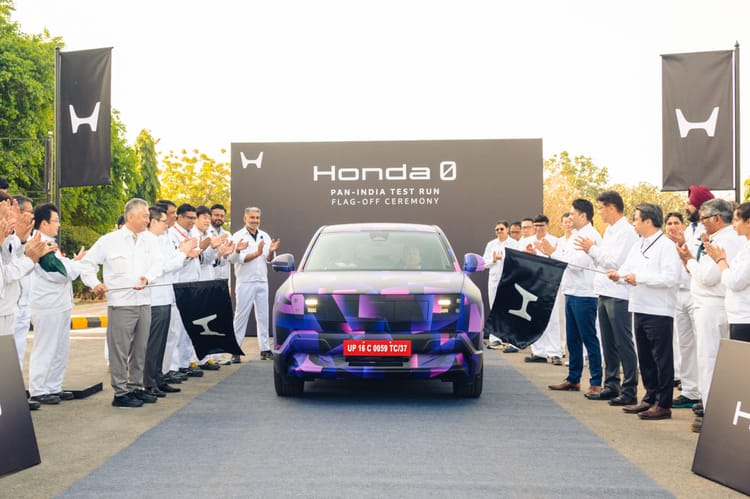 Honda Cars India Ltd. (HCIL) on Monday flagged off the pan-India public road verification testing of its first battery electric vehicle (BEV) SUV, marking a significant step in the company's push into electric mobility in one of the world's fastest-growing automobile markets. The flag-off, which took place at the company's manufacturing facility in Tapukara, Rajasthan, marks the official start of public road verification testing in India.
The vehicle being tested is a prototype of the Honda 0 α, a model that was first unveiled at the Japan Mobility Show 2025. The pan-India testing phase represents the transition from controlled test environments to real-world road conditions, a standard but critical stage in vehicle development before a commercial launch.
BYD Eyes Double-Digit Growth in India, Keeps Premium Focus; Hybrids Under Evaluation
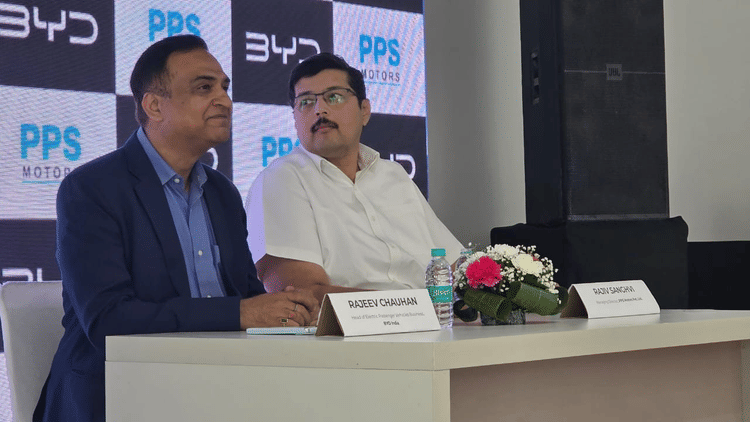 BYD is targeting double-digit growth in India in 2026 while continuing to focus on the premium segment, even as it evaluates the potential introduction of plug-in hybrid vehicles in the market.
Speaking at the inauguration of PPS Motors’ BYD showroom in Moti Nagar, Delhi, Rajeev Chauhan, Head, EV Business, BYD India, said the company will expand its product pipeline for India, with multiple models at different stages of readiness.
Audi Launches Audi SQ8 in India at ₹1.77 Crore
Lexus Launches First Battery Electric Vehicle in India at ₹89.99 Lakh
VinFast Extends Free EV Charging Program in India Until 2029
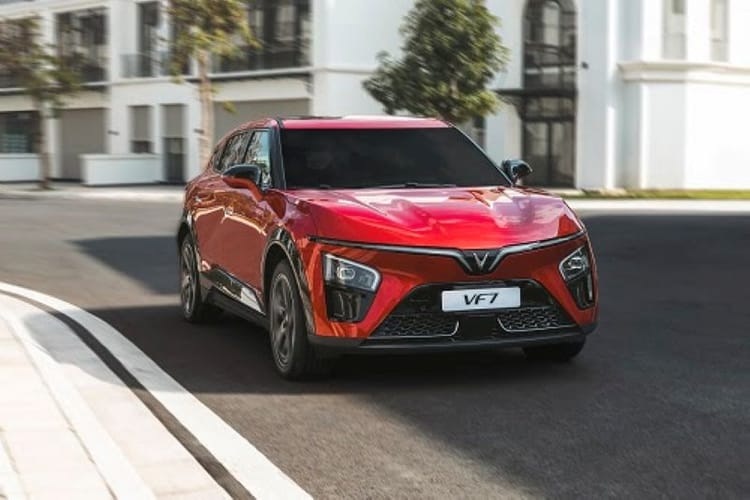 VinFast has announced an extension of its free electric vehicle charging program in India, Indonesia, and the Philippines, pushing the offer's end date to March 31, 2029. The policy covers all EV owners in those markets, including both private customers and drivers operating on commercial ride-hailing platforms, and represents one of the more significant consumer incentive commitments the company has made since entering these markets.
Under the extended program, eligible customers will receive free charging at stations developed and operated by V-Green, VinFast's charging network affiliate. The benefit applies to existing owners as well as future buyers, and includes drivers on the Green SM ride-hailing platform — VinFast's electric taxi service operating across several Asian countries. The company stated that the zero operating cost advantage is intended to give consumers stronger financial motivation to move away from gasoline-powered vehicles.
Mahindra's Charge_iN and HPCL Partner to Expand EV Charging Network Across India
JLR Design Veteran Gerry McGovern to Exit, Launch Own Creative Consultancy
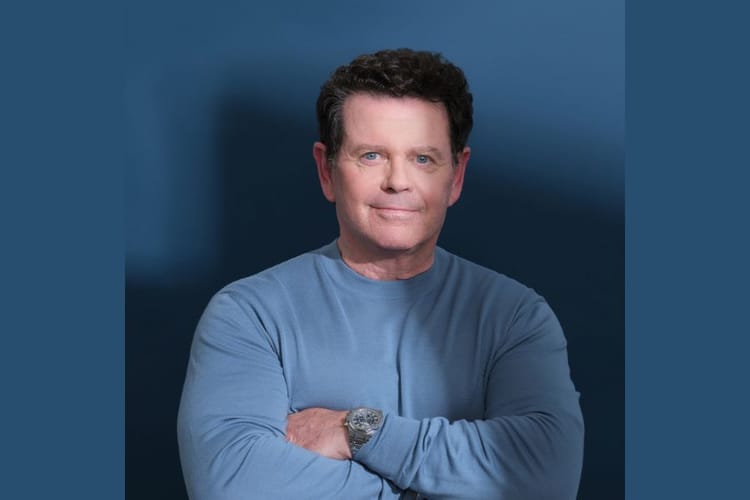 Jaguar Land Rover (JLR) today said that Gerry McGovern will step down as Chief Creative Officer and as a member of its board at the end of March, bringing to a close a two-decade stint that helped redefine the design identity of its core brands.
McGovern, who joined the Tata Motors-owned luxury carmaker in 2004, will leave the company to establish his own creative consultancy.
His exit marks a significant transition for JLR at a time when the company is repositioning its brands under a “modern luxury” strategy and accelerating its shift towards electrification.
BMW Group India to Increase Vehicle Prices by Up to 2% from April 1
BMW Launches M2 CS in India at ₹1.66 Crore
Tata Motors to Raise Passenger Vehicle Prices by 0.5% from April 1
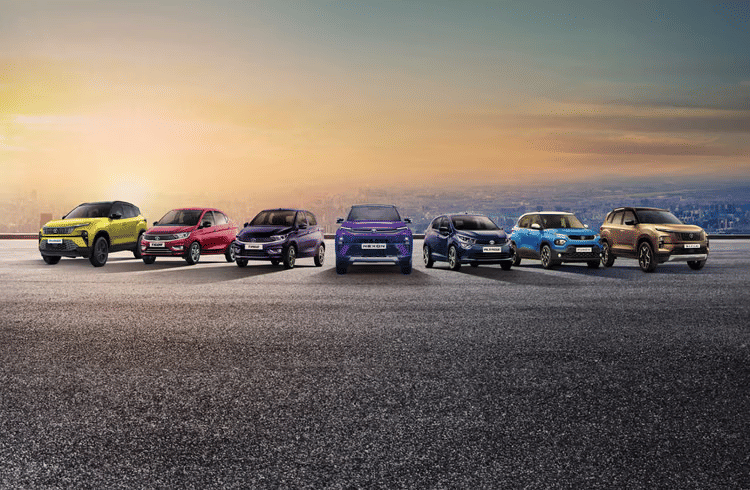 Tata Motors Passenger Vehicles Ltd. has announced that it will raise prices across its internal combustion engine (ICE) passenger vehicle range starting April 1. The weighted average increase will be 0.5%, though the exact amount will differ by model and variant.
The company attributed the revision to sustained increases in input costs — a term that refers to the raw materials, components, and manufacturing expenses that go into producing vehicles. TMPV said the hike will only partially offset these rising costs, indicating that the company is absorbing a portion of the increase rather than passing it on entirely to customers.
Tata Motors Expands Harrier.ev Lineup with More Affordable Quad Wheel Drive Option
Tata Motors to Increase Commercial Vehicle Prices by up to 1.5% from April 1
Two-Wheeler Sales to Surpass Pre-Covid Level, Will Hit a New High in FY2026
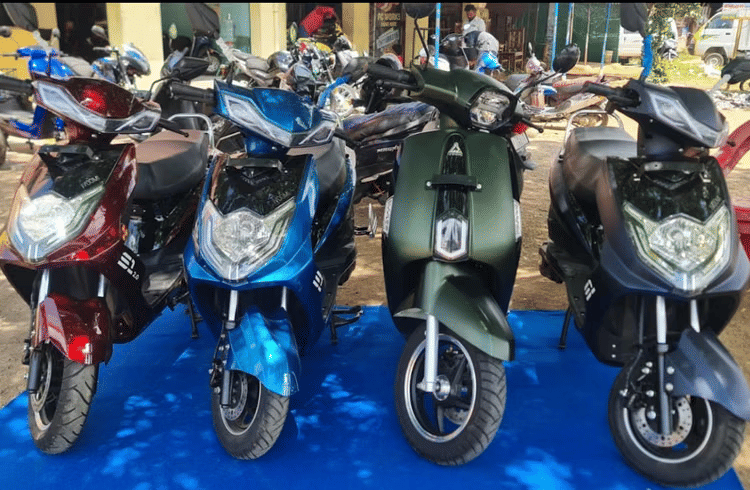 Amidst the ongoing global geopolitical turbulence, India continues to be a buoyant market in the form of automobile sales. With just 10 days left for the current fiscal year to come to a close, the world’s third largest automotive market is set to register a new high in FY2026 of over 27 million vehicles comprising the two- and three-wheeler, passenger and commercial vehicle segments. This will mean India Auto Inc will surpass FY2019’s record factory dispatches of 26.26 million units. Powering this growth is the largest volume segment – two-wheelers.
BMW Motorrad Launches M 1000 R Supersport Roadster in India at ₹33.5 Lakh
Honda Expands Two-Wheeler Production Capacity at Tapukara Plant
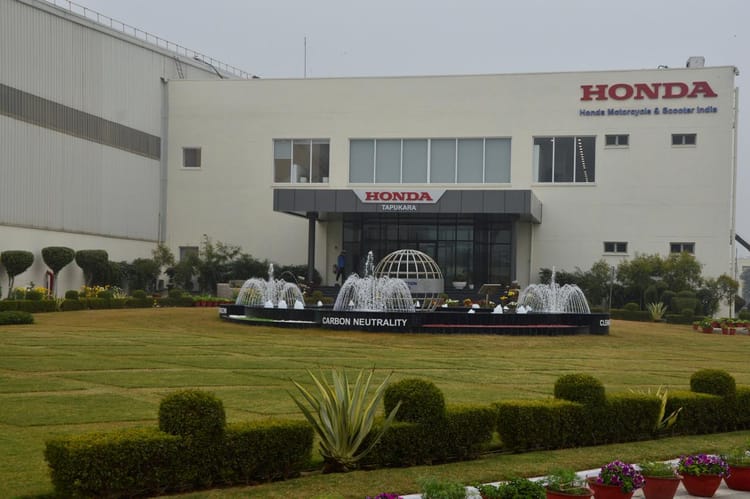 Honda Motorcycle & Scooter India Pvt. Ltd. (HMSI) has announced plans to expand its manufacturing capacity with the addition of a third production line at its Tapukara plant in Alwar district, production line, as part of its strategy to address rising demand in the two-wheeler segment.
The new production line is scheduled to begin operations in 2028 with an annual capacity of 670,000 units. Following this expansion, the total production capacity of the Tapukara facility will increase to 2.01 million units per year. The project is also expected to generate more than 2,000 jobs in the region.
Bijliride to Expand Franchise Network to 25+ Indian Cities
Ola Electric Plans ₹2,000 Crore Stake Sale in Battery Arm
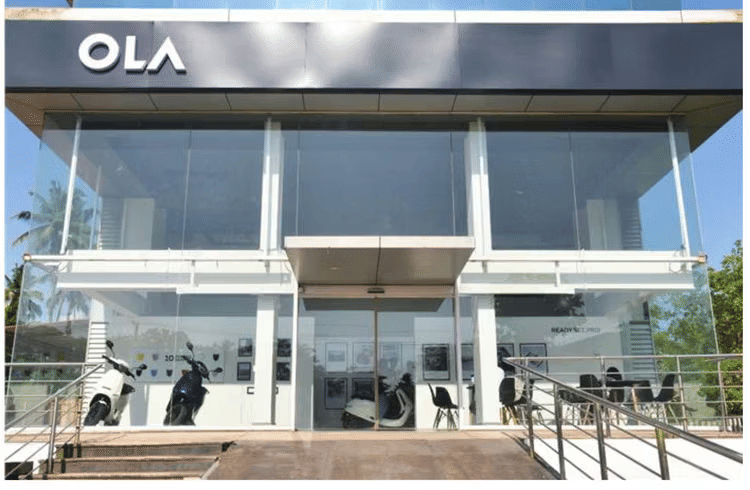 Ola Electric has initiated a plan to raise up to ₹2,000 crore by selling a stake in its battery subsidiary, Ola Cell Technologies (OCT), people familiar with the matter said, according to Press Trust of India (PTI).
The proposed fundraising, which is being managed by investment banks Avendus Capital and Motilal Oswal Financial Services, comes as the electric vehicle maker works to restructure operations and strengthen its balance sheet while expanding domestic battery manufacturing and energy storage capabilities, PTI reported citing sources.
Tractor Sales Growth to Slow Sharply in FY2027, Crisil Warns
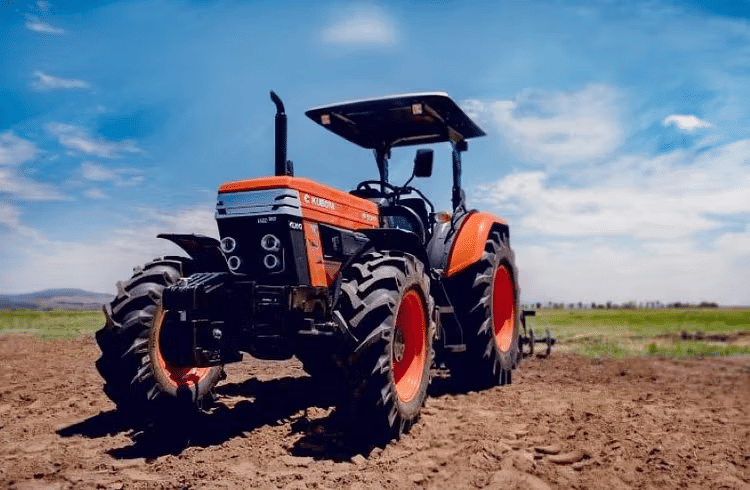 India's tractor sales are projected to grow by just 0–2% in fiscal year 2027, translating to approximately 1.2 million units, according to a report by Crisil Ratings released on March 18, 2026. The slowdown follows an estimated 22% year-on-year rise in FY2026, making the current fiscal a difficult base for comparison.
The primary driver of this year's strong performance was the reduction in the goods and services tax (GST) on tractors from 12% to 5%, which came into effect on September 22, 2025. The cut improved affordability and stimulated both first-time purchases and replacement demand. A favourable monsoon season also supported farm incomes during the period.
Domestic Tractor Shipments Grow 34% in February, Exports up 8%
Iran War Impact
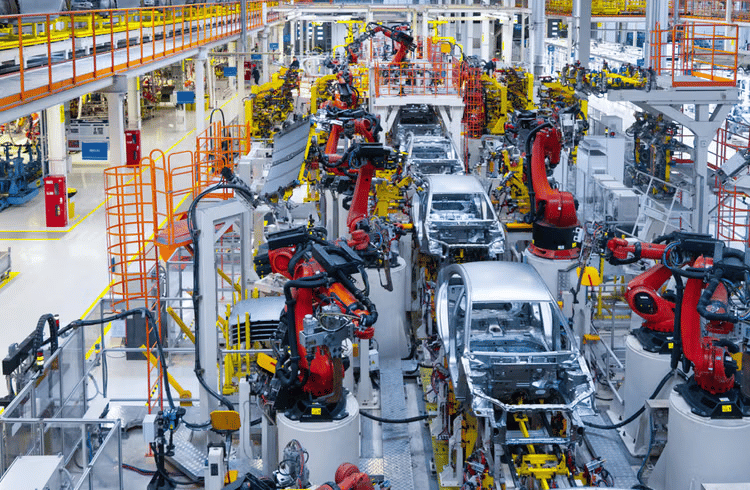 India’s Auto Sector Braces for Margin Squeeze as U.S-Iran Tensions Roil Energy Markets
Indian automakers are facing a sharp profitability dent in the final quarter of the fiscal year as escalating tensions between the U.S. and Iran trigger industrial gas shortages and a spike in raw material costs.
According to a sector update from Axis Securities, the Indian automobile industry is projected to see an EBITDA margin compression of 80 to 100 basis points for Q4FY26 (for manufacturers dependent on natural gas). The squeeze comes as tight energy supply forces manufacturers to shift from piped natural gas to costlier spot LNG or other fuels. This shift is estimated to drive manufacturing costs up by 15% to 25%.
AIDA to Host Annual Distillers' Conclave in New Delhi on 24 March
India’s Auto Boom Faces Risk as West Asia Conflict Disrupts Gas Supply Chains
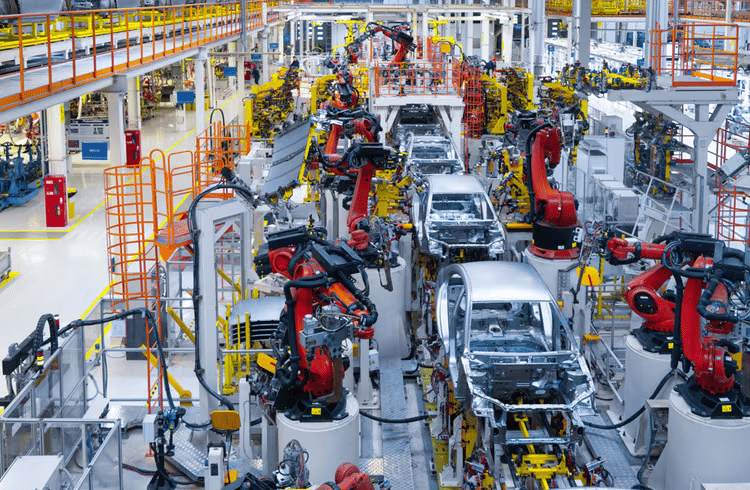 India’s fast-growing automobile sector is facing potential disruption as escalating tensions in West Asia, particularly involving Iran, begin to strain natural gas supplies critical to manufacturing, according to multiple industry executives cited by Reuters.
Automakers and component suppliers are preparing for possible production slowdowns as gas shortages begin to emerge across key manufacturing hubs. Executives across carmakers, suppliers, and dealerships told Reuters that early signs of supply chain stress are already visible, with some vendors reporting difficulty in securing adequate fuel to sustain operations.
Iran Conflict Disrupts Global Automotive Supply Chains
 Vessel traffic through the Strait of Hormuz fell by approximately 70% within hours of strikes on Iran on 28 February 2026, triggering disruptions to fuel supplies, shipping routes, and industrial gas availability that are now being felt across the global automotive industry.
The Strait of Hormuz, a narrow waterway between Iran and the Arabian Peninsula, carries roughly 20% of the world's oil supply. Its disruption has forced shipping operators onto alternative routes around the Cape of Good Hope, adding 10 to 14 days to voyages and creating congestion at ports as far as Singapore, Colombo, and Mundra in India.
Iran War: The Looming Urea Shortage Threatening to Ground India's Logistics Movements
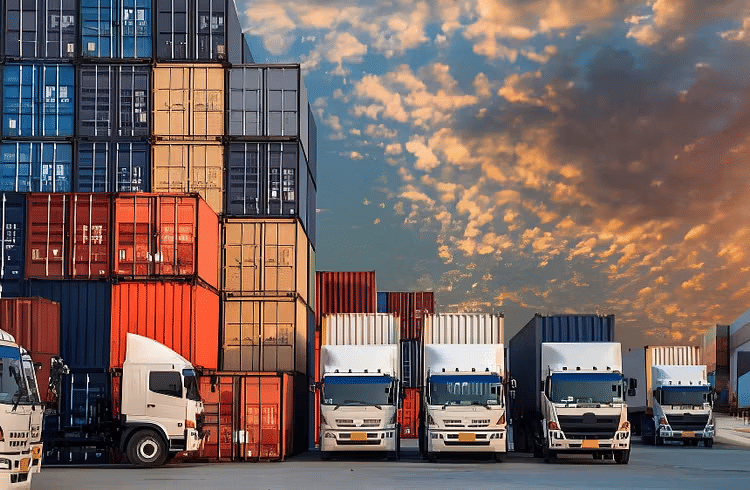 While global markets fixate on skyrocketing oil prices amid the escalating Iran conflict, a far more obscure chemical shortage is threatening to paralyze India's logistics networks. It is no longer just the price of diesel that matters to the global economy; it is whether the engines will even turn over.
According to March 2026 research from DAM Capital, India is staring down a critical shortage of industrial-grade urea used for emissions control. The nation typically relies on imports for 50% to 60% of its total requirements for this specific chemical, sourced primarily from major trade hubs in Egypt and Dubai. With the Strait of Hormuz effectively shut by the ongoing conflict, these vital supply lines are being rapidly severed, leaving the automotive sector dangerously vulnerable to a complete standstill.
India's Bitumen Imports Face Disruption Risk from Gulf Tensions
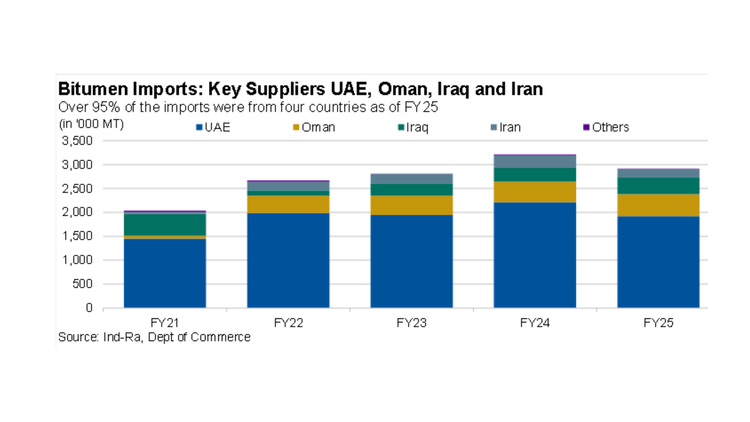 India's road construction sector faces mounting supply chain pressure as geopolitical tensions in the Gulf region raise concerns over the availability and pricing of bitumen, a petroleum-derived material central to road surfacing and pavement works, according to a note published Friday by India Ratings and Research (Ind-Ra).
The agency flagged that nearly 40% of India's bitumen is now sourced from imports, up from
30% at the start of the FY21–FY26 period, reflecting a structural shift in the country's supply base. Over 95% of those imports originate from Gulf suppliers — primarily the UAE, Oman, Iraq, and Iran. Any sustained disruption to shipping through the Strait of Hormuz, a narrow but strategically critical waterway through which a large share of global energy trade passes, could tighten supply and drive up costs for road contractors across the country.
Kirloskar Ferrous Flags Partial Disruption at Solapur Plant Amid LPG Supply Constraints
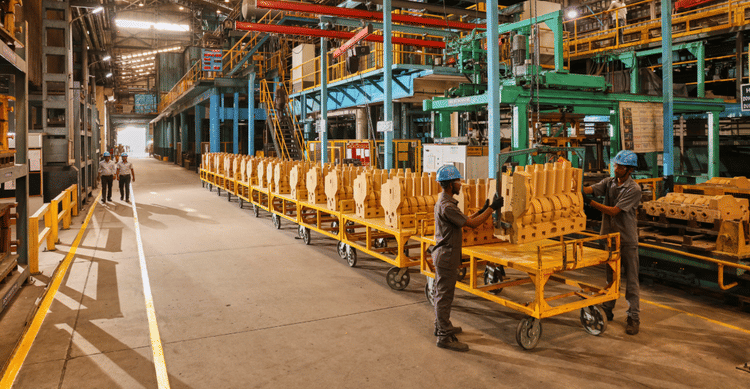 Kirloskar Ferrous Industries Limited has reported a temporary disruption in operations at its Solapur facility, citing constraints in the supply of Liquefied Petroleum Gas (LPG) linked to ongoing global energy supply chain challenges.
In a regulatory filing, the company said that one of the two High Pressure Moulding Lines at its Solapur plant has been impacted, with the disruption taking effect from March 17, 2026, and expected to continue until further notice.
Propylene Drought Hits TPL Manali, Clouding Outlook for Automotive Interior Suppliers
 Tamilnadu Petroproducts Limited (TPL) has declared force majeure and suspended operations at its Propylene Oxide (PO) facility in Manali, citing a total stoppage of raw material supplies as the Indian government moves to prioritize domestic energy security amid escalating Middle East tensions.
In a move that underscores the severity of the global energy crisis, India's Ministry of Petroleum & Natural Gas (MoPNG) has directed refineries and oil marketing companies to divert crude-based petroleum products away from downstream industries. These downstream operations are secondary facilities that transform raw oil and gas into specialized chemicals, such as the plastics and foams used in thousands of products, including those in the automotive industry.
Refinery Disruptions Hit Downstream Auto Chemicals as Andhra Petro Halts Production
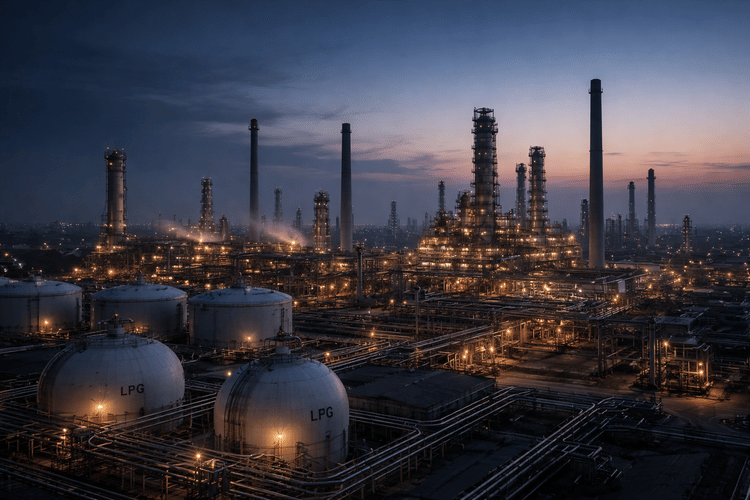 Andhra Petrochemicals Limited (APL) announced on Tuesday the immediate suspension of operations at its primary manufacturing facility in Visakhapatnam. The decision follows a critical disruption in the supply of propylene, a major raw material, after Hindustan Petroleum Corporation Ltd (HPCL) halted deliveries.
The supply failure is a direct consequence of the escalating war between Iran and the United States and Israel, which has begun to ripple through global and domestic energy supply chains. It has now also begun directly and indirectly impacting the automotive sector.
KKR Commits $310 Million to India's Electric Bus Sector in Partnership with PMI Electro
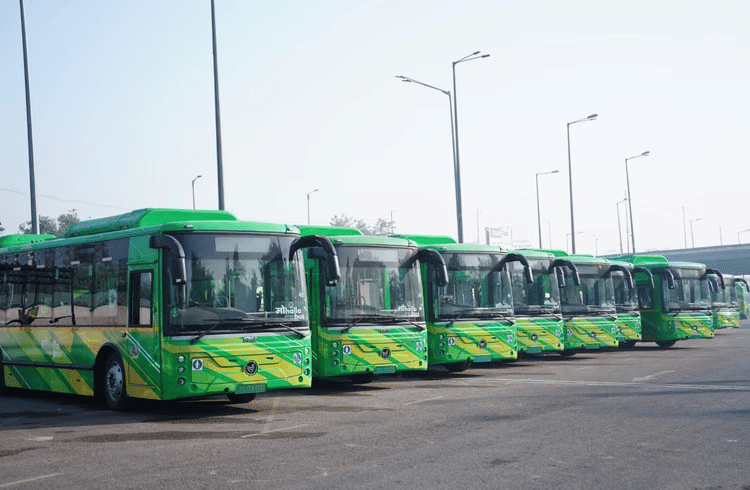 KKR has agreed to invest up to $310 million in a strategic partnership with electric bus manufacturer PMI Electro Mobility Solutions Private Ltd and its operating platform Allfleet India Private Limited, the firms announced on March 18, in Mumbai.
Under the terms of the deal, KKR-managed funds will acquire a majority stake in Allfleet and a minority stake in PMI Electro. The transaction is expected to close in mid-2026, subject to customary regulatory approvals.
GAIL (India) to Invest ₹13 Crore in TruAlt Bioenergy Subsidiary
Hyundai Launches Updated EXTER Compact SUV in India Starting at ₹5.79 Lakh
Bosch and Tata Autocomp to form EV Drivetrain Joint Venture in India
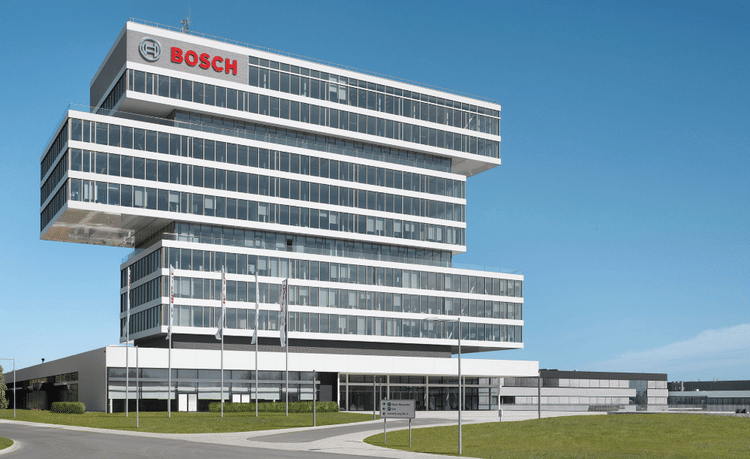 Bosch Ltd’s board of directors, at its meeting held on March 18, approved entering into a joint venture agreement with Tata Autocomp Systems Ltd to form a joint venture company in India. The formal joint venture agreement is scheduled to be executed on March 23.
The JVCo will be incorporated as a private limited company in India, under a name to be jointly applied by both companies and made available by the Registrar of Companies. Its primary business will be the manufacture, sale, and after-sales service of e-axles and electric traction motors, with the flexibility to expand into any other products that the JV board may decide upon from time to time. Both Bosch and Tata Autocomp Systems will each hold 50% of the paid-up share capital of the JVCo, making it an equal partnership in every sense.
Motherson and Hellmann Form Logistics Joint Venture in Dubai
Belrise Industries to Acquire UK-Based Chester Hall Precision Engineering
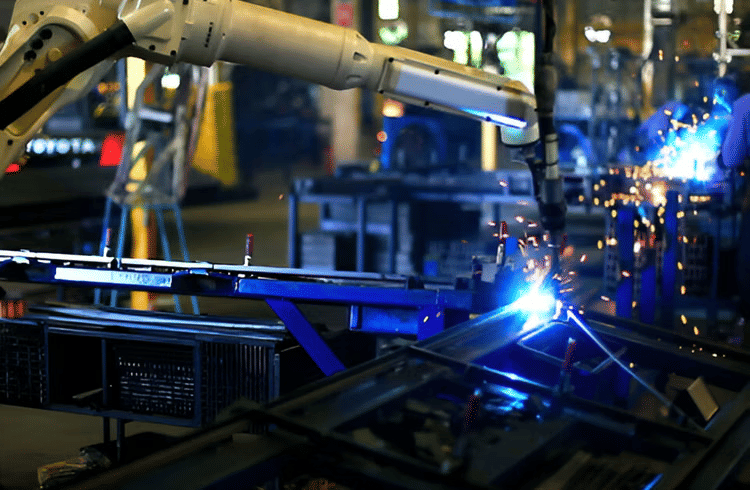 Belrise Industries Ltd’s step-down wholly owned subsidiary, Belrise UK Holdings Ltd, has signed a definitive agreement to acquire 100% stake in Chester Hall Precision Engineering Holdings Ltd, a United Kingdom-based engineering firm serving aerospace, space and defence sectors.
The acquisition marks Belrise’s entry into the global aerospace and defence precision engineering supply chain.
Chester Hall manufactures aerostructures, aero-engine components and satellite parts, and supplies to global aerospace original equipment manufacturers (OEMs) and Tier-1 suppliers. The company also works with a French aircraft engine manufacturer and acts as a single-source supplier for several programmes.
Tata Elxsi Opens Offshore Development Center for Japan's Terumo Corporation
UCAL Limited Offloads 90% Stake in U.S. Subsidiary to AscentX
 UCAL Limited, the long-standing Indian automotive component manufacturer formerly known as UCAL Fuel Systems Limited, has executed a sweeping realignment of its international corporate structure. The company announced a definitive dilution of its interest in its material subsidiary, Ucal Holdings Inc. (UHI), reducing its ownership from a total controlling interest to a minority stake.
The shift in equity structure follows the issuance and allotment of 9,000 equity shares (common stock) by UHI to AscentX Inc. on March 15, 2026, the company informed in a regulatory filing.
Bharat Forge Arm JS Auto Completes ₹300 Crore Fundraise; PI Opportunities Fund Acquires 23% Stake
 Bharat Forge Limited has announced that its step-down subsidiary J S Auto Cast Foundry India Private Limited (JS Auto) has completed a previously announced investment transaction with PI Opportunities Fund I Scheme II, resulting in the investor acquiring a 23% stake in the company on a fully diluted basis.
The transaction follows the execution of a Securities Subscription Agreement (SSA) and Shareholders Agreement (SHA) signed on February 2, 2026 between Bharat Forge, its wholly owned subsidiary BF Industrial Solutions Limited (BFISL), JS Auto, and the investor.
Tsuyo Manufacturing Gets Karnataka Clearance for ₹250 Crore EV Powertrain Plant in Hubli-Dharwad
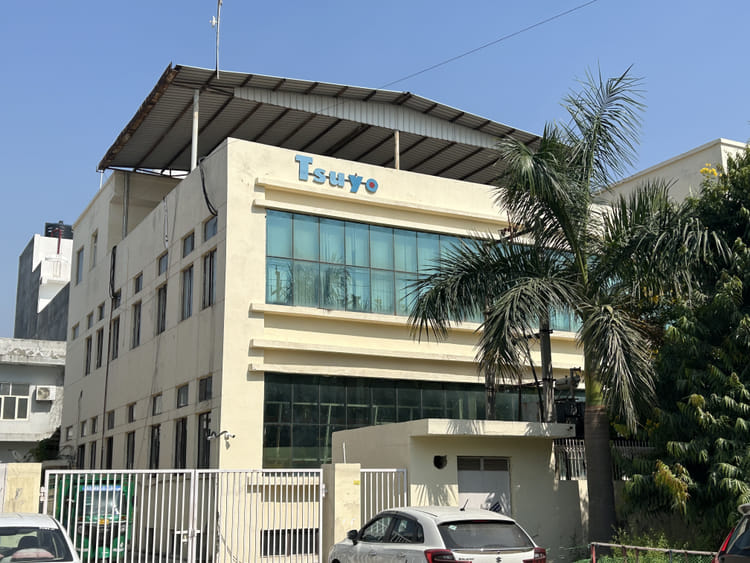 Tsuyo Manufacturing Pvt Ltd has received Single Window Clearance from the Government of Karnataka to set up an electric vehicle powertrain manufacturing and validation facility in the Hubli-Dharwad region. The proposed facility, spread across 20 acres, involves an investment of ₹250 crore and is positioned as a fully integrated powertrain development campus combining manufacturing infrastructure with testing and validation capabilities.
The clearance was granted by the State-Level Single Window Clearance Committee and follows a Letter of Intent the company signed with the Karnataka government in November 2025 at the Bengaluru Tech Summit. The move from intent to regulatory clearance within four months marks a relatively swift progression through the state's approval process.
Vienna Motor Symposium to Host Global Powertrain Experts in April
MRF Wins ₹221 Crore Tax Dispute at CESTAT
 MRF Limited, India's largest tyre manufacturer by revenue, has secured a favourable ruling from the Customs, Excise and Service Tax Appellate Tribunal (CESTAT), Chennai, in a long-running excise duty dispute worth ₹221.31 crore. The final order, dated 16 March 2026, allowed MRF's appeal in full, with consequential relief granted to the company. The order was uploaded to the CESTAT portal on the same day it was pronounced.
The company disclosed the development to the National Stock Exchange of India and the Bombay Stock Exchange on 17 March 2026, as required under Regulation 30 of the SEBI (Listing Obligations and Disclosure Requirements) Regulations, 2015. This disclosure follows a series of quarterly updates MRF had been making to the exchanges since the matter was first reported in August 2023, in keeping with its obligations to inform shareholders of material litigation.
Volvo Construction Equipment to Shut Rokbak Amid Profitability Concerns
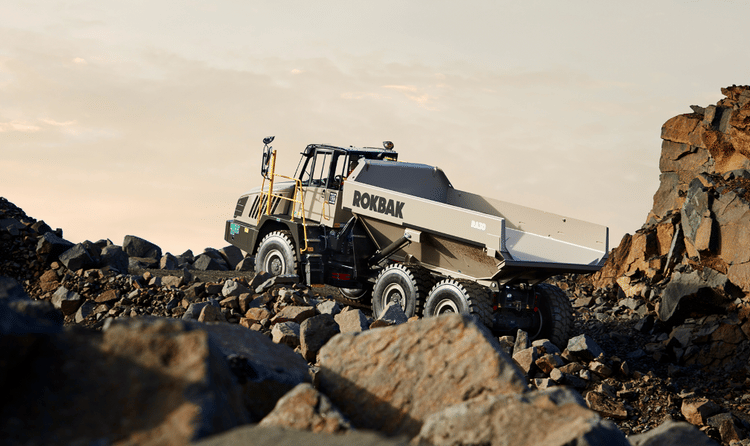 Volvo Construction Equipment (Volvo CE) has announced the closure of its Rokbak business as part of a long-term strategic shift, citing unsustainable profitability and rising operational challenges.
The Rokbak unit, which generated revenues of SEK 1.0 billion in 2025, has been loss-making, prompting the company to reallocate resources toward its broader hauling solutions portfolio.
The closure is expected to impact Volvo CE’s operating income by approximately SEK 0.7 billion in the first quarter of 2026. The company said around SEK 0.4 billion of this impact relates to non-cash items, primarily goodwill impairment.
Telecom Power Expertise Gave us a Head Start in EV Charging: Exicom MD Anant Nahata
 Exicom Tele-Systems Limited believes its decades-long experience in telecom power electronics has given it a natural technological advantage in the fast-growing EV charging segment, according to its CEO and MD, Anant Nahata.
Speaking in an exclusive interaction with Autocar Professional on the sidelines of the inauguration of the company’s new integrated manufacturing facility in Hyderabad, Nahata said the technological foundation of telecom power systems closely overlaps with that of EV chargers.
Exicom Opens Hyderabad Manufacturing Plant With ₹216 Crore Investment
DrivebuddyAI’s Long Road to Safer Roads
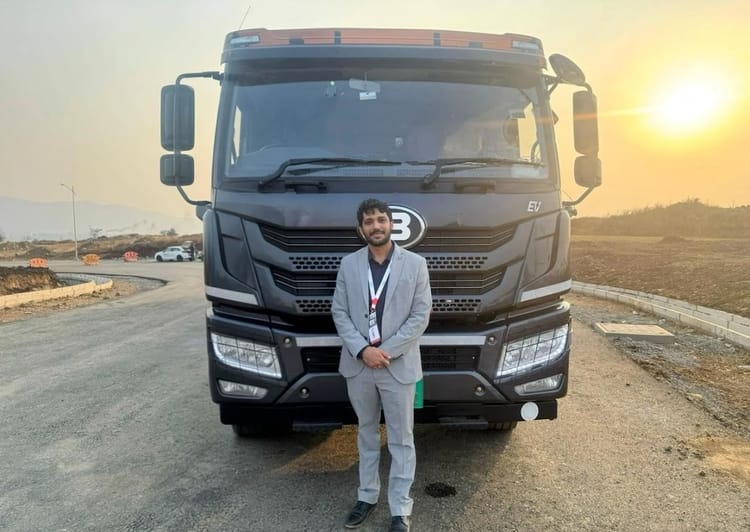 If artificial intelligence can learn to drive safely on Indian roads, it can probably work anywhere in the world. That belief sits at the core of drivebuddyAI, an Ahmedabad-based mobility technology startup building AI-powered driver monitoring and advanced driver assistance systems for fleets and vehicle manufacturers.
Founded in 2018 by electronics engineer Nisarg Pandya, the company is turning the complexity of Indian traffic into a training ground for algorithms designed to reduce accidents today and enable autonomous driving tomorrow.
Earnings Report Card
Automobili Lamborghini Reports €3.2 Billion Revenue in 2025
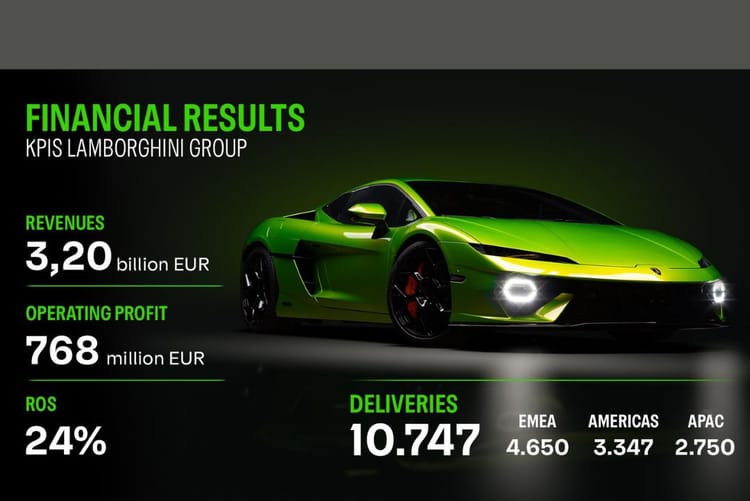 Automobili Lamborghini reported its strongest-ever financial and delivery performance for 2025, with global deliveries reaching 10,747 units and revenue rising to €3.20 billion, marking a 3.3% year-on-year increase.
The company’s operating income stood at €768 million, with profitability at 24%, slightly lower than the previous year due to external factors such as currency fluctuations and the impact of US tariffs. Despite these challenges, the automaker maintained strong margins through improved product mix and cost control measures.
MINI Launches Cooper S Victory Edition in India at ₹57.50 Lakh
ZF Friedrichshafen Posts €2.1 Billion Net Loss in 2025 Despite Profit Margin Gains
 ZF Friedrichshafen AG, one of the world's largest automotive suppliers, reported a net loss of €2.1 billion for fiscal year 2025, driven by charges related to the early termination of unprofitable electric mobility projects. Despite the accounting loss, the company exceeded its own guidance on operating profit and cash flow, and reduced its overall debt burden.
Group sales for the year reached €38.8 billion, down from €41.4 billion in 2024 — a nominal decline of around 6 percent. Stripping out currency and acquisition effects, sales grew 0.6 percent organically, reflecting modest resilience in a subdued global market.
AUMOVIO Posts Higher Profit in 2025 Despite Revenue Decline
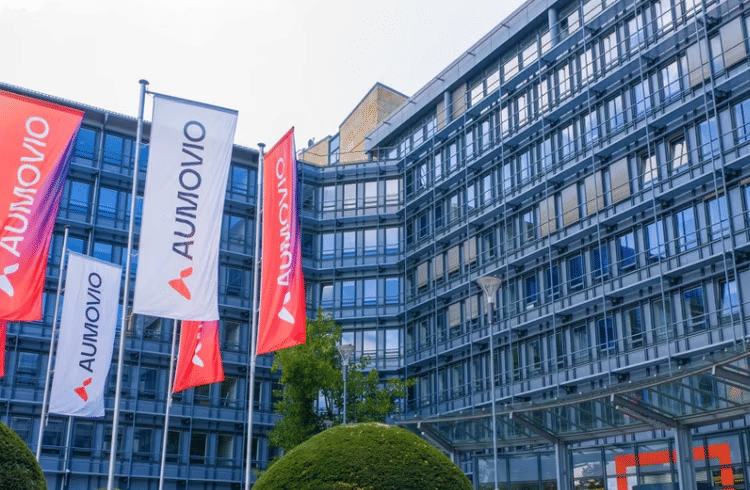 AUMOVIO reported adjusted earnings before interest and taxes (EBIT) of €717 million for fiscal year 2025, a 45.4% increase from €493 million the prior year, despite a 5% drop in adjusted consolidated sales to €18.5 billion. The adjusted EBIT margin reached 3.9%, up from 2.5% in 2024, landing at the top of the company's own guidance range.
The Frankfurt-based company generated adjusted free cash flow of €159 million for the year, after absorbing €491 million in cash outflows tied to restructuring activities and its corporate spin-off. Stripping out those one-time effects, normalised free cash flow stood at €650 million. Net liquidity at year-end was €1.4 billion, with the company's syndicated credit line remaining undrawn.
RELATED ARTICLES

Iran War: The Looming Urea Shortage Threatening to Ground India's Logistics Movements
 Shahkar Abidi
21 Mar 2026
Shahkar Abidi
21 Mar 2026
As Iran conflict chokes Gulf supply routes, India's BSVI diesel fleet faces an existential chemical crisis that no fuel ...


Tesla Plans Entry Into India's Energy Storage Market, Reuters Reports
 Autocar Professional Bureau
21 Mar 2026
Autocar Professional Bureau
21 Mar 2026
Reuters reports that Tesla is targeting India's utility-scale energy storage sector, signalling an expansion beyond elec...

Škoda Auto India Launches Updated Kushaq from ₹10.69 Lakh
 Sarthak Mahajan
21 Mar 2026
Sarthak Mahajan
21 Mar 2026
Škoda Auto India has introduced an updated Kushaq SUV across five variants, starting at ₹10.69 lakh, featuring a segment...