Follow us
Weekly News Wrap: Maruti’s ₹77,500 Crore Bet, Skoda VW Job Cuts, August Sales
The week saw passenger vehicle sales jump 36% in August, Maruti Suzuki outline a five-year investment programme, policymakers push deeper localisation and tighter emission norms, while Kia and Hyundai laid out multi-powertrain strategies.
 By Autocar Professional Bureau
 1584 Views


India’s automotive industry had a busy week between August 31 and September 6, led by a sharp rise in August vehicle sales, fresh investment and product plans and a series of policy announcements at the ACMA and SIAM annual conventions.
Domestic passenger vehicle wholesales were estimated to have risen around 36% year-on-year in August to about 4.5 lakh units, while the shift towards alternative powertrains continued. Maruti Suzuki outlined a ₹77,500 crore investment programme through FY31 and said it would ramp up production of the eVitara while preparing a smaller electric vehicle.
Policy was another major theme. The government said a draft of BS7 emission norms could be released in the next couple of months, approved a retrofit emission-control standard for older trucks and buses and called on manufacturers to deepen localisation.
Kia entered India’s hybrid market with the Sorento and announced plans for CNG, hybrid and flex-fuel products, while Hyundai said EVs would lead the transition to cleaner mobility but hybrids could eventually become the “next diesel”. Tata Motors, meanwhile, formally launched its €3.82 billion tender offer for Iveco Group.
Here is a detailed round-up of the key developments that shaped the automotive industry during the week:
Passenger Vehicles
August PV Wholesales Rise Around 36% to 4.5 Lakh Units
India’s domestic passenger vehicle market recorded another strong month, with wholesales estimated at around 4.5 lakh units in August, up about 36% from a year earlier. The growth was aided partly by a low base, but manufacturers also continued to see strong underlying demand ahead of the festive season.
Maruti Suzuki reported domestic passenger vehicle wholesales of 1.77 lakh units, up 35%, while Hyundai’s volumes increased 23.6% to 54,396 units. Tata Motors’ domestic PV dispatches jumped 59% to 65,253 units, while Mahindra sold 59,257 SUVs during the month.
Maruti Suzuki now expects the domestic PV industry to grow at least 10% in FY27, although growth is likely to moderate in the second half as the comparison base becomes stronger.
Electric passenger vehicle registrations also continued to grow. EV registrations increased 50% year-on-year to 30,325 units in August, taking registrations during April-August FY27 to 1.53 lakh units, up 85%. Tata Motors remained the market leader with a 42.8% share, followed by Mahindra at 21% and JSW MG Motor India at 15.1%.
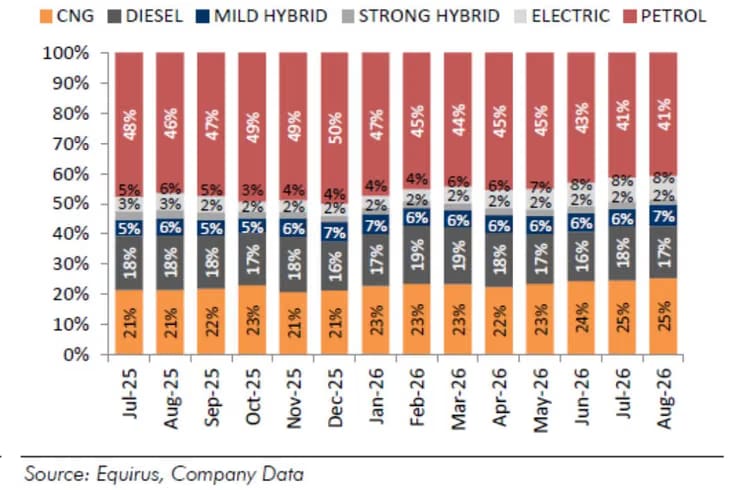
Retail data showed a broader change in the passenger vehicle fuel mix. Petrol’s share fell to a record-low 41% in August, while CNG, hybrids and EVs together accounted for 42% of PV retails, overtaking petrol for the first time. Passenger vehicle retail sales rose 16% to around 4.01 lakh units during the month.
Maruti Suzuki Outlines ₹77,500 Crore Investment Plan
Maruti Suzuki laid out plans to invest ₹77,500 crore over the five years through FY31 as it expands manufacturing capacity, develops new products and strengthens R&D.
The company plans capital expenditure of ₹14,000 crore in FY27 alone, up 40% from ₹10,000 crore in the previous financial year. The wider investment programme will cover production capacity, new models, research and development, sales infrastructure, logistics and carbon-reduction initiatives.
The investment comes as Maruti pursues a multi-powertrain strategy covering internal combustion engines, CNG, hybrids and EVs.
Maruti also said it expects to ramp up production of the eVitara ahead of the festive season as supply constraints ease. The company has a backlog of around 2,000 units for its first EV and is balancing domestic production with exports at its Gujarat plant.
It also confirmed that a smaller electric vehicle is in the pipeline as it looks to widen its EV portfolio.
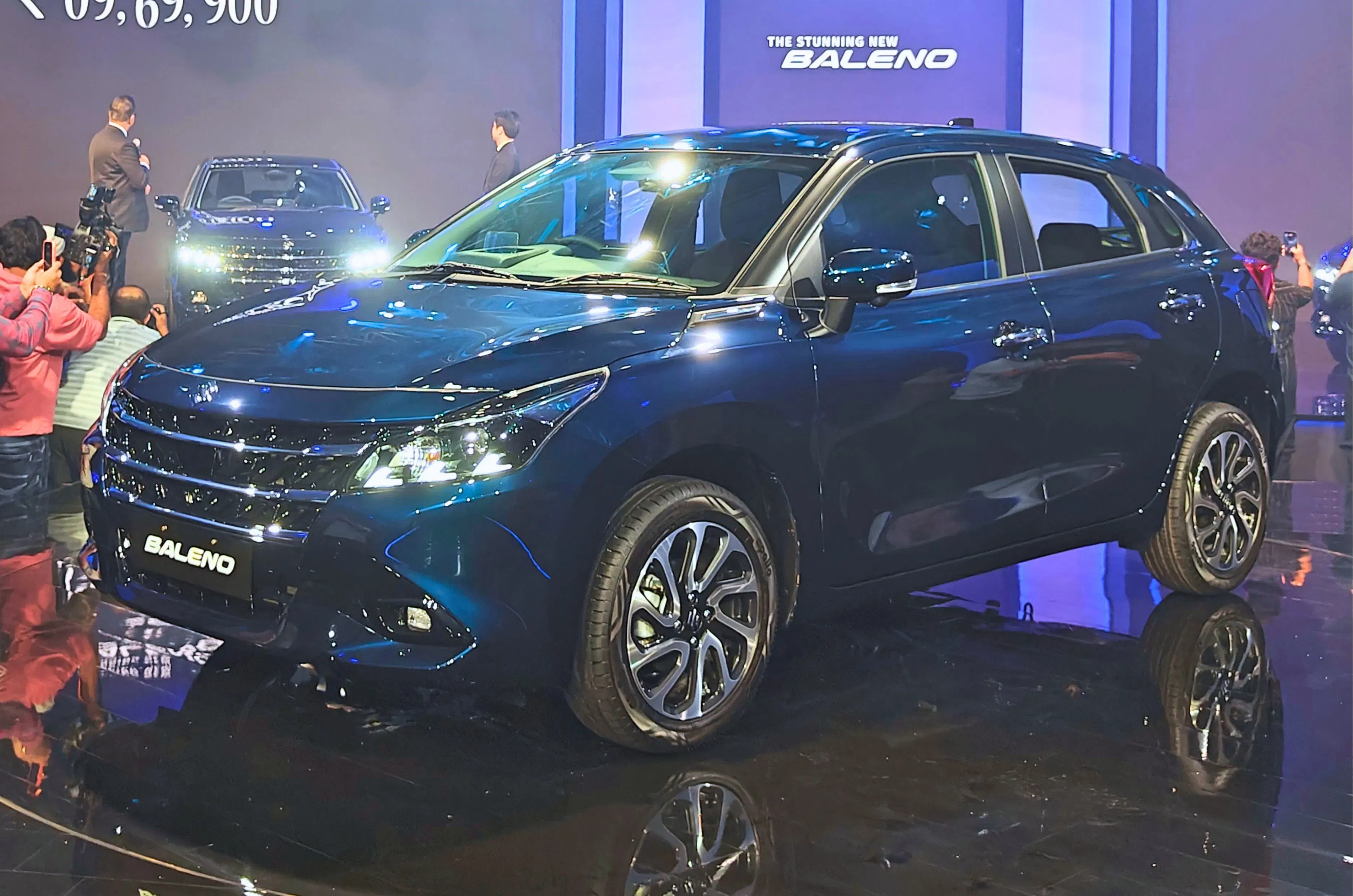
Later in the week, Maruti launched the updated Baleno at a starting price of ₹6.09 lakh. The company is looking to sustain the model’s monthly sales run rate of around 16,500 units and use the hatchback to strengthen its premium Nexa channel. The updated Baleno gets Level 2 ADAS, a first for the premium hatchback segment.
Kia Enters Hybrid Market, Widens Powertrain Strategy

Kia India made a significant expansion of its powertrain strategy during the week with the launch of the Sorento, its first hybrid model in the country.
The three-row SUV is priced from ₹27.99 lakh, with Kia targeting monthly volumes of as much as 4,000 units. The company plans to progressively increase localisation and manufacture the Sorento’s hybrid engine in India from next year.
Kia is also studying an additional production line with annual capacity of around 2 lakh units at its Anantapur plant as it targets domestic sales of about 4.1 lakh units and a 7.6% market share by 2030.
The Sorento is part of a much broader powertrain push. Kia confirmed factory-fitted CNG versions of the Carens and Carens Clavis, a flex-fuel Syros and a hybrid Carnival.
The company said CNG has become too large a part of the Indian car market to ignore, while localisation will be critical to making hybrid technology more affordable. EVs will remain another major part of the strategy.
Hyundai Sees Hybrids Becoming the ‘Next Diesel’

Hyundai Motor India also outlined a technology-agnostic strategy, with Managing Director and CEO Tarun Garg saying EVs would lead the move towards cleaner mobility while hybrids gain ground over time.
Hyundai expects petrol and CNG to remain important below ₹15 lakh, while diesel will continue to have demand among SUV and long-distance users. The company is preparing hybrids as its products, localisation and supplier ecosystem fall into place.
Garg said hybrids could eventually become the “next diesel”, appealing to buyers looking for lower running costs and longer driving range without depending on external charging.
Hyundai is also preparing a new India-focused electric SUV for the fourth quarter of 2026.
Skoda Volkswagen India Reportedly Plans Workforce Reduction
Skoda Auto Volkswagen India is accelerating a restructuring programme that could reduce its workforce by around 12% through 2027, Bloomberg reported.
The programme is aimed at cutting operating costs ahead of the Volkswagen Group’s next round of investments and model launches in India. Skoda Auto Volkswagen India said it does not comment on speculative workforce figures but confirmed that efforts to optimise its operations are continuing.
The restructuring comes as the group also holds discussions with JSW Group over a potential equity partnership in India.
Policy and Industry
BS7 Draft Expected in Coming Months
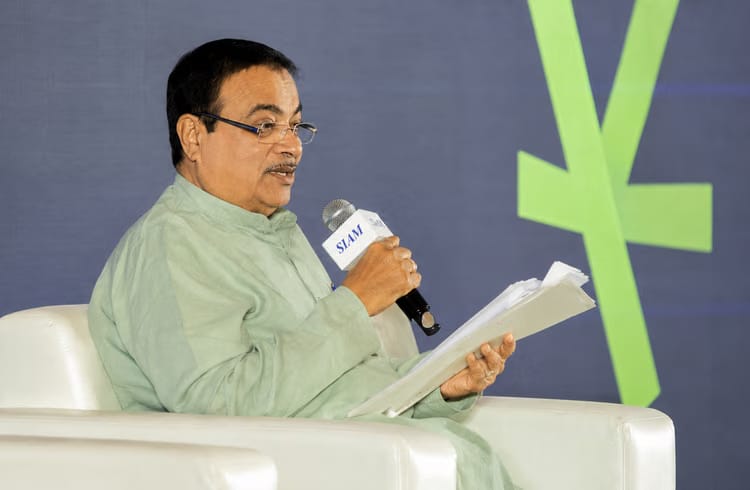
India could publish the draft framework for BS7 emission regulations within the next couple of months, Road Transport and Highways Secretary V Umashankar said at the SIAM Annual Convention.
The framework is close to being finalised and consultations are underway. The timing of implementation is expected to be one of the key issues for the automotive industry.
BS7 will succeed the BS6 framework introduced in April 2020 and is expected to place greater emphasis on vehicle emissions under real-world driving conditions.
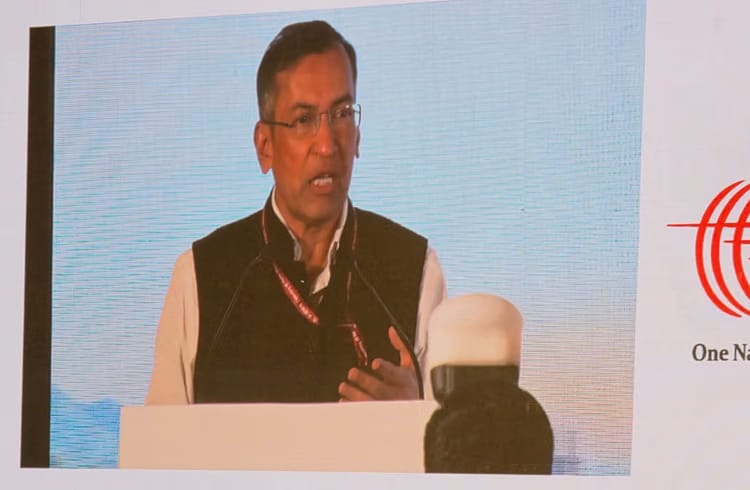
Separately, the road transport ministry said India has narrowed the gap with advanced automotive markets on vehicle standards. The country, which was around a decade behind markets such as Europe and Japan 10-15 years ago, is now only two to three years behind in some areas and at par or ahead in others, according to the ministry.
Govt Clears Retrofit Emission Standard for Older Trucks and Buses
The government also approved AIS-228, a new technical standard that allows emission-control devices to be retrofitted to older heavy trucks and buses.
Road Transport Minister Nitin Gadkari said the technology can reduce particulate matter emissions from pre-BS6 heavy vehicles by up to 90% and nitrogen oxide emissions by up to 60%, potentially bringing a retrofitted BS4 vehicle close to BS6 emission levels.
The retrofit option gives operators another route besides scrapping or replacing older vehicles as the government pushes fleet renewal under the Parivartan programme in Delhi-NCR.
Auto Industry Told to Deepen Localisation and Innovation
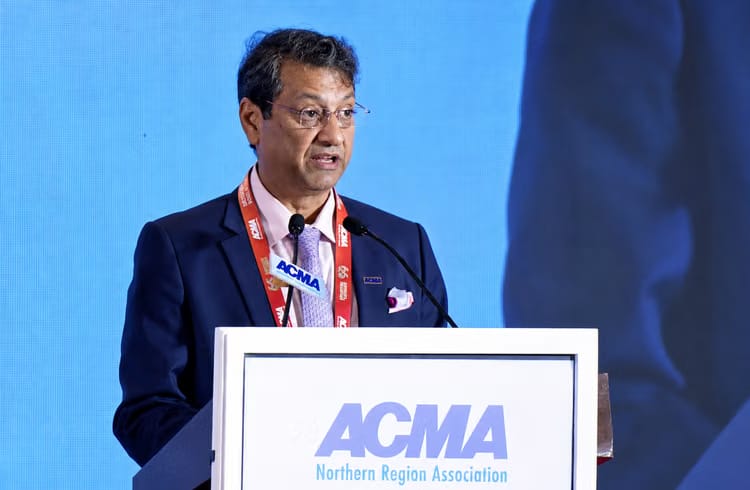
Localisation was one of the central themes at the ACMA Annual Session.
ACMA President Vikrampati Singhania called for the industry to move from simply “Make in India” towards “create in India, engineer in India and innovate in India”, arguing that Indian suppliers need to take greater ownership of product development, technology and intellectual property.
India’s auto component industry crossed ₹7.6 lakh crore, or around $86 billion, in FY26, growing 12.7%, while exports reached $24 billion.
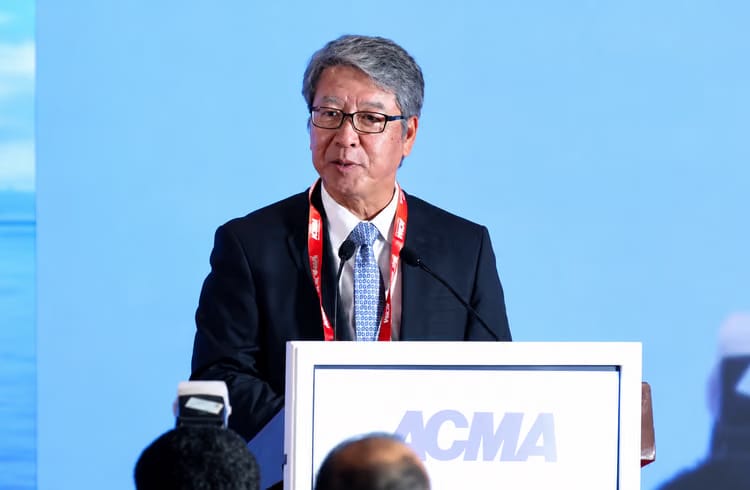
Maruti Suzuki MD and CEO Hisashi Takeuchi separately called for localisation to extend deeper into the supplier ecosystem, particularly among Tier-2 and Tier-3 companies.
He said changes in global supply chains are creating an opportunity for India to emerge as a trusted manufacturing hub, but suppliers will need stronger engineering, technology and quality capabilities to take advantage of it.
Commercial Vehicles
Tata Motors Opens €3.82 Billion Iveco Tender Offer
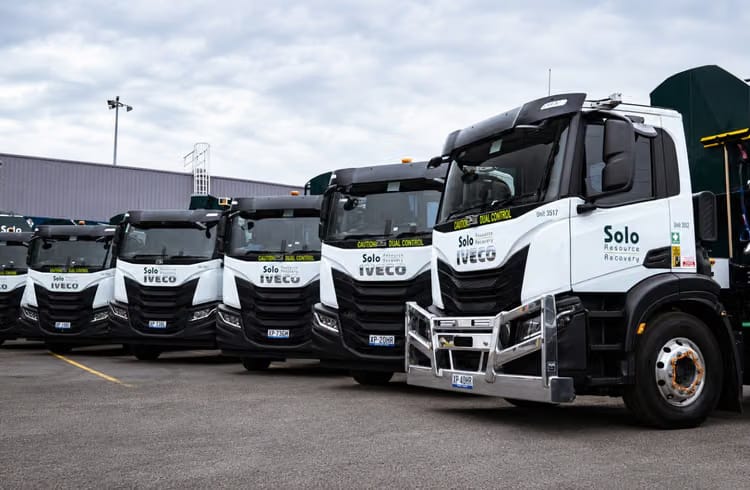
Tata Motors formally commenced its recommended all-cash tender offer for Iveco Group, valuing the European commercial vehicle company at around €3.82 billion.
The offer values Iveco shares at €14.10 each. Iveco’s board has unanimously backed the transaction, while largest shareholder Exor has committed its roughly 27% stake to the offer.
The acceptance period is scheduled to run from September 7 to October 26. Tata Motors intends to acquire 100% of Iveco and delist the company from Euronext Milan.
The two companies together would sell more than 590,000 commercial vehicles annually and generate about €21 billion in revenue, with operations spanning India, Europe, South America and other markets.
Commercial vehicle makers also posted strong August numbers. Ashok Leyland’s total sales rose 38% year-on-year to 21,038 units, with medium and heavy truck sales increasing 60% to 10,748 units.
Electric Two-Wheelers
Hero MotoCorp Targets No. 1 EV Position
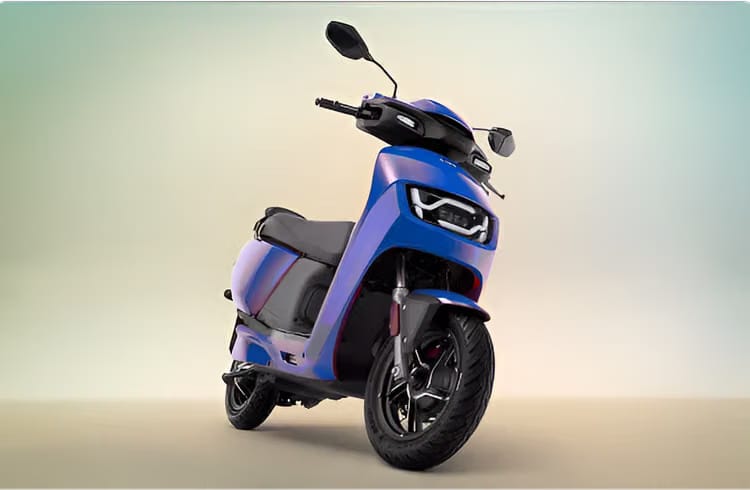
Hero MotoCorp said it is aiming for the top position in India’s electric two-wheeler market as it scales up Vida and continues to support Ather Energy.
CEO Harshavardhan Chitale said Vida and Ather together have already occupied the leading position during some months. Vida has gained almost 600 basis points of market share over the past year, while its sales are growing around 100% year-on-year.
Hero plans to increase its EV production capacity by almost 50% in September from the previous month and double it further by December.
Electric two-wheeler demand overall remained strong in August. Retail sales rose 67% year-on-year to around 1.83 lakh units, giving EVs a 10.7% share of the two-wheeler market. TVS remained the largest electric two-wheeler maker, followed by Bajaj, Ather, Hero and Ola.
Ola Electric Approves Up to ₹1,500 Crore Fundraise
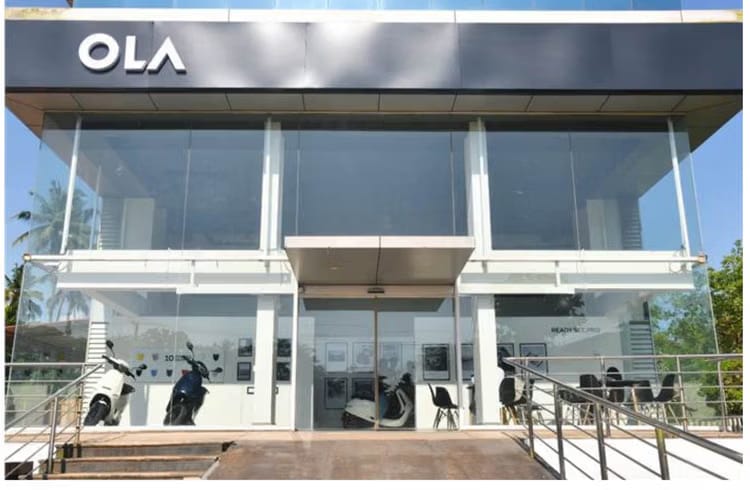
Ola Electric ended the week with its board approving an enabling resolution to raise as much as ₹1,500 crore through equity or equity-linked instruments.
The company also announced the resignation of Chief Operating Officer Hyun Shik Park, effective September 5, citing personal reasons.
The proposed fundraising could be carried out through routes including a qualified institutional placement, rights issue, further public offer or private placement, subject to approvals.
The developments capped a week in which the industry’s focus shifted simultaneously towards the festive demand outlook, deeper localisation, tighter emission standards and a broader mix of powertrain technologies.

RELATED ARTICLES

Petronet LNG and Gruner Renewable Energy Enter JV to Build CBG Plants
 Dev Vadchhedia
 22 Oct 2026
The State-run LNG importer signs binding term sheet for 50:50 joint venture to establish 10 compressed biogas units wort...


Rajratan Global Wire Q2 Net Profit Rises 17 Percent to Rs 24.14 Crore
Dev Vadchhedia
22 Oct 2026
The tyre bead wire maker records 26 percent revenue growth driven by export demand and operational turnaround at its Che...

Tata Passenger Electric Mobility Crosses 1,000 Fast-Charging Points Across India
Dev Vadchhedia
22 Oct 2026
Tata Motors-led EV network energizes 180 highway corridors and installs 40 MW of total charging capacity.