


 Follow us
CAFE Norms are Misaligned with India’s Mobility Reality: CAQM member
India’s car‑centric CAFE norms face criticism for overlooking two‑ and three‑wheelers that dominate urban mobility. Experts warn real‑world air‑quality gains require broader policy focus beyond passenger cars.
 By Prerna Lidhoo & Darshan Nakhwa & Anurag Chaturvedi & Mukul Yudhveer Singh
 29 Jan 2026
 2012 Views
Share -
2012 Views
Share -


India’s corporate average fuel efficiency (CAFE) norms are overly car-centric and not aligned with the country’s mobility and air-quality realities, a senior member of the Commission for Air Quality Management (CAQM) said on Wednesday.
“CAFE targets CO₂ (emissions) and fuel efficiency. It is designed for decarbonisation,” Dr Virinder Sharma, Member (Technical) at CAQM, said at the Symposium on International Automotive Technology (SIAT) 2026. “But India’s air-quality problem is fundamentally about PM2.5 exposure, and that is where the gap lies.”
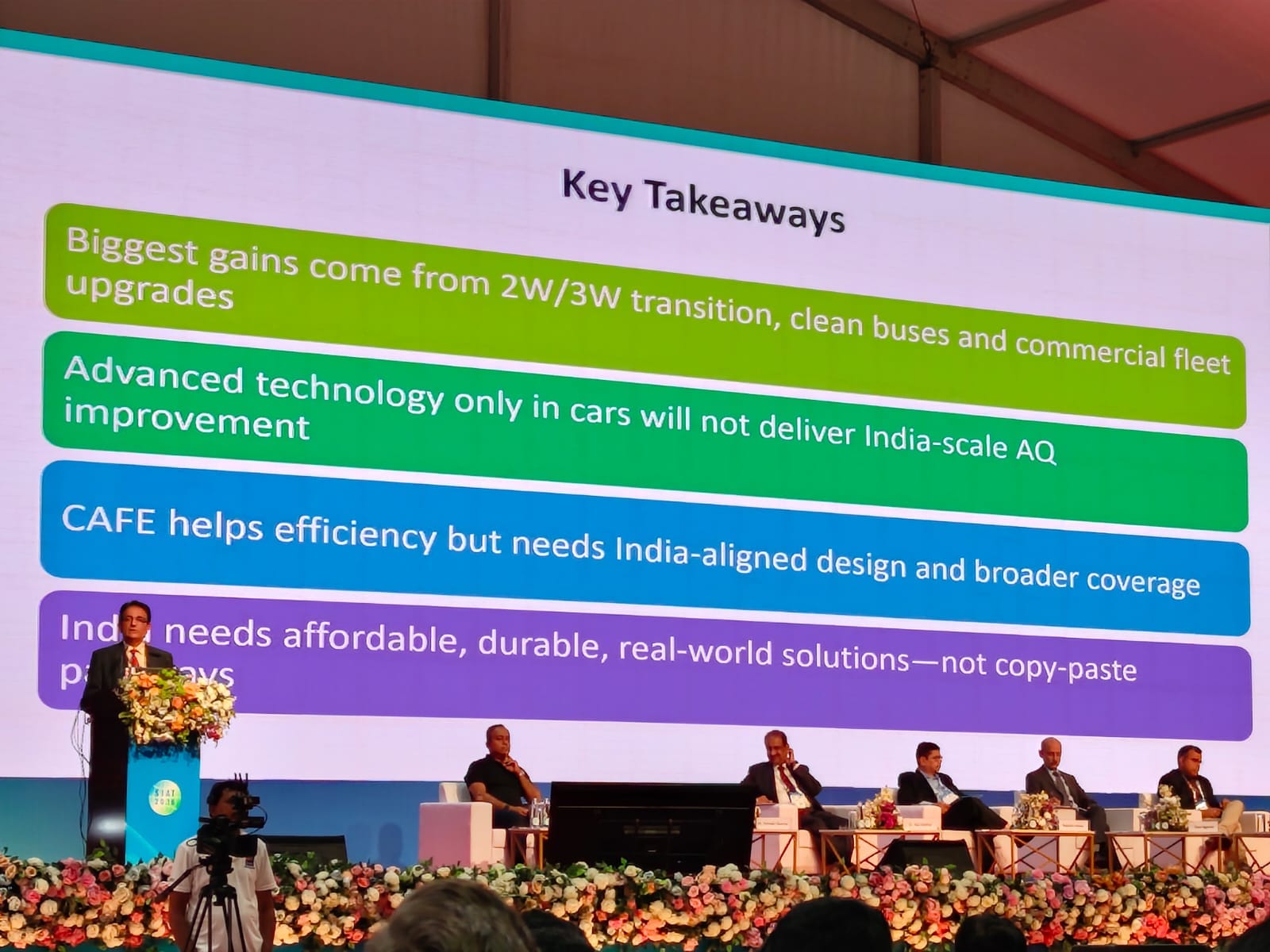
He said the impact of CAFE norms is concentrated on passenger cars, even though two-wheelers and three-wheelers dominate urban mobility, together accounting for nearly 70–80% of vehicles and a substantial share of on‑road emissions exposure.
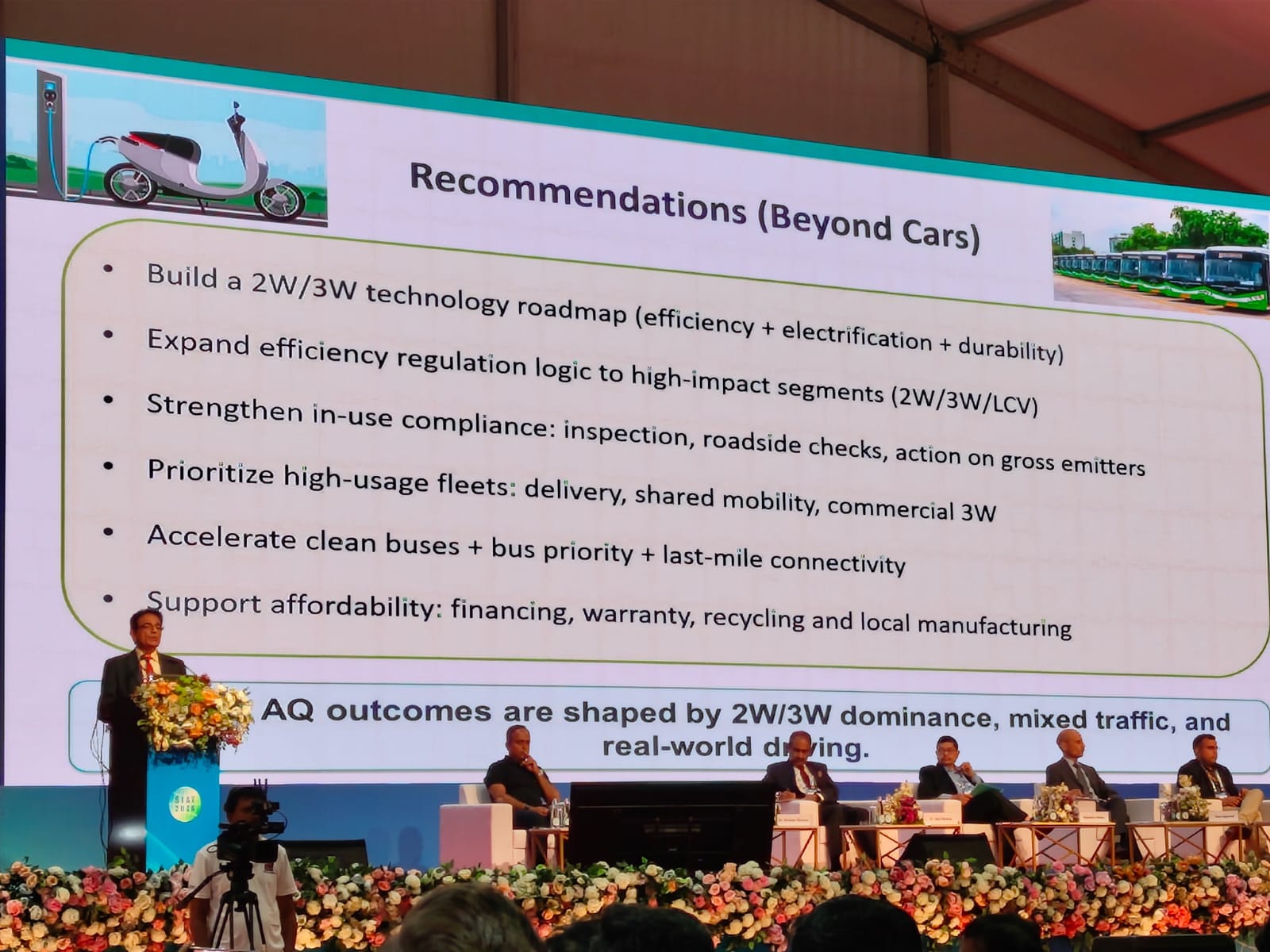
“India is not a car-dominated country,” Sharma said. Policies that improve only new car efficiency will therefore have limited impact on air quality outcomes. “The air-quality story in India will not be decided by cars alone,” he further added.
India implemented CAFE Phase II norms in April 2022 and has release draft of the next phase, often referred to as CAFE 3, which will tighten fleet-average CO₂ targets for passenger vehicles over the next regulatory cycle. The rules are aligned with global efficiency frameworks and are expected to push greater electrification and lightweighting among carmakers.
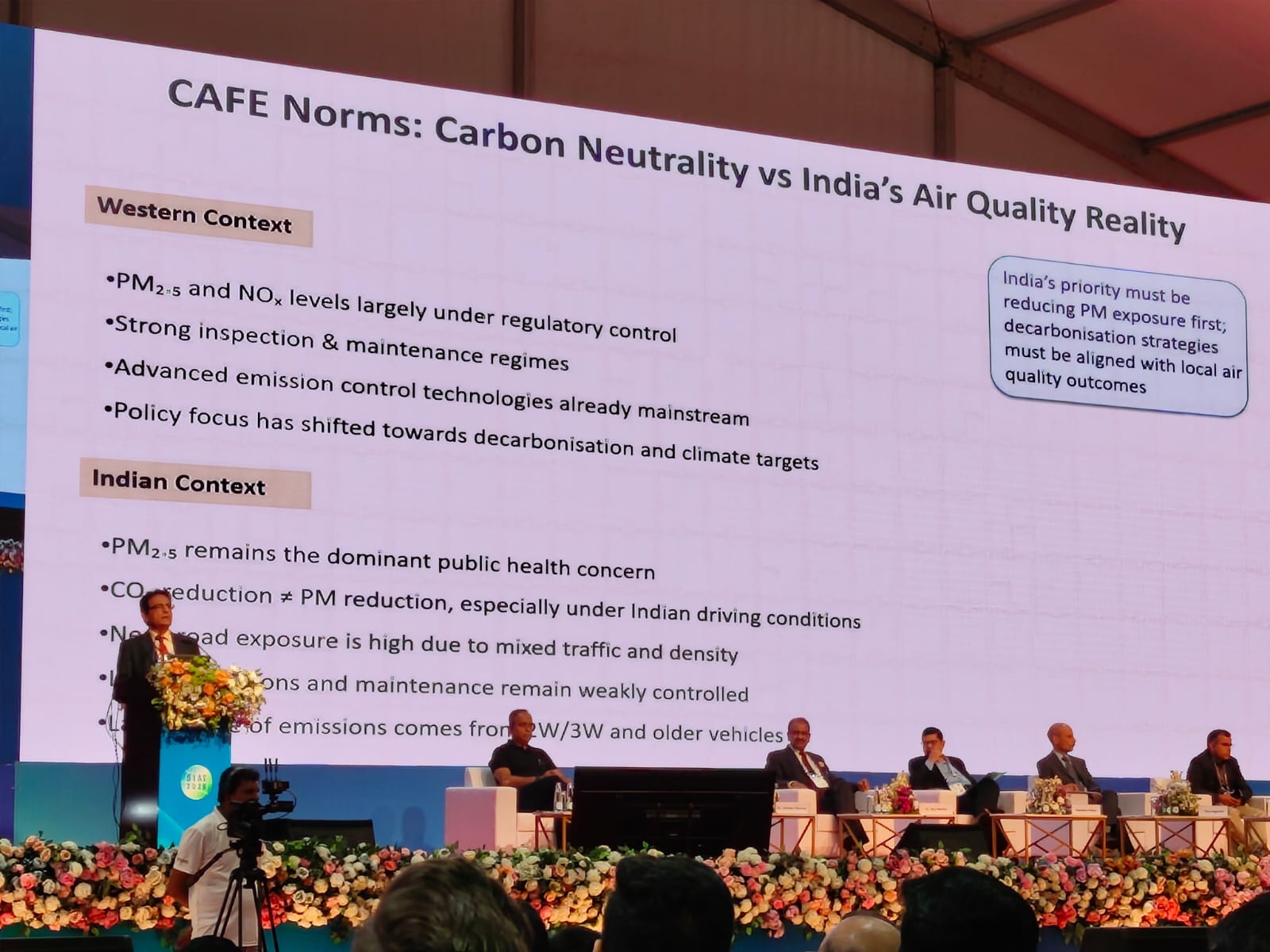 But Sharma said the western policy sequencing that first addressed air pollutants and later shifted to carbon reduction does not translate cleanly to Indian driving conditions marked by congestion, dust, idling and mixed traffic. “In many global cities, PM and NOx levels were brought under control through strong emission standards and enforcement before the focus moved to decarbonisation,” he said. “In India, PM2.5 remains the dominant public health concern.”
The slow turnover of India’s vehicle fleet further dilutes the impact of efficiency norms, Sharma said. Older BS-I, BS-II and BS-III vehicles continue to operate alongside newer models, particularly outside large metropolitan regions. “Even today, a large number of old vehicles remain on the road,” he said. “Benefits from cleaner new vehicles arrive gradually, while exposure continues at street level.”
Sharma said this imbalance between policy focus and fleet composition weakens the effectiveness of car-centric efficiency norms. “Advanced technology in cars alone will not deliver India-scale air-quality improvement,” he said, adding that policy attention needs to extend to high-usage segments such as two-wheelers, three-wheelers and commercial fleets.
Despite these regulatory and fleet challenges, demand momentum remains strong. India’s passenger vehicle market recorded its highest-ever annual volumes in 2025, with wholesales of about 4.5 million units, according to industry data. Utility vehicles accounted for a growing share of sales, while two-wheelers remained the single largest mobility segment by volume and usage.
He also flagged the limitations of test-cycle-based regulations. Gains recorded under laboratory conditions do not always reflect real-world performance in Indian heat, dust and stop-go traffic. Real-world outcomes matter more than brochure technology, Sharma said.
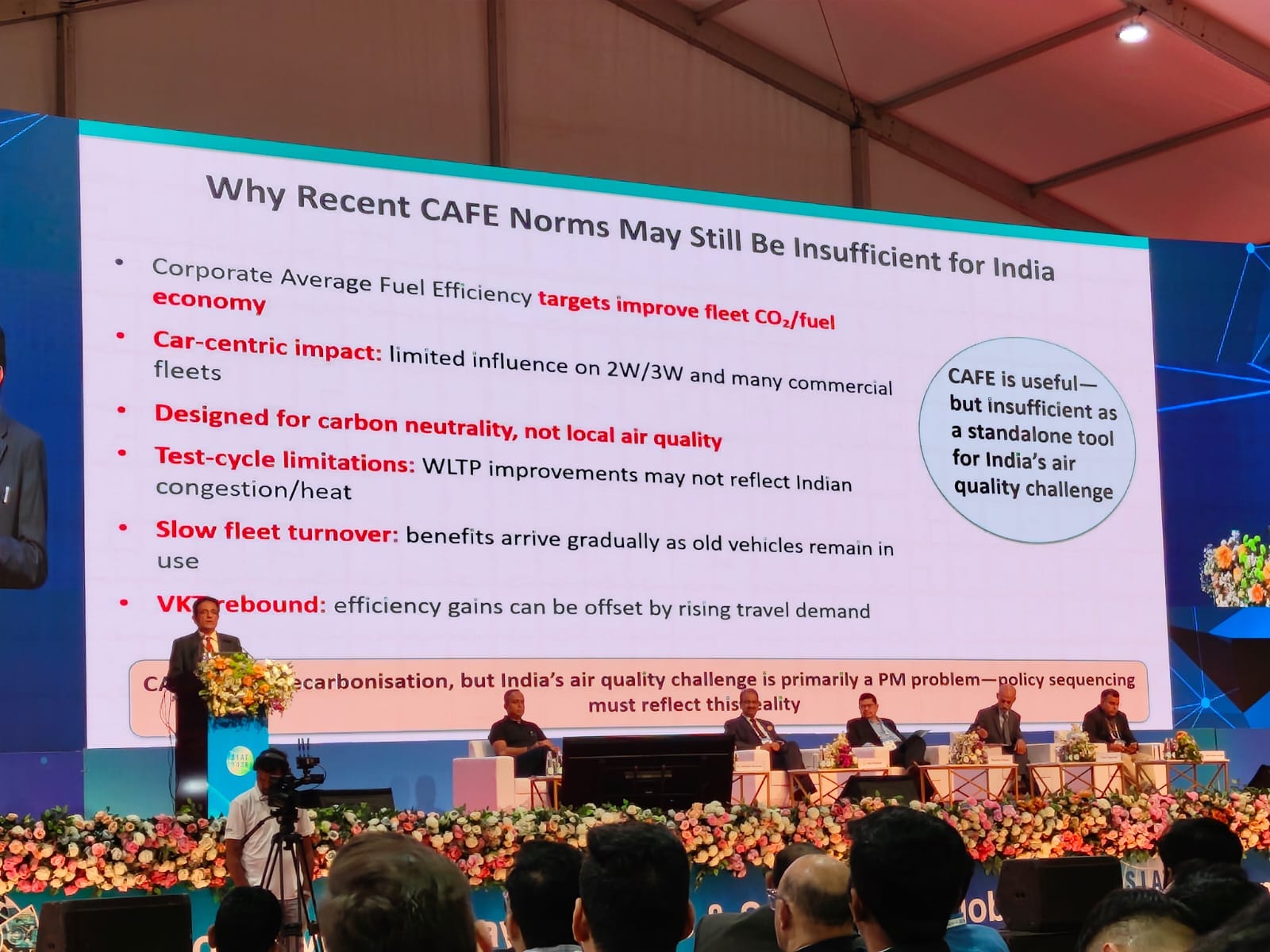
He maintained that CAFE remains a useful tool for improving fleet efficiency and supporting long-term decarbonisation, but warned against treating it as a standalone solution for India’s air-quality crisis. “India needs affordable, durable, real-world solutions designed for its own fleet and usage patterns, not copy-paste global models,” he said.
Sharma said the priority for Indian cities should be reducing emissions and exposure where people live and work, before sequencing broader decarbonisation strategies. “It will be decided by what the majority of people are using on the road every day."

RELATED ARTICLES

Oben Electric Reaches 10,000-Unit Production Milestone at Bengaluru Plant
 Dev Vadchhedia
28 Sep 2026
Dev Vadchhedia
28 Sep 2026
Oben Electric said it has ramped up assembly to service 25,000 Rorr Evo bookings.


NSRCEL, Maruti Suzuki Launch Seventh Mobility Startup Cohort
Eshisha Java
28 Sep 2026
The six-month programme will support early-revenue to scale-stage startups across vehicle technology, clean tech, mobili...

GARC Upgrades Automotive Testing Infrastructure Under PM E-DRIVE
Eshisha Java
28 Sep 2026
The Chennai-based testing agency is adding EV, battery, ADAS, crash safety and heavy commercial vehicle testing capabili...