Follow us
How Tata Motors is building its foundation in Bharat
At a time when the small commercial vehicle market is not driving well in the country, an initiative to tap small rural markets is helping Tata Motors, says Sumantra B Barooah.
 By Sumantra B Barooah
 21569 Views


R Ramakrishnan: "We will focus on offering more variants of the Ace for different applications as well as add creature comforts in the vehicles."
The revival of the medium and heavy commercial vehicle (M&HCV) segment spells good news for Tata Motors and its peers. But the story is a little different in the light commercial vehicle (LCV) market, especially in the small commercial vehicle (SCV) segment.
While M&HCVs drove to the bottom and are back on growth path, its smaller siblings are lagging. “We have struggled in the first three months of this year and we may be close to the bottom but I definitely can’t see the bottom behind us, which I can say very confidently for the bigger trucks,” says R Ramakrishnan, senior vice-president (Commercial Vehicle Business Unit), Tata Motors. Even in these tough times, what is helping Tata Motors is its 'Neev' (foundation) – an initiative to discover new markets started three years ago.
REACHING OUT TO RURAL INDIA
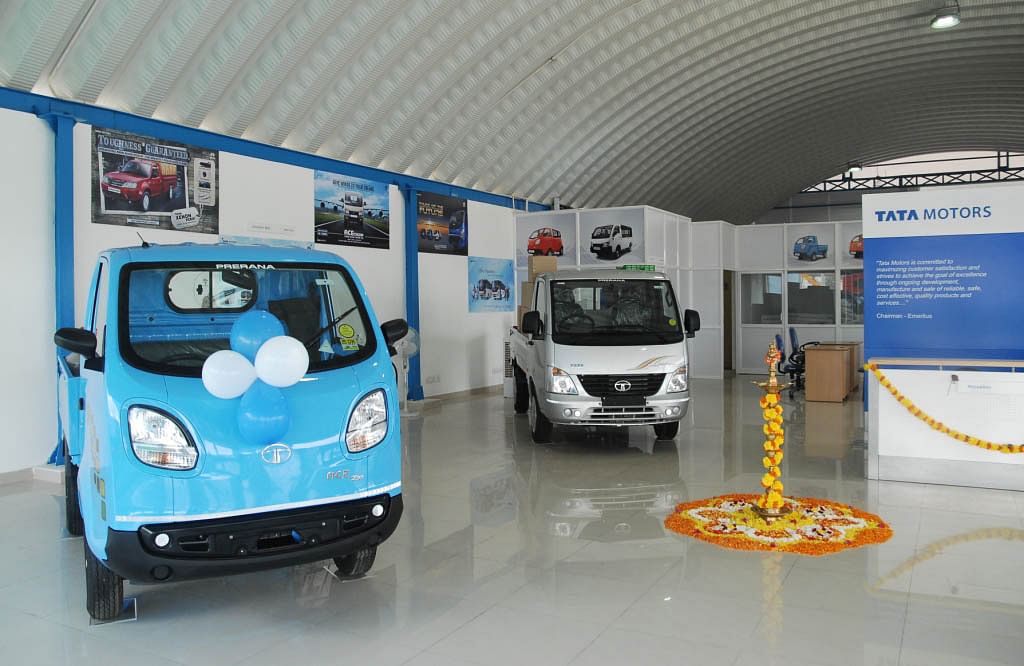
From three states at the beginning, the project has reached 11 states now covering about 60 percent of the market. About 80,000 vehicles have so far been sold through this channel. The Neev project covers only areas with population of less than 50,000. Investments are also frugal. While a 3S facility requires investment of Rs 45-50 lakh (excluding land cost), the monthly outflow for a Neev outlet could be in the region of Rs 20,000-30,000. Human resources costs are low too. Five thousand out of the 6,000 Tata Gram Mitras involved in the Neev project are freelancers. Most of them are village youth, teachers, doctors, mechanics and some from the panchayats. They “promote the idea of self-empowerment” through vehicle ownership. They get a regular stipend and an incentive whenever any enquiry is converted into a sale.
While the investments may be small, the yields are significant. “If we generate about 100,000 enquiries per month in urban markets, in these Neev markets – and they are in only 11 states – we generate about 50,000 enquiries per month cumulatively. In terms of conversion, typically in urban markets we convert is 8-12 percent, whereas in these markets it is about 3-4 percent,” says Ramakrishnan. These numbers are helping Tata Motors to gain around 20 percent of sales from the Neev markets. In states like Bihar and Madhya Pradesh, 35-36 percent sales are from the small markets. As the conversion rate improves, the company expects the overall sales from Neev markets to reach 35 percent for all the 11 states.
Tata Motors’ rural drive also has a partner in Indian Oil Corporation’s Kisan Seva Kendras which are set up in remote areas where there are hardly any fuel distribution network. The Kisan Seva Kendra franchisee owner is usually a well-known person in that community. At such locations, and through the contacts of the franchisee owner, Tata showcases vehicles, conduct functions and loan melas and also activities such as education programs for the village youth.
Tata Motors plans to expand the Neev project to another two or three states that will help it cover 80 percent of the potential market. No more states beyond that but the focus will be to increase enquiries and the conversion rate.
FIGHTING COMPETITION
Tata Motors, with its Ace brand, has been the leader in small trucks. Since the launch of the Ace 10 years ago, 1.5 million units of the Ace range have been sold. Production has grown to meet demand. From a level of 30,000 units a year in 2004-05, Tata Motors today can produce 500,000 units (in Uttarakhand) per year. In 2012, Tata Motors commenced production of the Ace Zip SCV at the Dharwad plant.
With competition coming mainly from Mahindra & Mahindra which has a strong rural presence, Tata Motors is taking steps to protect its turf in the commercial vehicle space by strengthening Neev in the villages of India.

RELATED ARTICLES

Built for 30,000, Running at 6,000: Godrej's New Forklift Plant is Waiting for India to Catch Up
 Shahkar Abidi
 08 Sep 2026
The 63-year-old business has moved almost all production to a new plant built for 15,000 units a year and is already eng...


KNR Hands Over a Transformed TVS Motor. What Next for Kargar?
 Autocar Professional Bureau
30 Aug 2026
Autocar Professional Bureau
30 Aug 2026
The incoming CEO inherits a stronger global business, growing positions in premium motorcycles and EVs, and the task of ...

Škoda‑Volkswagen Bets Big on India for a Strategic Turnaround
 Ketan Thakkar
29 Aug 2026
Ketan Thakkar
29 Aug 2026
Localisation and electrification are set to transform the group’s footprint in its most critical growth market outside E...