Follow us
TVS Motor Launches Orbiter V1 Electric Scooter at ₹49,999, Introduces Battery Subscription Model
TVS Motor Company has expanded its electric scooter lineup with a lower-capacity variant and a battery subscription option aimed at reducing the upfront cost of EV ownership in India.
 By Angitha Suresh
 10617 Views


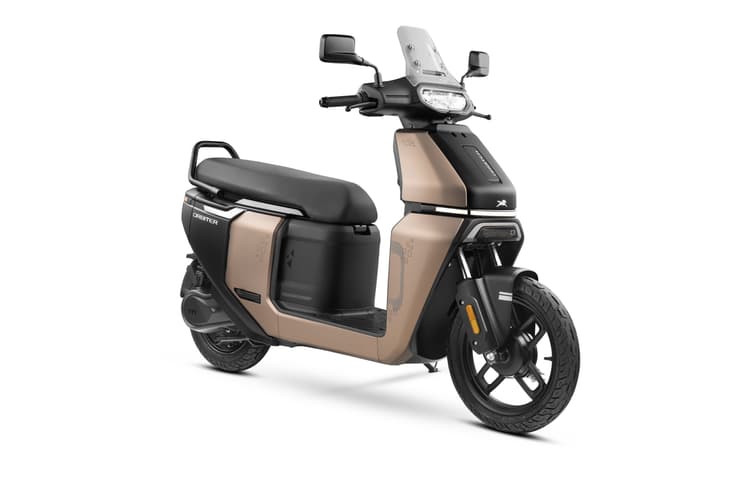
TVS Motor Company launched the Orbiter V1 electric scooter on March 12, 2026, pricing it from ₹49,999 (ex-showroom Delhi, inclusive of PM e-Drive subsidy) under a new Battery-as-a-Service (BaaS) model. Without BaaS, the scooter is priced at ₹84,500 under the same subsidy conditions. The announcement was made in Lucknow and was simultaneously disclosed to the Bombay Stock Exchange and the National Stock Exchange.
The BaaS model represents a structural shift in how TVS is positioning EV ownership. Rather than paying the full cost of the vehicle and its battery upfront, buyers under BaaS subscribe to battery usage on an ongoing basis. Monthly plans start at ₹862, and the arrangement includes an extended warranty of up to five years or 70,000 km, along with unlimited monthly usage throughout the chosen subscription tenure. TVS Motor has made BaaS available not just on the Orbiter V1, but across its entire electric scooter range, which also includes the TVS iQube.
The Orbiter V1 is powered by a 1.8 kWh battery and delivers a certified IDC range of 86 km per charge. It supports charging from zero to 80% in approximately two hours and 20 minutes, making it practical for daily urban use. The scooter joins the existing Orbiter V2, which carries a 3.1 kWh battery and was launched last year to positive market reception. With the addition of the V1, TVS now offers the Orbiter in two variants catering to different range and budget requirements.
On design, the V1 features an 845 mm flat-form seat built for both rider and pillion comfort, a 290 mm straight-line footboard offering legroom, and an upright handlebar intended to reduce riding fatigue. Under-seat storage stands at 34 litres, sufficient to hold two helmets. The overall design is described by TVS as modern and purposeful, prioritising function without sacrificing form.
The scooter is equipped with a range of technology features. A coloured LCD instrument cluster displays incoming calls alongside standard ride information. Connectivity through a companion mobile app allows riders to remotely monitor battery charge levels and odometer readings. Safety features include alerts for crashes, falls, theft, geo-fencing, and time-fencing. The V1 also supports Hill Hold Assist, Cruise Control, Parking Assist, and turn-by-turn navigation. Two ride modes — Eco and Power — are available, each with regenerative braking to extend range. Over-the-air software updates mean the scooter can receive improvements without requiring a service visit.
Gaurav Gupta, President of India 2W Business at TVS Motor Company, described the launch as an important step in making electric mobility more accessible. He noted that separating the vehicle price from battery usage cost gives customers a clearer picture of the total cost of owning an EV. Aniruddha Haldar, Senior Vice President heading the Commuter and EV Business, added that customer feedback on the Orbiter V2 directly informed the decision to introduce a more entry-level option, and that models like BaaS are intended to accelerate EV adoption at a broader scale across India.
TVS Motor Company, listed on both the BSE (532343) and NSE (TVSMOTOR), operates across more than 80 countries and maintains manufacturing facilities in India and Indonesia. It is the only two-wheeler manufacturer globally to have been awarded the Deming Prize for quality. Its group portfolio includes Norton Motorcycles in the United Kingdom and TVS Ebike Company AG, which holds a significant position in Switzerland's e-bike market.
The launch comes at a time when India's electric two-wheeler market is experiencing rapid growth, driven by government subsidies, rising fuel costs, and increasing urban demand for low-emission commuting options. Competitors including Ola Electric, Ather Energy, and Bajaj's Chetak brand have been aggressively expanding their own lineups and cutting prices, intensifying competition particularly in the sub-₹1 lakh segment. TVS's BaaS model and the Orbiter V1's sub-₹50,000 entry price appear designed to address the affordability barrier that remains one of the primary obstacles to wider EV adoption in the Indian market.

RELATED ARTICLES

Prime Industries Appoints Deepak Handa as Director to Lead Precision Engineering Expansion
 Dev Vadchhedia
 21 Sep 2026
Auto manufacturing veteran with over 25 years of experience joins the company's board.


Maruti Suzuki Targets 30% Female Enrolment at Manesar Training Institute by 2028-29
Dev Vadchhedia
21 Sep 2026
Maruti Suzuki introduces incentives to expand female representation across manufacturing trades.

Exponent Energy Completes 200 Three-Wheeler Retrofits in Bengaluru Pilot
 Autocar Professional Bureau
21 Sep 2026
Autocar Professional Bureau
21 Sep 2026
Exponent Energy targets commercial vehicle fleet conversion, claiming 20% share of city's electric three-wheeler segment...