Follow us
Marquardt Group introduces new high voltage sensor for safer EV battery management systems
The German supplier claims the sensor will offer protection against overcurrent in an EV by integrating with its BMS.
 8566 Views


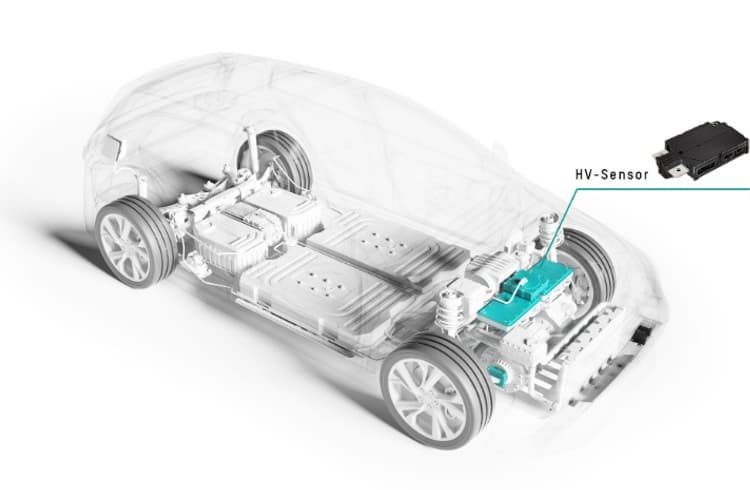
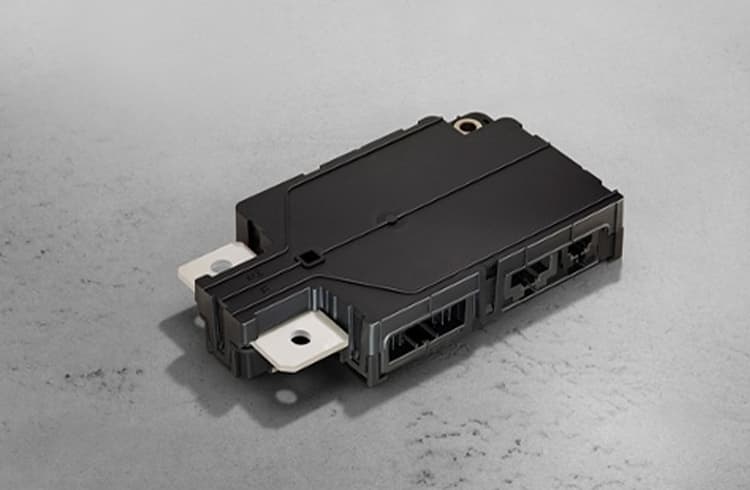
German mechatronics solutions supplier Marquardt has announced developing a high-voltage (HV) sensor that offers improvements in the battery management system (BMS) of an electric vehicle. The BMS measures and reports current and overcurrent scenarios in an EV and leverages a high-voltage sensor to accomplish this goal.
Marquardt claims that its HV sensor provides increased safety for electric cars, fuel cell vehicles and stationary battery systems, where this technology can be implemented.
Ellen Marquardt, Product Management Power and Energy Solutions, Marquardt Group, explains, "Our new HV sensor not only measures very precisely, but also extremely quickly. This allows the system to respond immediately. This advanced technology has the potential to save lives in the event of an accident, making it a crucial factor in ensuring the safety of e-mobility."
Utilising a pyroswitch
If the sensor detects an overcurrent, it immediately triggers the pyroswitch, which then disconnects the system from the power supply within just five milliseconds. The HV sensor also continuously monitors the resistance between the chassis and EV battery to ensure it is within the desired range.
While this may be simple for static systems, it is a technical challenge for dynamic systems, like vehicles, explains Marquardt. "Due to the constant motion of vehicles, the voltage rises and falls rapidly, making it easy for incorrect resistance values to be measured. We offer a solution with higher measurement accuracy than conventional sensors' she added.
The company says that it has developed a proprietary algorithm for the insulation resistance measurement, and also delivers the HV sensor with its own software. "We are expanding our portfolio with this self-developed HV sensor, ensuring that the battery management system is state-of-the-art down to the smallest detail," she said.
Scalable Design
As per the Marquardt Group, its HV sensor can be used in electric cars, hybrid vehicles, fuel-cell electric vehicles, and stationary systems. Depending on the application, the HV sensor meets the required safety functions from ASIL A to ASIL D. One advantage of the HV sensor is its scalable design, which makes it possible to combine different functionalities. "This allows us to adapt the sensor to the respective customer's requirements from specification to production - and in a cost-effective manner", emphasises Marquardt.
Marquardt's latest HV sensor is slated to go into series production in 2023 and will serve a diverse customer base, including passenger cars, trucks, off-road vehicles, agricultural and construction machinery, and even aviation.

RELATED ARTICLES

Castrol India Q32026 Net Profit Drops 23% to Rs 176 Crore as Input Costs Surge
 Dev Vadchhedia
 24 Oct 2026
The lubricants maker recorded 27 percent revenue growth, but raw material inflation and currency headwinds pressed profi...


Paradeep Parivahan Secures 10-Year EV Heavy Haulage Contract From JSW Group
 Autocar Professional Bureau
24 Oct 2026
Autocar Professional Bureau
24 Oct 2026
The logistics provider will deploy 100 electric trucks for industrial transport across Andhra Pradesh and Karnataka.

Ursaa Energyworx Launches Ursaa Hybrid Platform for Fleet Operations and Battery Data
 Shruti Shiraguppi
24 Oct 2026
Shruti Shiraguppi
24 Oct 2026
Ursaa Hybrid links vehicle movement and utilisation data with battery performance, charging activity and route execution...