


 Follow us
Budget 2024: E-bus adoption encouraged via payment security mechanism
The creation of a payment security mechanism will help India achieve its commitment to decarbonise India’s transportation sector and meet the target of 40 percent e-bus penetration by 2030 and net neutrality by 2070.
 By Autocar Professional Bureau
 6764 Views


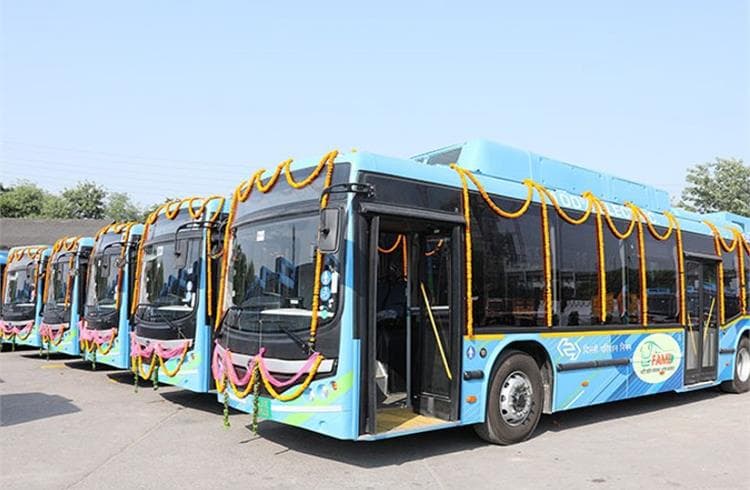
In the interim budget today, Finance Minister Nirmala Sitharaman stated that greater adoption of e-buses for public transport networks would be encouraged through a payment security mechanism.
“Our Government will expand and strengthen the e-vehicle ecosystem by supporting manufacturing and charging infrastructure. Greater adoption of e-buses for public transport networks will be encouraged through payment security mechanism,” the Finance Minister said.
The creation of a payment security mechanism will help India achieve its commitment to decarbonise India’s transportation sector and meet the target of 40 percent e-bus penetration by 2030 and net neutrality by 2070.
The United States and India announced plans to create a payment security mechanism that will facilitate the deployment of 10,000 Made-in-India electric buses in India, in 2023.
This announcement came during Prime Minister Narender Modi’s three-day state visit to the US. The commitment will augment India’s focused efforts in reducing greenhouse gas emissions, improving public health, and diversifying the global supply chain.
As of March 2023, of the 349,726 buses registered in the country since the start of FAME scheme in April 2015, only 4,057 buses (1.16 percent) are electric. Bus subsidies under the FAME scheme constitute 70 percent of the total e-buses plying on the roads.
Gautam Shahi, Director, CRISIL Ratings said, "Policy measures announced in the budget such as setting up of a payment security mechanism and emphasis on increasing support to the manufacturing of charging infrastructure are steps in the right directions for improving the adoption of e-buses for public transport networks. CRISIL Ratings’ expects penetration of electric buses to double to around 8% by fiscal 2025, from roughly 4% in fiscal 2023.
"The announcement to promote e-buses is a progressive move towards electrifying the heavy vehicle segment. It shows the government’s efforts towards encouraging wider adoption of EVs and fostering sustainable public transportation," said
Chetan Maini, Co-founder and Chairman, SUN Mobility.
Prashanth Doreswamy, President and CEO, Continental India said, "The government’s commitment towards the EV ecosystem is also worth appreciation, and this is also in keeping with the needs of the current times, especially as the plan is to expand and strengthen support of manufacturing and charging infrastructure – both critical aspects for faster adoption."
"With the government encouraging greater adoption of e-buses for public transport through payment security mechanism, it gives the automotive sector an opportunity to explore the same as well," he added.
"Addressing a pivotal concern, the announcement of a Payment Security Mechanism reflects the government's proactive stance in fostering a conducive business environment," said Dr. Aanchal Jain, CEO, PMI Electro Mobility.
Also read: Budget 2024: Govt allocates Rs 3,500 crore for PLI Auto, Components scheme in FY25
Also read: Budget 2024: Infra development gets boost; CVs, construction equipment industry to benefit
Also read: Budget 2024: Govt allocates Rs 2,671 crore for FAME subsidy scheme in FY25

RELATED ARTICLES

Petronet LNG and Gruner Renewable Energy Enter JV to Build CBG Plants
 Dev Vadchhedia
 22 Oct 2026
The State-run LNG importer signs binding term sheet for 50:50 joint venture to establish 10 compressed biogas units wort...


Rajratan Global Wire Q2 Net Profit Rises 17 Percent to Rs 24.14 Crore
Dev Vadchhedia
22 Oct 2026
The tyre bead wire maker records 26 percent revenue growth driven by export demand and operational turnaround at its Che...

Tata Passenger Electric Mobility Crosses 1,000 Fast-Charging Points Across India
Dev Vadchhedia
22 Oct 2026
Tata Motors-led EV network energizes 180 highway corridors and installs 40 MW of total charging capacity.