Follow us
India’s Road Safety Imperative: How Helmet Innovation and Premiumization Can Save Thousands of Lives
As two-wheeler sales reach record highs, India faces mounting pressure to close the gap between rapid mobility growth and road safety outcomes.
 11 Apr 2026
 688 Views
Share -
688 Views
Share -


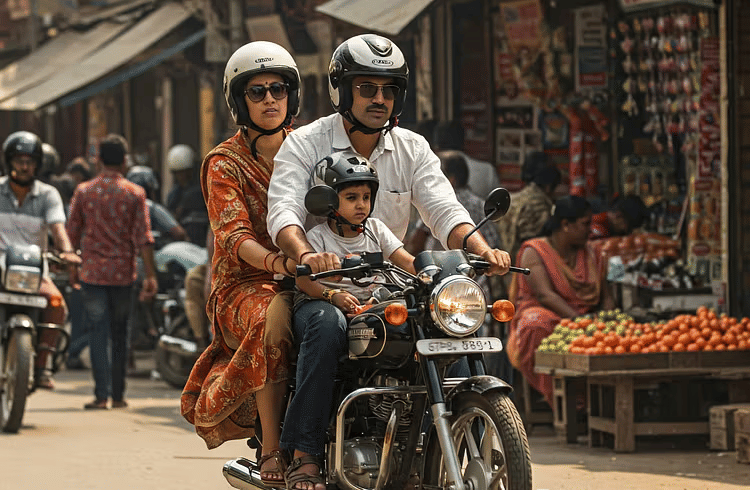
India’s mobility story is expanding at an unprecedented pace. Two-wheelers remain the backbone of personal transportation for millions of Indians. From daily commuting in cities to essential mobility in rural markets, motorcycles and scooters enable livelihoods, education and economic participation.
Yet the growth of mobility brings with it a critical responsibility. Safety must keep pace with scale.
In January 2026 alone, India recorded more than 19.25 lakh two-wheeler sales, representing a 26 percent increase compared to January 2025 and the highest-ever January performance for the segment. As this mobility ecosystem expands, improving road safety outcomes becomes an urgent national priority.
Two-wheeler riders remain among the most vulnerable road users in India. While infrastructure, enforcement and rider behaviour all influence accident outcomes, one fact remains clear: Among all safety interventions, wearing a certified helmet remains the single most effective line of defence against head injuries.
India’s road safety challenge therefore rests on three pillars: scale, safety and innovation.
1. India’s Two-Wheeler Reality: Mobility at Unprecedented Scale
India today has one of the largest two-wheeler ecosystems in the world. Scooters and motorcycles dominate the country’s vehicle population and remain essential for commuting, employment and daily mobility.
More than 2.02 crore two-wheelers were sold in calendar year 2025, representing the largest share of India’s mobility market. Growth is increasingly driven by expanding rural mobility as well as riders upgrading from entry-level motorcycles to premium commuter and lifestyle bikes.
This transformation reflects the scale of India’s mobility expansion. At the same time, it increases the number of riders exposed to road risks, making the adoption of safety equipment even more critical.
2. The Safety Gap: Why Two-Wheeler Fatalities Remain High
Despite improvements in vehicle safety and road infrastructure, two-wheeler riders remain disproportionately exposed in road accidents.
A significant proportion of these fatalities are linked to either the non-use of helmets or the use of substandard helmets, resulting in severe head injuries that could otherwise have been prevented.
Road accident data presented in Parliament in December 2025 highlights the scale of the issue. Union Minister for Road Transport and Highways Shri Nitin Gadkari stated in the Rajya Sabha that speeding and the non-usage of helmets and seatbelts together accounted for nearly 39 percent of road deaths in India.
Independent road safety analyses further show that tens of thousands of two-wheeler fatalities every year involve riders who were not wearing helmets at the time of the accident.
Improving helmet usage therefore remains one of the most immediate and effective interventions available to reduce road fatalities in India.
3. The Fake Helmet Crisis
Another challenge is the widespread presence of counterfeit or substandard helmets in the market.
In India, motorcycle helmets are required to comply with the BIS safety standard IS 4151 and carry the ISI certification mark. This ensures that helmets undergo prescribed tests for impact absorption, penetration resistance and retention system strength. However, enforcement gaps have allowed substandard helmets that falsely display certification marks to enter the market.
The United Nations Special Envoy for Road Safety recently warned about the prevalence of fake helmets in India and called for stronger enforcement of helmet laws.
Substandard helmets may appear visually similar to certified products but often fail during impact.
4. Innovation in Helmet Technology
Helmet technology has evolved significantly over the past decade. Modern helmets increasingly incorporate multi-density EPS liners, advanced thermoplastic or composite shells, improved aerodynamics and enhanced ventilation systems. High clarity visors with anti-scratch and UV protection improve usability and comfort for riders.
International safety standards such as ECE and DOT require more rigorous testing protocols and higher performance benchmarks.
Continued innovation in helmet engineering therefore remains critical as India’s mobility ecosystem evolves.
5. Premiumisation and the Cultural Shift in Safety
India’s motorcycle market is undergoing a structural shift. Riders are increasingly upgrading from basic commuter motorcycles to premium commuter bikes, adventure motorcycles and performance scooters.
As India moves up the motorcycle value chain, safety equipment must evolve alongside.
Helmets are gradually transitioning from being viewed merely as a regulatory requirement to being recognized as essential protective gear.
Premium helmets typically offer improved impact protection, better ventilation, lighter weight and stronger structural integrity. These features enhance safety and comfort, encouraging riders to wear helmets consistently.
Encouraging riders to adopt better engineered helmets rather than only cheaper alternatives can significantly improve safety outcomes at scale.
6. Policy and Ecosystem Support
Technology alone cannot solve the safety challenge. Stronger enforcement against fake helmets, wider public awareness campaigns and improved accessibility of certified helmets are necessary.
There is also growing discussion around the GST mismatch between vehicles and helmets where two-wheelers have received tax relief while helmets continue to remain taxed at higher rates.
Addressing such policy gaps can encourage greater adoption of certified helmets and improve road safety outcomes.
India’s mobility expansion represents opportunity, connectivity and economic progress for millions of citizens. However mobility growth must be matched by a stronger commitment to safety. Improving helmet adoption, eliminating counterfeit products, investing in technological innovation and encouraging premiumisation of safety gear can together create a safer road ecosystem.
If policymakers, industry and consumers align on these priorities, India can significantly reduce two-wheeler fatalities while ensuring that the country’s mobility revolution remains inclusive and safer for millions of riders.
Sidhartha Bhushan Khurana is the Managing Director of the STUDDS Accessories Ltd. Views expressed are the authors' personal.

RELATED ARTICLES

Beyond EV Adoption: How Intelligent Electric Mobility Can Build Ownership Confidence
 Autocar Professional Bureau
10 Oct 2026
Autocar Professional Bureau
10 Oct 2026
India’s two‑wheeler EV adoption now hinges on building rider trust through intelligent systems, transparent warranties, ...


India's Electric Two-Wheelers Are Ready. Is the Ecosystem?
Autocar Professional Bureau
26 Sep 2026
“India’s electric two‑wheeler boom now hinges on charging, service and financing ecosystems.

Can AI Solve India's Automotive Shop-Floor Workforce Challenges?
Autocar Professional Bureau
13 Sep 2026
AI is hiring smarter, managing shifts better, and building skills for the factory of the future.