Follow us
Exclusive: JSW Motors Secures Rs 8,000 Crore SBI Funding for New Energy Vehicle Venture
JSW group is looking beyond vehicle assembly and attempting to build an integrated new-energy ecosystem from the ground up.
 20 May 2026
 10519 Views
Share -
10519 Views
Share -


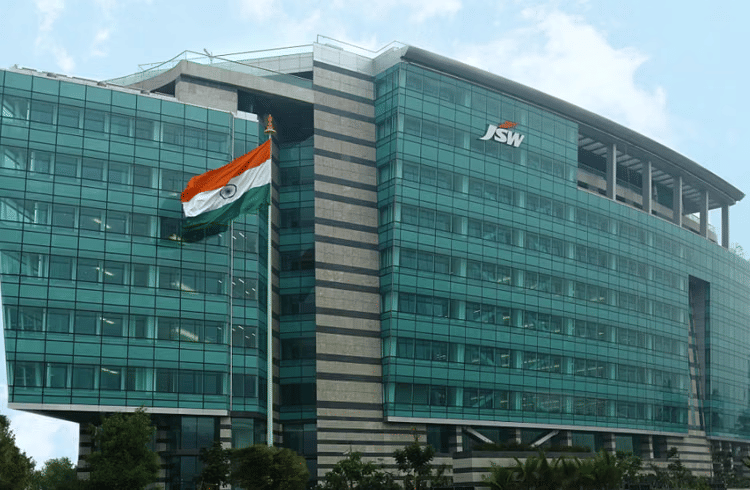
In a major boost to its electric mobility ambitions, JSW Motors Limited has secured Rs 8,000 crore in long-term project finance from State Bank of India to fund its new energy vehicle (NEV) business, sources close to the matter told Autocar Professional. The financing will partly fund the company’s greenfield manufacturing facility at Chhatrapati Sambhajinagar, Maharashtra and the build-out of a domestically anchored NEV ecosystem.
Sources said that the Chhatrapati Sambhajinagar plant in Maharashtra is being developed with an annual installed capacity of 3.5 lakh vehicles and is being set up in partnership with global equipment manufacturers.
The project comes at a time when India’s EV industry is entering a more competitive phase, with legacy automakers, startups and industrial conglomerates all racing to secure manufacturing scale, battery capabilities and supply chain control. JSW group is looking beyond vehicle assembly and attempting to build an integrated new-energy ecosystem from the ground up.
The funding marks one of the more significant project financing deals in India’s emerging electric passenger vehicle space, underlining both lender confidence in the sector and the JSW Group’s intent to become a serious player in the country’s rapidly evolving automotive market.
"At JSW Motors, our focus is on creating a strong presence in the new energy passenger vehicle segment (NEV), including PHEVs and REEVs, followed by a phased expansion of our portfolio across segments and powertrains. We are progressing as per plan on the development of our manufacturing footprint and product roadmap. Our upcoming facility in Chhatrapati Sambhajinagar will bring this plan to life as a next-generation manufacturing ecosystem built for scale, agility, and the future of mobility. Details regarding our product launch timelines and the portfolio will be announced at an appropriate stage.” – Company Spokesperson, JSW Motors Limited.
Alongside the vehicle plant, JSW Motors is also setting up a battery assembly facility in Pune to support its electric and new-energy powertrain programmes to strengthen its “in-house capability across critical components of the powertrain value chain.”
People familiar with the company’s plans said the strategy is centred on creating deeper domestic value addition at a time when the Indian EV industry remains heavily dependent on imported battery components and technology partnerships.
The broader vision of the company is to position JSW Motors as a full-stack automotive player in India with a portfolio of aspirational and technology-led vehicles spanning EVs, plug-in hybrids and other new-energy powertrains. JSW Motors is evaluating a diversified technology portfolio, including PHEVs that could act as a bridge between conventional internal combustion vehicles and fully electric cars. To support its ambitions, the JSW Group has committed investments of around $2–3 billion into the automotive business over the next five years. The investment will fund the company’s greenfield manufacturing facility at Chhatrapati Sambhajinagar in Maharashtra, technology and platform development, battery manufacturing through JSW Energy, and R&D infrastructure.
Alongside manufacturing, the company is also building engineering and localisation capabilities in India. Its current R&D setup focuses on adapting and localising vehicles for the Indian market across advanced driver assistance systems (ADAS), connected car technologies, body-in-white localisation, chassis systems, powertrains and high-voltage battery integration. The R&D organisation currently employs around 150 engineers with experience across OEMs, Tier-1 suppliers and engineering services companies. JSW plans to expand this to roughly 500 engineers by 2027 and eventually build a large-scale R&D centre in India by 2029 with around 2,000 engineers capable of supporting full vehicle development programmes.
Retail strategy is another key part of the rollout. Rather than relying solely on traditional dealerships from the outset, JSW Motors plans to begin with company-owned experience centres in major cities including Mumbai, New Delhi and Ahmedabad. The company has already begun engaging potential dealer partners for a wider retail expansion, while prospective dealers are expected to be shown the first batch of products developed in partnership with China’s Chery Automobile. All vehicles will carry the JSW badge.
A key part of JSW’s strategy is leveraging global partnerships, particularly Chinese EV technology, while localising manufacturing in India.
The company is expected to launch its version of the Jetour T2 SUV, a large plug-in hybrid SUV comparable in size to the Toyota Fortuner. Globally, the model uses a hybrid setup combining a 1.5-litre turbo-petrol engine, dual motors and a 26.7kWh battery pack, producing a combined 381hp and 610Nm, with a claimed combined driving range of over 1,000km. JSW is also believed to be working on an India-specific version of the iCar V23 electric SUV. Both products are expected to be assembled at the Chhatrapati Sambhajinagar facility.
This gives JSW a dual-track automotive play in India: on one side, the group continues expanding JSW MG Motor India, its joint venture with China’s SAIC Motor and on the other, it is building its own independent JSW Motors brand focused on EVs and plug-in hybrids positioning the conglomerate as one of India’s most aggressive new entrants in the emerging new-energy vehicle market.

RELATED ARTICLES

Ola Electric Warns of Data Errors as SEBI Sales Disclosure Case Remains Pending
 Autocar Professional Bureau
11 Oct 2026
Autocar Professional Bureau
11 Oct 2026
The EV maker's latest offer document details regulatory scrutiny over sales numbers, store expansion claims and Roadster...


Tessolve Semiconductor Raises $75 Million from Vector Line Capital
 Angitha Suresh
11 Oct 2026
Angitha Suresh
11 Oct 2026
The US-based semiconductor-focused investment firm marks its first India investment, joining existing backers TPG and No...

SJS Enterprises Subsidiary to Build New Manufacturing Facility in Pune
Angitha Suresh
11 Oct 2026
Walter Pack Automotive Products will consolidate three existing plants into a single facility at Koregaon Bhima, with op...