Follow us
Weekly News Wrap: GST Uncertainty, China Breakthrough, and Bold Corporate Bets
A week of contrasts where policy uncertainty threatened to dampen short-term sales even as bold corporate investments, global collaborations, and digital innovations pointed toward a transformative decade ahead for the Indian auto sector.
 By Darshan Nakhwa
 4224 Views


The week spanning August 18 to 24, 2025 was a mixed bag of policy uncertainty, bold corporate bets, and new technology frontiers for India’s auto sector. The biggest headline was the cloud hanging over the upcoming festive season after Prime Minister Narendra Modi signaled that a revised GST structure could be rolled out by Diwali.
While this created a sense of anticipation among consumers, OEMs, and dealers, it also injected short-term hesitation into the market, with FADA cautioning against excess inventory build-up. Analysts suggested that a shift of small cars and two-wheelers from the 28% slab to 18% could potentially lift sales by 15–18%, but warned that early festive demand may remain muted until clarity emerges.
On the corporate front, Amara Raja and CEAT announced fresh investments into lithium-ion and off-highway tyres respectively, while Endurance Technologies geared up to quadruple ABS capacity.
Elsewhere, global and domestic policy winds shaped developments: China agreed to lift restrictions on critical exports to India, Nitin Gadkari pushed for flash-charging e-buses, and Maharashtra extended EV toll exemptions on Atal Setu. On the global stage, Mercedes and BMW explored engine-sharing, signaling a rethink in Europe’s ICE strategies. Back home, the Maruti-Mahindra SUV rivalry intensified, while Mahindra’s NU.IQ platform pointed to clean-slate innovation in compact SUVs.
Together, these stories capture an industry at an inflection point, balancing immediate headwinds with long-term transformation. Here’s the detailed round-up of all major developments this week:
GST Uncertainty Clouds Festival Season Vehicle Sales
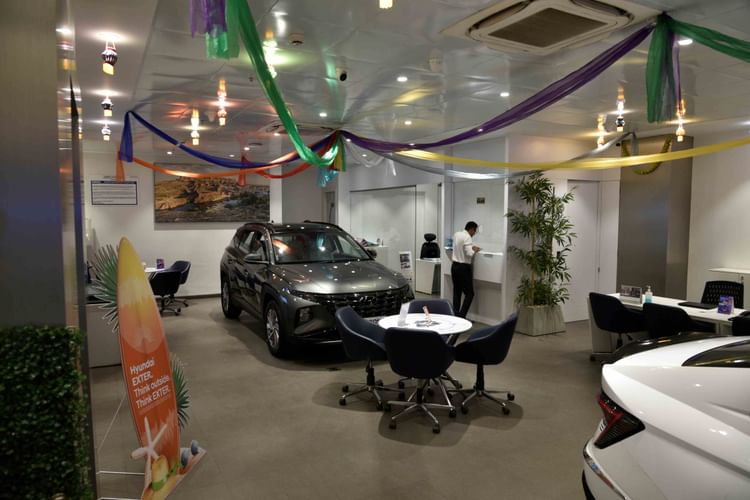
Consumers planning to buy a new vehicle, as well as OEMs and dealerships looking to increase their volumes, were taken by surprise when PM Modi announced that the government is reviewing the Goods and Services Tax (GST) structure, and that relief can be expected by Diwali this year.
However, a lack of clarity on the new GST structure and its rollout date is likely to hit car and bike sales during the early festival season in late August and September. This is because Indian consumers often delay big purchases when they anticipate prices might drop.
A couple of dealers who spoke to Autocar Professional indicated that customers in Tier 1 and Tier 2 cities are starting to get cautious. Customers inquiring about new cars and two-wheelers are now asking if prices will drop in the coming months. A slowdown in sales, at a time when OEMs increase production in anticipation of strong festival demand, could lead to a significant inventory pileup.
FADA Warns Dealers Against Excess Inventory Amid GST Uncertainty
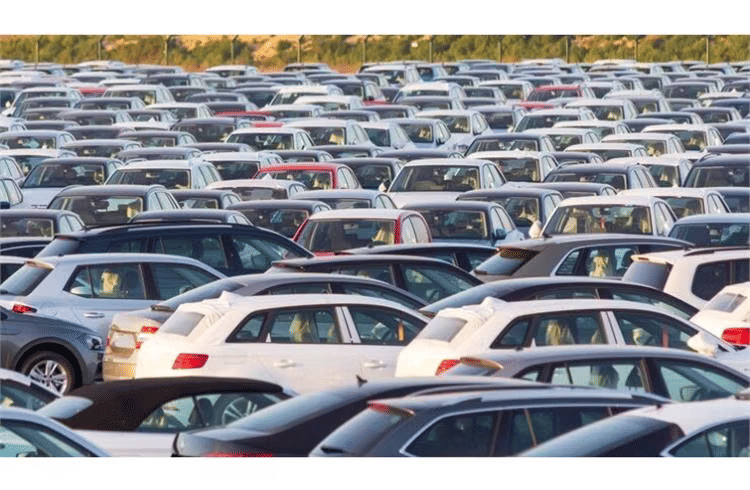 At a time when the auto industry gears up for the festive season, the Federation of Automobile Dealers Associations (FADA) sounded a note of caution for its members, warning them against higher inventory and premature messaging on vehicle prices in light of the government’s proposed GST 2.0 reforms.
The government has proposed restructuring the existing GST regime - reducing the existing multiple GST slabs to a simpler two-rate structure. Reports say that could be a sharp cut in the GST rates for vehicles, particularly for entry-level cars and two-wheelers, from 28% to 18%.
The current GST rates fall in four primary slabs - 5%, 12%, 18%, and 28%. ICE vehicles have a GST rate of 28% with an additional compensation cess, ranging from 1% to 22% depending on the type of vehicle. The tax on small petrol cars is around 29%, while it soars to 50% for large SUVs.
GST Council Meet on Sept 3-4; Clarity on Vehicle Taxation Expected
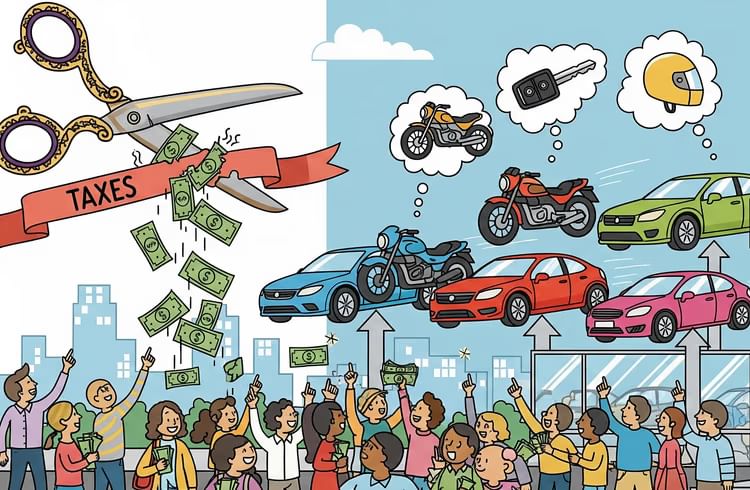
Amid uncertainties regarding a reduction in the Goods and Services Tax (GST) on vehicles, especially for small cars and two-wheelers, the government has announced the dates for the upcoming GST Council meeting. According to an office memorandum from Revenue Secretary Arvind Shrivastava on Friday, the GST Council will hold its 56th meeting on September 3 and 4.
Since Prime Minister Narendra Modi announced that the government is reviewing the GST structure on August 15, and a relief can be expected by Diwali this year, there have been reports that there could be a sharp cut in the GST rates for vehicles, particularly for entry-level cars and two-wheelers from 28% to 18%.
The absence of any clear information on the potential new GST structure and its rollout date has resulted in uncertainty among consumers planning to buy new vehicles. This is because Indian consumers often postpone major purchases, like a new car or two-wheeler, when they anticipate that prices might drop in the near future.
GST Rate Cut Could Lift Auto Sales by 15–18%, But Festival Outlook Remains Weak

A potential reduction in GST rates for India's automotive sector could deliver volume growth of 15-18% for major automakers, according to a research report from BNP Paribas.
However, the investment bank warns that uncertainty around the timing of these reforms could disrupt crucial festival season sales in the coming weeks, potentially affecting millions of consumers planning vehicle purchases.
The comprehensive report, released Monday, suggests that if sub-4 meter passenger vehicles and entry-level two-wheelers move from the current 28% GST slab to 18%, the Indian automotive industry could witness a transformation similar to the boom experienced in 2006.
Companies like Maruti Suzuki could see volume growth tailwinds of 15.5%, while Hero MotoCorp could experience an 18.3% boost in sales, according to the analysis.
China Agrees to Lift Export Restrictions on Rare Earth Magnets, Critical Items to India

In a significant diplomatic development, China has agreed to address India's pressing concerns regarding export restrictions on three critical items - fertilizers, rare earth minerals, and tunnel boring machines, according to news reports.
The breakthrough came during Chinese Foreign Minister Wang Yi's two-day visit to India, where he held crucial talks with External Affairs Minister S. Jaishankar.
According to sources familiar with the discussions, Beijing has not only committed to easing fertilizer export restrictions but has also conveyed its readiness to allow shipments of rare earth magnets, minerals, and tunnel boring machines to India. These were the three key requests that New Delhi had consistently flagged in bilateral talks.
Gadkari Pushes For Flash Charging Electric Bus System on Highways
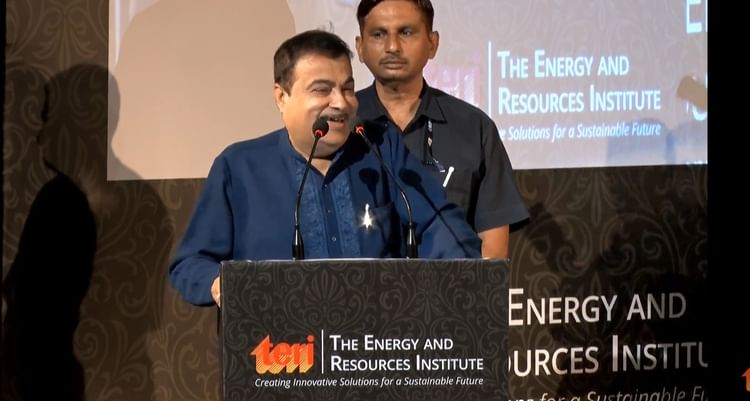
In a bid to improve sustainable public transport services across cities, Minister of Road, Transport and Highways Nitin Gadkari on Wednesday advocated the rollout of a flash-charging-based electric articulated bus system on new highways.
“It is essential to transform the public transport system in the country…With new highways connecting the cities seamlessly, I wish to establish a new public transportation system,” Gadkari said while speaking at the 24th Darbari Seth Memorial Lecture organised by The Energy and Resources Institute (TERI).
A flash-charging-based electric articulated bus system uses a fully automated fast charging system installed at bus stops for rapid battery top-ups within seconds while passengers board and alight at designated stops. This allows continuous operations on high-frequency routes rather than long periods of charging at a depot.
Mercedes in Talks to Source Engines from BMW
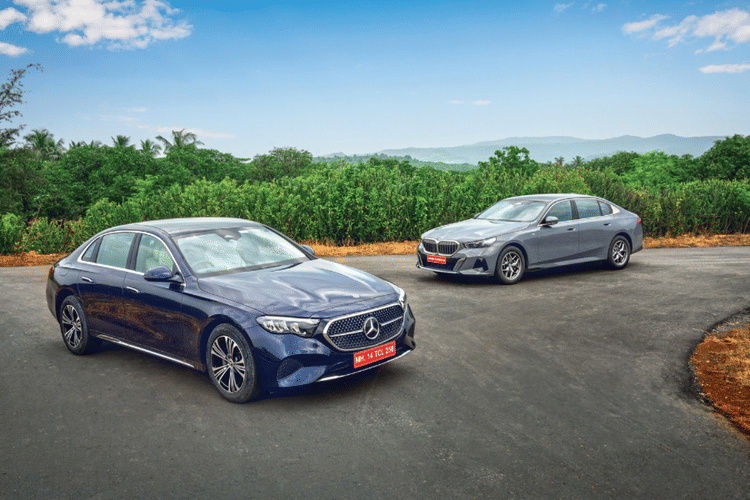
Mercedes-Benz is in advanced talks with its direct German rival BMW for an engine sharing agreement where BMW will supply its 2.0-litre B48 four-cylinder petrol engine to be used in a large number of future Mercedes SUVs and cars.
According to reports from our sister publication Autocar UK and Manager Magazin, the move comes as Mercedes starts to rework its internal combustion engine (ICE) plans amid slower-than-expected EV adoption.
If finalized, Mercedes models like the recently unveiled CLA, the GLA and GLB SUVs, the next-gen C-Class, the popular E-Class, the GLC SUV and the upcoming ‘Little G’SUV that will be inspired by the G-Class will see engines sourced from BMW.
Maruti vs Mahindra: UV Leadership Battle Heats Up
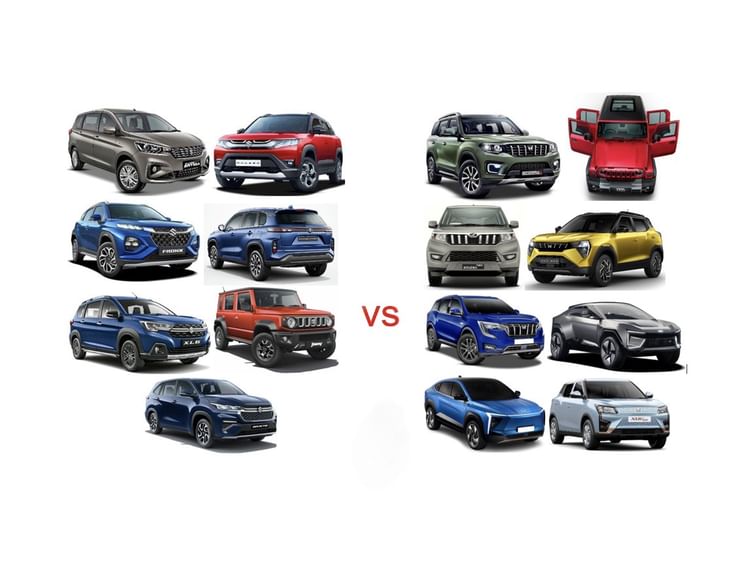 There’s an exciting battle underway in the most exciting segment in the Indian passenger vehicle industry. Maruti Suzuki India, which had wrested the utility vehicle (UV) market leader title from Mahindra & Mahindra eight years ago in FY2018, is facing a renewed charge from the SUV market leader. As per the latest UV wholesales statistics released by SIAM, the two auto majors are separated by 12,703 units in the April-July 2025 period.
While Maruti Suzuki has clocked factory dispatches of 214,641 UVs in the past four months, M&M has registered wholesales of 201,938 units. The key difference other than the 12,703 units in the UV market leader’s favour is that Maruti Suzuki has witnessed a 2% YoY decline (April-July 2024: 219,432 UVs) and Mahindra has clocked 22% YoY growth (April-July 2024: 165,871 units).
Mahindra's R Velusamy on NU.IQ: 'We Wanted to Start with a Clean Slate'
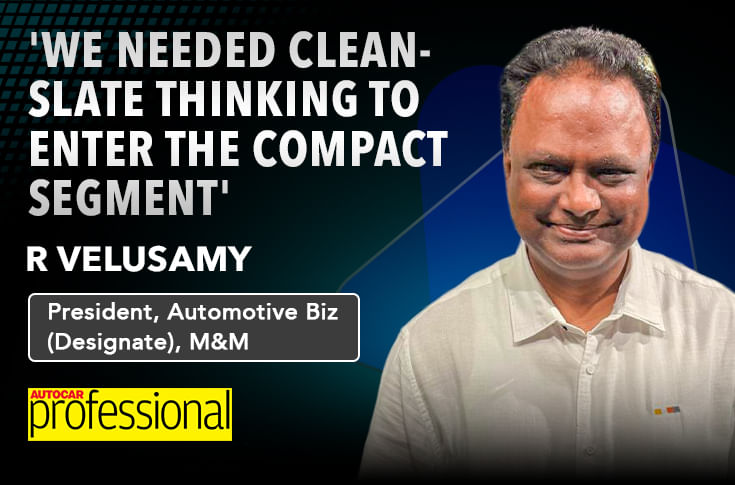
Homegrown SUV major Mahindra & Mahindra (M&M), which showcased its range of upcoming models on an all-new platform, is betting big on the future opportunities from the compact SUV segment in the Indian passenger vehicle market.
Transitioning from its body-on-frame expertise, the company unravelled its brand-new monocoque architecture - NU.IQ - which boasts of a multi-powertrain application potential, including gasoline, diesel, hybrid, as well as EV. R Velusamy, President - Automotive Business (Designate), M&M, says: "We needed clean-slate thinking to enter the compact segment."
Beyond India: Tata Motors’ Calculated Play for Global CV Dominance
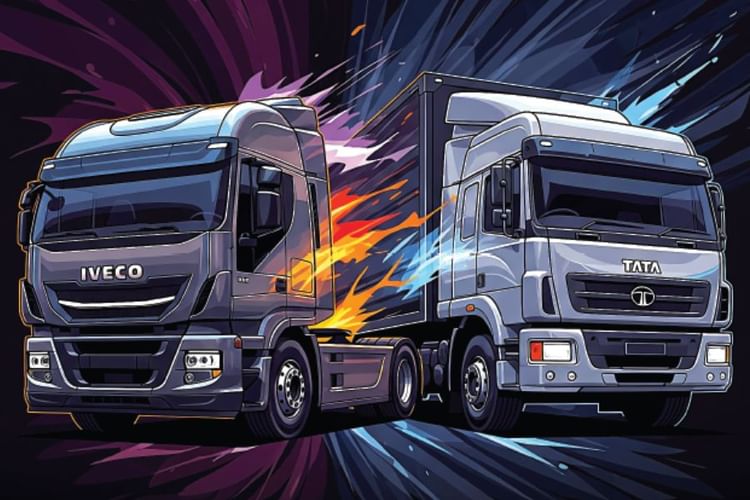
Seventeen years is a lifetime in the automotive world— a space where transformation is often measured in quarterly results but driven by long-term bets. In mid-February 2007, when India’s Tata Motors and Italy’s Iveco, then a part of the Fiat Group, signed an initial memorandum of understanding, the move barely caused a ripple. It was exploratory, tentative.
A handshake to study possibilities in the commercial vehicle space. At the time, Tata Motors was known more for its dominance within India and its ambitions abroad, while Iveco stood tall as a globally established European manufacturer with a diversified footprint in commercial vehicles. That small exploratory step—fostered by an existent relationship in the passenger vehicle space—planted a seed: Seventeen years later, it has blossomed into one of Tata Motors’ most calculated strategic maneuvers.
Tata-Iveco: The Logic, Rationale and Context of India's largest CV Deal
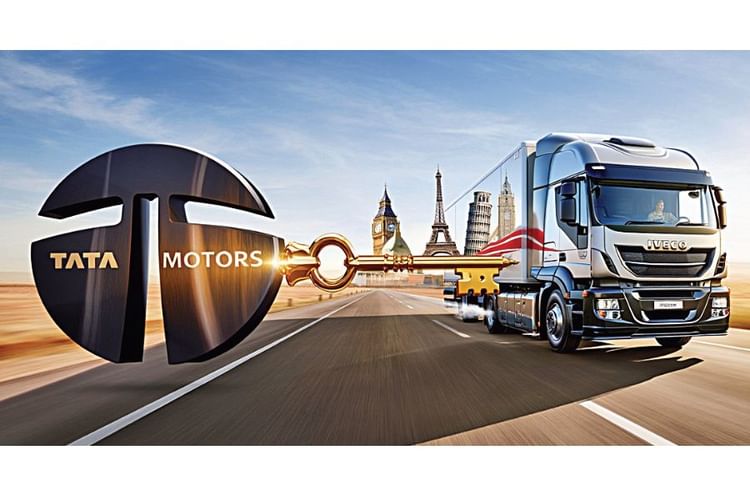 Deals of the size of Tata’s acquisition of Iveco are not just built on spreadsheets. They emerge from long conversations in boardrooms, deep strategy sessions, what-if simulations, and often, a dose of instinct. So when the Tata—Iveco deal was finally announced on July 30, 2025, industry insiders had already been speculating for months. But few knew how far it would go. An all-cash deal. Full operational integration. A clear vision to go global—again.
At the core of the move is a pressing strategic imperative—scale. VG Ramakrishnan, Managing Partner at Avanteum Advisors, explained it candidly: “You can’t survive in today’s auto industry without scale. It becomes very difficult. Look all around in the automotive space, people are left, right and center buying things. Consolidation is happening everywhere.”
Amara Raja to Invest ₹1,200 Crore More in Lithium Cell Gigafactory
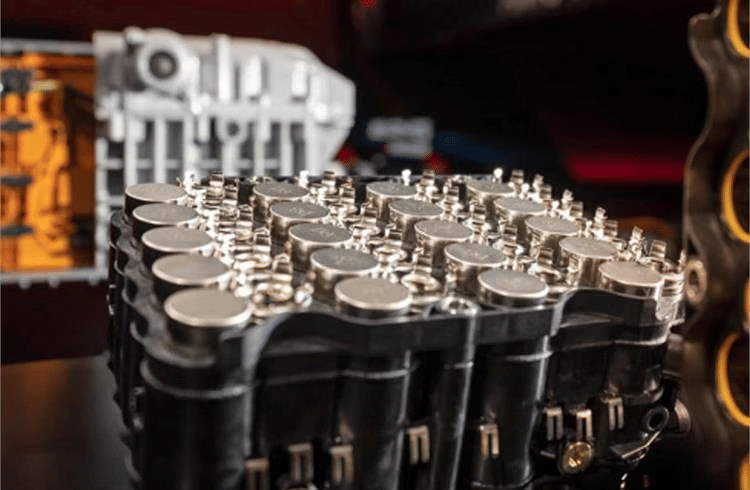
India’s largest lead-acid battery maker Amara Raja Energy and Mobility Ltd will invest an additional Rs 1,200 crore by the financial year 2027 for its lithium-ion cell manufacturing project. This would bring the total investment in the cell manufacturing project for 1 GWh capacity to Rs 2,400 crore.
“So far, we have invested Rs 1,200 crore into the subsidiary [New Energy business], which is not only used for CAPEX but also for some of the working capital requirements. We would require another Rs 1,200 crores to complete the research lab, customer qualification plant, as well as the gigafactory with about 1 GWh capacity,” the company’s management said on Monday.
Amara Raja is setting up the Gigafactory in Telangana through its New Energy Business unit — Amara Raja Advanced Technologies — at an estimated cost of Rs 9,500 crore. The company targets a total cell manufacturing capacity of 16 GWh in phases by the end of this decade, catering to both automotive and storage applications.
CEAT OHT Lanka Signs $171 Million Investment Deal in Sri Lanka
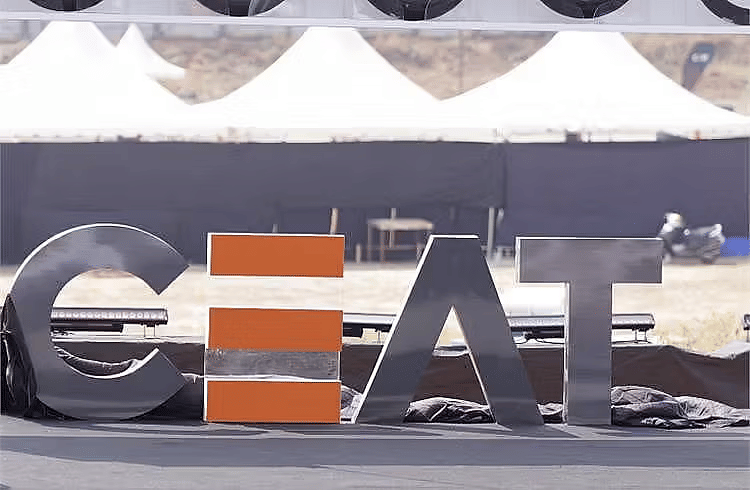
CEAT OHT Lanka (Private) Limited has formalized a $171 million investment agreement with the Board of Investment of Sri Lanka (BOI), marking one of the largest recent investments by an Indian company in Sri Lanka’s manufacturing sector.
The agreement follows CEAT Limited’s acquisition of Michelin Group’s Construction Compact Line Business, which includes the Midigama plant and the Casting Product plant in Kotugoda, Sri Lanka. The transaction grants CEAT global ownership of the Camso brand, which will be fully integrated across product categories after a three-year licensing period. The closing process for the acquisition is currently underway.
The investment is aimed at expanding manufacturing capacity for Off-Highway Tyres (OHT) and tracks at the Midigama and Kotugoda facilities. These units will focus on export-oriented production, particularly for compact construction equipment, reinforcing Sri Lanka’s position as a hub for high-value, export-led manufacturing.
Endurance Technologies to Expand ABS Capacity 4X by March 2026
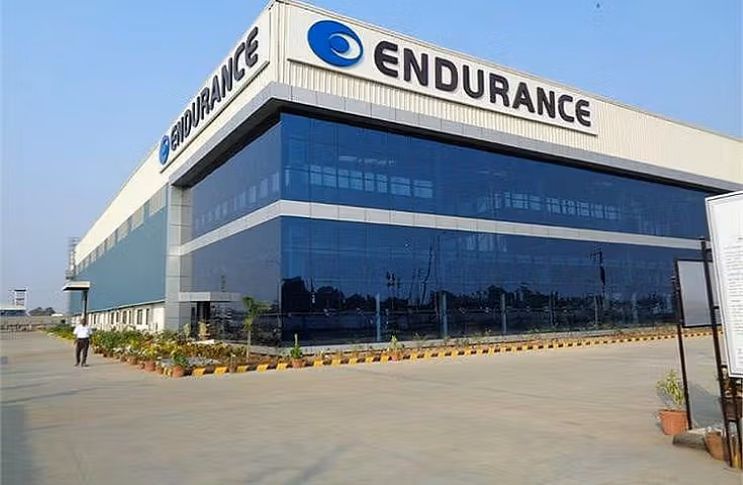
Banking on the potential strong increase in the demand for anti-lock braking systems (ABS) following a government proposal to mandate ABS for all two-wheelers, Aurangabad-based vehicle safety components supplier Endurance Technologies is set to significantly boost its capacity for ABS during the financial year.
The company currently has an ABS capacity of 53,000 units per month at its plant in Aurangabad. As per the plans, Endurance Technologies will boost the ABS capacity at the existing plant by 200,000 units per month. The additional capacity is expected to come up during the fourth quarter of FY26 with an investment of Rs 103.1 crore.
An ABS is a safety feature that keeps the vehicle’s wheels from locking up during hard braking. It helps to maintain control, especially on wet or bumpy roads. While ABS is already mandatory for two-wheelers above 125cc, lower-capacity models are currently equipped with a Combined Braking System (CBS).
Maharashtra Extends EV Toll Exemption on Atal Setu
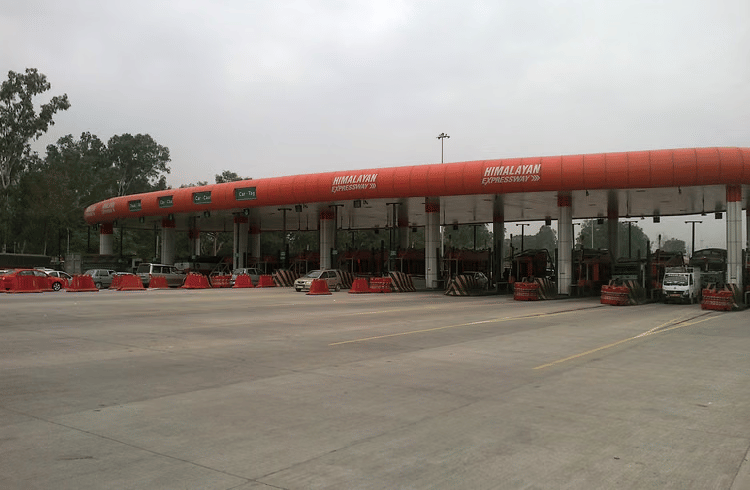
The Government of Maharashtra has announced a partial modification to its earlier toll policy on the Atal Bihari Vajpayee Sewri-Nhava Sheva Atal Setu and its approach roads, granting toll exemptions to certain categories of electric vehicles effective August 21, 2025.
The decision issued by the Urban Development Department extends the existing toll exemption to electric four-wheelers (category M1), including both transport and non-transport vehicles, as well as electric buses (categories M3 and M4), whether operated by State Transport Undertakings (STU) or non-STU entities. This exemption applies specifically to toll collection centers at Shivaji Nagar and Gavan along the Atal Setu corridor.
How Dealerships Can Compete with Big Brands Using CRM
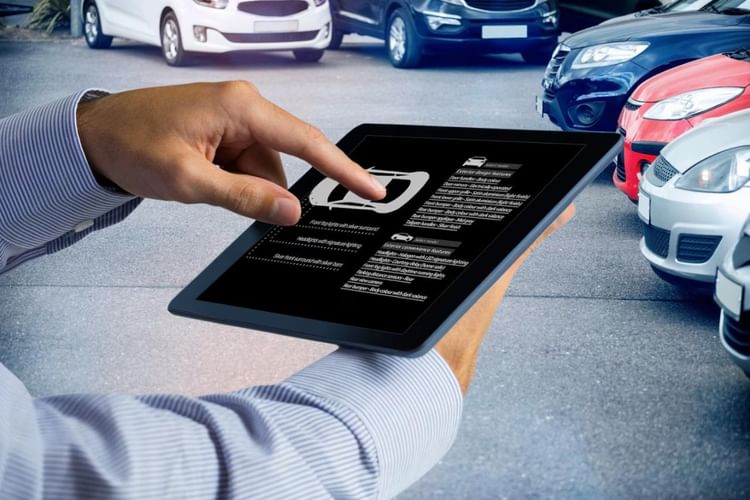
Automobile retail is a very asymmetric space with several large and small players competing against each other. Amid intense competition, local dealers often lose out to their large counterparts due to the latter’s large marketing budgets, inventories, and negotiating power with the brand.
However, with the technology evolution, the game is gradually shifting from scale to those who can deploy data-driven customer intelligence solutions. For the uninitiated, a consumer’s car-buying journey is going through a significant transformation.
Unlike dealership visits of the past to touch, see, and test a car, 70% of potential consumers start their purchase journey online, according to a McKinsey report. However, many local dealers still lack the digital infrastructure to influence the buying decisions at this stage. They also do not have the means to offer a hyper-personalised customer experience.
This is where a smart CRM solution becomes important. It enables even the smallest of dealerships to offer seamless customer journeys, track and maintain leads, and build strong, long-term relationships.
The Connected Car Revolution: A Tale of Transformation
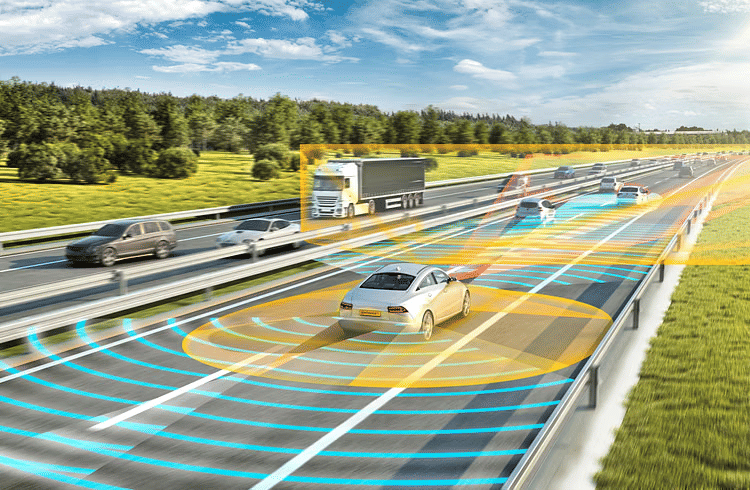
Since its launch, connected cars have transformed from a luxury novelty to an essential feature for Indian consumers. This revolution has redefined the automotive landscape, turning vehicles into smart, connected platforms that seamlessly integrate with our digital lives. As technology continues to evolve, connected cars are not just changing how we drive, but also how we interact with our vehicles and the world around us.
A decade ago, a “connected car” was little more than an industry buzzword—something reserved for luxury sedans or high-end SUVs. Fast forward to today, and the landscape has shifted dramatically. Indian car buyers, from metropolitan professionals to aspirational tier-2 families, now expect their vehicles to be smart, intuitive, and seamlessly integrated with their digital lives.

RELATED ARTICLES

BharatBenz Expands North India Network with Gorakhpur 3S Facility
 Arunima Pal
 29 Sep 2026
The 75,000 sq ft facility has 11 bays and an annual servicing capacity of 4,100 vehicles.


Mercedes-Benz GLC Electric to Launch in India on November 4
 Ketan Thakkar
29 Sep 2026
Ketan Thakkar
29 Sep 2026
The locally assembled GLC Electric 400 4Matic will get a 94kWh battery, dual motors and a claimed WLTP range of 715km.

Uno Minda Launches Compact 4-Channel Amplifier
Arunima Pal
29 Sep 2026
The new amplifier delivers up to 150W per channel and can be installed in space-constrained areas such as under the seat...