
 Follow us
Tata Motors targets 1.0-1.2 million sales by FY30, eyes 18-20% market share
Tata Motors expects the Indian passenger vehicle market to grow to 6 million units by the end of this decade and is targeting a share of over 18-20% by FY30.
 11 Jun 2024
 10025 Views
Share -
10025 Views
Share -


Tata Motors expects the Indian passenger vehicle market to grow to 6 million units by the end of this decade and is targeting a share of over 18-20% by FY30.
A back-of-the-envelope calculation suggests that if the company attains its goals, it could sell over 1-1.2 million vehicles by FY30.
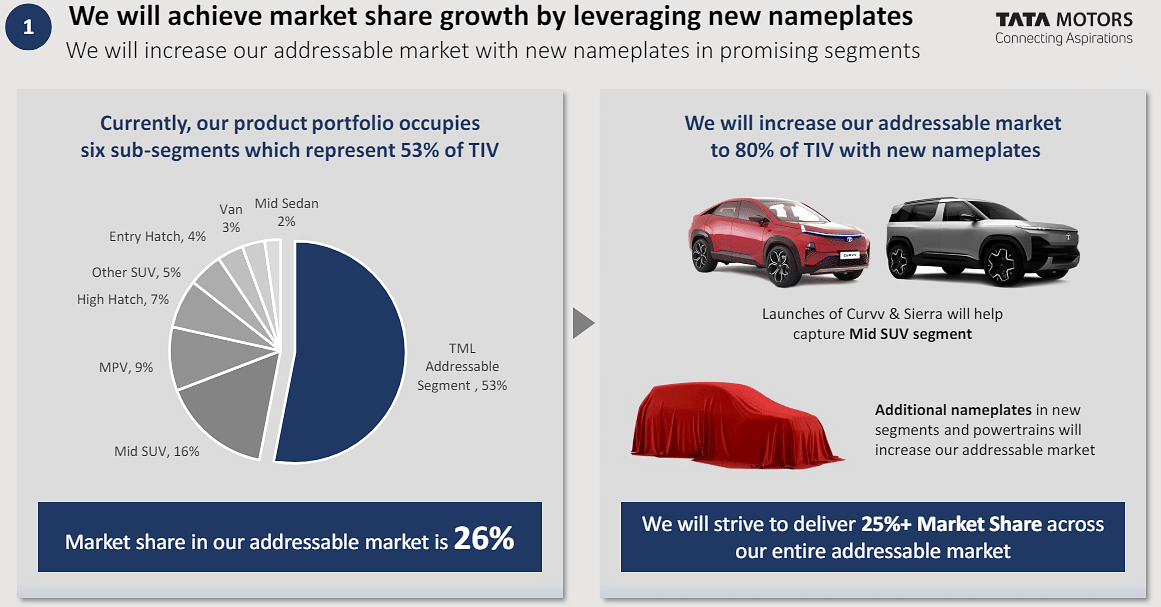
To this end, Tata Motors plans to add more products and nameplates and expand its addressable market to 80% in the coming decade from the current 53% market it caters to.
“We will achieve market share growth by leveraging new nameplates. We will increase our addressable market with new nameplates in promising segments,” stated a presentation scheduled to be delivered by Shailesh Chandra, MD, Tata Motors Passenger Vehicles and Tata Passenger Electric Mobility, on the company's investor day on Tuesday.
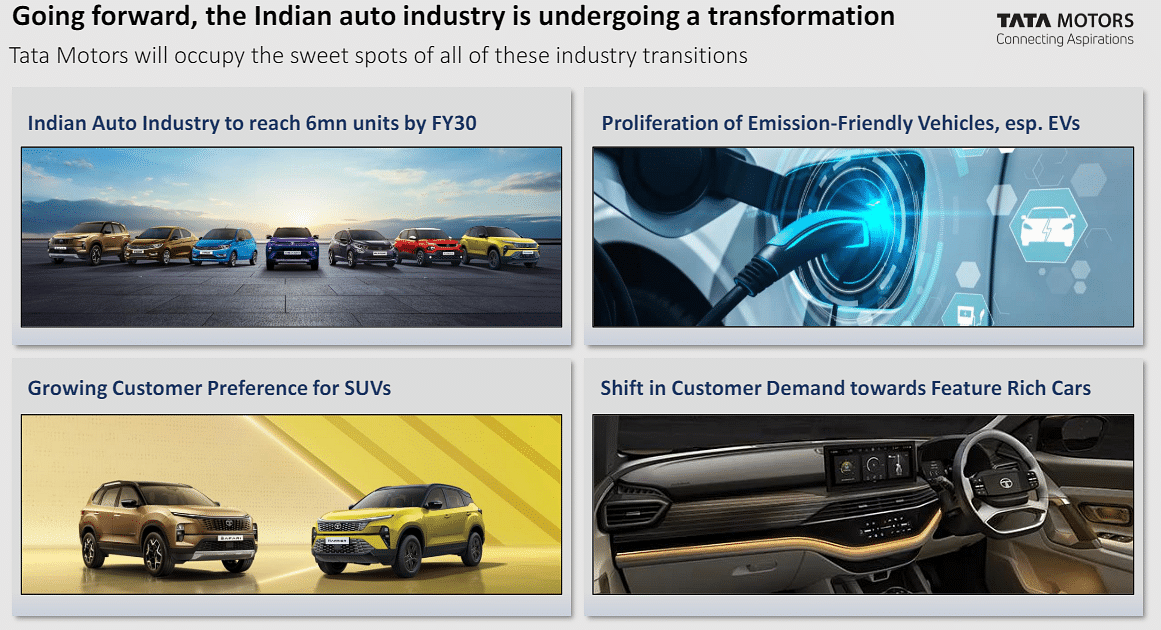
At the end of FY24, Tata Motors was the third largest passenger vehicle maker, with a market share of 14%. In the next three years, the company expects its market share to grow to 16%, before rising another 3-4 percentage points by FY30.
“Our market share in our addressable market is 26% (at present). We will strive to deliver 25%+ market share across our entire addressable market. We will target 18% to 20% market share with our endowments. We will grow faster than the industry leveraging new nameplates and powertrain shifts,” added the presentation.
The presentation slide from the MD of Tata Motors' car business noted that the launches of Curvv and Sierra will help the company capture the mid-SUV segment, and the additional nameplates in new segments and powertrains will increase our addressable market.
The company has identified five key strategic pillars for TMPV (ICE business) and TPEM (EV business) - increase the addressable market by introducing new nameplates, strengthen its multi-powertrain strategy to leverage industry powertrain shifts, proactively grow the EV market in India and maintain market leadership, leverage technology to augment products in line with customer demands and finally enhance the profitability through scale benefits, improving mix, and optimisation of cost and capex.

RELATED ARTICLES

Ampere Updates Magnus G Max Electric Scooter with New Features
 Dev Vadchhedia
12 Aug 2026
Dev Vadchhedia
12 Aug 2026
Priced at Rs 1,09,999, the electric two-wheeler receives more than 30 IoT-enabled features alongside cruise control and ...


Escorts Kubota Partners with Tractor Junction for Used Tractor Resale Network
Dev Vadchhedia
12 Aug 2026
Collaboration aims to streamline exchange inventory valuation and accelerate new tractor sales across key agricultural m...

Skoda Lines up Diesel Superb Comeback in India
 Ketan Thakkar
12 Aug 2026
Ketan Thakkar
12 Aug 2026
Flagship sedan is expected to return as a CBU, giving the Czech carmaker a diesel offering and strengthening the premium...