Follow us
Daewoo delays India e-two wheeler launch on policy, business model concerns
Bhatia's remarks should be seen in the context of the latest notification from the Ministry of Heavy Industries, which came out in mid-March.
 04 Apr 2024
 7014 Views
Share -
7014 Views
Share -


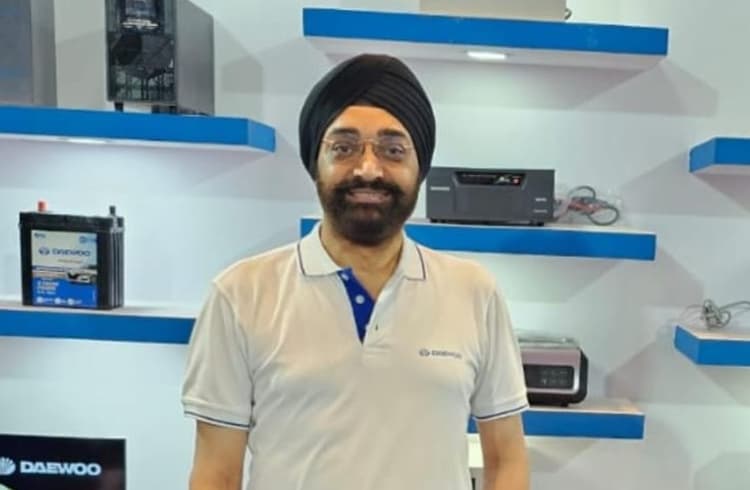
South Korean Brand DAEWOO has postponed the launch of their Electric two-wheelers in India, due to unclear electric vehicle (EV) policies and internal discussions on its commercial strategy.
HS Bhatia, MD, Kelwon Electronics and Appliances Pvt. Ltd, the exclusive manufacturing partner for Daewoo in India, told Autocar Professional that this category isn't stable in their point of view, in the sense that "the government policies are not consistent and clear as of now."
Elaborating further, Bhatia noted that earlier they were under the impression that the FAME II subsidies were ending by March-end, only to learn later of their extension. "So when an entrepreneur or a manufacturer plans for a business, he needs visibility on government policies for the next two-three years at least, if not five years."
Bhatia's remarks should be seen in the context of the latest notification from the Ministry of Heavy Industries, which came out in mid-March. Named Electric Mobility Promotion Scheme 2024 to continue subsidies for electric two- and three-wheelers. The scheme comes with a total outlay of Rs 500 crore and is valid for four months, from April 1 to July 31.
The new scheme ensures incentives for electric two- and three-wheelers sold post-expiry of the second phase of the Faster Adoption and Manufacturing of (Hybrid and) Electric Vehicles (FAME) scheme on March 31. FAME II was rolled out in 2019 with an outlay of Rs 10,000 crore for three years ending in 2022 but was extended to March 2024.
FAME II’s budget was also enhanced last month by an additional Rs 1,500 crore, and the government said the subsidies under the scheme will be applicable for vehicles sold until March 31, or until funds are available, whichever is earlier. The scheme has so far provided subsidies to around 1.47 million electric vehicles, including 1.30 million two-wheelers, 150,613 three-wheelers, and 18,794 four-wheelers.
Daewoo, which was once a renowned automotive brand in the Indian passenger vehicle market between 1995 and 2003 before exiting the country, showcased in October last year a range of consumer electronics and automotive aftermarket products, including lead-acid batteries for two- and four-wheelers, Daewoo-branded lubricants, as well as electric bicycles in New Delhi. The company's top executive had also announced their intentions to venture into the e-mobility segment, with Daewoo's electric bicycles, scooters, and motorcycles.
The policy uncertainties aside, on the technology side, Bhatia noted that his company is considering a lot of options, including whether to build it themselves or to partner with some other company that already has the related technologies and manufacturing facilities available, with them. "So it will probably be at least six months to one year before we actually step into this category with our product range," he added.

RELATED ARTICLES

Maruti Suzuki Projects Double-Digit Retail Growth Through Festive Season
 Autocar Professional Bureau
21 Oct 2026
Autocar Professional Bureau
21 Oct 2026
The carmaker reported a 35% increase in retail sales between Ganesh Chaturthi and Dussehra.


Valeo to Build NVIDIA Hyperion Compute Platforms for SDVs
 Dev Vadchhedia
21 Oct 2026
Dev Vadchhedia
21 Oct 2026
Valeo integrates dual NVIDIA DRIVE AGX Thor processors to produce Level 4 compute hardware for passenger cars, robotaxis...

Delhi CM Rekha Gupta Announces Anti-Pollution Measures: Non-BS VI Entry Ban, Mandatory Fuel Station PUC Checks
Autocar Professional Bureau
21 Oct 2026
Delhi mandates No PUC No Fuel policy, bars entry of non-BS VI vehicles, and implements staggered office hours and 50 per...