


 Follow us
Over 95% of EIM’s Electric CV Sales Follow Battery Subscription Model, Says MD
EIM plans 160 megawatt-scale swap stations across major freight corridors as electric commercial fleet scales up.
 By Darshan Nakhwa
 1 Views


More than 95% of Energy In Motion's (EIM) electric heavy commercial vehicles are sold without batteries, with customers opting for a subscription model that reduces upfront purchase costs by around 40%, Managing Director Narendra Murkumbi said on Wednesday.
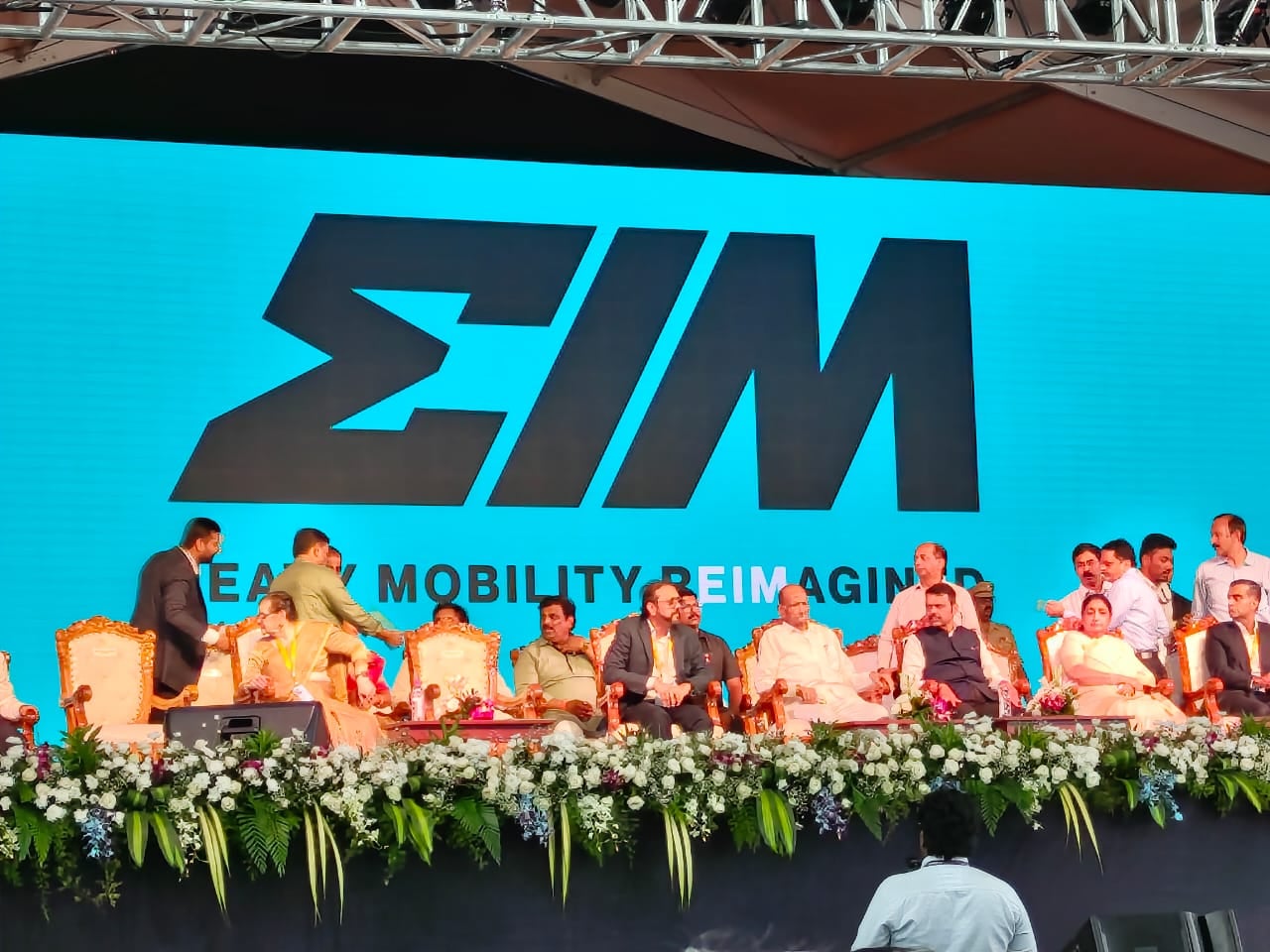
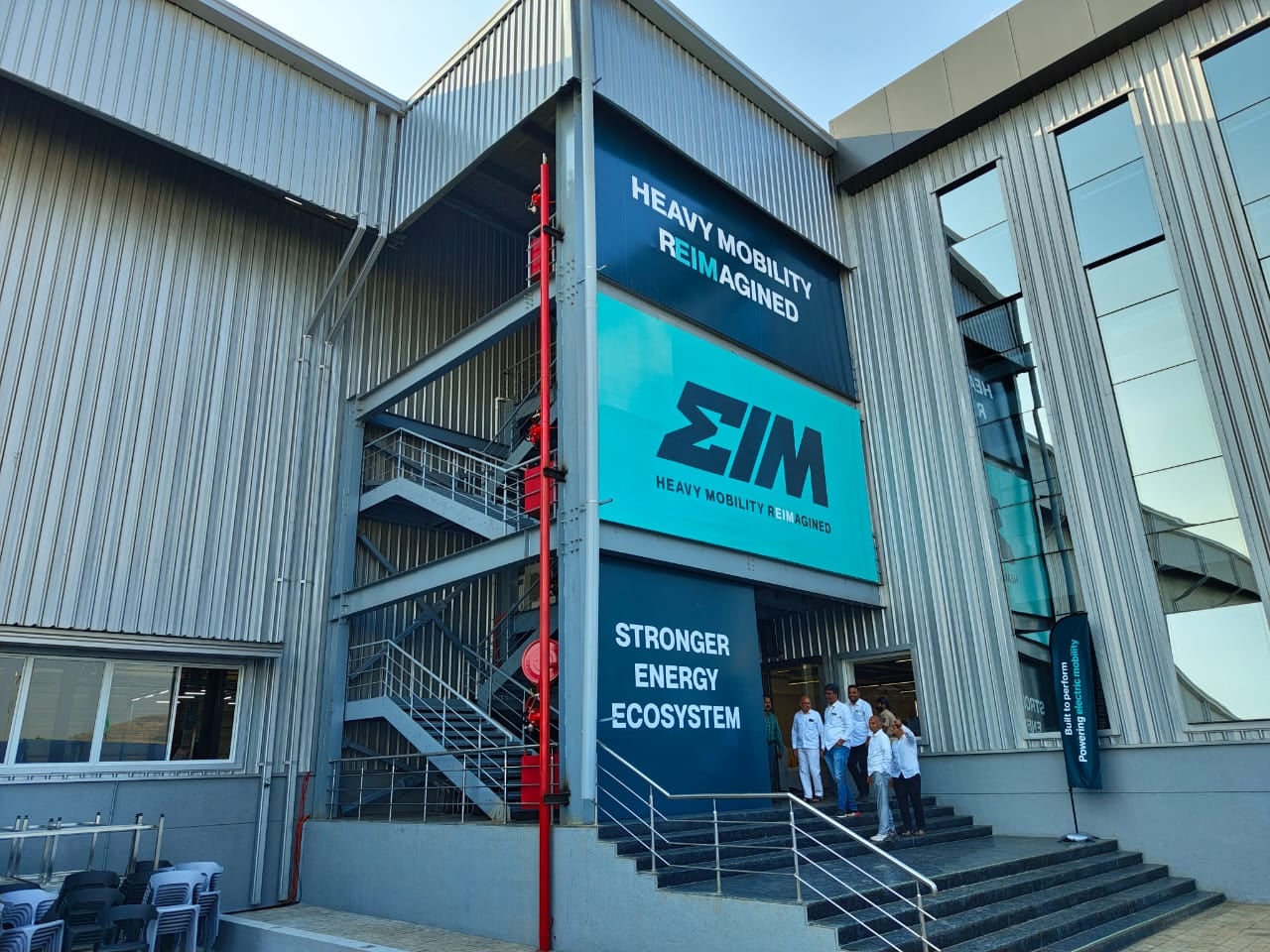
Speaking at the inauguration of EIM's electric commercial vehicle assembly plant in Talegaon, Pune, Murkumbi said the company is combining battery subscriptions, charging infrastructure, and lower operating costs to make electric trucks commercially competitive with diesel vehicles.
Under its Maitryi Battery-as-a-Service (BaaS) programme, customers purchase electric trucks without batteries, while EIM provides batteries and charging services through contracts lasting five to ten years. "Nearly 95% of our truck sales are under the Battery-as-a-Service programme," Murkumbi said.
According to the company’s presentation, an EIM electric truck without its battery costs approximately ₹25 lakh, more than an equivalent diesel vehicle. However, it claims the difference can be recovered in 2.3 years through lower operating expenses.
The comparison assumes annual utilisation of 100,000 km. EIM estimates running costs of around ₹25 per km for its electric truck, including the battery subscription and energy services, compared with ₹36 per km for a diesel vehicle. This translates into annual expenditure of approximately ₹25 lakh and ₹36 lakh, respectively, resulting in potential savings of ₹11 lakh.
"So even though the vehicle costs for our electric truck without battery is more than a diesel truck. You recover it in less than 3 years," Murkumbi said. The figures are based on the company's assumptions and have not been independently verified. Actual savings would depend on vehicle utilisation, diesel prices, subscription charges, financing costs and operating conditions.
Murkumbi said nearly 500 electric trucks were already running under the company's subscription arrangement, which he described as evidence of the model's commercial viability.
"So we feel this innovation and happiness now that we have almost 500 trucks running on this package. We have proved this at scale commercially," he said.
EIM’s heavy electric commercial vehicles have been mainly deployed around ports and major freight routes. In September, the company signed an agreement with Oil Field Warehouse & Services and Radiance Green Mobility to deploy 500 electric trucks across the Mumbai-Pune, Mundra-Morbi-Ahmedabad and Mumbai-Delhi corridors. That agreement envisaged an initial deployment of 50 vehicles on the Mumbai-Pune route in October, with further expansion linked to the availability of charging and battery-swapping infrastructure.
EIM currently offers the Foton Ashwa 4x2 electric tractor-trailer, a 55-tonne gross combination weight (GCW) vehicle offered with 282-kWh and 350-kWh battery configurations. The company plans to expand its portfolio with an electric tipper for mining and construction and a rigid-body truck for goods transportation over the next 15 months.
EIM has emerged as one of the leading players in India's nascent electric heavy commercial vehicle market. According to VAHAN data, the company registered 206 vehicles between January and July 2026, accounting for around 25% of the 821 electric heavy commercial vehicles registered during the period. Maharashtra was its largest market, contributing 172 registrations. However, monthly registrations stood at 31 units in August and 18 in September, according to VAHAN data.
In India, EIM’s direct competitors in the 55-tonne electric tractor-trailer segment include Montra Electric's Rhino 5538 EV and Blue Energy Motors' BEM 5548e, while Tata Motors, Ashok Leyland and BharatBenz compete in the broader heavy commercial vehicle market, primarily with diesel-powered models.
Building the Charging Network
Alongside vehicle sales, EIM is expanding its megawatt-scale charging and battery-swapping network, which Murkumbi described as critical to the wider adoption of electric heavy commercial vehicles.
The company plans to establish 160 such facilities across India over the next three years. Murkumbi said eight stations are already operational, while another 32 are under construction and expected to be commissioned by March 31, 2027. Each station is typically designed with seven battery-swapping bays and one additional bay, with a battery swap taking around five to seven minutes.
The swapping model is intended to reduce the downtime associated with charging large battery packs, particularly for trucks operating on fixed routes with high daily utilisation.
In September, EIM inaugurated a heavy-duty battery-swapping station at Rewari, Haryana, on the NH-48 corridor. The facility joined existing stations at Palwal and Kotputli, with each having a connected load of 2.5 MW.
The company has also signed an agreement with Hindustan Petroleum Corporation Limited (HPCL) to develop charging and battery-swapping facilities at selected fuel retail outlets, with an initial focus on major freight corridors.
Its first phase of network expansion includes Mumbai-JNPA-Pune, NCR-Sonipat, Kandla-Mundra, Ludhiana-Pune and the Mundra-Kandla-Ahmedabad region.
Murkumbi said EIM was also using a centralised monitoring platform to track vehicle location, speed and battery charge in real time, allowing it to manage truck operations and energy requirements across different routes.
While EIM is developing an integrated electric trucking business in India, covering vehicle sales, battery subscriptions and charging infrastructure, it remains dependent on Chinese companies for key technologies and components.
The company has a six-year exclusive agreement with China's Foton Motor to introduce electric heavy commercial vehicles above 18 tonnes in India, initially through imports and subsequently through local assembly. It also sources battery cells and pack kits from CATL, while China's Enneagon Energy supplies charging and battery-swapping equipment.
According to Ravindra Energy's June 2026 Letter of Offer, EIM plans to progressively localise battery-pack assembly, although battery cells are expected to remain imported for the foreseeable future.

RELATED ARTICLES

CEAT Converts $24.5 Million Loan to Equity as Camso Off-Highway Integration Reaches 85% Customer Migration Threshold
 Shahkar Abidi
 14 Oct 2026
Tier-1 tyre maker restructures Sri Lankan subsidiary balance sheet and absorbs European distribution setup costs ahead o...


CEAT Requires 7–8% Price Hike to Offset Inflationary Pressures as Commodity Costs Surge
Shahkar Abidi
14 Oct 2026
Surging crude derivatives and logistics bottlenecks squeeze tier-1 supplier margins despite double-digit revenue expansi...

India Plans Phased BS-VII Emission Norms Rollout from April 2029: Reports
 Autocar Professional Bureau
14 Oct 2026
Autocar Professional Bureau
14 Oct 2026
Road transport ministry approves Euro 7-aligned regulatory roadmap spanning six years with stricter particulate threshol...