Follow us
JLR expects modest revenue growth in FY25, sets long-term target of £38 billion in sales
Jaguar Land Rover also aims to improve its EBIT margin to 10 percent in the financial year 2026 and expand it further to 15% in the long term, as per an investor presentation.
 19 Jun 2024
 5338 Views
Share -
5338 Views
Share -


Having delivered a robust double-digit growth in revenue during the financial year 2024, Tata Motors-owned Jaguar Land Rover has guided for a moderation in its topline growth to low single digits in the current financial year. JLR has a revenue target of £30 billion for FY25, implying a growth of a little more than 3%, with a long-term vision of reaching £38 billion.
JLR is also targeting an earnings before interest and taxes (EBIT) margin of 10% in FY26, and expanding it to 15% in the long term, as per the presentation made on Investor Day 2024.
The British automaker expects to remain net cash positive this year with a free cash flow of £1.8 billion, which it eventually wants to take up to £3 billion. In FY24, the company had a free cash flow of £2.3 billion.
JLR delivered a strong financial performance in FY24 with 27% on-year growth in its revenue to a record £29 billion, fueled by higher production and sustained demand for luxury vehicles globally.
The automaker’s EBIT margin during the year also saw a sharp improvement to 8.5 percent and is expected to remain at the same level in FY25. EBIT growth was driven by improvement in sales, product mix and new platforms.
“By increasing free cash flow, we reduced our debt and made huge strides towards the target of reaching net debt zero by the end of FY25,” JLR Chief Executive Officer Adrian Mardell.
The automaker has also expanded its five-year investment plan till FY28 to £18 billion from £15 million as it prepares to transform existing manufacturing facilities supporting the development of electric, autonomous, AI and digital technologies.
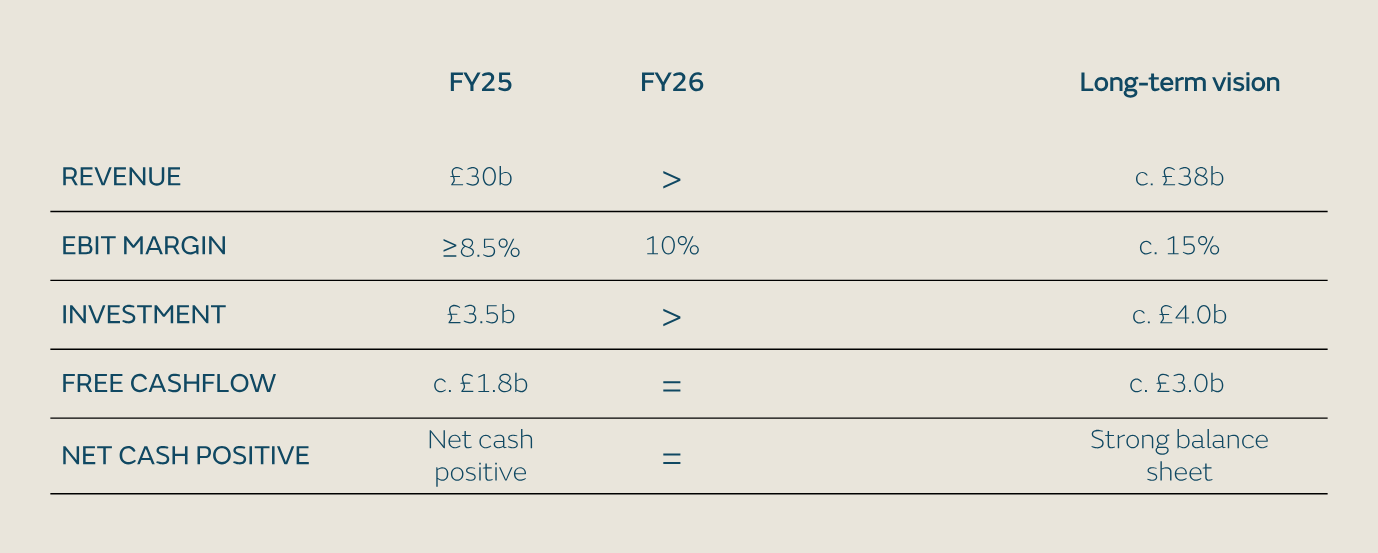
In FY24, JLR invested £3.3 billion and it plans to invest £3.5 billion this year, followed by another £3.8 billion in the next financial year. JLR has also set a long-term annual investment target of £4 billion.
“We began reconfiguring our production facilities for electrification, including making Halewood in Merseyside our first ever all-electric production facility, and upskilling our diverse workforces,” Mardell said.
JLR’s parent company Tata Motors’ India business is now debt-free, and it is on track to become debt-free on a net, consolidated basis in FY25 in its automotive business. Tata Motors also marked a landmark achievement in the Indian automotive industry in FY24 by becoming the first domestic automaker to breach the USD 50 billion mark in annual turnover.
JLR is the main revenue contributor of Tata Motors, accounting for around 70 percent of its consolidated revenue from operations. The remaining revenue comes primarily from the commercial vehicle business – around 18 percent – and the India passenger vehicle business - 12 percent.

RELATED ARTICLES

Castrol India Q32026 Net Profit Drops 23% to Rs 176 Crore as Input Costs Surge
 Dev Vadchhedia
24 Oct 2026
Dev Vadchhedia
24 Oct 2026
The lubricants maker recorded 27 percent revenue growth, but raw material inflation and currency headwinds pressed profi...


Paradeep Parivahan Secures 10-Year EV Heavy Haulage Contract From JSW Group
 Autocar Professional Bureau
24 Oct 2026
Autocar Professional Bureau
24 Oct 2026
The logistics provider will deploy 100 electric trucks for industrial transport across Andhra Pradesh and Karnataka.

Ursaa Energyworx Launches Ursaa Hybrid Platform for Fleet Operations and Battery Data
 Shruti Shiraguppi
24 Oct 2026
Shruti Shiraguppi
24 Oct 2026
Ursaa Hybrid links vehicle movement and utilisation data with battery performance, charging activity and route execution...