Follow us
India-UK FTA: No Duty Cut For Lower Priced Electric, Hybrid Cars
The agreement has introduced gradual duty reductions for alternative fuel vehicles priced above £40,000 (around Rs 44 lakh) imported to India from its sixth year, with the concessions tied to import volume thresholds.
 7150 Views


The India–UK Comprehensive Economic and Trade Agreement (CETA) has explicitly excluded battery, hybrid and hydrogen-powered passenger cars priced under £40,000 (approximately Rs 44 lakh) from any import duty cuts, a move aimed at shielding the domestic manufacturers. The basic customs duty on these cars will remain 70%.
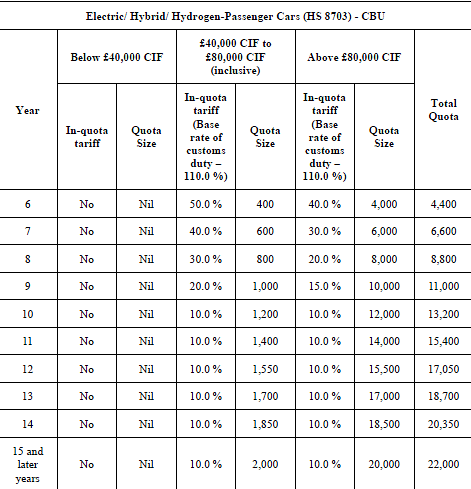
There will be no import duty concessions for any of these alternative fuel vehicles during the first six years of the FTA, even for those priced above £40,000 CIF (cost, insurance and freight value).
However, from the sixth year, vehicles priced above £40,000 will see gradual reduction in duties within a import volume threshold. Vehicles in this price segment currently has a basic customs duty of 110%.
The vehicles priced between £40,000 and £80,000 will qualify for a 50% concessional duty rate in the sixth year of FTA, which will further decrease to 10% by the tenth year.
These reduced rates are tied to a specific quota, beginning at 400 units in the sixth year and expanding to 2,000 units annually by the fifteenth year.
For alternative fuel vehicles priced above £80,000, import duties will be cut to 40% in the sixth year, with an initial quota of 4,000 units.
The duty will then progressively drop to 10% in the year when the import volume reaches 12,000 units. By the fifteenth year, this 10% duty quota will expand to 20,000 units annually.
Meanwhile, the trade agreement will progressively slash the basic customs duty on internal combustion engine (ICE) passenger vehicles to as low as 10% over the next five years.
For petrol cars with engine capacities exceeding 3000cc and diesel cars exceeding 2500cc, the current import duty of 110% will be progressively reduced to 10%. This reduction will be staggered over five years within a specific quota.
Similarly, for petrol cars up to 3000cc and diesel cars up to 2500cc, the import duty will be reduced from 66% to 10% over the same five-year period, also under a defined quota.
In a reciprocal move, the UK is also set to open its EV market for automakers exporting vehicles from India by removing tariffs on EV exports to the UK from the sixth year of the trade agreement. This opens up a major new market opportunity for India's burgeoning EV industry.
READ MORE: India-UK FTA to cut import duty on ICE cars to 10% in 5 years

RELATED ARTICLES

Oben Electric Reaches 10,000-Unit Production Milestone at Bengaluru Plant
 Dev Vadchhedia
 28 Sep 2026
Oben Electric said it has ramped up assembly to service 25,000 Rorr Evo bookings.


NSRCEL, Maruti Suzuki Launch Seventh Mobility Startup Cohort
 Eshisha Java
28 Sep 2026
Eshisha Java
28 Sep 2026
The six-month programme will support early-revenue to scale-stage startups across vehicle technology, clean tech, mobili...

GARC Upgrades Automotive Testing Infrastructure Under PM E-DRIVE
Eshisha Java
28 Sep 2026
The Chennai-based testing agency is adding EV, battery, ADAS, crash safety and heavy commercial vehicle testing capabili...