

 Follow us
India must position itself as hub for affordable mobility components – Hisashi Takeuchi
He suggested five steps for the industry to adopt: offer technologically advanced features at affordable prices, support local semi-conductor manufacturing, adopt digitalisation and automation, skill manpower for new-age technology, and compete at the global stage.
 By Ketan Thakkar
 5618 Views


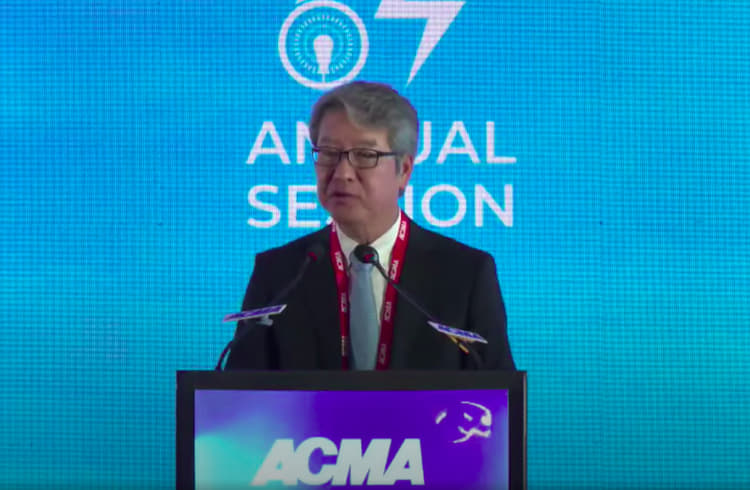
Hisashi Takeuchi, MD and CEO of Maruti Suzuki, says India must position itself as a hub for high-quality, affordable mobility components. The goal should be to not only meet but exceed global standards.
Takeuchi says the Indian suppliers have acquired in-depth knowledge of conventional manufacturing processes. Now, the industry must extend this expertise to new technologies, offering solutions that are not only cost-effective but also meet the highest quality standards.
"By combining our technological know-how with a continued focus on innovation and quality, we can tap into the demand potential across major global markets," he said.
Given the global disruption and volatile geopolitical scenario, global automakers are looking at alternate best cost sources, and India is seen as a key China-plus base for many. Last year, the auto component industry exported components worth $20 billion, yet it is still minuscule on the global stage.
"India is emerging as a global hub for auto component sourcing, and the industry exports over 25% of its production annually. However, this is less than 2% of global auto industry trade, giving us a huge opportunity to increase exports further. The world is watching, and the steps we take today will shape the future of our industry for decades to come," asserted Takeuchi.
The MD of the largest car maker suggested five key steps that can put the industry on this ambitious path: offer technologically advanced features at affordable prices, support local semi-conductor manufacturing, adopt digitalisation and automation, skill manpower for new-age technology, and compete at the global stage.
"We have the talent, the resources, and a visionary government to build a self-reliant, globally competitive automotive industry. It is now up to us to grab this opportunity and drive the future of mobility, not just for India, but for the world," concluded Takeuchi.

RELATED ARTICLES

Tata Motors Secures Acceptances for 89.42% Iveco Stake, Crosses Offer Threshold
 Autocar Professional Bureau
 27 Oct 2026
Shares tendered under the offer are worth €3.43 billion; the acquisition would bring Tata Motors closer to its ambition ...


High-Tech Two-Wheelers Power EV Revenue Surge at Auto Parts Supplier Sona
 Shahkar Abidi
26 Oct 2026
Shahkar Abidi
26 Oct 2026
The automotive component maker expands two-wheeler EV portfolio, driving record quarterly revenue.

MoRTH Amends CMVR to Formalise E100, B100 Testing Norms; Raises Light-Vehicle Test Limit to 3,500 kg
Shahkar Abidi
26 Oct 2026
Gazette notification provides clear homologation roadmap for flex-fuel vehicles.