
 Follow us
Toyota incorporates a robot to test durability in new Avalon
Toyota incorporates a new robot for testing Avalon for its rough road durability.
 By Autocar Professional Bureau
 10071 Views


Toyota has replaced the human test driver with a robot that would endure all the harshness of the tough durability test. It is being tried out for the testing of the new Toyota Avalon.
The rough road durability testing for Toyota’s North American vehicles is conducted on a course in Michigan that the company has specifically engineered with potholes, dips and other defects precisely placed along the track surface. These conditions inflict all the road-induced punishment that the average vehicle encounters during its lifetime into a single, bone-jarring evaluation.
This spares engineers and technicians from conducting the evaluations through this very uncomfortable ride which involves continuously circling around the pothole-filled track. As they are required to drive the vehicle at specific speeds till the necessary mileage were accumulated in the vehicle, Toyota decided to let a robot perform the test.
Toyota stresses that this is not an automated vehicle, but a simpler robotic solution using a combination of computers, actuators, levers, other mechanicals and a lot of engineering know-how. In fact, the system doesn’t utilise any of Avalon’s many advanced driver assistance or navigation features, nor any of the advanced LIDAR, sensors, and cameras used by the autonomous vehicles being developed by Toyota Research Institute (TRI).
According to Avalon chief engineer Randy Stephens, “This not only saved the engineers and technicians from having to endure the gruelling ride, it also provided a more accurate test cycle. The system was proven during Avalon development, and we plan to use it during all future North American vehicle development cycles.”
The robot is a set of components that could remotely start, shift, steer and stop the Toyota flagship vehicle. Traditional in-car global positioning systems are accurate to about four-metres, but Toyota’s VPD team developed the path control software with an accuracy of within two centimetres.
The complete navigation infrastructure allows the engineers and technicians to monitor the test from a nearby control room without the need for humans to physically occupy the vehicle through harsh testing conditions. Another benefit of the robot behind the wheel is that the test cycles were now limited by fuel capacity, instead of stopping every 30-40 minutes for swapping drivers.
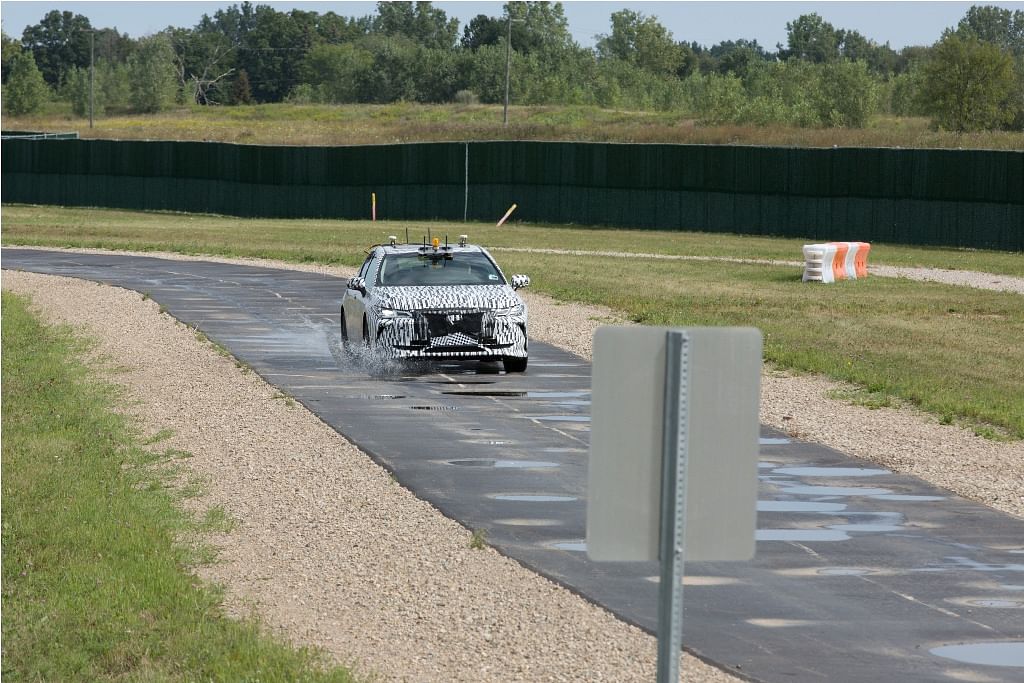
Toyota's robot undergoes the harsh durability test in new Avalon.
The robot is exclusively in use by Toyota’s North American R&D headquarters in Michigan. However, the company intends to explore possible applications of the system at other Toyota R&D facilities in the future.
RELATED ARTICLES

Horse Powertrain develops ‘all-in-one’ powertrain for hybridizing BEV platforms
 Ajit Dalvi
 20 Apr 2026
X-Range C15 Direct Drive is an ‘all-in-one’ hybrid powertrain that allows BEV platforms to serve as foundations for HEVs...


Autoliv Plans JV for Advanced Safety Electronics With China’s HSAE
Ajit Dalvi
11 Oct 2025
The new joint venture, which is to be located strategically near Shanghai and close to several existing Autoliv sites in...

JLR to Restart Production Over a Month After September Hacking
Ajit Dalvi
07 Oct 2025
Manufacturing operations at the Tata Group-owned British luxury car and SUV manufacturer were shut down following a cybe...