

 Follow us
GM opens new brake test lab in Michigan
Engineers at General Motors’ new 14,000 square-foot brake testing facility at the GM Proving Ground in Milford, Michigan, know the differences between moans, squeals, grinds, groans and grunts – annoying noises common to their work.
 04 Jul 2014
 4094 Views
Share -
4094 Views
Share -


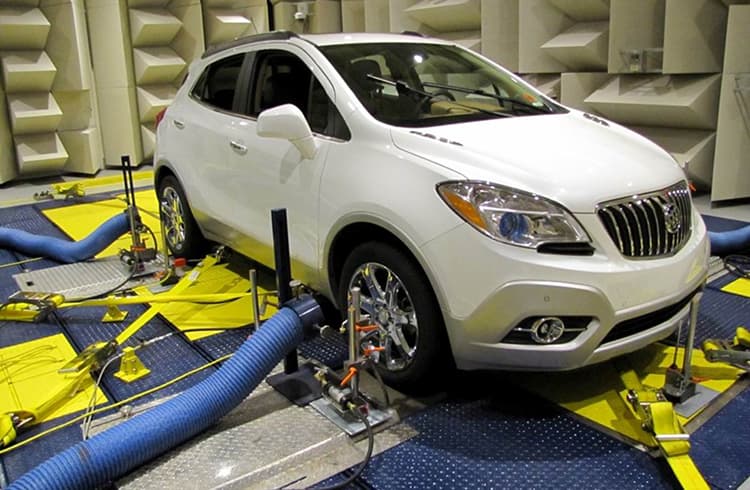

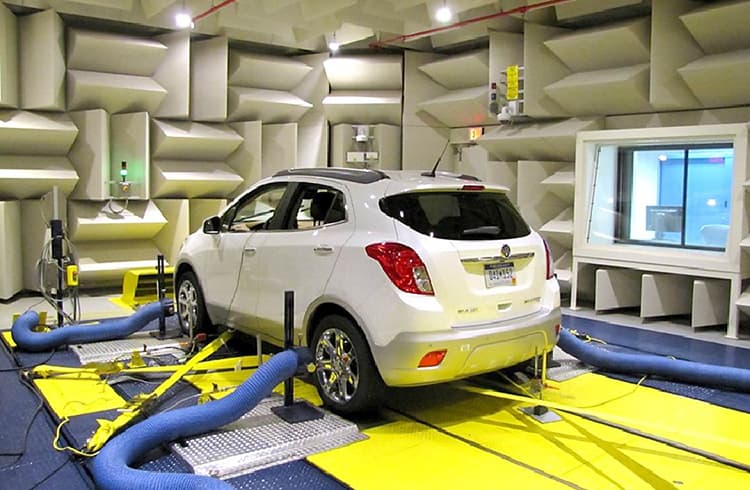


Engineers at General Motors’ new 14,000 square-foot brake testing facility at the GM Proving Ground in Milford, Michigan, know the differences between moans, squeals, grinds, groans and grunts – annoying noises common to their work. Now, with a new brake chassis dynamometer, they can simulate braking in weather conditions that range from Alaska to a tropical island.
With the new facility opened earlier this year, GM vehicles can now take up to 1,900 stops in 2½ days compared with 1,000 stops in two weeks using previous testing methods. The result is a quiet braking experience that customers associate with a quality vehicle.
“If we do our job correctly, the customer won’t notice our work,” said Brent Lowe, GM performance engineer for brake noise development. “Watch any movie and you’ll hear brake squeal every time a car stops because Hollywood loves to add the brake squeaking sound effect, and nothing bugs me more. We work to make sure our brakes lead the industry in silence.”
The new dynamometer was developed in conjunction with supplier Link Engineering. The state-of-the-art facility can run 24 hours a day, simulate underbody airflow, and change temperatures and humidity.
“The ability to control and replicate the conditions that our customers’ vehicles are driven under is just as important as the ability to control the brake pressure, vehicle speed and direction,” Lowe said.
The test chamber is padded with jagged sound proofing to provide a quiet environment for testing and to spare others the unpleasant noises or vibrations that may arise during a test. The room can also accommodate vast changes in climate and moisture conditions, and can dramatically alter its temperature within about 15 minutes.
“The concept of a silent brake is actually very complicated,” said Lowe. “Braking creates friction and the more friction present amounts to more noise. Though the sound of brakes squealing is something every driver can easily identify as a nuisance, it is one of the more difficult things to actually remove. We have been very successful at taking on that challenge at GM.”
Before the new facility, the team had to rely on test driving vehicles at the track and a two-wheel-drive chassis dynamometer that offered far less control over humidity and temperature.
“With our previous methods and equipment, we became really good at finding and mitigating approximately 85 percent of existing brake noises,” Lowe said. “With this new facility, we’ll be able to locate and address the remaining 15 percent of brake noise frequencies.”
Photograph: A 2014 Buick Encore's brakes are put to the test in the all-new state-of-the-art brake noise dynamometer at GM's Milford Proving Ground in Milford, Michigan.
RELATED ARTICLES

Horse Powertrain develops ‘all-in-one’ powertrain for hybridizing BEV platforms
 Ajit Dalvi
20 Apr 2026
Ajit Dalvi
20 Apr 2026
X-Range C15 Direct Drive is an ‘all-in-one’ hybrid powertrain that allows BEV platforms to serve as foundations for HEVs...


Autoliv Plans JV for Advanced Safety Electronics With China’s HSAE
Ajit Dalvi
11 Oct 2025
The new joint venture, which is to be located strategically near Shanghai and close to several existing Autoliv sites in...

JLR to Restart Production Over a Month After September Hacking
Ajit Dalvi
07 Oct 2025
Manufacturing operations at the Tata Group-owned British luxury car and SUV manufacturer were shut down following a cybe...