


India's E20 Ethanol Programme Expected to Generate Rs 40,000 Crore for Farmers This Year
Government data shows ethanol blending initiative will save Rs 43,000 crore in foreign exchange while reducing carbon emissions significantly.
 By Angitha Suresh
 7549 Views


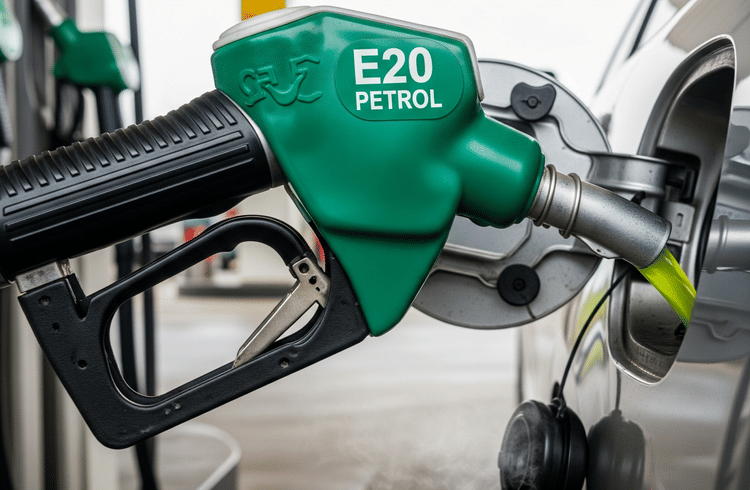
India's push toward 20 percent ethanol blended petrol (E20) is projected to generate approximately Rs 40,000 crore in payments to farmers this year, while saving around Rs 43,000 crore in foreign exchange, according to a joint statement from automotive testing agency ARAI, oil marketing companies, and vehicle manufacturers.
The Ethanol Blended Petrol Programme, launched in 2001, has gained momentum as the government aims to reduce crude oil imports and support rural incomes. The initiative has resulted in carbon dioxide emission reductions of 736 lakh metric tonnes, equivalent to planting 30 crore trees, the statement said.
Over the past 11 years since the programme's expansion, India has saved Rs 1.44 lakh crore in foreign exchange and substituted 245 lakh metric tonnes of crude oil. The programme transforms farmers from "annadaatas" (food providers) to "urjadaatas" (energy providers), redirecting money previously spent on crude oil imports to the rural economy.
The statement addressed concerns about the E20 fuel blend, clarifying that real-world vehicle mileage depends primarily on driving habits, maintenance practices, vehicle age, and tire conditions rather than ethanol content. Testing on older vehicles showed only marginal drops in fuel economy.
Ethanol's higher octane rating of 108.5 compared to petrol's 84.4 allows modern high-compression engines to operate more efficiently, particularly benefiting city driving conditions. The addition of ethanol has improved petrol quality from RON 88 to RON 95 under BS-VI norms, enhancing anti-knock properties.
Recent social media claims about water ingress in fuel tanks and issues with insurance coverage for vehicles using ethanol-blended petrol have been dismissed as baseless. The All India Petroleum Dealers Association reported that dealers across the country have not received customer complaints related to ethanol blending.
The programme draws from global experiences, particularly Brazil's ethanol adoption model, and was implemented after studies confirmed its feasibility under Indian conditions. Industry stakeholders including oil companies, automotive manufacturers, distilleries, and regulatory bodies have collaborated on the initiative.
Government officials and insurance companies have confirmed that vehicle insurance remains valid for cars using ethanol-blended petrol, contradicting claims that warranties or coverage might be affected.
RELATED ARTICLES

JK Tyre to Invest Rs 1,130 Crore to Expand Capacity by FY28
 Darshan Nakhwa
 06 Feb 2026
Expansion across TBR, LTBR and passenger car radial tyres to come on stream by Q2 FY28.


JK Tyre Reports 3.7-Fold Surge in Q3 Profit Amid Strong Demand and Margin Expansion
 Sarthak Mahajan
06 Feb 2026
Sarthak Mahajan
06 Feb 2026
India's leading tyre manufacturer posts Rs 209 crore net profit for Q3 FY26, driven by robust domestic growth, premium p...

Olectra Greentech Appoints Suhas Athma as VP-Human Resources
Sarthak Mahajan
06 Feb 2026
Olectra Greentech Limited has appointed Suhas Athma as Vice President-Human Resources, effective February 6, 2026, bring...