


H2-ICE vehicles to hit roads in 2-3 years, says ARAI's Dr. Sukrut S. Thipse
Dr. Thipse emphasized that government support through subsidies and tax incentives among others, will be crucial in accelerating the adoption of hydrogen technology.
 By Shahkar Abidi
 7448 Views


India is gearing up for a hydrogen-powered introduction in its commercial vehicle segment, with the Hydrogen Internal Combustion Engine (H2-ICE) technology poised to hit the roads in the next two to three years.
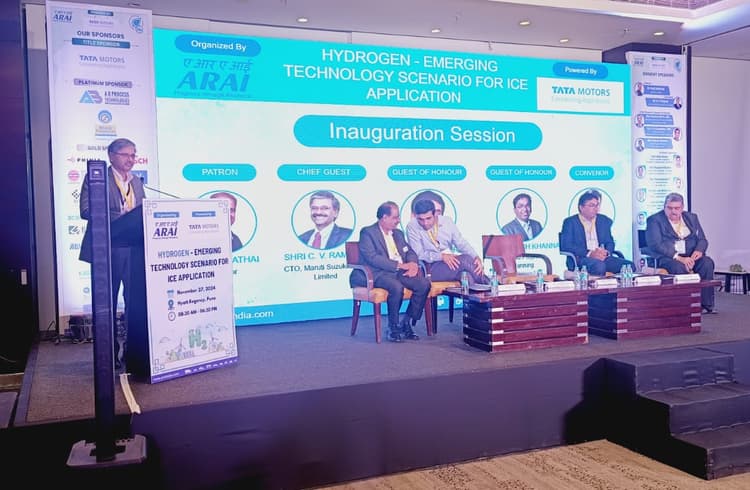
Dr. Sukrut S. Thipse, Senior Deputy Director at the Automotive Research Association of India (ARAI) and Head of the Engine Development Lab, expressed optimism about the imminent commercialization of the technology. “In 2-3 years, you can see actual H2-ICE vehicles on the road,” Dr. Thipse told Autocar Professional during the sidelines of a seminar titled "Hydrogen: Emerging Technology Scenario for ICE Application," hosted by ARAI in Pune on Wednesday.
The transition to hydrogen-powered heavy vehicles is being driven by both Indian and global original equipment manufacturers (OEMs). Indian giants such as Ashok Leyland and Tata Motors have already signaled their intent to unveil H2-ICE vehicles, while Mahindra & Mahindra is believed to be joining the race with plans to integrate the technology into its heavy-duty truck lineup.
Global players, including Volvo, Scania, and MAN, are also preparing to bring their hydrogen-ICE expertise, developed in international markets, to Indian soil. These manufacturers are expected to commence local testing as they await the market’s readiness for large-scale rollouts. “It’s in process,” noted Dr. Thipse.
The initial deployment of H2-ICE vehicles is likely to target fleet operations in sectors such as logistics, municipal services, and public transportation. However, the widespread adoption of the technology hinges on key enablers, according to Dr. Thipse.
“Parallelly, during that time, we can focus on building infrastructure, including hydrogen fueling stations,” he explained, highlighting the involvement of major energy players like Indian Oil Corporation (IOCL), Reliance, Adani, and GAIL, who are already investing in hydrogen infrastructure.
Dr. Thipse emphasized that government support will be crucial in accelerating the adoption of hydrogen technology. Measures such as subsidies, tax incentives like GST reductions, public awareness campaigns, and initiatives like green license plates could play a pivotal role. Additionally, investment in testing facilities and the development of local research and development (R&D) ecosystems—through collaborative efforts involving fuel producers, researchers, and component manufacturers—will be essential. Currently almost all major parts required for development of Hydrogen-ICE technology gets imported, he pointed out.
As the global automotive industry pivots toward greener technologies, India’s ambition to embrace H2-ICE technology represents a significant step toward decarbonizing its heavy vehicle segment. Whether the necessary ecosystem can be built swiftly enough remains to be seen.
RELATED ARTICLES

GreenCell Mobility Announces 570-Bus Electric Fleet Expansion in Delhi
 Sarthak Mahajan
 09 Feb 2026
GreenCell Mobility has announced the deployment of 570 electric buses in Delhi following an USD 89 million investment ro...


Bajaj Auto Launches ₹4.41 Lakh WEGO P9018, India's Longest-Range Electric Three-Wheeler
Sarthak Mahajan
09 Feb 2026
Bajaj Auto has unveiled the WEGO P9018 electric three-wheeler featuring a 17.7 kWh battery pack and 296 km certified ran...

Global Trade Agreements and Export Demand Propel New Opportunities for the Indian Aftermarket Ecosystem
 Ketan Thakkar
09 Feb 2026
Ketan Thakkar
09 Feb 2026
Record participation at ACMA Automechanika New Delhi highlights a sector ready to capitalize on shifting global supply c...