



 Follow us
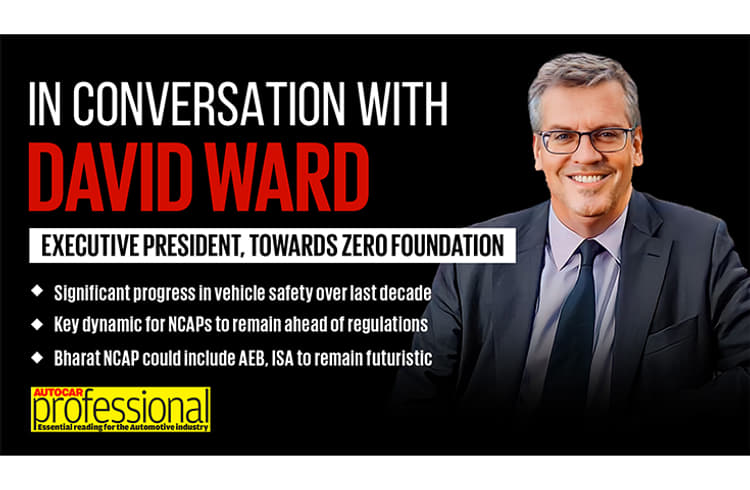
In Conversation with Towards Zero Foundation's David Ward
With NCAPs being ahead of regulations when it comes to vehicle safety, Ward suggests how the proposed Bharat NCAP regime in India can become adventurous and give weightage to future-oriented technologies such as Autonomous Emergency Braking to push OEMs to build more safety into vehicles.
 27 May 2023
 5711 Views
Share -


Vehicle safety in India has seen tremendous progress over the last decade, particularly with the notable efforts of Global NCAP, which, with its SaferCarsForIndia programme, has spread awareness among consumers by surfacing crash safety of some of the popular car models on sale in the country. The programme, which crossed the 50-car test mark in 2022 in terms of evaluating crash performance of some made-in-India models, has recently upgraded its protocols to include ESC as a key requirement.
David Ward, Executive President, Towards Zero Foundation, talks about the rewarding journey of the SaferCarsForIndia programme, and how it has struck the right conversations around vehicle safety, as well as been instrumental in pushing OEMs towards incorporating more safety features in their products, while driving government authorities towards bringing in regulatory reforms that enhance vehicle safety.

RELATED ARTICLES

Bharat Mobility Auto Expo 2027: 44 OEMs, JLR Debut & More | Rajesh Menon, SIAM DG
 Autocar Professional Bureau
18 Nov 2026
Rajesh Menon on 44 confirmed automakers, debuts by JLR, Norton, Iveco and JSW Group, multi-powertrain showcases, new out...


Denza Launch in India: BYD's Rajeev Chauhan on D9, Z9 GT and Luxury Play | AP Dialogue
Autocar Professional Bureau
17 Nov 2026
BYD is positioning Denza as a technology-led luxury brand in India, with the D9 MPV and Z9 GT marking its entry into the...

VIDEO: Jyoti Malhotra on EV Demand, GST & Supply Chain | India EV Conclave 2026
 Prerna Lidhoo
15 Nov 2026
Rising customer acceptance is supporting electric vehicle demand in the luxury segment, but supply constraints, geopolit...

