With 30+ years in automotive electronics—from ignition systems to connected EVs—Saaketh Electrocircuit delivers lifecycle-driven engineering: robust design, sustainable components, manufacturability, validation, and serviceability. Our integrated IATF 16949/ISO 9001 ecosystem unites concept-to-manufacturing with in-house SMT, EOL testing, environmental labs, and rapid prototyping for faster cycles and first-time-right quality. EV portfolio: BLDC controllers, DC-DC converters, BMS, VCUs, digital clusters—backed by OEM partnerships, patented ASIC ECUs, and IoT smart controllers for India. We co-develop enduring platforms from prototype to volume.
How can Saaketh Electrocircuit’s 30+ years of experience in automotive electronic product design and manufacturing help your next-generation automotive or EV program stand out in the market?
When you work in automotive electronics for over 30 years, you don’t just accumulate projects; rather, you accumulate judgment and platform-level knowledge. We have seen technologies evolve from basic ignition systems to intelligent, connected EV platforms. What that experience gives us is clarity—clarity on what will scale, what will fail in the field, and what will survive real-world automotive conditions.
At Saaketh, we don’t look at a product as just a PCB assembly or ECU. We look at the entire lifecycle—design robustness, component availability, manufacturing feasibility, validation stress points, and serviceability. That system-level thinking helps our customers launch products that are not only innovative but also reliable products. Standing out in today’s market is not about adding features; it is about engineering confidence.
Are you looking for a single partner who can design, validate, and manufacture custom automotive electronics under IATF 16949:2016 and ISO 9001:2015 certified quality systems?
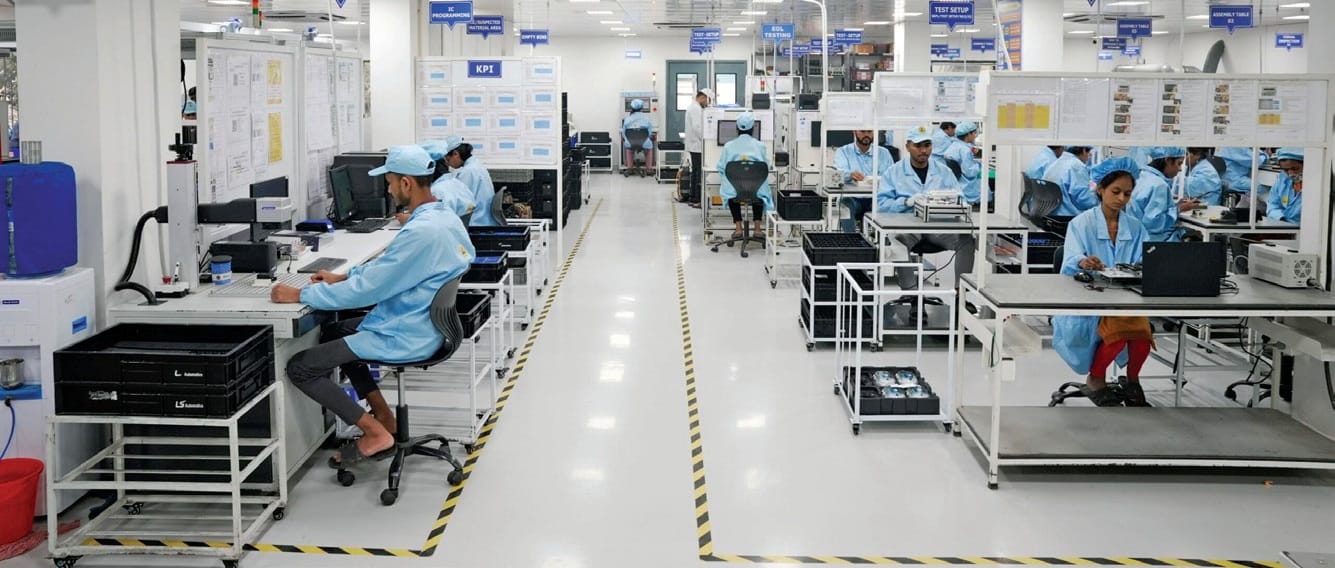
Our organization has the facility for designing, manufacturing, and validation under one roof. Many companies today are managing multiple vendors—one for design, another for PCB fabrication, another for assembly, and another for validation. That fragmentation slows decision-making. We operate differently. Under IATF 16949 and ISO 9001 frameworks, we handle concept, design, validation, and manufacturing within a single ecosystem.
This creates accountability. It shortens feedback loops. And most importantly, it ensures that quality is built into the product from day one, before being inspected at the end. Our new product development time is comparatively much shorter than other companies out there. For an OEM, that means no surprises and more predictable outcomes.
What could your time to market look like if your ECU, cluster, sensors, PCB, and wire harnesses were all developed within one integrated group—from design center to PCB plant to harness facility?
In automotive electronics, time is rarely lost in engineering capability; it is lost in handover. Files move, queries wait, validation slots are scheduled weeks later, and corrections sit in external queues. Integration eliminates that lag. At Saaketh, the design team can walk to the SMT/production line and discuss manufacturability in real time, so iteration becomes faster. If validation is in-house, design corrections don’t wait in a queue outside. This compresses development cycles significantly. More importantly, it improves first-time-right performance. Speed without stability is risky in automotive. Our approach is to achieve both.
How much more reliable would your vehicle electronics be with in-house SMT lines, manual insertion, EOL test rigs, and validation labs (environmental, vibration, thermal shock, salt spray) all under one roof?
Reliability is not a department; rather, it’s a culture. Because we have in-house SMT lines, insertion lines, EOL testing, and environmental labs, we don’t depend on assumptions. We test under vibration, thermal shock, salt spray, and electrical stress conditions that mimic real-world usage. Design, manufacturing, and validation teams work in a closed loop. If a layout needs correction or a component needs upgrading, we fix it immediately. That integration dramatically reduces field failures—and that’s where real credibility is built.
Is Saaketh providing true concept-to-production support on EV products such as BLDC motor controllers (1–5 kW), DC-DC converters, BMS, VCU, and digital clusters?
In EV electronics, you cannot separate hardware, firmware, thermal management, and manufacturing strategy. When we develop BLDC motor controllers, DC-DC converters, BMS, or VCUs, we think about semiconductor availability, packaging constraints, and scaling volumes from day one. Our semiconductor ecosystem engagement helps us choose the right chips—not just technically suitable, but commercially sustainable. Concept-to-production means anticipating challenges before they become delays.
What difference would it make to supply ECUs, sensors, flashers, and HVAC controllers to leading OEMs like Mahindra, Piaggio, Force Motors, and VE Commercial Vehicles?
Working with established OEMs builds discipline. Automotive programs demand documentation precision, PPAP compliance, traceability, and zero tolerance for inconsistency. Supplying clusters, sensors, ECUs, and controllers to leading OEMs has strengthened our internal systems and execution capability. New customers benefit from that maturity. We don’t experiment with process stability; we build on proven frameworks.
Is your next platform—2-wheeler, 3-wheeler, passenger car, CV, or farm equipment—ready for smart electronics such as immobilizers, PKE/RKE, telematics (AIS 140), and body control modules with integrated RKE and RPAS?
Every vehicle platform today—whether 2W, 3W, passenger vehicle, CV, or farm equipment—is becoming electronics-driven. Features like immobilizers, PKE/RKE, telematics (AIS 140), and body control modules are no longer premium features; they are becoming standard expectations. The key is to design these systems not just for functionality but for Indian road conditions—voltage instability, dust, temperature swings, and vibration. That’s where our embedded and field experience becomes valuable.
Could your BOM cost and component count be reduced by leveraging patented ASIC-based small engine control ECUs developed in collaboration with a global semiconductor major like ROHM?
Cost reduction should come from architecture, not compromise. Our patented ASIC-based small engine ECUs, developed in collaboration with ROHM, allow us to reduce component count, shrink PCB size, and improve reliability simultaneously. When electronics are architected intelligently, cost and performance improve together. That’s sustainable optimization.
How are you currently validating the durability of your automotive electronics, and could Saaketh’s in-house prototyping (FDM and epoxy 3D printing) and lab facilities compress your design–validation loop?
With FDM and epoxy 3D printing, rapid PCB prototyping, and in-house validation labs, we can test concepts quickly and iterate efficiently. This reduces the gap between design ideas and validated products. Shorter loops mean faster confidence—and confidence drives quicker program approvals.
What if your next digital cluster project—LCD segmented, TFT, or touch display—came with proven experience across 2-, 3-, and 4-wheelers, commercial vehicles, and India-specific duty cycles?
 Clusters have evolved from simple display units to integrated communication hubs. We have delivered LCD, segmented, TFT, and touch-based clusters across multiple vehicle categories. The real challenge is durability—maintaining readability, brightness stability, and vibration resistance across Indian duty cycles. Our experience across segments helps us anticipate these challenges early in the design phase.
Are you able to get customized smart sensors (fuel level, speed, gear position, angle, pressure, encoders for PMSM/BLDC) tuned exactly to your vehicle architecture and Indian road conditions?
Sensors must match vehicle architecture precisely—electrically, mechanically, and environmentally. Whether it’s fuel level, gear position, pressure, or PMSM/BLDC encoders, calibration accuracy and signal stability are critical. We design sensors to integrate seamlessly with vehicle systems, ensuring performance consistency in real-world conditions, not just lab validation.
How confident are you that your current in-house EMS facility can scale from proto to volume with conveyorized SMT at 81,500 CPH, in-circuit testing, EOL testing, and potting—all while maintaining automotive-grade traceability?
Scaling from prototype to volume is where many organizations struggle. At Saaketh, with conveyorized SMT at high placement capacity, in-circuit testing, EOL testing, potting, and full traceability systems, we ensure that volume production maintains the same level of reliability as prototype samples. Manufacturing stability is engineered through process control and historical data, not firefighting.
Could you benefit from an in-house wire harness setup, including automatic cutting, stripping, twisting, crimping, sleeve cutting, continuity testing, and push-pull testing aligned to OEM standards?
The reliability of electronic products is incomplete without harness reliability. Our automated cut–strip–crimp processes, continuity checks, and push-pull validation aligned to OEM standards ensure that interconnect integrity is maintained. In automotive, small mechanical inconsistencies can lead to large system failures. We take that seriously and control our processes.
What business impact would you see if your genset, agri, or off-highway equipment used IoT-enabled controllers that allow remote scheduling, ON/OFF, and live electrical and engine parameter monitoring on mobile?
For gensets, agriculture, and off-highway applications, remote monitoring and control are becoming critical. IoT-enabled controllers allow scheduling, remote ON/OFF, and real-time monitoring of electrical and engine parameters through mobile platforms. This not only improves operational efficiency but also enables predictive maintenance, which is increasingly important in distributed automotive and industrial applications.
Saaketh Electrocircuit Pvt. Ltd., based in Talawade, Pune, Maharashtra, India, is a rising leader in automotive electronics and embedded systems. Drawing on 30+ years of expertise from its predecessor R.D. Electrocircuits Pvt Ltd (1986–2019), Saaketh was incorporated in March 2019 as a private limited company specializing in design, development, and manufacturing.Key strengths include automotive ECU development, embedded firmware, complex magnetless sensors, digital clusters, and full-lifecycle support— from concept to scalable production—for OEMs and Tier-1 suppliers. With ~170 engineers in embedded systems, hardware design, testing, and operations, the company boasts advanced prototyping, R&D, and manufacturing facilities. Saaketh invests heavily in technology, talent, and quality to emerge as a trusted partner for next-gen mobility electronics.
Website Address - www.saaketh.co.in