



 Follow us
Battery Intelligence: The Missing Layer in India’s EV Growth Story
As electric vehicle numbers rise across India, industry attention is shifting from deployment to the operational management and health monitoring of battery assets.
 28 Nov 2026
 1 Views
Share -


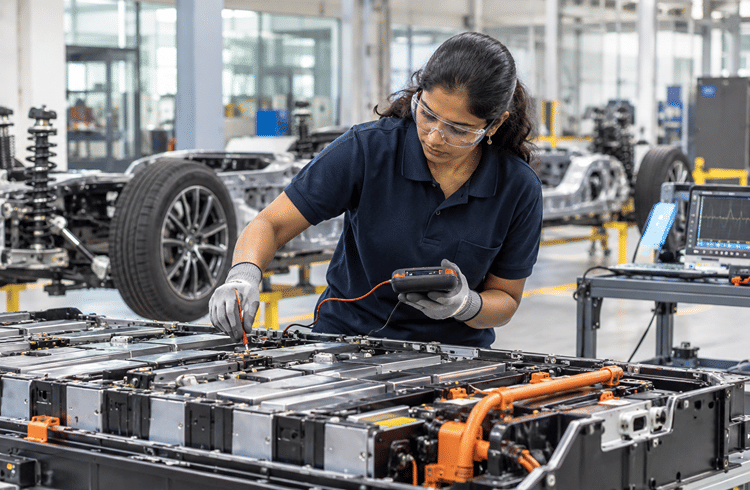
India has spent the last few years asking how quickly it can put more electric vehicles on the road. The more important question for the next phase of the EV transition may be: how intelligently can we operate them once they are there?
Electric mobility has made considerable strides in the country. Today, electric two wheelers and three wheelers are making their presence felt, corporate fleets are being electrified, and manufacturers are extending their portfolios while the surrounding ecosystem of charging and battery production is attracting investors.
However, with the move to commercial scale, the industry is confronted with a major issue: knowing how its most significant building block operates throughout its life.
The battery is no longer just a component inside an EV. It is an energy source, an operational asset, a major contributor to vehicle economics and, increasingly, a source of valuable data.
India’s next EV challenge, therefore, is not simply to put more vehicles on the road. It is to ensure that millions of battery-powered assets can operate reliably, predictably and efficiently in the real world.
From Monitoring Batteries to Understanding Them
An advanced electric vehicle (EV) generates a large amount of data. The battery management system (BMS) is involved in constant monitoring of parameters like voltage, current, the temperature of the battery, and other conditions needed to be satisfied for the battery’s safety.
That capability is fundamental. But monitoring and intelligence are not the same thing.
A BMS can tell us what the battery is experiencing at a given point in time. The next layer of intelligence helps us understand what that behaviour means in the context of the battery’s history, operating conditions, charging patterns and vehicle usage.
Why is one battery behaving differently from another? Is the change temporary or part of an emerging trend? Is a particular cell or module beginning to show abnormal behaviour? Is a charging or usage pattern accelerating degradation? And, most importantly, does the issue require action before it becomes an operational failure?
This is where Battery Intelligence becomes relevant. Its value lies not in collecting more data or creating another dashboard filled with parameters. Its value lies in converting complex battery and operational signals into insights that can support better decisions.
India Needs Intelligence Built for Indian Duty Cycles
India is not simply importing the EV operating model of another market. Batteries here are being deployed across one of the world’s most diverse mobility environments.
Ambient temperatures can be demanding. Urban traffic creates frequent stop-and-go operating cycles. Last-mile vehicles can see intensive daily utilisation. Two- and three-wheelers, delivery fleets, buses and other commercial vehicles operate under very different duty cycles. Charging behaviour and infrastructure conditions can also vary significantly.
These factors matter because a battery is not a static component. Its behaviour changes with usage patterns, charging practices, temperature, load and operating conditions. Two vehicles with an identical battery configuration can therefore experience very different degradation patterns over time.
The case for finding solutions based on the behaviour of intelligent systems over static limits and laboratory-determined standards is an important one.
The significant opportunity that exists for India is to construct new knowledge of how batteries actually perform in Indian conditions and apply that knowledge for their reliability and lifetime performance.
The Shift from Reactive Maintenance to Predictive Operations
Battery maintenance in most sectors follows a reactive procedure. The moment power source issues manifest, action is taken. Unfortunately, at fleet scales, unanticipated battery failure can have negative effects on the entire fleet’s availability and cost-efficiency.
Battery Intelligence makes a transition towards predictive operations possible by detecting initial signs of abnormal battery function. Changes in temperature, battery cell performance, charging efficacy, and other factors can bring up new battery faults. The challenge is to identify those crucial patterns from isolated peculiarities.
Modern analytical techniques allow for the identification of these patterns and definition of the situations that require actions. The aim is not to replace the battery management system but to introduce an additional layer of intelligence for stakeholders to prevent battery problems ahead of time.
Battery Health Is Becoming a Business Metric
As the EV market matures, battery health is likely to become more than an engineering parameter.
For a fleet operator, battery health can influence vehicle availability and operating costs. For an OEM, it can provide valuable feedback on real-world product performance and support service and warranty decisions. For a financier or leasing company, a more reliable understanding of battery condition could eventually become relevant to asset risk and residual value.
The used EV market presents another important example. Buyers increasingly understand that the condition of a battery can materially influence the value and usability of an electric vehicle. A credible, data-driven understanding of battery condition could potentially bring greater transparency to vehicle valuations and reduce uncertainty for buyers
Range and charging time dominate EV conversations today. As the market evolves, another question could become increasingly important: what is the actual health of the battery, and how much useful life does it have remaining?
In that sense, battery health may eventually become one of the EV industry’s most important economic indicators.
Intelligence Across the Battery Lifecycle
In the lifespan of a battery, Battery Intelligence should not stop with its end of working life. The Indian battery market continues to develop and therefore needs to ensure wise decisions in terms of refurbishment, repurposing and recycling. It means that although it may be unsuitable for strict automotive use, the battery may still serve some other purposes. However, understanding its previous use and current state needs to be accurate and credible to make such a conclusion.
In this context, the importance of lifecycle data becomes undeniable. Having a better knowledge of how the battery was used, its performance, deterioration level will lead to better understanding what should be done next with it.
It is possible to see battery lifecycle as a continuous process, which seems-to involve its first stage of transportation, evaluation of further possibilities of second life usage and rational end of life disposal.
The Missing Decision Layer
As the EV ecosystem in India expands, it will no longer be a matter of gathering data regarding batteries, but rather of making use out of it. Fleet managers need solutions/satisfactory answers instead of multiple measurements- which vehicles need assistance, how crucial the problem is, and whether battery performance can affect its availability and/or financial implications.
This is the missing decision layer between battery data and business outcomes. The focus should be on translating battery and vehicle data into actionable insights that help OEMs and fleet operators identify emerging issues, optimise performance and prevent unexpected downtime.
For Battery Intelligence to deliver real value, it must go beyond monitoring what is happening inside a battery to understanding what that data means for the vehicle, the operation and the business.
India’s Opportunity Goes Beyond Manufacturing Batteries
India is investing in the physical foundations of the battery ecosystem from cell manufacturing and pack development to charging infrastructure and recycling. But there is another strategic opportunity emerging alongside the hardware: building the intelligence around it.
Indian technology companies have an opportunity to create software and intelligence layers that can work across different vehicle categories, battery configurations and operating environments.
The advantages of the competition will not necessarily get to be claimed by the company that is able to capture the highest volumes of data. Instead, the competitive edge will occur when companies discover effective operations by utilizing that data and achieving the goals derived from these operations.
Such goals may consist of minimizing unexpected downtime, boosting battery use, ensuring safety in operations, optimizing charging activities, increasing longevity, and adding more visibility for the benefit of battery equipment.
The Next Competitive Advantage
India's EV Revolution is now centered around the aspects of manufacturing, installation of charging stations, and adoption of electric vehicles. The next step in this journey should focus on the reliability and effectiveness of these vehicles.
As the number of EVs increases, and misses the goal of being reliable, predictable and economical. Battery Intelligence can thus convert real data about batteries into goal-oriented findings that help improve performance, effectiveness of batteries, and increase battery service life.
The technology should not be regarded as an optional extra, but as a key step towards making India’s EV movement reliable, predictable, and economically feasible.
The next chapter of India’s EV story may not only be about building more electric vehicles or manufacturing more batteries. It may also be about building the intelligence to make every battery perform better, last longer and operate more reliably.
Kapil Sharma is the Co-founder of Ursaa Energyworx. Views expressed are the author's personal

RELATED ARTICLES

Why India's Engineering Suppliers Must Look Beyond Automotive
 Angitha Suresh
28 Nov 2026
Indian component exports reached $24 billion in FY26, yet imports outpaced them — pointing to the gap between current sc...


India’s Next Growth Story: Stability as a Catalyst for Manufacturing and EV Investment
Angitha Suresh
28 Nov 2026
Kinetic Watts & Volts vice chairman argues that policy predictability and domestic battery manufacturing are key to Indi...

The future of Mobility Won’t be Decided by One Technology
Angitha Suresh
28 Nov 2026
India's transport sector will need multiple powertrain technologies, each suited to different vehicle segments, geograph...

