



 Follow us
Top-end Vehicles Drive Mercedes-Benz India’s FY26 Revenue Up 10.8% to Rs 14,581 Cr
Cars manufactured in India contributed three-fourths of operating revenue, while top-end models accounted for 27% of vehicle sales. Higher import costs, lower other income and a labour-code charge weighed on earnings.
 By Ketan Thakkar
 3 Views


Mercedes-Benz India’s operating revenue grew nearly five times as fast as its vehicle sales in FY26, helped by a shift towards higher-priced models. Operating revenue rose 10.8% to ₹14,581.4 crore from ₹13,163.7 crore a year earlier, according to the company’s financial statements accessed through private-market intelligence platform Tracxn. Vehicle sales increased 2.3% to a record 19,363 units.
Cars manufactured in India brought in ₹10,926.5 crore, up 7.8%. Revenue from fully built imports rose 26.9% to ₹2,272.9 crore, lifting their share of operating revenue to 15.6% from 13.6% a year earlier.
Parts revenue grew 11.9% to ₹1,342.6 crore. The directors’ report recorded sales of 1,395 fully built imports, excluding vans.
In its FY26 sales update, Mercedes-Benz said top-end vehicle sales rose 16% and accounted for 27% of deliveries, while entry-level sales fell 18%. Demand for higher-priced variants extended to its core range.
The locally assembled long-wheelbase E-Class remained India’s best-selling luxury car, with the six-cylinder E 450 supporting demand at the upper end of the range.
Earnings Lag Revenue Growth
Profit before tax and exceptional items rose 0.7% to ₹599.5 crore. As a share of operating revenue, it fell to 4.1% from 4.5%. Total comprehensive income declined 6.3% to ₹404.4 crore from ₹431.8 crore.
The directors said comprehensive income came under pressure “despite increased sales volume”, citing an “adverse input-cost environment” and “unfavorable foreign exchange on imported material”, alongside trade headwinds and supply-chain disruptions.
They also pointed to lower non-operating income. Other income fell by ₹81.1 crore to ₹162 crore, while finance costs more than doubled to ₹88.2 crore.
A ₹55.4 crore exceptional charge for gratuity and leave encashment obligations linked to the new labour codes brought reported pre-tax profit to ₹544.1 crore. Net profit fell 7.8% to ₹403.2 crore.
Operating cash flow turned positive at ₹1,209.4 crore after an outflow of ₹1,176.8 crore in FY25. The board did not recommend a dividend.
The euro averaged ₹102.46 in FY26, nearly 13% above the previous year’s ₹90.76. On the last trading day of FY26, it stood at ₹109.01, against ₹92.32 a year earlier.
The stronger euro raised the rupee cost of fully built imports as well as imported parts and kits used at Chakan. The filing did not quantify the exchange rate’s impact on material costs.
In January, Santosh Iyer, managing director and CEO of Mercedes-Benz India, told Autocar Professional that the euro had moved from about ₹105 to ₹109 in roughly 10 days.
“We cannot avoid price increases at this stage,” he said. Iyer expected the India–EU trade agreement to cushion future price increases, with currency movements capable of offsetting some of the savings from lower duties.
Chakan Takes on More Top-end Work
“Cost optimization remains a key focus area,” the directors said. Mercedes-Benz increased rooftop solar capacity at Chakan by 70% to 6.1 MW during FY26. The filing also shows that the eligible investment period under Maharashtra’s Ultra Mega project scheme was extended to March 2028, with an approved investment limit of ₹3,000 crore.
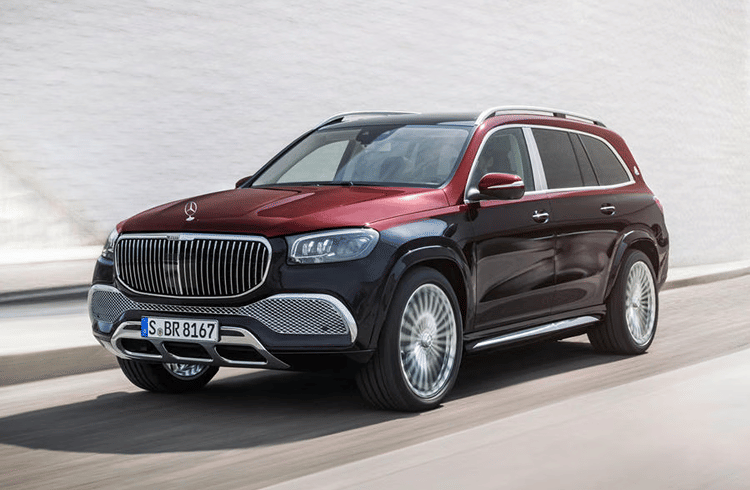
India became the first market outside the US to assemble the Mercedes-Maybach GLS. The locally assembled SUV launched at ₹2.75 crore ex-showroom in January, ₹42 lakh below the price of the fully imported version.
Mercedes-Benz retailed a record 5,422 vehicles in July–September 2026, up 5.9% year on year. Sales for January–September rose 7.5% to 15,190 vehicles. Top-end sales grew 13% in those nine months and accounted for more than a quarter of deliveries, while battery-electric sales rose 16%.
In October, Iyer told Autocar Professional that Mercedes-Benz India’s average transaction price had risen from around ₹60 lakh to ₹1 crore. He said shortages of the EQS SUV had held back deliveries and that passing the full increase in currency and other costs on to buyers could hurt demand. The locally assembled electric GLC joined the range in November.

RELATED ARTICLES

Weekly News Wrap: Tata Draws Global OEM Interest, Ashok Leyland Eyes Expansion, VinFast Revises India Plans
 Darshan Nakhwa
 22 Nov 2026
Tata Group explores cooperation with global automakers, Ashok Leyland evaluates new manufacturing capacity, while VinFas...


VinFast Targets 300 Electric Scooter Dealerships Across 100 Indian Towns by End of 2027
Darshan Nakhwa
22 Nov 2026
The Vietnamese automaker has so far signed agreements with more than 50 dealers across 34 cities.

VinFast to Enter India's Electric Two-Wheeler Market With Mass-Market Models in Early 2027
Darshan Nakhwa
22 Nov 2026
The Vietnamese automaker plans to offer India-adapted scooters at competitive prices, supported by battery swapping and ...

