



 Follow us
VinFast to Enter India's Electric Two-Wheeler Market With Mass-Market Models in Early 2027
The Vietnamese automaker plans to offer India-adapted scooters at competitive prices, supported by battery swapping and charging options, while targeting 300 dealerships by the end of 2027.
 1 Views


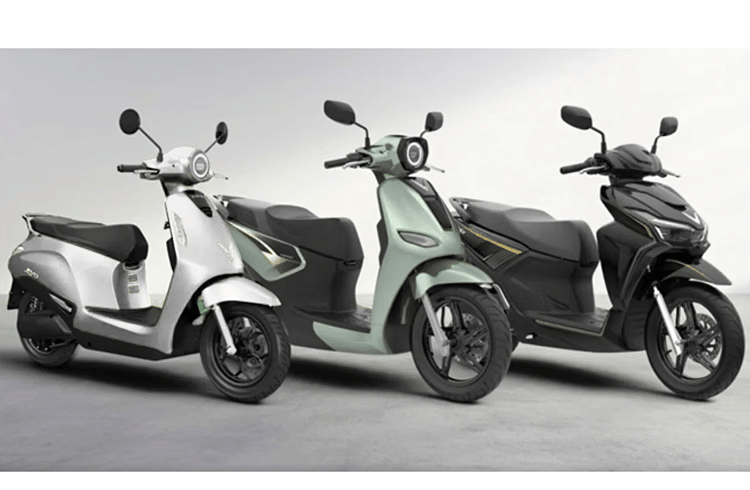
Vietnamese electric vehicle manufacturer VinFast plans to enter India's electric two-wheeler market with mass-market electric scooters in early 2027, targeting family buyers, individual commuters and performance-oriented customers, as it looks to establish a presence in one of the world's largest two-wheeler markets.
The company will initially focus on electric scooters, with plans to introduce multiple models across different customer segments. It is also evaluating opportunities in electric motorcycles, although no launch timeline has been finalised.
"So we will start with mass market," Anurag Saxena, CEO of E-Scooters at VinFast India, told Autocar Professional. He added that the company aims to offer a combination of competitively priced products, charging convenience and a wider ownership ecosystem rather than compete solely on price.
"We are not into a price war or a price game. What we want to offer is the best value which a product or ecosystem can give and the best experience which we can offer to the customers at a very competitive rate," Saxena said.
VinFast is preparing electric scooters based on its existing Vietnamese portfolio, with modifications to suit Indian road conditions, weather and customer requirements.
The company is developing three scooters based on the Evo, Kyo and Kinet models. These are expected to cater to different segments, with the Evo positioned as the more affordable offering, while the Kyo and Kinet target customers looking for additional features and performance.
The company plans to modify the vehicles' chassis, ground clearance, storage capacity and other specifications for India. However, final specifications, pricing and individual launch dates have not been announced.
Saxena said VinFast had undertaken consumer research in India to understand local riding conditions, customer preferences and practical requirements. "These products would not be as it is products from Vietnam. They would be well suited to Indian conditions and well suited to the needs of Indian customers," he said.
The company had earlier planned to enter India's electric two-wheeler market in the second half of 2026, but the timeline has since shifted to early 2027.
VinFast's entry comes amid growing competition in India's electric two-wheeler market, with established manufacturers such as TVS Motor, Bajaj Auto, Ather Energy and Hero MotoCorp expanding their electric scooter portfolios and production capacities.
Between April and October, electric two-wheeler registrations reached approximately 13.44 lakh units, compared with an estimated 7.91 lakh units in the corresponding period of FY26, representing growth of nearly 70%.
In comparison, total two-wheeler registrations increased by just 7.81% during the period. The electric two-wheelers’ seven-month volume is already close to the 14.02 lakh units registered during the entire FY26, when segment sales increased 21.8% from 11.51 lakh units in FY25, according to the Federation of Automobile Dealers Associations.
Battery Swapping and Charging Flexibility
A key part of VinFast's India strategy will be to offer battery swapping alongside charging option to reduce range anxiety and give customers greater flexibility.
Saxena said electric scooter owners often need to plan their journeys around charging schedules. VinFast wants to address this by allowing customers to use different charging arrangements depending on their requirements.
"If you have a charging facility at home, you will definitely charge at home, but say someday you forgot to charge... you can swap it," he said.
Saxena added that the upcoming products would support swappable batteries and other charging options, although the company has not disclosed how the ecosystem will operate in India.
He estimated that Indian two-wheeler customers typically travel around 25-35 kilometres daily and said VinFast's scooters would offer substantially more range. However, he did not disclose a minimum range figure or battery specifications for the India-bound products.
VinFast already has experience with battery-swapping technology in Vietnam through V-Green. In March, the company told this publication that it was evaluating battery-swapping models from its Vietnamese portfolio for India.
However, details regarding the number of swapping stations, battery-swapping charges, and infrastructure availability at launch have not been announced.
Electric Motorcycles Under Evaluation
Beyond scooters, VinFast is studying opportunities in India's electric motorcycle market, although its initial priority will remain electric scooters.
"Capability-wise, yes. However, we would be studying the market because the needs of a scooter customer and a motorcycle customer are very different, and it has to be commercially viable as well as a business," Saxena said.
The company has already filed design patents for several electric two-wheelers in India, including an electric motorcycle and a scooter resembling the Vento S, as well as the Rasad electric maxi-scooter. However, these filings do not necessarily indicate confirmed product launches.
VinFast is also evaluating opportunities in commercial two-wheeler mobility. Saxena said the company has experience with electric two-wheeler taxi services in Vietnam and is studying whether similar solutions could work in India. No specific fleet programme has been announced.
Retail Network and Manufacturing
To support its market entry, VinFast plans to establish approximately 300 electric two-wheeler dealerships across 100 Indian towns by the end of 2027.
The company has already signed agreements with more than 50 prospective dealers across 34 cities in 15 states and territories. It is developing retail infrastructure and training local staff ahead of the launch.
Saxena said the company aims to establish a presence in markets where electric vehicle adoption is growing, while also addressing customers in locations where inadequate charging infrastructure has constrained demand.
VinFast is developing a dedicated electric two-wheeler production line at its Thoothukudi facility in Tamil Nadu, separate from its passenger vehicle operations. The company has outlined potential capacity of up to one million electric two-wheelers annually.
However, management has clarified that this represents the maximum scalable capacity, rather than initial installed capacity. Production expansion and investment will depend on customer demand.
Saxena said VinFast is also working with Indian suppliers to increase localisation in phases, particularly for batteries and electronic components, which the company sees as important for keeping vehicle prices competitive as it expands in India.

RELATED ARTICLES

Maruti Suzuki Raises Prices of Select Models by 0.31% as Cost Pressures Weigh on Margins
 Shruti Shiraguppi
 22 Nov 2026
Maruti Suzuki's latest price revision comes as higher input costs weigh on margins despite record quarterly sales, putti...


Ashok Leyland May Set Up Truck Plant in Singur, Says Union Minister
 Autocar Professional Bureau
22 Nov 2026
Union minister Sukanta Majumdar says work on the proposed heavy vehicle facility will begin soon, but investment, capaci...

VinFast India's Parts Localisation Stays at 15%, Says Higher Volumes Key to Boosting Local Sourcing
 Darshan Nakhwa
22 Nov 2026
The Vietnamese automaker had aimed to increase localisation to 40% through domestic component sourcing, but says progres...

