Follow us
‘Technology is an enabler to grow our business’: BorgWarner's Dwarka Simili
With a local accountability and global strength (LAGS) approach, the American Tier-1 major is eyeing to cater to the specific needs of the Indian EV market.
 09 Apr 2024
 8957 Views
Share -
8957 Views
Share -


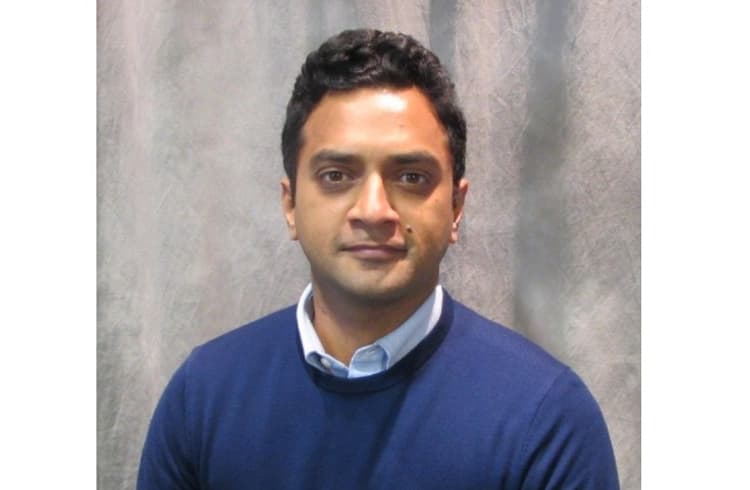
According to Dwarka Simili, Head of India Propulsion Engineering Centre, BorgWarner, “Scale is one of the prime components which is key to growing our India business, and at the same time, technology is an enabler. As BorgWarner, we are transitioning from being a component supplier to a systems-and-solutions provider, and offering more value to our customers.”
Simili was speaking at the Autocar Professional InnerCircle held in Bengaluru on February 20, and said that with the move to higher voltages - 400V and 800V systems – a lot of BorgWarner’s focus is on the PV and CV segments within the electric vehicle domain. “Motors and power electronics are key to us, and these are some of those hidden gems in electric propulsion that are witnessing a lot of innovation. However, in India, the challenge lies in both scale, and cost,” he pointed out.
“Therefore, we must deliver solutions that address local needs through innovation and technology. We have a local accountability and global strength (LAGS) model which is core to BorgWarner, and enables us to access the global learnings to engineer them into products. The local accountability pushes us to cater to the needs of the local customers,” he said.
Simili further explained that the company is almost there when it comes to making some of the EV-specific components accessible, and is witnessing RFIs from Indian OEMs being at par with those from its customers in North America or Europe. “Indian end consumers are very demanding and aware about safety, and that is what is being offered by vehicle manufacturers, particularly in terms of functional safety standards,” Simili said.
However, he pointed out that the government must help manufacturing companies to address and bridge some of the gaps, particularly related to land parcels, and power. “There is room for government and multinationals to work together, and arrive at a common ground, thereby, progressively improving the margins, which will eventually help offer cost-effective products to consumers.
“It is more about executing what we have, and this will help drive further value creation for the customer,” Simili signed off.

RELATED ARTICLES

Volvo Plans 13 New Models by 2030 in Largest Product Expansion in Company History
 Angitha Suresh
19 Sep 2026
Angitha Suresh
19 Sep 2026
The Swedish automaker will split its line-up between Western and Chinese markets, offer both electric and hybrid powertr...


Kolkata Police Adds 183 Ultraviolette Electric Motorcycles to Its Fleet
Angitha Suresh
19 Sep 2026
The Kolkata Police has taken delivery of 183 units of the Ultraviolette X-47 Skyforce, a dedicated law-enforcement varia...

Mahindra Last Mile Mobility Named Finalist for 2026 Earthshot Prize
Angitha Suresh
19 Sep 2026
The Indian electric vehicle manufacturer is the only automotive company among 15 global finalists, with Mumbai set to ho...