Follow us
Suzuki Motor and National Dairy Development Board sign MoU to study commercialisation of biogas
The idea is to explore the commercialisation of biogas using technologies and also help curtail the greenhouse effect.
 09 Nov 2022
 8880 Views
Share -
8880 Views
Share -


As part of its sustainability initiative, Japanese car maker Suzuki Motor Corporation has entered a Memorandum of Understanding with the Government of India's National Dairy Development Board to start a biogas demonstration project.
Suzuki Motor and NDDB signed an MoU in August that will study the business model for the commercialisation of biogas and its potential for widespread use in view of establishing a joint venture, the Japanese car maker told investors.
To be sure, biogas is amongst half a dozen cleaner fuel options that the market leader Maruti Suzuki has been exploring for the country to contribute positively towards addressing the climate challenge that has led to severe droughts and floods in many parts of the country. The company exited the diesel market in 2020, post implementation of BS VI emission norms.
Suzuki said there are technologies available that can prevent generation of harmful greenhouse gases like methane that trap heat in the atmosphere and cause the planet to become warmer. Other greenhouse gases include carbon dioxide, nitrous oxides and water vapour. Methane’s greenhouse effect is 28 times that of CO2.
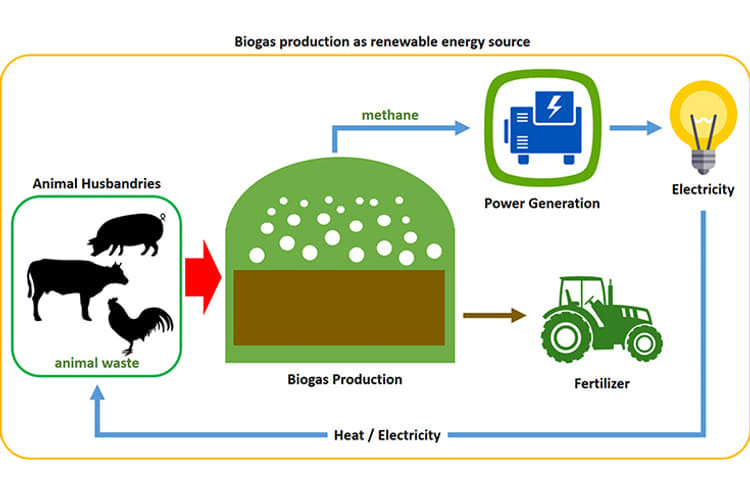
Suzuki says one can generate biogas from rich methane sources like grass-derived cow dung that can also be used as clean fuel for automobiles or household energy sources.
The advantage is that biogas is derived from CO2 emitted into the atmosphere, so it is a carbon neutral fuel. The residue from the biogas can also be used as organic fertiliser. Organic fertiliser production is part of a promotion policy by the Government of India.
Biogas generation at the local level has several economic and social advantages. It can contribute to revitalising rural communities, help create new jobs, recycle waste, improve energy self-sufficiency and even create a recycling-oriented society.
The green road
Maruti Suzuki has already led the penetration of alternate fuels like CNG in the country. It offers a CNG variant in over a half dozen of the vehicles it sells today. CNG sales account for almost a fifth of its total sales in the country at present and it had internally set a target of selling half a million CNG vehicles this financial year.
Alternatively, the company has invested significant amounts of money in localising hybrid vehicle parts including the lithium ion cells, which it even plans to export from India to other global markets. The localised hybrid solution developed in tandem with Toyota Motor has already been received well in the market with the new Grand Vitara that accounts for almost a third of its total new car bookings. The company has also started working on a battery electric SUV, codenamed YY8, which is set to hit the Indian roads by 2025.

RELATED ARTICLES

Sterling Tools Appoints Amit Dhadda as Chief Financial Officer
 Dev Vadchhedia
27 Oct 2026
Dev Vadchhedia
27 Oct 2026
Anish Agarwal steps down to focus on strategic business development as Whole-time Director.


Electric Scooters Enter Mainstream, Motorcycles Remain a Challenge: Ather CBO
 Darshan Nakhwa
27 Oct 2026
Darshan Nakhwa
27 Oct 2026
Ravneet Phokela says electric scooters are moving into the mainstream, supported by growing consumer confidence, transfe...

Lanxess and HINCOL Partner for Bitumen and Asphalt Modification Technologies
Dev Vadchhedia
27 Oct 2026
The specialty chemicals firm signs agreement with bitumen provider to conduct joint laboratory and commercial trials for...