


 Follow us
Suzuki Access CNG, Hydrogen-powered Burgman on display at Japan Mobility show
Suzuki’s Tokyo display also has a scale model of its biogas production plant in India.
 30 Oct 2025
 3978 Views
Share -
3978 Views
Share -


Suzuki Access CNG can also run on CBG setup.
At the ongoing Tokyo Motor Show 2025, Suzuki has showcased hydrogen-powered and biogas-based scooters. These are based on the popular Suzuki Access and Burgman scooters sold in India.
Suzuki Access CNG/CBG Prototype
An R&D prototype of the Access scooter is one of the two exhibits from the brand at Tokyo, powered by both CNG and CBG options. The prototype retains the familiar styling of the popular Access 125 sold in India, but what sets it apart is its innovative dual-tank setup.
Under the seat sits a 6-litre CNG tank with a filling nozzle, complemented by a 2-litre petrol tank accessed via an external filler. This allows riders to seamlessly switch between fuels depending on availability. Suzuki claims that with both tanks filled, the scooter offers a combined range of around 170km, though the added hardware results in about a 10 percent increase in kerb weight compared to the standard model. While still in the research phase, this Suzuki Access CNG/CBG prototype could have strong potential in cost-conscious markets like India. It also aligns with the Indian government’s push for biogas and CNG adoption under its renewable energy initiatives.
Hydrogen-Powered Burgman on Display
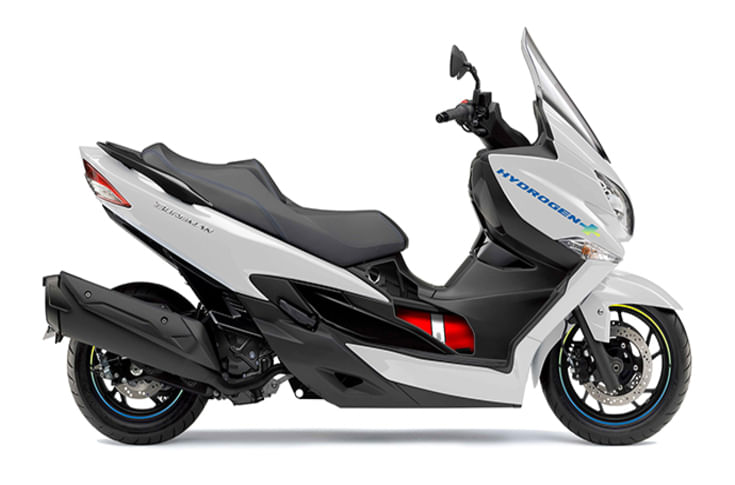
Also showcased is the hydrogen-powered Burgman, which represents Suzuki’s ongoing research into hydrogen combustion engines. Unlike fuel-cell systems that convert hydrogen into electricity, Suzuki’s approach focuses on direct hydrogen combustion, which could allow for simpler packaging and lower costs while achieving near-zero carbon emissions.
India-Centric Biogas Initiative
A major highlight of Suzuki’s display is a scale model of its biogas production plant located in India. Developed in collaboration with an Indian dairy cooperative, the project converts dairy waste into compressed biogas (CBG) — a renewable and locally sourced fuel. The initiative not only demonstrates how agricultural by-products can be turned into clean energy but also how localised biogas generation could strengthen rural economies and reduce dependence on fossil fuels.
The biogas produced at these plants can be used to power vehicles or even for electricity generation. In addition, the residual slurry from the biogas process can serve as organic fertiliser, providing an additional revenue stream for farmers and supporting sustainable agriculture.

RELATED ARTICLES

Ashok Leyland Ties Up With Union Bank for Truck, Bus Loans
 Eshisha Java
13 Oct 2026
Eshisha Java
13 Oct 2026
Ashok Leyland has signed an MoU with Union Bank of India to offer vehicle financing and flexible repayment options to cu...


Volvo Studies Plug-In Hybrids for India, Remains Committed to EVs
Ketan Thakkar
12 Oct 2026
MD Malhotra says current tax treatment favours battery electric vehicles, while customer willingness to pay will determi...

Volvo Signals Price Hike as Currency and Supply Pressures Hit Business
Ketan Thakkar
12 Oct 2026
Rising logistics costs could force an increase before the next annual review, while vehicle shortages constrain festive-...