Follow us
Exclusive: Renault Developing New 1.2-Litre MPFi Engine for Upcoming Bridger SUV
According to Autocar India, the engine is derived from an existing 1.3-litre unit and is being engineered to support turbo-petrol and CNG variants, with the SUV slated for a late-2027 launch.
 25 Apr 2026
 1466 Views
Share -
1466 Views
Share -


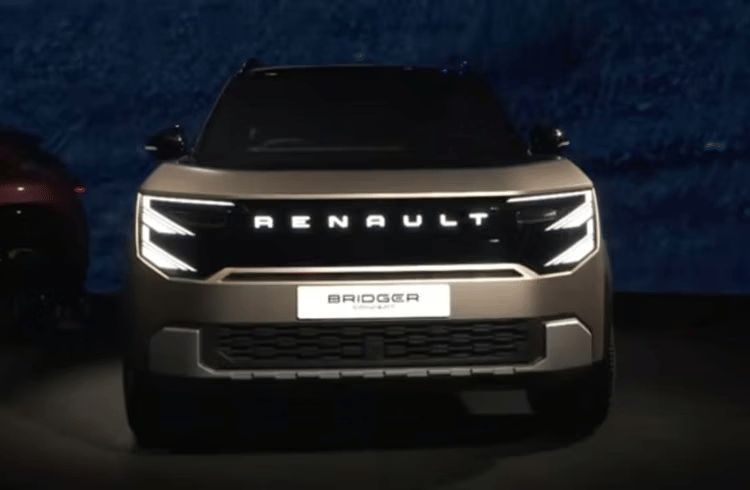
Autocar India reported that Renault is working on a new 1.2-litre, four-cylinder turbo-petrol engine for its upcoming Bridger compact SUV — a model the French automaker is counting on, alongside the recently launched Duster, as part of its broader effort to rebuild its position in the Indian market.
According to the publication, the engine is a derivative of the Duster's 1.3-litre TGDi unit, with a reduced stroke that brings displacement below 1,200cc — a threshold that qualifies the vehicle for the sub-4-metre tax slab, giving Renault room to price the Bridger more competitively. The decision to engineer the engine around this displacement limit appears to reflect a deliberate strategy to remain accessible in a price-sensitive segment.
A key technical distinction highlighted by Autocar India is the choice of fuel delivery system. Unlike the Duster's direct-injection setup, the Bridger's engine will use a multi-point fuel injection (MPFi) system — a simpler and more cost-effective architecture that also makes it compatible with CNG. This is significant given that the Bridger's RGMP platform has been conceived to support CNG powertrains by design, suggesting the integration goes beyond an aftermarket adaptation.
On performance figures, the report indicated that the turbo-petrol variant is expected to produce around 120hp, placing it in the same range as several existing turbo-petrol SUVs in the compact segment. For buyers seeking a lower entry price, a naturally aspirated version of the engine is also expected to be offered.
The Bridger's powertrain lineup, as described by Autocar India, is set to be among the broader in its class. With naturally aspirated, turbo-petrol, CNG, hybrid, and electric options on the table, the Bridger will cover a wide range of fuel types — though notably, there will be no diesel variant. Renault's approach to filling that gap is of some consequence: the company is hoping to position the hybrid variant as a diesel alternative, though its success will depend on how competitively it is priced relative to rivals.
The CNG option, in particular, could prove to be a meaningful volume driver. Autocar India noted that CNG has surpassed diesel to become the second-most popular fuel type in India, accounting for 22 percent of all car sales in FY2026. In this context, a factory-fitted CNG setup — rather than a retrofitted one — may carry weight with buyers who prioritise running costs and reliability.
The competitive benchmark in the segment remains clear. The Tata Nexon, the best-selling compact SUV in India, currently offers petrol, diesel, CNG, and electric variants — a lineup that the Bridger, with its hybrid addition, will be aiming to match or differentiate from.
The Bridger is scheduled to go on sale by the end of 2027. Renault has not made any official announcement on pricing or specifications at this stage.

RELATED ARTICLES

Ashok Leyland Evaluates EV Battery Project in Bhandara with up to Rs 15,000 Crore Outlay: TOI
 Dev Vadchhedia
21 Sep 2026
Dev Vadchhedia
21 Sep 2026
Nitin Gadkari pitches Vidarbha's logistics and export infrastructure to automotive manufacturers.


Escorts Kubota Appoints Manish Sharma as President of Agri Business
Dev Vadchhedia
21 Sep 2026
Former Panasonic India head to lead tractors, agricultural solutions, spare parts, and service across domestic and globa...

Maruti Suzuki to Upgrade 31 ITIs to JIM Standards
 Kiran Murali
21 Sep 2026
Kiran Murali
21 Sep 2026
Carmaker commits close to Rs 100 crore over two years to expand Japanese manufacturing curriculum and modern training in...