Follow us
Ola Electric’s Auto Business Back To EBITDA Loss In Q3FY26 After Breakeven In Q2
The automotive business, however, saw its gross margin improve.
 13 Feb 2026
 7175 Views
Share -
7175 Views
Share -


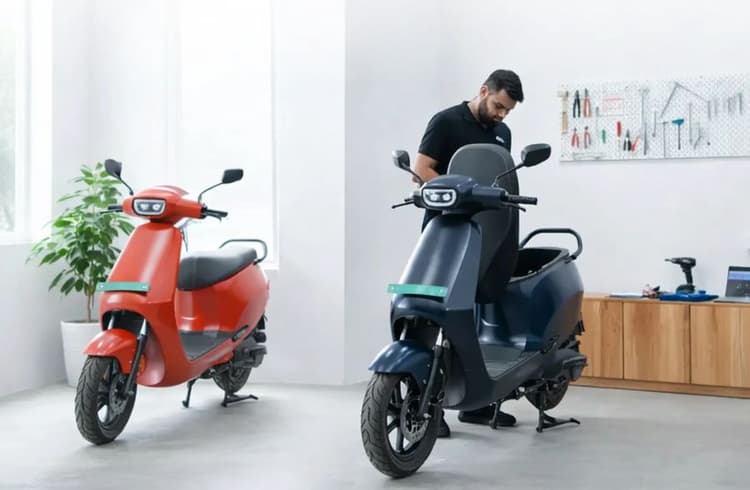
Ola Electric’s electric two-wheeler business managed to achieve breakeven for the first time in the second quarter of this financial year. However, a sharp decline in volumes and revenue in the subsequent quarter pushed the segment back into an EBITDA loss for the third quarter.
The SoftBank-backed company’s automotive segment reported a negative EBITDA (Earnings Before Interest, Taxes, Depreciation, and Amortisation) of Rs 83 crore in the third quarter of the financial year 2026, compared with an EBITDA of Rs 2 crore in the second quarter of this year. EBITDA margin for the December quarter came in at negative 35.8%, compared with positive 2% in the September quarter.
The business slipped back into a negative EBITDA in the third quarter, primarily due to a sharp decline in volumes and revenue, despite the company continuing with its operating model reset. Revenue plunged as service execution gaps impacted the brand’s customer perception and demand. The company’s volumes have declined steadily, and the brand, which led the market in 2024, has slipped to fourth position in 2025.
Revenue from the automotive segment declined 32% quarter-on-quarter to Rs 467 crore in the third quarter from Rs 688 crore, reflecting lower deliveries. Total deliveries fell 38% to 32,680 units during the quarter from 52,666 units in the September quarter. With a largely fixed cost structure, lower volumes reduced operating leverage, pushing the segment back into a loss after achieving break-even in the previous quarter.
Ola Electric Founder, Chairman and Managing Director Bhavish Aggarwal admitted that service execution gaps affected the brand’s trust among prospective customers, while underlining that the issues were related to service infrastructure and operations rather than product quality. However, citing an independent third-party survey, he said customer confidence and preference for the company’s products remained strong.
Despite the drop in revenue, the automotive business improved its gross margin profile. Gross margin rose to 33.8% in the third quarter from 30.7% in the previous quarter and 18.6% a year earlier. Gross profit for the segment stood at Rs 158 crore.
Gross profit reflects revenue minus cost of goods sold, including manufacturing and material costs. EBITDA goes a step further by subtracting operating expenses such as employee costs and other administrative expenses. Gross margin reflects the strength of the product, while EBITDA margin reflects the strength of the overall business. Although Ola’s automotive gross margin improved during the quarter, lower volumes meant fixed operating costs were spread over fewer units, which weighed on EBITDA.
Operating expenses for the automotive segment rose to Rs 273 crore in the third quarter from Rs 258 crore in the previous quarter. With revenue declining sharply, the higher cost base weighed on operating performance.
Even though the two-wheeler business started losing money again after breaking even in the second quarter, it looks to have improved its control on costs. The company seems to have more money on each vehicle it sells. But because it sold fewer vehicles overall, its fixed costs were spread over fewer units, which pushed it back into a loss.
“As EV penetration growth has slowed and our service execution has required strengthening, we chose to realign our retail footprint, cost structure, and operating model to a sustainable steady state by fixing the fundamentals and not optimising for short-term volume,” Aggarwal said.
The cell business continued to scale up production during the quarter. Revenue from the cell segment rose to Rs 9 crore in the third quarter, compared with Rs 4 crore in the September quarter. Gross margin for the segment stood at 42.3%. However, the cell segment remained in the investment phase. It reported an EBITDA loss of Rs 39 crore in the third quarter, compared with a loss of Rs 27 crore in the previous quarter.
At the consolidated level, revenue from operations declined 32% quarter-on-quarter to Rs 470 crore in the third quarter from Rs 690 crore. EBITDA loss widened to Rs 237 crore from a Rs 137 crore loss. Gross margin, on the other hand, improved to 34.3% from 30.9%, reflecting higher unit economics despite lower volumes. The company also reduced operating expenses to Rs 432 crore from Rs 416 crore.

RELATED ARTICLES

TVS Apache, Ronin Get Festive Updates; Prices From Rs 1.27 Lakh
 Eshisha Java
17 Sep 2026
Eshisha Java
17 Sep 2026
TVS Motor Company has introduced feature and variant updates across the Apache and Ronin motorcycle ranges, including ne...


Volvo XC60, XC90 Get Festive Offers With Buyback, Warranty And Service Benefits
Eshisha Java
17 Sep 2026
Volvo Car India has announced festive-season benefits for the XC60 and XC90, including a 65% assured buyback on the XC60...

Raptee.HV Starts Bengaluru Deliveries, Targets 100+ Motorcycles By November
Eshisha Java
17 Sep 2026
Raptee.HV has commenced customer deliveries in Bengaluru and plans to deliver more than 100 motorcycles across Bengaluru...