Follow us
JLR sets up a Value Optimisation office to accelerate targets for FY25 and FY26
The company has set itself a target of attaining 30 billion pounds in revenues with an operating margin of 8.5%, with a plan to achieve 10% EBIT in FY26.
 19 Jun 2024
 3170 Views
Share -
3170 Views
Share -


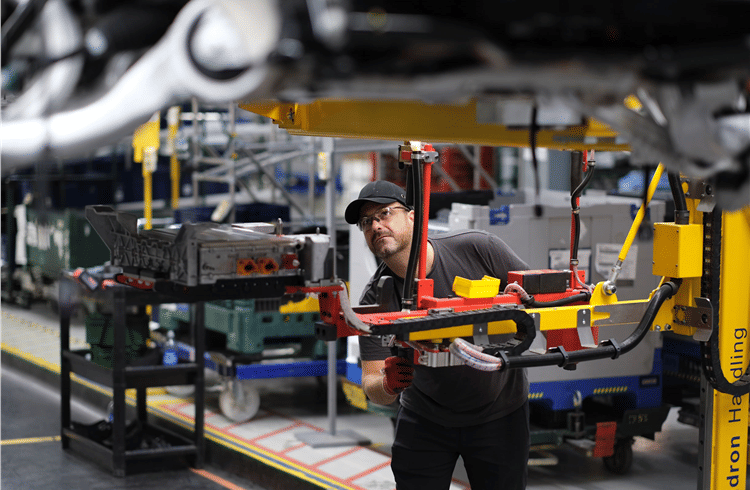
Representative image
As part of its plan to almost double the operating margin or EBIT to 15% in the long run, Tata Motors-owned Jaguar Land Rover has set up a “Value Optimisation Office.”
A presentation the company made to investors on Wednesday stated that the company had launched the office to accelerate the delivery of FY25 and FY26 targets, institutionalising change for the long term.
As part of the company's long-term vision shared with the investors, Richard Molyneux, Jaguar Land Rover's CFO, stated in his presentation that the company's Reimagine plan will deliver.
The company has set an immediate target of attaining 10% EBIT in FY-26, which will be helped by revenue growth, product mix, and new platforms.
Molyneux’s presentation added that the value optimisation office has three key objectives: “drive transformation, deliver value, and facilitate performance, delivered through five targeted workstreams.”
The work streams include:
-Brand profitability by maximising offering and elevating through personalisation & bespoke model focus.
-Cost Reduction by innovating to reduce the cost of manufacturing and operations
-Investment optimisation – by streamlining and prioritising based on value potential
-After Sales Profitability to be realised from post-vehicle sales services
-Balance Sheet Optimisation by Focusing on freeing cash tied up in working capital
JLR has also established an ex-work cost optimisation program to optimise costs across the value chain.
The company is looking for more systematic collaboration with supplier partners to identify opportunities for joint cost savings. Explore technical opportunities by deploying technical levers to optimize specs/design to minimise costs without compromising key customer requirements.
It will be reviewing the carline and platforms to optimise features considering customer requirements to reduce cost and look at further initiatives to reduce manufacturing and freight costs.

RELATED ARTICLES

Statiq, GLIDA Inaugurate First EV Charging Station in Ghaziabad
 Eshisha Java
26 Oct 2026
Eshisha Java
26 Oct 2026
Statiq, GLIDA and Ghaziabad Nagar Nigam have inaugurated the first of 20 planned public EV charging stations, with 100 c...


Yokohama India To Add Five Sizes To GEOLANDAR X-CV Tyre Range
Eshisha Java
26 Oct 2026
Yokohama India plans to expand its locally manufactured GEOLANDAR X-CV tyre range from 32 to 37 sizes, covering 16-inch ...

Valeo Appoints Jayakumar G as Power Asia Regional Operations Vice-President
Eshisha Java
26 Oct 2026
Valeo India President Jayakumar G will oversee Power Division operations across Japan, South Korea and ASEAN, while reta...