Follow us
Israeli start-up raises $50m for Lidar sensing tech in self-driving cars
Oryx Vision is taking a different approach to LiDAR and using microscopic antennas to detect light frequencies.
 09 Aug 2017
 8237 Views
Share -
8237 Views
Share -


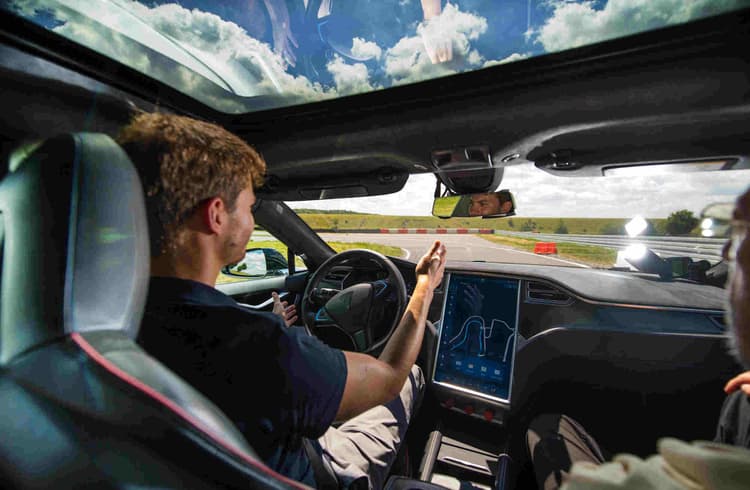
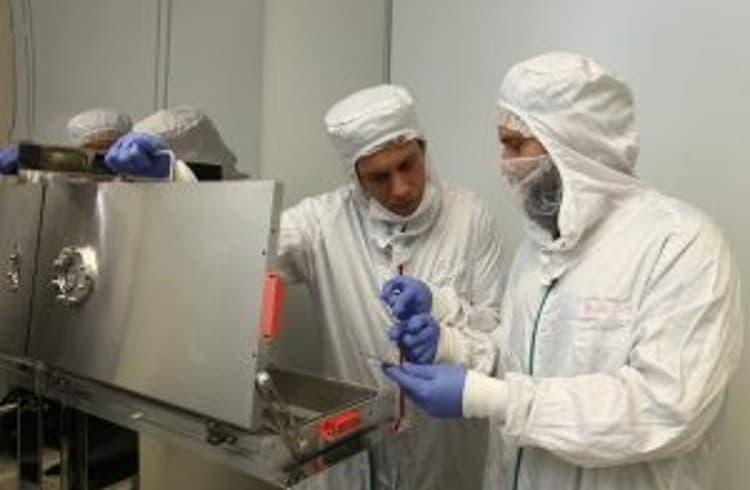
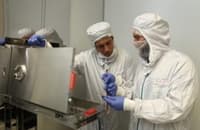
Israel's Oryx Vision has raised $50 million (Rs 31.58 crore) in venture capital for its LiDAR (Light Detection and Ranging) tech for self-driving automobiles. LiDAR maps the surroundings of a car in 3D by reflecting multiple laser light pulses and measuring the distance traveled, and the time it took to travel. LiDAR uses photodetectors to trace those bundles of light.
The round of funding was led by Third Point Ventures and WRV with participation by Union Tech Ventures. They join existing investors Bessemer Venture Partners, Maniv Mobility, and Trucks VC, a VC firm focused on the future of transportation. The company has raised a total of $67 million (Rs 42.32 crore) to date.
Oryx Vision says it is taking a different approach to LiDAR and using microscopic antennas to detect the light frequencies. The tiny antennas are made of silicon which allows them to put thousands in one sensor which opens up lower cost LiDAR. In a press release, the company said these antennas are more sensitive and resistant to interference from the sun and other LiDARs. They are also capable of producing range and velocity data for every point in its field of view.
Tom Coughlin, IEEE senior member, said, “Current LiDAR with enough range for applications such as autonomous vehicles involves relatively large and expensive hardware. Making these devices smaller and easier to produce could result in their faster adoption for several emerging markets.”
Rani Wellingstein, CEO, and co-founder, Oryx Vision, commented, "The intensity of investments in next-generation LiDAR technologies clearly indicates that a big piece of the self-driving puzzle is still missing. If robots are allowed to drive on open roads, and at high speed, their vision must become much better than what existing solutions can deliver. Oryx's innovation can close this gap."

RELATED ARTICLES

Schaeffler Group Explores Partial Stake Sale in Schaeffler India
 Dev Vadchhedia
27 Oct 2026
Dev Vadchhedia
27 Oct 2026
The German parent company considers selling a minor stake while committing to retain a two-thirds majority holding in Sc...


India, South Korea Can Offer Competitive Alternative to China in EVs: Hyundai India CEO
 Darshan Nakhwa
27 Oct 2026
Darshan Nakhwa
27 Oct 2026
Hyundai Motor India CEO Tarun Garg says India’s cost competitiveness and South Korea’s technological expertise could str...

Maruti Suzuki to Set Up Foundation for Manufacturing Skills Training
 Autocar Professional Bureau
27 Oct 2026
Autocar Professional Bureau
27 Oct 2026
OSCOE Foundation will promote and build vocational and technical skills to advance manufacturing practices across India....