Follow us
Hala Mobility Partners with iGowise to Deploy 2,000 Electric Trikes for Last-Mile Delivery
Made-in-India electric trikes offer increased cargo capacity and stability while reducing costs for logistics companies across Hyderabad and Bangalore.
 By Angitha Suresh
 6264 Views


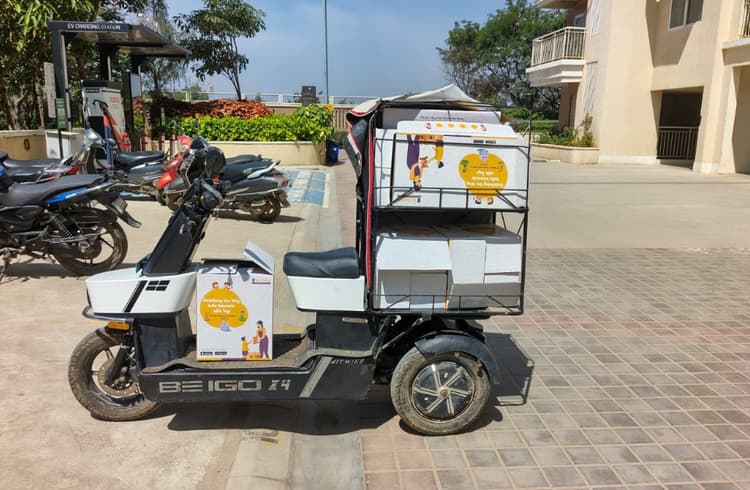
Hala Mobility, an EV-as-a-service platform, has announced a partnership with iGowise Mobility to deploy 2,000 high-speed electric trikes for last-mile delivery operations in cities including Hyderabad and Bangalore. The partnership aims to address inefficiencies in last-mile logistics through purpose-built, anti-topple electric vehicles manufactured in India.
Under the agreement, iGowise will supply its BeiGo electric pickup trikes, which feature greater cargo capacity and stability compared to traditional two-wheelers and auto-rickshaws. The vehicles will be deployed across various sectors including e-commerce, perishable goods delivery, and quick commerce.
"The biggest challenge in last-mile logistics is balancing speed, cost-efficiency, and rider comfort," said Srikanth Reddy, CEO of Hala Mobility. "With iGo's innovative BeiGo electric trike, we are introducing a solution that makes electric mobility not just sustainable but also operationally superior."
Sravan Kumar Appana, CEO and co-founder of iGowise Mobility, stated that their vehicles aim to reduce emissions while enhancing safety and comfort for riders, along with providing cost savings for logistics partners.
Hala Mobility recently raised INR 51 crore and plans to deploy 10,000 electric vehicles by December 2025 as part of its effort to electrify India's logistics sector. The company offers electric vehicles through rent, lease, or subscription models, while also providing integrated services including battery swapping and fleet analytics.
The partnership comes as India works toward its target of having 80 million electric vehicles on roads by 2030. The electric mobility sector has seen growing interest as businesses seek to reduce operational costs and meet sustainability requirements, while the government continues to promote cleaner transportation alternatives through various incentive programs.
Industry analysts note that purpose-built electric vehicles for specific commercial applications represent a growing segment within India's EV market, with last-mile delivery being a particularly suitable use case due to predictable routes and the ability to establish fixed charging or battery-swapping infrastructure.

RELATED ARTICLES

High-Tech Two-Wheelers Power EV Revenue Surge at Auto Parts Supplier Sona
 Shahkar Abidi
 26 Oct 2026
The automotive component maker expands two-wheeler EV portfolio, driving record quarterly revenue.


MoRTH Amends CMVR to Formalise E100, B100 Testing Norms; Raises Light-Vehicle Test Limit to 3,500 kg
Shahkar Abidi
26 Oct 2026
Gazette notification provides clear homologation roadmap for flex-fuel vehicles.

Amara Raja Appoints Preetam Ganguly as Chief Business Officer for Industrial Business
 Dev Vadchhedia
26 Oct 2026
Dev Vadchhedia
26 Oct 2026
The former Cummins India executive takes charge of industrial battery segment as part of a leadership succession plan.