Follow us
Government amends permit rules for tourist vehicles, smaller players to benefit
Regulatory changes in taxation were first introduced in 2021 for inter-state tourist buses, which the OEM claim has not only helped to reduce financial outlays for bus operators but also helped to benefit end users with lower fares.
 16 Nov 2022
 6182 Views
Share -
6182 Views
Share -


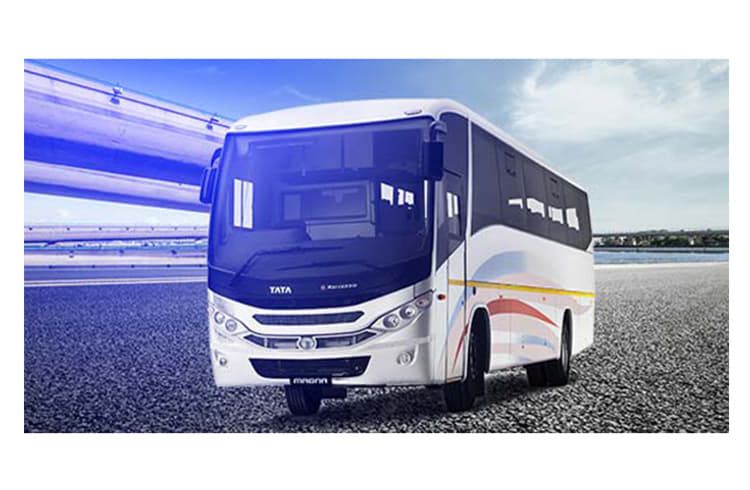
The Ministry of Road Transport & Highways (MoRT&H) has further streamlined the rules under the All-India Tourist Vehicle (Authorisation or Permit) rules, which were first introduced last year. The measure, the ministry says will help boost the country's tourism industry.
The Ministry stated in a notification that the development will not only help to reduce the compliance burden for operators, but it will also include more categories of tourist vehicles, with lower permit fees for smaller capacity vehicles (less than ten).
According to the ministry, this will provide significant financial relief to smaller tourist operators who have smaller vehicles with lower seating capacity because they will now be required to pay lower fees commensurate with the seating capacity of their vehicles.
Furthermore, to encourage widespread adoption of electric vehicles, a streamlined regulatory ecosystem at no cost to operators has been proposed. A similar exemption has been granted to tourist vehicles that use methanol or ethanol fuel.
Last year, the Ministry implemented regulatory changes in taxation for inter-state tourist buses, which not only helped to reduce financial outlays for bus operators but also helped to benefit end users with lower fares. Taxes on interstate buses are determined by the number of seats or berths in the vehicle, according to industry rules.
A back-of-the-envelope calculation may just help in understanding the tax structure for the tourist bus operator’s vis-a-vis the older one. For comparison purposes, when an inter-state bus previously travelled between Mumbai and Bengaluru, covering an area of approximately 600-odd kilometres and passing through the geographical boundaries of Maharashtra and Karnataka, both states levied approximately Rs 28,000 and Rs 59,200 in taxes, totalling nearly Rs 87,200.
However, under the new all-India permit rules introduced last year, while Maharashtra's charges remain the same at around Rs 28,000, the remaining charges are drastically reduced to Rs 25,000, totalling just about Rs 53,000, a clear savings of nearly Rs 34,200 over the previous regime.
Also read
Interstate buses set to roll

RELATED ARTICLES

Weekly News Wrap: Festive Sales Surge, Citroen Eyes India EV Production, BKT-Pirelli Plan JV
 Darshan Nakhwa
25 Oct 2026
Darshan Nakhwa
25 Oct 2026
Festive demand drives vehicle sales, while automakers outline new electric vehicle plans, Tata Motors projects double-di...


Castrol India Q32026 Net Profit Drops 23% to Rs 176 Crore as Input Costs Surge
 Dev Vadchhedia
24 Oct 2026
Dev Vadchhedia
24 Oct 2026
The lubricants maker recorded 27 percent revenue growth, but raw material inflation and currency headwinds pressed profi...

Paradeep Parivahan Secures 10-Year EV Heavy Haulage Contract From JSW Group
 Autocar Professional Bureau
24 Oct 2026
Autocar Professional Bureau
24 Oct 2026
The logistics provider will deploy 100 electric trucks for industrial transport across Andhra Pradesh and Karnataka.