


 Follow us
Electric Two-Wheeler Purchase Intent Rises to 43%, Market Penetration at 9.9% Through August: BCG
The share of consumers actively considering electric two-wheelers rose from 30% in 2024, while those rejecting the category declined to 29%, according to a BCG survey.
 By Darshan Nakhwa
 1 Views


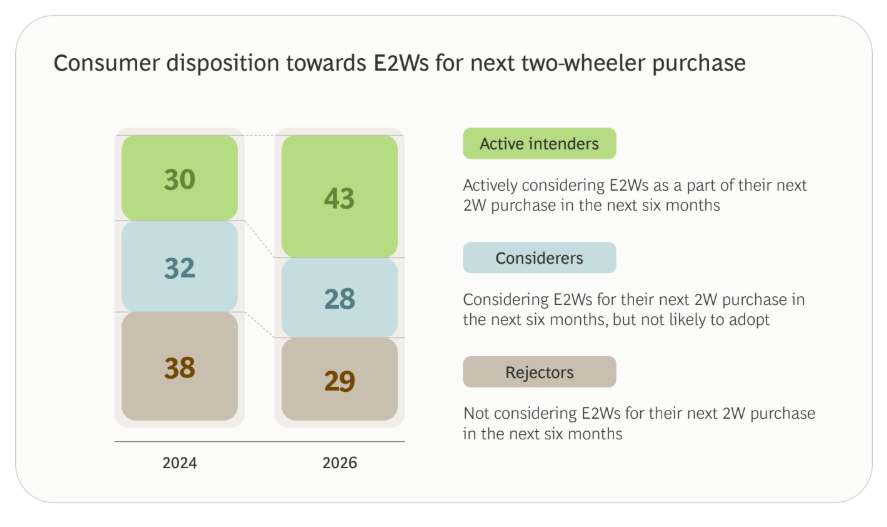
The share of Indian consumers actively considering an electric two-wheeler as their next purchase rose to 43% in 2026 from 30% in 2024, even as electric vehicles accounted for less than 10% of overall two-wheeler sales in FY27 through August, according to a report by Boston Consulting Group (BCG).
The report, titled Electric in Charge: How India's Electric Two-Wheelers Are Moving into the Mainstream, found that outright rejection of electric two-wheelers declined to 29% from 38% over the same period, reflecting growing consumer acceptance of the technology.
While 43% of respondents said they were actively considering electric two-wheelers as part of their next purchase within six months, another 28% were open to the category but unlikely to adopt it in that period, compared with 32% in 2024.
"The electric two-wheeler is no longer an experiment for early adopters. It is now a default consideration for a growing share of Indian buyers," said Natarajan Sankar, Managing Director and Senior Partner, BCG.
The growing interest is also reflected in vehicle sales. According to BCG analysis, electric two-wheeler penetration increased to 9.9% in FY27 year-to-date through August 2026 from 5.5% in FY24. Adoption has been particularly strong in scooters, where electric vehicle penetration rose to 24.1% from 16.8% during the same period.
BCG said around 1.8 lakh Indians are buying their first electric two-wheeler every month. Electric scooter sales grew at a compound annual growth rate of 54% between FY22 and FY26, compared with 16% for petrol scooters, according to the report.
More recent data from the Federation of Automobile Dealers Associations (FADA) shows that electric two-wheeler retail sales increased 88.7% year on year to 2,07,314 units in September 2026. Electric two-wheelers accounted for 11.6% of overall two-wheeler retail sales during the month, compared with 8.2% in September 2025.
BCG's findings are based on a survey of 1,600 respondents across different geographical, income and age groups, comprising existing electric and petrol-powered two-wheeler buyers as well as prospective customers. Around 55% of respondents were from rural and Tier 2, 3 and 4 markets.
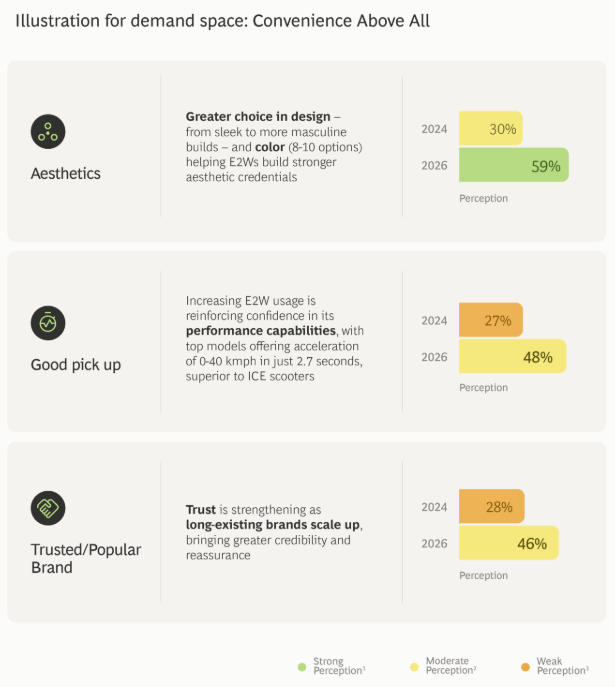
The report attributed improving consumer acceptance partly to stronger perceptions of electric two-wheeler performance, styling and brand trust. In one consumer segment identified as "Convenience Above All", positive perceptions of vehicle aesthetics increased to 59% in 2026 from 30% in 2024, while perceptions of good pickup improved to 48% from 27%.
Similarly, the proportion associating electric two-wheelers with trusted or popular brands increased to 46% from 28% within the same consumer group. BCG noted that wider product choices and the expansion of established manufacturers were helping improve confidence in the category.
The report also found that actual ownership experiences were generally in line with or better than consumer expectations across several parameters, including running costs, storage, comfort, manoeuvrability and digital features.
However, concerns remain around long-term durability, rough-road capability and the suitability of electric two-wheelers for highway travel. BCG noted that relatively short ownership periods continue to limit consumer confidence in the lifespan of electric vehicles compared with petrol-powered two-wheelers.
The findings come as manufacturers expand their electric two-wheeler portfolios. According to BCG, the number of available electric two-wheeler models has increased by approximately 30% since 2023, while electric motorcycle model availability has doubled. Despite the wider choice, five brands account for around 83% of the market.
The report also identified ten distinct consumer groups with different requirements around affordability, comfort, mileage, performance, range and vehicle usage. BCG argued that the purpose and distance of travel are increasingly important in determining vehicle preferences, rather than demographics alone.
BCG said manufacturers would need to develop products around specific customer requirements rather than relying only on price, technology and vehicle type. It also highlighted the importance of strengthening the ownership experience through accessible servicing, battery warranties, insurance and resale or exchange support.
"The race to create the category is now shifting to the race to win the category. The brands that will lead are the ones that build for how Indians actually ride, rather than for price bands alone, and that earn trust across the entire ownership journey, from service and battery assurance to insurance and resale," said Saurabh Chhajer, Managing Director and Partner, BCG.

RELATED ARTICLES

JBM Auto Q2 Revenue Up 21% to Rs 1,656 Crore with Record E-Bus Deliveries
 Dev Vadchhedia
 26 Oct 2026
JBM Auto posts 21 percent revenue expansion as electric bus deliveries hit a quarterly record of 578 units.


Apollo Tyres Elevates Amit Chhabra to Group Head, Commercial for OEM and Institutional Business
Dev Vadchhedia
26 Oct 2026
Chhabra takes charge of commercial strategy.

Jakson Green E-Mobility Secures Order for 220 Electric Buses in Gujarat
Dev Vadchhedia
26 Oct 2026
The new e-mobility player wins tender to operate electric buses across three cities on a 12-year contract.