



 Follow us
Delhi EV Policy Sees Weak Response to Commercial Vehicle Subsidies
Delhi’s EV policy offers generous purchase and scrapping incentives, but weak application numbers for commercial vehicles raise questions over adoption ahead of mandatory electrification deadlines.
 1 Views


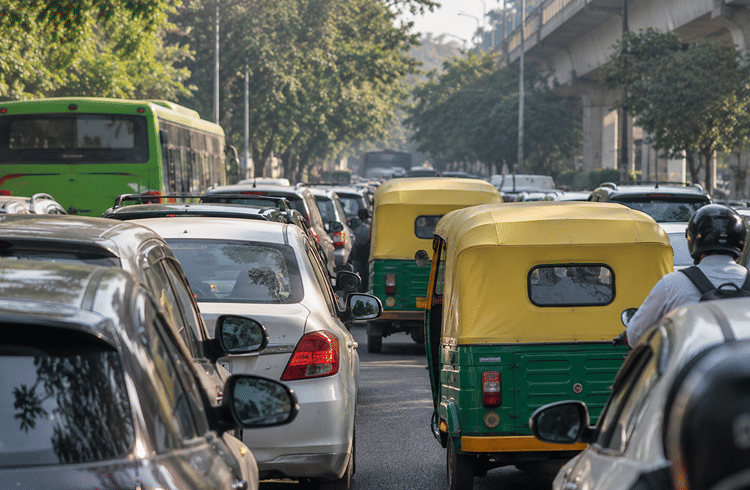
Delhi's push to electrify commercial transport is yet to translate into significant demand for electric auto-rickshaws and goods vehicles, with government data showing limited applications for purchase and scrapping incentives under its Electric Vehicle Policy 2026.
As of November 2026, the government had received no applications for the purchase subsidy for electric auto-rickshaws and just 37 applications for electric goods carriers.
The response to scrapping incentives has also been negligible, with no applications for the ₹25,000 incentive for scrapping conventional-fuel three-wheelers and only one application for the ₹50,000 incentive for goods vehicles.
The figures contrast with the response to incentives for electric two-wheelers, which have attracted 12,584 applications. However, the corresponding scrapping incentive of ₹10,000 has received only 237 applications.
Notified on June 30, 2026, and effective from July 1, the Delhi Electric Vehicles Policy 2026 aims to accelerate electrification across vehicle categories to improve air quality.
The policy identifies vehicular emissions as the largest contributor to Delhi's air pollution, accounting for 23% during winter, according to a Commission for Air Quality Management report cited in the notification.
The policy specifically identifies three-wheelers and N1-category goods vehicles as priority segments for electrification because of their higher daily utilisation and mileage, which contribute disproportionately to urban pollution.
To encourage adoption, the government has offered a purchase incentive of ₹50,000 for electric auto-rickshaws in the first year of the policy. This will decline to ₹40,000 in the second year and ₹30,000 in the third year.
Electric goods vehicles are eligible for incentives of up to ₹1 lakh in the first year, with lower amounts in subsequent years.
The policy also provides scrapping incentives of ₹25,000 for eligible conventional-fuel three-wheelers and ₹50,000 for goods vehicles, subject to the purchase of a new electric vehicle within six months of obtaining a Certificate of Deposit from an authorised scrapping facility.
Despite these incentives, the transition faces practical challenges. Industry representatives have flagged technical issues with the subsidy portal, including the non-availability of certain eligible electric goods vehicle models. The policy requires eligible models to meet criteria aligned with central government EV schemes, including localisation requirements.
High upfront vehicle costs, concerns over maintenance expenses and inadequate charging infrastructure are also weighing on adoption. For auto-rickshaw operators, charging time and the availability of charging points remain significant considerations when comparing electric vehicles with conventional CNG-powered alternatives.
The policy's timelines add urgency to the transition. From January 1, 2027, only electric L5-category three-wheelers and N1-category goods vehicles will be permitted for new registrations in Delhi. The policy also mandates electric-only new registrations for two-wheelers from April 1, 2028.
The limited response to commercial vehicle incentives therefore presents an implementation challenge for Delhi's electrification programme, particularly as the first registration deadlines approach.

RELATED ARTICLES

Hindalco Appoints Hemant Sikka as Deputy MD, Re-appoints Satish Pai as MD
 Shruti Shiraguppi
 25 Nov 2026
Responsibility for the India business will pass progressively to Sikka in phases, with Pai and the leadership team worki...


ICRA Business Activity Monitor Reaches 12.8% Growth In October 2026
 Autocar Professional Bureau
24 Nov 2026
High-frequency index posts its fifth consecutive double-digit year-on-year expansion, aided by festive calendar shifts a...

62% Of Indian Employees Expect Job Move Within A Year Despite High Engagement: Ipsos
Autocar Professional Bureau
24 Nov 2026
Global survey across 32 markets finds 75% of Indian respondents willing to recommend their employer and 75% attracted to...

