



 Follow us
Ola Electric Targets 20 GWh Cell Capacity Under ₹400 Cr/GWh Capex
Following the commissioning of its 6 GWh facility in September 2026, the company intends to stabilise current operations over the next few quarters before raising external equity to scale up to its 20 GWh Production Linked Incentive allocation.
 1 Views


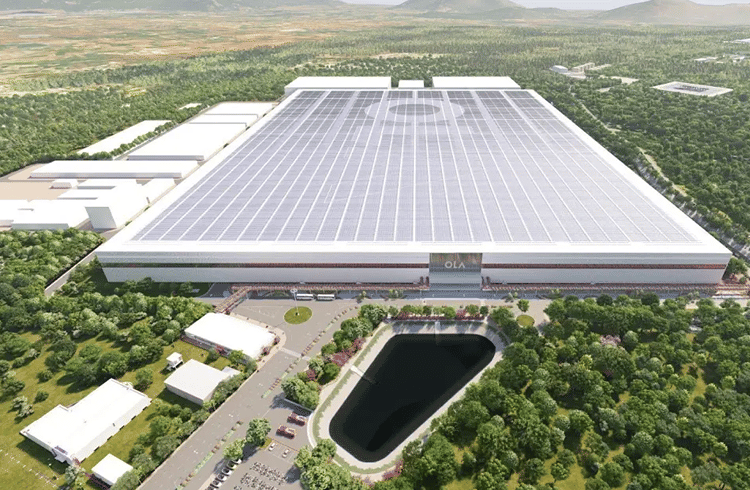
Ola Electric Mobility Limited has outlined a mid-to-long-term roadmap to expand its battery cell manufacturing capacity from 6 GWh to 20 GWh. Speaking during the company’s Q2 FY27 earnings conference call on November 12, 2026, Chairman and Managing Director Bhavish Aggarwal stated that the company will fund this next phase of expansion by bringing external equity into its cell subsidiary.
The company achieved the commercial operation date (COD) for an additional 3.5 GWh of capacity on September 23, 2026, bringing its total commissioned capacity to 6 GWh. However, management clarified that the expansion to 20 GWh will not occur within the next couple of quarters, as the immediate operational priority is to stabilise the existing 6 GWh facility.
Capex Efficiency and Infrastructure Readiness
According to Aggarwal, the capital expenditure required to scale the facility from 6 GWh to 20 GWh will be substantially lower than the outlay spent on the initial 6 GWh phase. Once fully scaled to 20 GWh, the company projects its blended capital expenditure to drop below ₹400 crore per GWh.
This lower incremental cost is attributed to front-loaded infrastructure investments. The core building and foundational infrastructure at the gigafactory have already been constructed to accommodate a 20 GWh footprint, reducing the civil and structural outlay required for subsequent capacity additions.
PLI Timeline and Production Ramp-Up Roadmap
The planned expansion aligns with Ola Electric’s allocation of up to 20 GWh under the government’s Advanced Chemistry Cell (ACC) Production Linked Incentive (PLI) scheme. CFO Deepak Rastogi noted that the government has extended the ACC PLI timeline until 2031, and because the company is ahead of its mandated milestones, PLI incentives are expected to commence from Q3 FY27.
In the near term, the cell division is focusing on ramping up capacity utilisation and manufacturing yields:
-
Yield Targets: Current Nickel Manganese Cobalt (NMC) cell production is operating at yields in the mid-70s percentage range, with an engineering roadmap to reach the mid-80s over the next couple of months and eventually 90%.
-
Cell Chemistry Mix: Cell integration will begin with NMC cells for the company's own automotive products in Q3 FY27, followed by the ramp-up of in-house Lithium Iron Phosphate (LFP) cells toward the end of Q4 FY27 or early Q1 FY28. Long-term automotive consumption is projected to split at roughly 70% LFP and 30% NMC.
-
Grid Storage Application: Beyond electric vehicles, the company plans to deploy its Indian-manufactured cells into its upcoming Mahashakti grid-scale battery product, positioning it for domestic installations that require 40% domestic value addition under new government policy.

RELATED ARTICLES

Ampere Captures 6% E2W Market Share in November 2026
 Eshisha Java
 20 Nov 2026
VAHAN registration data for November 1–18 shows 7,956 units sold, marking a 70% month-on-month volume increase and conso...


Belrise Enters Complete Three-Wheeler Body Manufacturing With New Plant
Eshisha Java
20 Nov 2026
The Chhatrapati Sambhajinagar facility will manufacture complete body and chassis assemblies for a high-volume three-whe...

Belrise Wins Passenger Vehicle Sheet Metal Orders From Japanese, European OEMs
Eshisha Java
20 Nov 2026
The Japanese OEM programme will be serviced from Greater Noida, while the order from the European manufacturer will be e...

