Follow us
Daimler India's AI-driven system revs up spare part sales by 2-3 times
Satyakam Arya, Managing Director and CEO of DICV, said this improvement in forecasting accuracy is yielding substantial benefits for the company’s aftermarket business, including a 20% boost in the company’s ability to provide timely parts deliveries.
 11 Sep 2024
 13315 Views
Share -
13315 Views
Share -


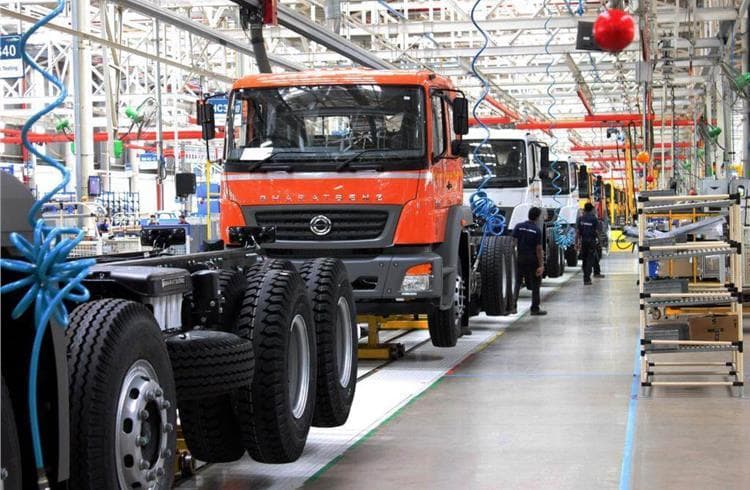
Daimler India Commercial Vehicles (DICV), a subsidiary of Germany’s Daimler Truck AG, has increased its spare-parts sales by two to three times by implementing an AI-based solution. The solution, called Vruddhi, works by continuously analysing the truck population, assess retention rates, and calculate demand based on vehicle usage patterns.
Satyakam Arya, Managing Director and CEO of DICV, told Autocar Professional that this improvement in forecasting accuracy is yielding substantial benefits for the company’s aftermarket business, including a 20% boost in the company’s ability to provide timely parts deliveries.
Vruddhi’s predictive capabilities stem from its ability to continuously analyze the truck population, assess retention rates, and calculate demand based on vehicle usage patterns. By accounting for business seasonality, the system offers precise demand forecasts, which enable DICV to manage inventory more effectively and capitalize on upsell opportunities. "It also offers us upsell opportunities. It helps us to find which customers are not coming to workshops on time. So that we can approach them and therefore, increase the demand for our parts." Arya explained.
Arya highlighted that customer retention after the warranty period is around 80%, a stark contrast to the commercial vehicle industry average of 30%. Retention in the CV sector measures the proportion of customers who continue to use the manufacturer’s services after their initial warranty expires.
The earlier statistical technique analyzes historical data, weighting recent data more heavily to produce more accurate predictions. However, the adaptability of AI-driven models like Vruddhi provides a more dynamic approach, enhancing the precision of forecasts and streamlining aftermarket operations.
Daimler’s investment in AI-driven forecasting reflects a broader industry trend towards leveraging technology to enhance operational efficiencies and better serve customers in a highly competitive market.

RELATED ARTICLES

Weekly News Wrap: Festive Sales Surge, Citroen Eyes India EV Production, BKT-Pirelli Plan JV
 Darshan Nakhwa
25 Oct 2026
Darshan Nakhwa
25 Oct 2026
Festive demand drives vehicle sales, while automakers outline new electric vehicle plans, Tata Motors projects double-di...


Castrol India Q32026 Net Profit Drops 23% to Rs 176 Crore as Input Costs Surge
 Dev Vadchhedia
24 Oct 2026
Dev Vadchhedia
24 Oct 2026
The lubricants maker recorded 27 percent revenue growth, but raw material inflation and currency headwinds pressed profi...

Paradeep Parivahan Secures 10-Year EV Heavy Haulage Contract From JSW Group
 Autocar Professional Bureau
24 Oct 2026
Autocar Professional Bureau
24 Oct 2026
The logistics provider will deploy 100 electric trucks for industrial transport across Andhra Pradesh and Karnataka.