Follow us
BYD India to Raise EV Prices by Up to Rs 100,000 From May
Chinese automaker seeks to offset rising input and freight costs as Strait of Hormuz crisis hammers global commodity markets.
 By Autocar Professional Bureau
 1581 Views


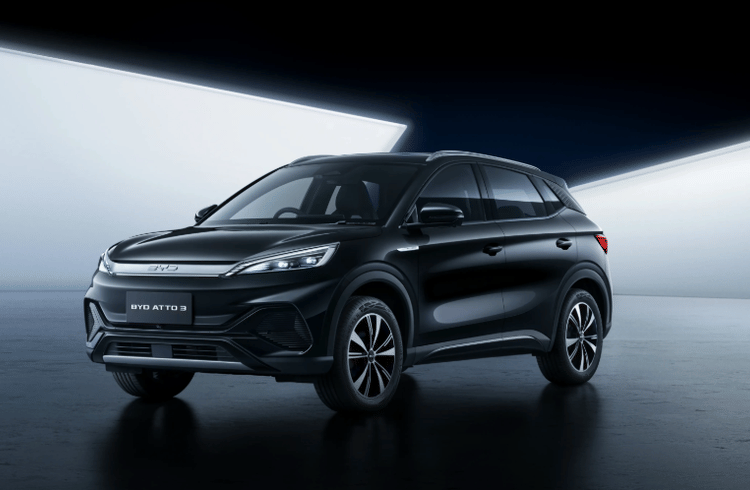
BYD India will increase prices across its electric vehicle range by 50,000 to 100,000 rupees from May 1. The revision will apply to the brand's full India portfolio, covering the Atto 3 SUV, eMAX 7 MPV, Seal sedan and Sealion 7 SUV. Current ex-showroom prices run from 24.99 lakh rupees for the entry-level Atto 3 to 54.90 lakh rupees for the top-spec Sealion 7.
People familiar with the development, said the increase was aimed at offsetting higher raw material costs and freight expenses that have been accumulating on the cost of imported models and components constituting BYD's India supply chain.
The Strait of Hormuz crisis, which the International Energy Agency has described as the largest supply disruption in the history of the global oil market, has sharpened those pressures considerably. The effective closure of the waterway, through which roughly 27 percent of the world's seaborne crude oil and petroleum products normally pass, has sent Brent crude surging and pushed war-risk shipping insurance premiums to multi-year highs. The crisis has consequently tightened the supply of industrial inputs with direct bearing on electric vehicle manufacturing.
The Gulf region accounts for roughly 9 percent of global aluminum output and approximately half of all seaborne sulfur trade. Synthetic graphite, the key material for EV battery anodes, is similarly exposed, as it relies on petroleum coke, a refinery byproduct, as its primary feedstock, linking battery supply chain costs to the disruption in Gulf refining. S&P Global Mobility has noted that original equipment manufacturers are absorbing much of that burden for now, though vehicle prices are widely expected to rise as a result.
For BYD in India, those converging headwinds are particularly acute. The brand relies on imported models and components for its local lineup, has over 55 showrooms across the country as of early 2026 and is preparing to expand further with the two new models
Nonetheless, the increase will push acquisition costs higher in a segment where demand has remained relatively steady, but price sensitivity has not receded. The move mirrors a wider pattern taking hold among premium and electric vehicle makers in India, who have been resorting to calibrated price corrections to defend margins as input costs grow increasingly volatile.

RELATED ARTICLES

MINI Cooper Oxford Edition Launched in India at Rs 55.50 Lakh
 Arunima Pal
 16 Oct 2026
The car will be imported as a completely built-up unit (CBU) and is based on the Favoured Pack.


Netradyne Wins Frost & Sullivan's 2026 Global Product Leadership Award for Fleet Video Telematics
 Angitha Suresh
16 Oct 2026
Angitha Suresh
16 Oct 2026
The San Diego-based AI fleet safety company was evaluated on innovation, customer value, reliability, growth potential, ...

VIDA Launches Limited-Edition Electric Off-Roader at 100th FIM International Six Days Enduro
Angitha Suresh
16 Oct 2026
Hero MotoCorp's electric vehicle brand VIDA has released a 100-unit numbered edition of its youth off-road bike in partn...