Follow us
'By 2026 expect more than 50% EVs sold globally to be Chinese branded automobiles': Gartner
"There are more than 15 Chinese companies selling EVs and many of these are smaller and much less expensive models than those sold by foreign rivals", stated Mike Ramsey, VP Analyst at Gartner in a press release.
 5113 Views


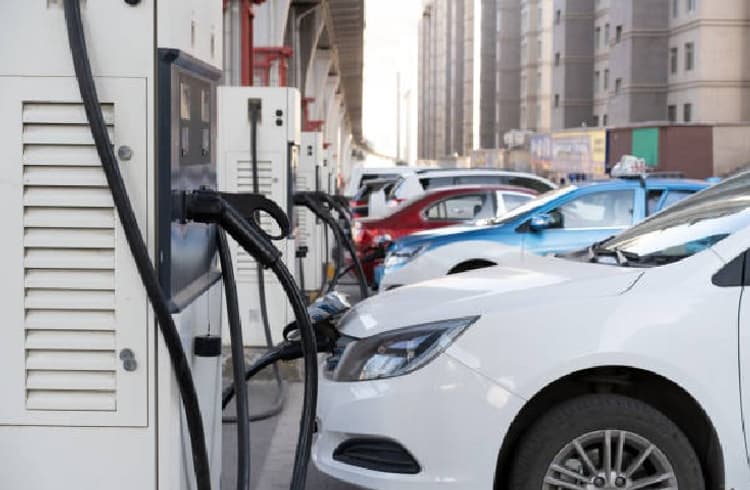
According to Stamford, Connecticut-based consultancy firm Gartner, over 50% of the electric vehicles (EVs) sold globally will be Chinese-branded automobiles, given their access to minerals and battery manufacturing capacity. Besides its manufacturing capabilities, China has been able to build onto its existing automobile supply chains to augment growth.
The consultancy firm recommends that automotive chief information officers focused on EVs, and amalgamate supply chain planning and software, to ascertain where key materials are sourced and secure resiliency for key materials.
Globally, only around seven countries have access to lithium ion reserves, namely, China, Australia, Congo, Chile, South Africa, and Indonesia, with India being the latest to join this rank. The sharp increase in raw material prices like lithium and nickel will inherently drive battery electric vehicles (BEV) costs higher. Key materials such as lithium are very important in the race for achieving self-sufficiency, and reducing dependence on imports. The recent 5.9 million tonnes of lithium discovered in Jammu are slated to give India an advantage for batteries used in electric vehicles.
"There are more than 15 Chinese companies selling EVs and many of these are smaller and much less expensive models than those sold by foreign rivals" Mike Ramsey, VP Analyst at Gartner stated in a press release. “While foreign automakers like Tesla, VW and GM are selling a lot of EVs in China, the growth is much faster with Chinese companies,” he added.
The consultancy further goes on to state that several established automakers are trying to transform into technology companies, but their corporate culture has been proved to be a hindrance to their ambitions, in a summation of factors that point out to 2023 being the ‘moment of truth’ for battery electric vehicles.
“This must be their starting point to avoid widening the gap with digital native automakers and grow their revenue via the use of technology even further, Pedro Pacheco, VP analyst at Gartner stated.
Gartner also expects that tech giants will own a part of the operating system for 95% of new cars on the road. “Succeeding alone won’t be possible for a traditional OEM or supplier,” said Pacheco. “Each of them must forge partnerships with at least some digital giants if they want to remain profitable and competitive in the industry.”

RELATED ARTICLES

Weekly News Wrap: Festive Sales Surge, Citroen Eyes India EV Production, BKT-Pirelli Plan JV
 Darshan Nakhwa
 25 Oct 2026
Festive demand drives vehicle sales, while automakers outline new electric vehicle plans, Tata Motors projects double-di...


Castrol India Q32026 Net Profit Drops 23% to Rs 176 Crore as Input Costs Surge
 Dev Vadchhedia
24 Oct 2026
Dev Vadchhedia
24 Oct 2026
The lubricants maker recorded 27 percent revenue growth, but raw material inflation and currency headwinds pressed profi...

Paradeep Parivahan Secures 10-Year EV Heavy Haulage Contract From JSW Group
 Autocar Professional Bureau
24 Oct 2026
Autocar Professional Bureau
24 Oct 2026
The logistics provider will deploy 100 electric trucks for industrial transport across Andhra Pradesh and Karnataka.