Follow us
Apollo Tyres plans Rs 1,500 Crore Capex for FY26
Of this, Rs 700 crore will be dedicated to maintenance, ensuring operational efficiency and technological upgrades, while Rs 800 crore will be channeled into growth initiatives.
 7792 Views


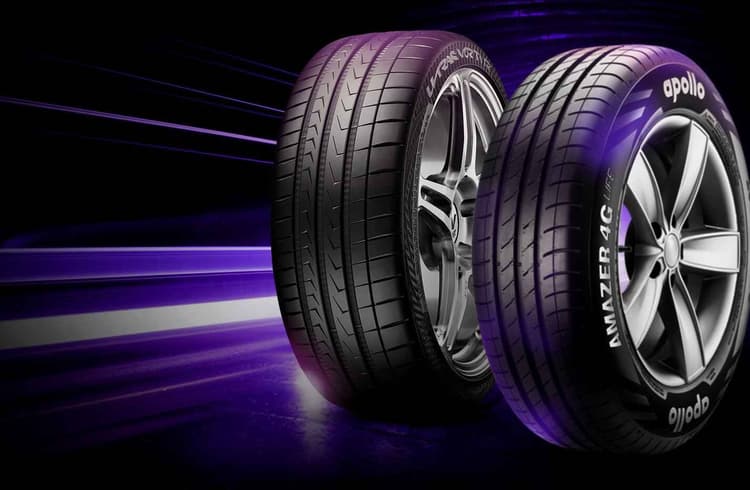
Apollo Tyres, one of India's leading tyre manufacturers, has ramped up its investment in capacity expansion and maintenance. The company has earmarked a significantly higher capex of Rs 1,500 crore for the financial year 2025-26 (FY26). Of this, Rs 700 crore will be dedicated to maintenance, ensuring operational efficiency and technological upgrades, while Rs 800 crore will be channeled into growth initiatives. The latter will primarily fund a brownfield expansion of the company's passenger car radial (PCR) tyre capacity.
In the first nine months of the fiscal year 2024-25 (9MFY25), the company allocated Rs 350 crore towards capital expenditure (capex) on a standalone basis and Rs 500 crore on a consolidated basis, the company’s management noted in a post-results discussion with analysts. Apollo's overall utilization levels currently stands at 79%, with PCR at over 80% and Truck & Bus radial (TBR) at 80%.
The Indian tyre industry finds itself at an inflection point as demand dynamics evolve across key segments. Apollo Tyres anticipates continued momentum in replacement demand through the final quarter of FY25, while commercial vehicle (CV) sales may benefit from the government’s sustained focus on infrastructure development. Export markets, particularly the United States and the Middle East, are expected to provide additional tailwinds.
The third quarter of FY25 presented a mixed picture. Overall volumes registered marginal year-on-year (YoY) growth, supported by a 5% rise in the replacement market. However, original equipment manufacturer (OEM) sales declined by 10%, while exports remained stagnant. The replacement segment, a critical revenue driver for tyre manufacturers, saw robust demand across truck and bus radial (TBR), passenger car radial (PCR), and farm tyre categories. In contrast, OEM demand softened due to lower production levels and an unfavourable shift in the CV mix, with buses accounting for a larger share.
The industry continues to grapple with cost pressures. Raw material expenses rose by 15% YoY and 2% quarter-on-quarter (QoQ), reaching Rs 175/kg in Q3FY25. The prices of key inputs—natural rubber ( Rs 215/kg), synthetic rubber ( Rs 195/kg), and carbon black ( Rs 125/kg)—exerted upward pressure on margins. However, Apollo Tyre management expect raw material costs to stabilise in Q4FY25, offering some respite to profitability.

RELATED ARTICLES

Spiro Deploys First 100 Electric Motorcycles in Ghana
 Dev Vadchhedia
 20 Oct 2026
Spiro introduces Ekon 450 M1 V3 two-wheelers and battery-swapping infrastructure to Ghana.


JLR India to Launch Three Electric Range Rovers, Reintroduce Jaguar Next Year
 Anurag Chaturvedi
20 Oct 2026
Anurag Chaturvedi
20 Oct 2026
JLR's electric debut targets Indian luxury buyers who want battery power without giving up brand identity.

Chasing 'China-Like' Speed, European OEMs Are Handing Core Vehicle Realization to India
 Shahkar Abidi
20 Oct 2026
Shahkar Abidi
20 Oct 2026
Turnkey vehicle realization agreements take center stage with Indian tech engineering companies as Western OEMs under pr...