
 Follow us
Bosch looks to drive future of electric, automated, and connected driving
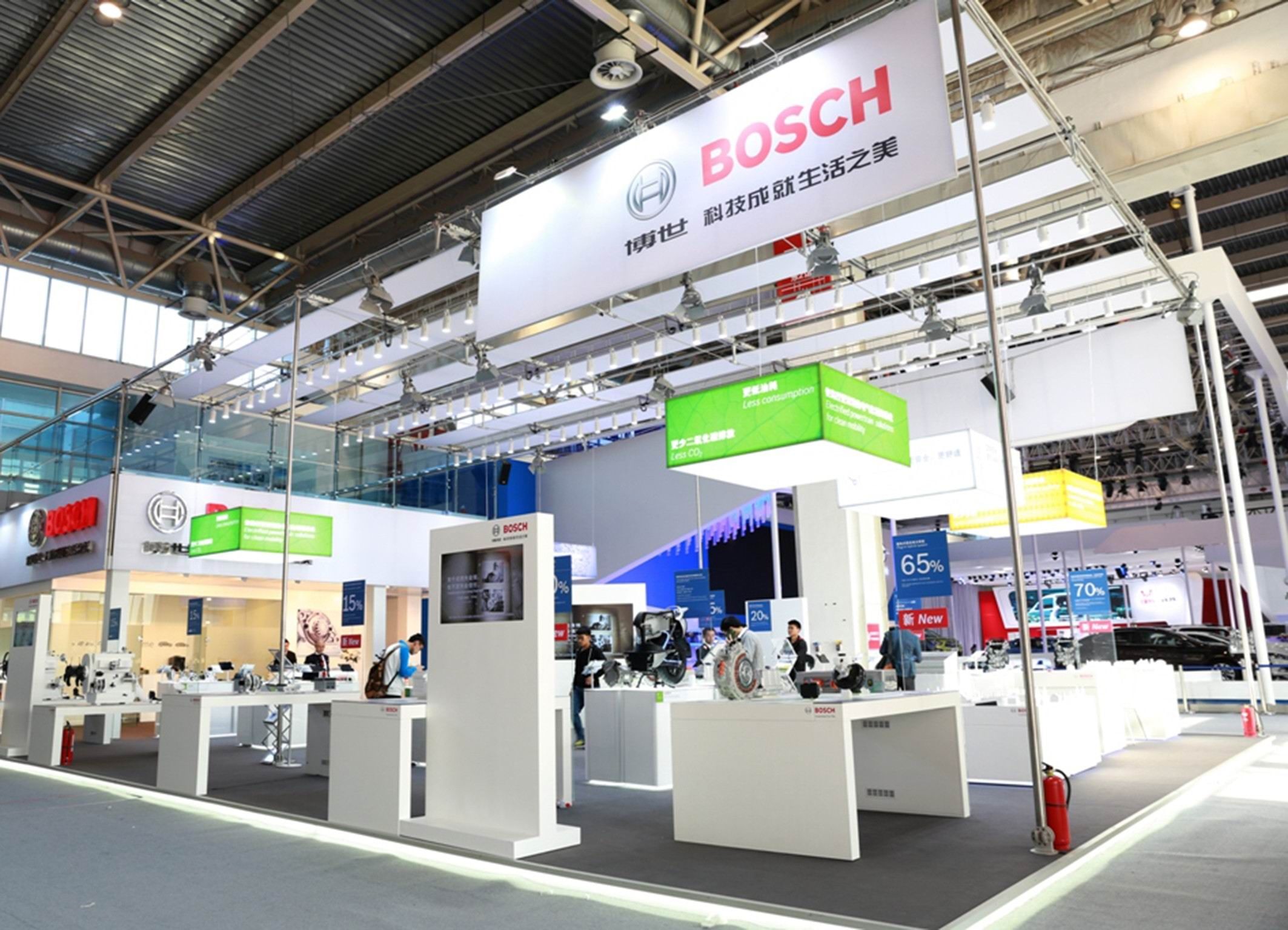
At the ongoing Beijing Motor Show, Bosch is showcasing a series of future-oriented automotive technologies and solutions.
 22 Apr 2014
 4299 Views
Share -
4299 Views
Share -


At the ongoing Beijing Motor Show, Bosch is showcasing a series of future-oriented automotive technologies and solutions.
“The global automotive industry is going through a profound technological revolution, and China will be an important part of it,” said Wolf-Henning Scheider, the board of management member of Robert Bosch GmbH responsible for the company’s global automotive business. “To keep up with the trend of electric, automated, and connected driving, Bosch has developed a comprehensive portfolio of automotive technologies in these three areas. And our continuous innovations help us stay at the forefront of the industry.”
Environmental, safety norms shaping the future of mobility
Globally, ever-stricter regulations for fuel consumption, emissions control, as well as road safety are driving the development of powertrain and automated driving technologies. “There is still considerable potential in internal-combustion engines, if various measures are taken,” Scheider explained. “By 2020, the fuel consumption of petrol- and diesel-powered vehicles can be further reduced by another 20 percent from its 2012 level.” Improved injection and engine management systems, turbocharged downsized engines, as well as start-stop and regenerative braking systems are some of the solutions to increase the efficiency of cars with internal combustion engines.
Besides improving the conventional powertrain, electrification will play an increasingly important role in the future of mobility, especially to help reduce air pollution in large cities and to aid in resource conservation. “Our portfolio of electric solutions encompasses a broad spectrum from e-bikes and e-scooters, through mild and plug-in hybrids, all the way to fully-electric powertrains,” Scheider said. “With varying levels of electrification depending on the vehicle class, Bosch is dedicated to helping China reach its stricter fuel-efficiency targets and emission standards.”
For instance, in combining the four efficient functions of recuperation, boosting, start-stop, and coasting, the boost recuperation system (BRS) can lower fuel consumption and CO2 emissions up to 15 percent. Another revolutionary new powertrain technology is the hydraulic hybrid, which features a pressure accumulator filled with nitrogen which stores deceleration energy, as well as a hydraulic motor which converts accumulated energy into propulsion. On average, the system reduces fuel consumption by 30 percent, or even up to 45 percent in city driving with frequent acceleration and breaking.
Road accidents have become one of the primary causes of injury and death. Around 60,000 people die in road accidents each year in China and a majority of traffic accidents are caused by human error. As the first supplier testing automated driving on German roads, Bosch continuously invests in developing automated safety and assistance functions, and is committed to the future of accident-free driving. Today, more than 5,000 engineers at Bosch are developing more powerful safety and assistance systems which form the basis for automated driving. In China, advanced driver-assistance systems are being marketed and increasingly installed in vehicles produced by Chinese automakers. Moreover, the Bosch iBooster is a pioneering braking solution for hybrid and electric vehicles. It is an electromechanical brake booster that doesn’t require a vacuum, but effectively provides braking assistance and allows almost all the energy lost in typical braking to be recovered.
Connected driving: safety, comfort, and convenience
To achieve the vision of fully automated driving, vehicle connectivity is one of the prerequisites. “Fully automated driving will be possible only with connected driving. For it to work, at least 50 percent of the vehicles in flowing traffic have to be sharing data with each other in real time.” explained Scheider. “The aim of vehicle connectivity is accident-free, comfortable, and informed driving, as well as the convenience of an increased range of services for users.” By 2025, Bosch expects that almost all newly-registered vehicles will be “connected” and share data with each other in traffic.
One of the solutions Bosch offers in this field is the new connectivity control unit (CCU). For an efficient fleet management, the CCU helps to monitor vehicles and analyze their condition. Another example is Bosch mySPIN, which features a system for integrating smart phones into the vehicle. Compatible with both IOS and Android operating systems, mySPIN enables smart phone apps to be operated on the dashboard display exactly as they are on the phone. This means they can be used safely while driving, thus increasing comfort and safety.
Increasing localisation for sustainable development in China
“Thanks to long-term cooperation with local car makers, Bosch has been increasing localisation, particularly in research and development as well as manufacturing,” said Dr. Xu Daquan, the executive vice-president of Bosch (China) Investment Ltd. “We will continue to work with our partners in China closely and support them by providing innovative automotive solutions and services.” Thanks to its product excellence and close partnerships, Bosch China received a total of over 40 excellent supplier awards from more than 20 original equipment manufacturers (OEM) in 2013.
Over the last five years, Bosch’s automotive business in China registered a compound annual growth rate of 17 percent, achieving sales of CNY 32 billion in 2013. In addition, three new automotive operations were inaugurated in China last year, involving a total investment of around CNY 2.5 billion. By end-2013, Bosch China had established 26 automotive manufacturing sites, 11 automotive technical centres, two automotive test centrers, and over 1,600 Bosch Car Service workshops.
Photograph: Wolf-Henning Scheider: “The global automotive industry is going through a profound technological revolution, and China will be an important part of it.”
RELATED ARTICLES

Horse Powertrain develops ‘all-in-one’ powertrain for hybridizing BEV platforms
 Ajit Dalvi
20 Apr 2026
Ajit Dalvi
20 Apr 2026
X-Range C15 Direct Drive is an ‘all-in-one’ hybrid powertrain that allows BEV platforms to serve as foundations for HEVs...


Autoliv Plans JV for Advanced Safety Electronics With China’s HSAE
Ajit Dalvi
11 Oct 2025
The new joint venture, which is to be located strategically near Shanghai and close to several existing Autoliv sites in...

JLR to Restart Production Over a Month After September Hacking
Ajit Dalvi
07 Oct 2025
Manufacturing operations at the Tata Group-owned British luxury car and SUV manufacturer were shut down following a cybe...