


Intel advances 'AI Everywhere' initiative at CES 2024
The company has also announced acquisition of Silicon Mobility and has unveiled AI-enhanced vehicle SoCs.
 By Autocar Professional Bureau
 3344 Views


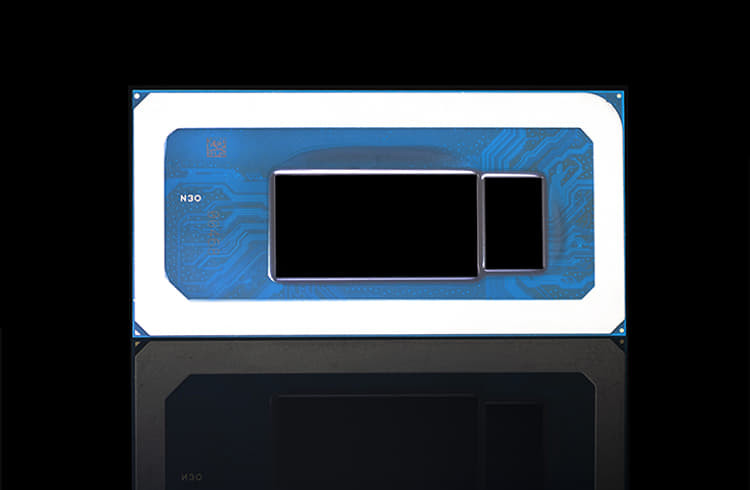
Intel has revealed its strategy to expand its 'AI Everywhere' initiative into the automotive sector, marking a significant move to bring artificial intelligence to various aspects of the driving experience. The company has announced plans to acquire Silicon Mobility, a fabless silicon and software company specialising in system-on-chips (SoCs) for intelligent electric vehicle (EV) energy management. Additionally, Intel introduced a new family of AI-enhanced software-defined vehicle SoCs, with Zeekr as the first OEM to adopt these chips for AI-driven living room experiences in next-generation vehicles.
Silicon Mobility is a fabless automotive silicon and software company known for designing, developing, and deploying EV energy management SoCs.
The acquisition aims to unlock a more sustainable electrified future by leveraging Silicon Mobility's expertise in SoCs with accelerators designed for energy delivery and advanced software algorithms for improved vehicle energy efficiency.
New Family of AI-Enhanced SDV SoCs
The family of SoCs addresses the industry's need for scalable power and performance, featuring AI acceleration capabilities from Intel's AI PC roadmap.
Designed to support various in-vehicle AI use cases, including driver and passenger monitoring, these SoCs provide flexibility and enhanced performance.
Zeekr as the First Adopter
Geely's Zeekr brand will be the first OEM to utilise Intel's new family of SDV SoCs.
The forward-compatibility on Intel systems, combined with AI acceleration, will enable Zeekr to scale and upgrade services continuously to meet evolving customer demands.
Open Standards for Industry Success
To facilitate a smoother transition to electric vehicles (EVs) and sustainable software-defined vehicles (SDVs), Intel, in collaboration with SAE International, announced the creation of a committee to establish an automotive standard for Vehicle Platform Power Management (J3311).
The new standard, chaired by Intel, draws inspiration from proven power management techniques in the PC industry's ACPI standard, enhancing advanced concepts to make all EVs more energy-efficient and sustainable.
Intel's initiatives underscore the company's commitment to integrating AI into the automotive sector, aiming to enhance energy efficiency, sustainability, and the overall driving experience.
RELATED ARTICLES

India, US agree interim trade deal; Auto exports to get preferential quota
 Kiran Murali
 07 Feb 2026
Under the terms of the interim framework, the US has agreed to apply a reciprocal tariff rate of 18% on Indian goods suc...


JK Tyre to Invest Rs 1,130 Crore to Expand Capacity by FY28
 Darshan Nakhwa
06 Feb 2026
Darshan Nakhwa
06 Feb 2026
Expansion across TBR, LTBR and passenger car radial tyres to come on stream by Q2 FY28.

JK Tyre Reports 3.7-Fold Surge in Q3 Profit Amid Strong Demand and Margin Expansion
 Sarthak Mahajan
06 Feb 2026
Sarthak Mahajan
06 Feb 2026
India's leading tyre manufacturer posts Rs 209 crore net profit for Q3 FY26, driven by robust domestic growth, premium p...