



 Follow us
The Future of Urban Mobility Is About Connecting the Dots
Why India's sustainable mobility transition must go beyond electric vehicles to create an integrated, shared transport ecosystem.
 22 Nov 2026
 6 Views
Share -


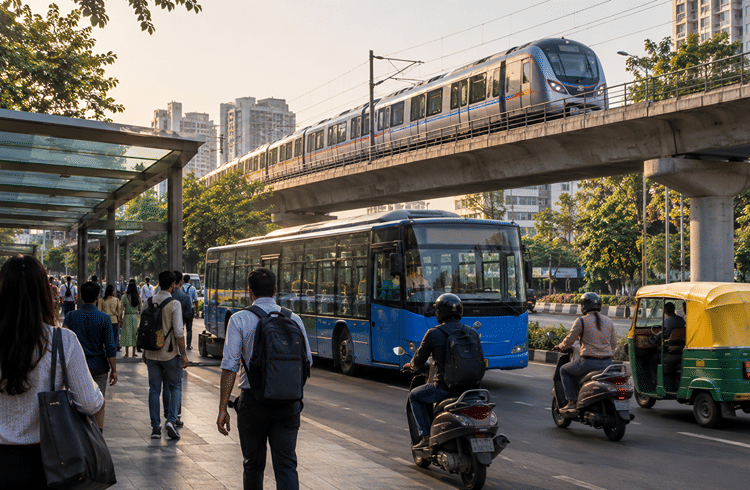
The future of urban mobility will not be decided by which powertrain wins. It will be decided by how effectively we move people across our cities. India is at an inflection point. Metro networks are expanding, electric buses are entering public transport fleets, and electric two-wheelers and three-wheelers are increasingly visible on our roads. Yet millions of urban commuters continue to depend on private vehicles for everyday journeys. The reason is simple: our mobility systems remain fragmented.
We have focused on making individual vehicles cleaner. That is important, but only part of the answer. Replacing every petrol or diesel vehicle with an electric equivalent will not solve congestion, inefficient use of road space or growing demand for urban travel. A cleaner vehicle stuck in traffic is still a vehicle stuck in traffic. The bigger opportunity is to rethink how cities move people.
Public transport must be the backbone
A sustainable urban mobility system must begin with high-capacity public transport. Metro and suburban rail networks efficiently move large numbers of people across dense cities.
Electric buses complement them by connecting neighbourhoods and serving corridors where rail infrastructure may not be viable. Together, these form the backbone of urban transport. But even the best public transport network cannot take every commuter from their doorstep to their ultimate destination. The first and last mile is often the weakest link.
For many commuters, a two- or three-kilometre gap between a metro station and their workplace or home can determine whether public transport is practical. An unreliable auto, an expensive cab, a long walk or an uncertain wait can undermine an otherwise convenient metro journey.
The first and last mile is not an add-on to public transport. It is what makes the entire network accessible.
A new layer of shared mobility
This is where shared electric mobility solutions can make a meaningful difference. Smaller vehicles can connect transit stations to offices, residential communities, business districts, campuses, hospitals and other destinations.
The right solution will vary by journey.
Electric two-wheelers can serve individual commuters travelling short distances. Shared three-wheelers can connect neighbourhoods and transit points. Compact electric shuttles can serve high-demand corridors, while electric buses can cater to larger passenger volumes.
No single vehicle can solve every mobility problem. The objective should be to match the vehicle to passenger demand, route characteristics and the nature of the journey.
Our experience in building shared electric mobility services has reinforced an important insight: access matters as much as the vehicle itself. People adopt mobility solutions when they are available where and when needed, easy to use, dependable and sensibly priced. These principles must guide the next generation of shared passenger transport.
Designing a better, more integrated shared transport system
Here are five steps that can help India's urban transport ecosystem work better.
1. One journey, not multiple transactions: Integration must be designed into the commuter’s experience. Commuters should be able to plan journeys across metro, bus and feeder services without figuring out every leg independently.
2. Seamless connections: Service frequency should complement transit schedules, and pick-up and drop-off points must be safe and convenient. Digital discovery, booking and payment should be simple. The experience should feel like one connected journey.
3. Infrastructure and policy support: Cities need designated pick-up zones, sensible curb management, and charging and parking infrastructure. Public transport agencies, city authorities, vehicle manufacturers and mobility operators must work together. Regulation should ensure passenger safety while allowing new service models to be tested and improved.
4. Viable economics: Sustainable mobility cannot remain a premium or niche choice. Services must be affordable for everyday use and commercially viable for drivers, riders and operators. High vehicle utilisation, well-designed routes, appropriate passenger capacity and technology-enabled demand forecasting are central to achieving this.
5. Context-specific solutions: There is no universal blueprint. Dense urban districts may need frequent buses and metro services supported by smaller feeders. Technology and business parks may benefit from scheduled electric shuttles, while campuses and airports may require dedicated circulator networks. Service design must follow passenger demand.
India has an opportunity to build this integrated model as its cities expand. The transition is not merely about replacing one category of vehicle with another. It is about moving from individual, fragmented travel towards connected, shared and multimodal mobility.
The goal is not simply to put more electric vehicles on our roads. It is to make it easier for people to leave their private vehicles behind.
Amit Gupta is the Co-Founder & CEO of Yulu. Views expressed are the author's personal.

RELATED ARTICLES

The Missing Link in India’s EV Transition: Affordable Credit for Small Mobility Entrepreneurs
 Autocar Professional Bureau
22 Nov 2026
India's EV transition hinges not just on affordable vehicles, but on accessible financing that allows drivers and small ...


Let’s Make India the EV Manufacturing Hub for the World
Autocar Professional Bureau
21 Nov 2026
India’s automotive industry has evolved into a global component supplier through technology partnerships and localisatio...

The EV Battery Race Is No Longer About Energy Density: Why Carbon Nanotubes Matter
Autocar Professional Bureau
21 Nov 2026
Carbon nanotubes could improve electrode conductivity, support silicon-rich anodes and enhance EV battery charging speed...

