Follow us
JCB India’s FY24 Profit Soars Amid Push for Stricter Emission Compliance
JCB India sold 63,355 machine units during FY24, a 22% increase compared to the 52,083 units sold in fiscal year 2023.
 By Shahkar Abidi
 33828 Views


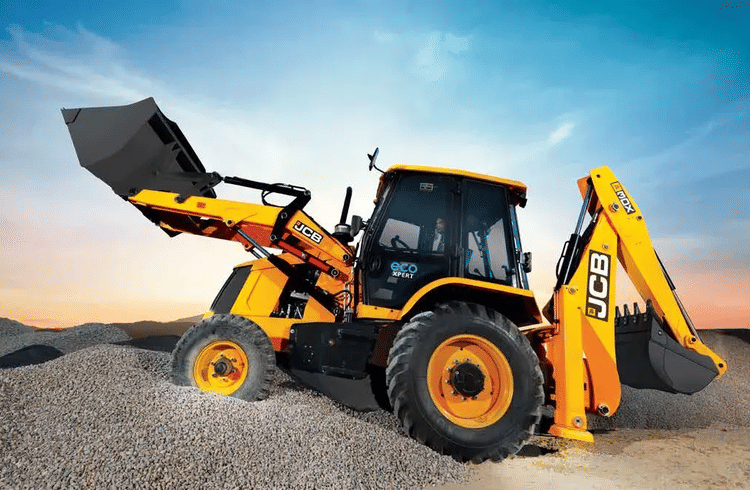
JCB India Ltd, the local arm of the British construction equipment machinery giant, reported a notable surge in profitability and revenue for the fiscal year 2024. Net profit reached Rs 2074.70 crore, a substantial increase from Rs 1454.70 crore in the previous fiscal year 2023. Correspondingly, operating revenues climbed to Rs 18,824.94 crore, up from Rs 15,299.04 crore in the prior year, according to company filings.
This financial performance is underpinned by strong sales growth. JCB India sold 63,355 machine units during the reported period, a 22% increase compared to the 52,083 units sold in fiscal year 2023. March 2024 marked a significant milestone for the company as it surpassed 500,000 machines sold since its inception in India. This domestic success is coupled with an international reach. Operating five factories across India, JCB manufactures for both the domestic market and for export, with products reaching customers in over 130 countries.
Beyond volume, the company is highlighting technological advancements. JCB India emphasized the increasing adoption of telematics within its customer base, noting that over 250,000 machines equipped with its “Livelink” system have been sold to date. According to management statements accompanying the filings, this technology "has changed the way customers manage their fleet," suggesting a growing sophistication in the operational management of construction equipment in India.
In terms of investment, JCB India’s capital expenditure for FY2024 stood at Rs 131.47 crore, a decrease from Rs 207.24 crore in FY2023. This reduction comes as the company emphasizes its focus on technology absorption and adaptation. JCB India is leveraging technology transfer agreements with its parent group to refine its product portfolio and align with evolving industry standards. This includes a strategic pivot towards premier product lines and incorporating technological upgrades across its range of machinery – from premier to mid-range and smaller models.
A key driver of technological development is the impending shift to stricter emission norms in India. JCB India detailed its engagement in emission technology projects across its wheeled product range to meet the forthcoming CEV V (Construction Equipment Vehicle V) environmental regulations.
This includes the development and localization of new CEV V engine technology in the 55kW to 112kW range. Furthermore, the company has been field-testing imported CEV V equivalent machines in Indian conditions and conducting high-altitude testing to ensure performance reliability across diverse operational environments. These efforts also encompass the incorporation of enhanced operator safety norms, complying with ISO20474 (AIS160 Ph II) standards.

RELATED ARTICLES

Weekly News Wrap: Festive Sales Surge, Citroen Eyes India EV Production, BKT-Pirelli Plan JV
 Darshan Nakhwa
 25 Oct 2026
Festive demand drives vehicle sales, while automakers outline new electric vehicle plans, Tata Motors projects double-di...


Castrol India Q32026 Net Profit Drops 23% to Rs 176 Crore as Input Costs Surge
 Dev Vadchhedia
24 Oct 2026
Dev Vadchhedia
24 Oct 2026
The lubricants maker recorded 27 percent revenue growth, but raw material inflation and currency headwinds pressed profi...

Paradeep Parivahan Secures 10-Year EV Heavy Haulage Contract From JSW Group
 Autocar Professional Bureau
24 Oct 2026
Autocar Professional Bureau
24 Oct 2026
The logistics provider will deploy 100 electric trucks for industrial transport across Andhra Pradesh and Karnataka.