



 Follow us
Tech Talk: Aluminium matrix composite – the weight-shedding innovation
The aluminium alloy and carbonfibre blends will be coming soon to a powertrain near you, taking over from traditional materials like steel, aluminium and carbonfibre
 04 Nov 2019
 10338 Views
Share -


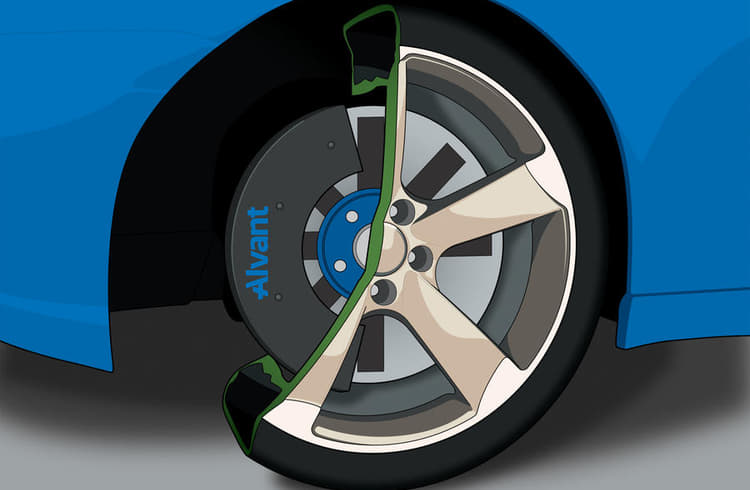
Alvant is developing wheel motor rotors from AMC that are 40% lighter, reducing rotating and unsprung mass
So far manufacturers have relied on three main materials to reduce weight. High-strength steels, which you can use less of; aluminium alloys, which are lighter than steel, and carbonfibre, which is lighter than both of the other two. Now there’s another kid in town called Aluminium Matrix Composite (AMC). AMCs are not new but breakthroughs in their development are making them more suitable for automotive applications, especially in EVs.
AMCs are a combination of aluminium alloy mixed with either particles or long or short fibres. The concept is not unlike carbonfibre-reinforced plastic, except the plastic resin is replaced by aluminium. The material can be 50% stiffer and almost 300 percent stronger than carbonfibre, can withstand severe damage and is stronger than the average steel at half the weight.
It conducts heat well but, crucially, expands very little when it heats up compared with steel or aluminium. That’s important when making precision components. The stiffness of AMC makes it ideal not just for increasing structural integrity but also for reducing noise vibration and harshness (NVH).
Although strong and light, carbonfibre doesn’t withstand abrasion and ballistic impacts well. That’s one reason it isn’t used to make suspension parts on production cars, because it’s so vulnerable to flying grit and stone. Carbonfibre components cannot withstand high temperatures, either, so cars made of it have carefully routed exhaust systems to avoid damage to the structure. Neither is carbonfibre suitable for making internal motor components.
Engineering consultancy Alvant sees huge potential for the use of AMC in EV powertrains and drivelines. It has developed a proprietary manufacturing process called advanced liquid pressure forming (ALPF), which works with any relatively low-melting-point metal such as aluminium alloy.
The process can be used with silicon carbide particles mixed into the molten metal to produce a lower-cost version of the AMC material. The lightest, highest-performance and most costly variant incorporate fibres derived from aluminium oxide. The fibres are pre-formed into the required shape in a mould and then injected with the molten metal to make the component.
Components can be made entirely from AMC or only specific areas of a component that are being subjected to especially high stresses or fatigue. The point of doing that is to reduce cost, using the new material only where it is needed most, while the rest of the component can be made from a cheaper conventional metal.
Alvant has been working specifically on rotors for axial flux (biscuit-tin-shape) drive motors for EVs. In conjunction with UK motor manufacturer Yasa, it has developed a rotor that is 40 percent lighter than the original. Elsewhere, a sandwich of AMC fibre-impregnated sheets with an AMC foam filling can work in a similar way to a bullet-proof vest, making it useful for protecting EV batteries at a fraction of the weight of a steel casing. Less weight equals smaller, lighter batteries, reducing cost and increasing range in the famous virtuous circle of weight reduction.
Better power to weight
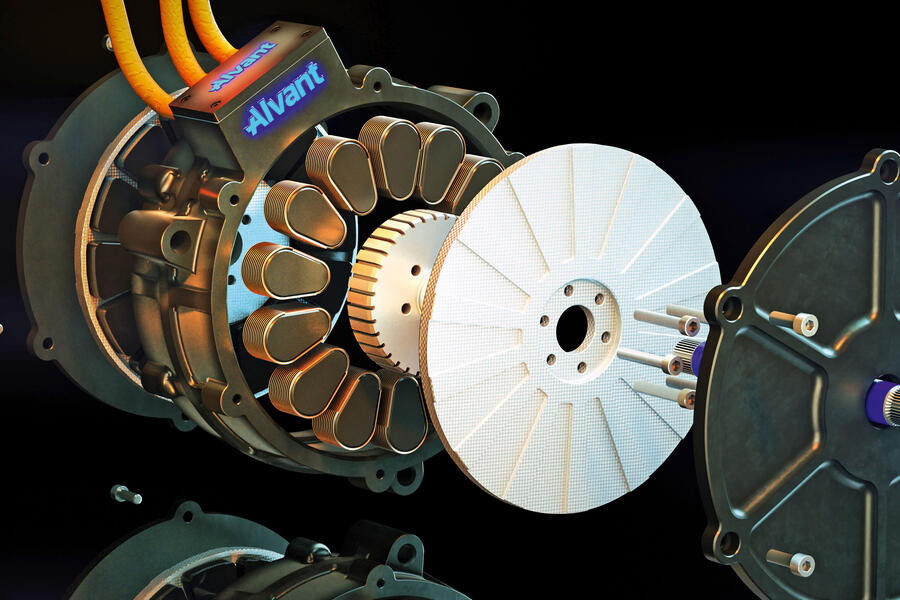
Because AMC is so stiff, it’s possible to reduce the air gap between the rotor and stator (electro-magnet windings) in axial flux (biscuit tin) EV motors, increasing the power-to-weight ratio of the motor.

RELATED ARTICLES

Schaeffler India's Aftermarket Balancing Act: Growing ICE Business While Preparing for EVs
 Darshan Nakhwa
24 Nov 2026
With conventional vehicles accounting for around 90% of its aftermarket business, Schaeffler India is targeting growth f...


For Battery-Swapping Companies, Lenders Arrive Before Profits
 Shahkar Abidi
24 Nov 2026
India's top battery-swapping networks are being financed more like infrastructure projects than tech startups, even as f...

Inside dSPACE India’s Next Phase: Local Product Development, Frugal Racks, and a Push Beyond Auto
Shahkar Abidi
19 Nov 2026
As stricter safety and cybersecurity rules take effect in India, the validation toolmaker is stripping out costly foreig...

