



 Follow us
Inside dSPACE India’s Next Phase: Local Product Development, Frugal Racks, and a Push Beyond Auto
As stricter safety and cybersecurity rules take effect in India, the validation toolmaker is stripping out costly foreign extras and qualifying domestic suppliers to lower testing costs.
 1 Views


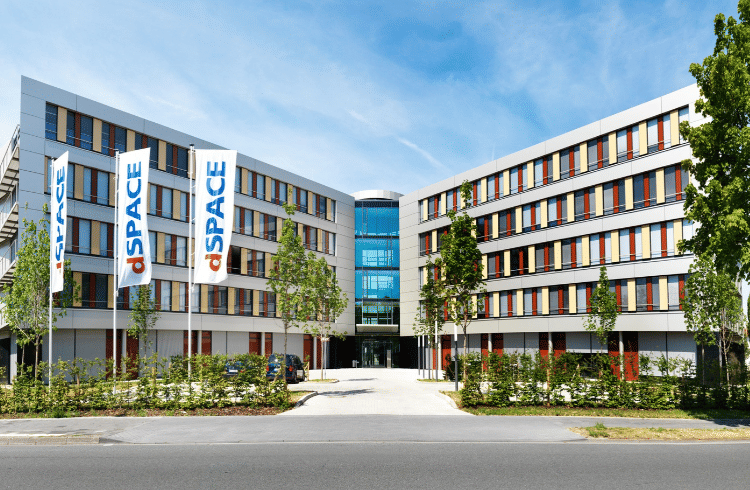
About three and a half years after establishing a direct commercial footprint in the country, dSPACE India Solutions Pvt Ltd has built an annual domestic revenue base of roughly Rs 200 crore and is targeting sustained double-digit annual growth over the next five to six years. Having expanded at more than 50 percent annually in recent years due to rising electronic content in Indian vehicles, Chief Executive Officer Andreas Gau has set a baseline growth floor of at least 10 percent per year through 2030, outpacing India’s 7 to 8 percent gross domestic product growth and matching the country’s double-digit automotive software expansion.
While over 90 percent of dSPACE’s overall India business serves the domestic market rather than direct exports, the Rs 200 crore generated by dSPACE India Solutions is entirely domestic, split roughly evenly between indigenous Indian vehicle manufacturers and the local engineering centers of global automakers and Tier-1 suppliers.
"If you ask me about vision for dSPACE in India, what I see is I want to have double-digit growth over five, six years at least. I mean, we have a GDP growth of 7%, 8%. We have a software market growth that is 10% plus. So that is the minimum that I want to achieve for dSPACE in India, that we also need to have 10 plus percent." Gau told Autocar Professional during a recent interaction.
Tailoring Products for India’s Two-Wheeler and Mass-Market Segments
To sustain that trajectory, dSPACE India is moving beyond adapting German-engineered systems to developing its first India-specific validation tools from the ground up within the next one to two years. While its local teams currently customize vehicle simulation models and powertrain parameters for Indian driving conditions, product managers are finalizing specifications for locally developed entry-level testing systems aimed at price-sensitive domestic automakers, EV startups, academic institutions, and homologation agencies.
A primary focus is the two-wheeler sector. According to the Society of Indian Automobile Manufacturers (SIAM), India is the world’s largest two-wheeler market, recording 2.58 million domestic two-wheeler sales in October 2026. Unlike Europe or North America, where motorcycles are largely high-margin recreational products, India relies on commuter motorcycles and scooters for everyday transport. Even in budget segments, anti-lock braking systems (ABS), stability control, and faster electric vehicle adoption than in four-wheelers are forcing manufacturers to validate safety-critical software for battery management, motor control, and vehicle control units.
As per Gau, it is a conscious decision on their part to have the product development for it locally; the reason being that just because the technology is similar, it does not mean that the test requirements are the same. "It must be affordable in this mass market segment. And that's where we believe the only solution to that is that we develop a tailored product that is developed in India so that we can reach the right cost point, but also still achieving all of the quality levels that are required for safety-critical functions," he stated.
Alongside future indigenous tools, dSPACE is introducing compact, lower-cost global systems suited to Indian regulatory shifts. A centerpiece is the DARTS ARROW radar target simulator, operating across the 76 to 81 GHz band. Unlike optical cameras that feed standardized video streams to a vehicle’s computer, radar sensors from Tier-1 suppliers use proprietary internal signal processing. The simulator lets automakers test a physical radar sensor as a 'black box' inside a laboratory across simulated ranges up to 500 meters. While European and South Korean regulators use the unit for periodic technical inspections, Gau sees immediate Indian demand in development testing as the Ministry of Road Transport and Highways (MoRTH) mandates Electronic Stability Control and Advanced Emergency Braking Systems under AIS-162 for heavy commercial vehicles, alongside growing adoption of advanced driver assistance systems (ADAS) in passenger cars.
"So that is the first step that we only provide to the Indian customer what he really needs and [leave out] the stuff that he doesn't need. And maybe for whatever reason, the customer in Japan or in Germany, he wants something top on extra. The Indian customer should not pay for this whatever extra the other region might want." Gau explained.
Although automotive accounts for roughly 90 percent of dSPACE India’s revenue today, Gau is diversifying into adjacent sectors. Under his medium-term plan, aerospace and defence will expand to 20 percent of Indian revenue, while energy, agriculture, off-road and construction equipment, industrial automation, and robotics are targeted to contribute another 5 to 10 percent.
Global Footprint, Indian Evolution, and Core Specialization
Founded in 1988 and headquartered in Paderborn, Germany, dSPACE GmbH employs more than 2,900 people worldwide across subsidiaries in the United States, the United Kingdom, France, Japan, China, Croatia, South Korea, Sweden, and India. The company specializes in Hardware-in-the-Loop (HIL) and Software-in-the-Loop (SIL) simulation, testing rigs that trick an electronic control unit (ECU) or software code into behaving as if it is inside a real vehicle, allowing engineers to catch faults in a lab before building physical prototypes.
After operating through a distributor for years, the group incorporated dSPACE India Solutions Pvt Ltd in Bengaluru in March 2023 by acquiring the distributor’s business and absorbing its staff. It operates alongside a sister software center, dSPACE India Software and Technologies Pvt Ltd in Thiruvananthapuram, which supports global software development. Its Indian customer roster spans Tata Motors, Mahindra & Mahindra, Maruti Suzuki, commercial vehicle and two-wheeler makers, global R&D hubs of Bosch, Mercedes-Benz, General Motors, and Stellantis, and engineering service providers. dSPACE India Solutions competes with the likes of Altair, Autodesk, ZWSOFT, Cadence, Gamma Technologies, MathWorks, Vector Informatik, Bosch, Electrobit, among a host of other rivals.
Independent research underscores why validation vendors are prioritizing India. MarketsandMarkets values India’s HIL market at $38.7 million in 2025, forecasting growth to $68.0 million by 2030 at an 11.9 percent compound annual growth rate (CAGR), outpacing the 10.1 percent global average. Globally, Grand View Research projects the HIL market to grow from $904.3 million in 2026 to $1.38 billion by 2030 (11.1 percent CAGR). On the software side, MarketsandMarkets estimates India’s automotive software market will double from $1.52 billion in 2026 to $3.06 billion by 2031 (10.6 percent CAGR), aligning with NASSCOM projections of 8 to 9 percent annual growth in global automotive engineering R&D spending through 2030.
Software-Defined Vehicles and Integrated Cybersecurity
Across the sector, the shift toward Software-Defined Vehicles (SDVs)—vehicles whose functions are governed by updatable software decoupled from hardware—is compressing four-to-five-year development cycles into continuous update loops.
To avoid proprietary tool lock-in, dSPACE joined the open automotive software marketplace SDVerse in February 2026 and is expanding flexible software licensing and cloud-based validation models, enabling Indian suppliers to manage tool access more efficiently.
Simultaneously, cybersecurity validation is merging with functional testing. Following its acquisition of German specialist dissecto GmbH in late 2025, dSPACE integrated the dissecto HydraVision cybersecurity test framework, alongside hardware interfaces like HydraProbe, into its simulation environments, allowing engineering teams to run automated penetration tests over live vehicle networks during HIL runs.
The Way Forward
dSPACE India is evolving from an importer of German lab equipment into an indigenous product developer. Delivering stripped-down, locally engineered validation tools within the next two years will determine how effectively it captures India’s next wave of electrification and software growth.

RELATED ARTICLES

"Why Not?": The Phone Call That Brought Silvio Munhoz Off a Beach to Rebuild Scania India
 Shahkar Abidi
 17 Nov 2026
When Scania needed to liquidate real estate, pay down parent debt, and enforce cold-eyed compliance in India, it didn’t ...


Can a Garage Earn More By Showing You the Bill?
 Anurag Chaturvedi
13 Nov 2026
Autorox, a Hyderabad-based garage software company, is betting that an itemised bill can earn independent workshops more...

Ashok Leyland Unifies CV Portfolios to Challenge Tata’s Full-Range Crown
Shahkar Abidi
09 Nov 2026
Elevated to oversee both MHCV and LCV verticals as Chief Marketing Officer, Sanjeev Kumar is taking the fight to Tata Mo...

